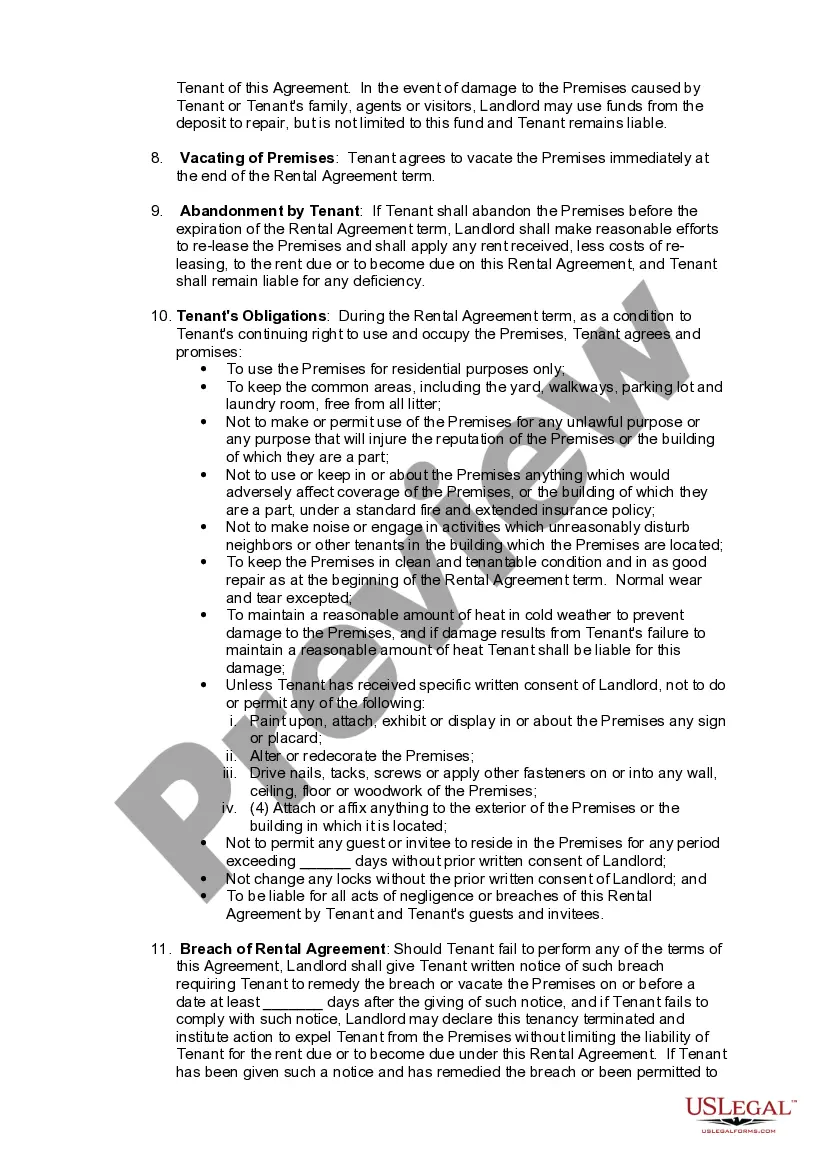
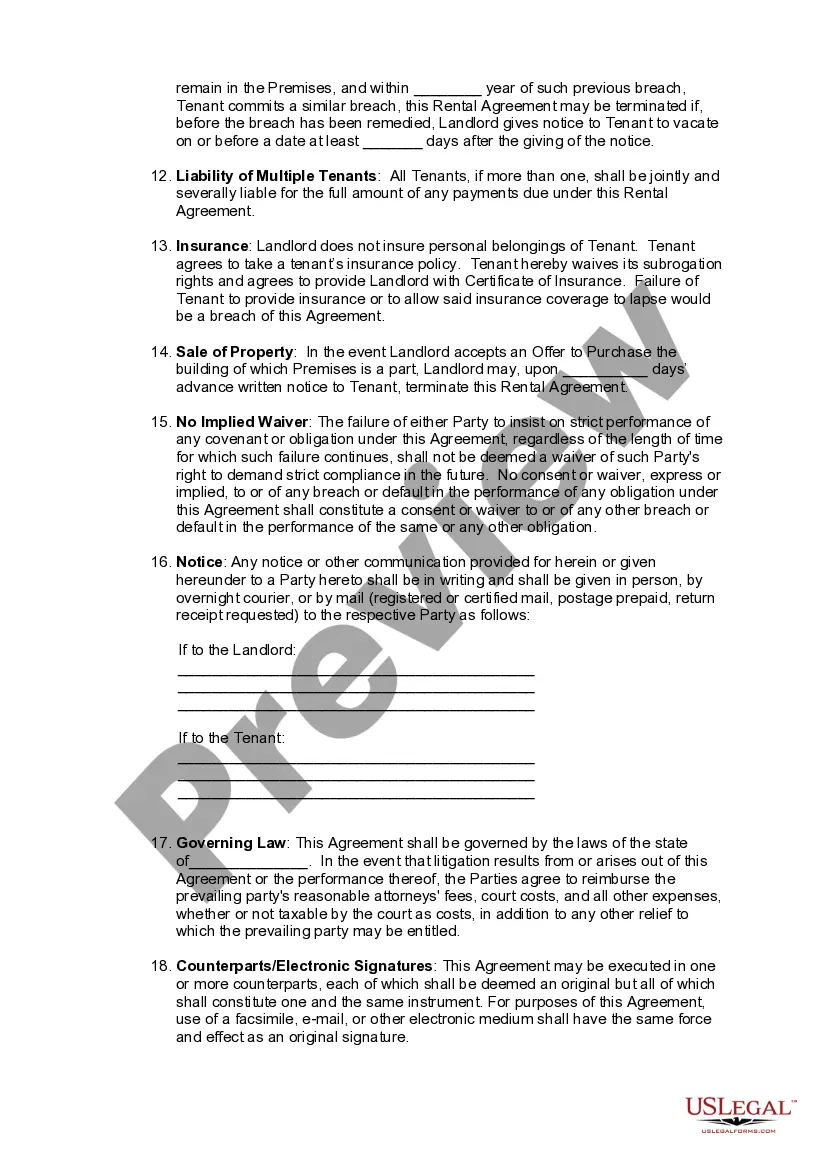
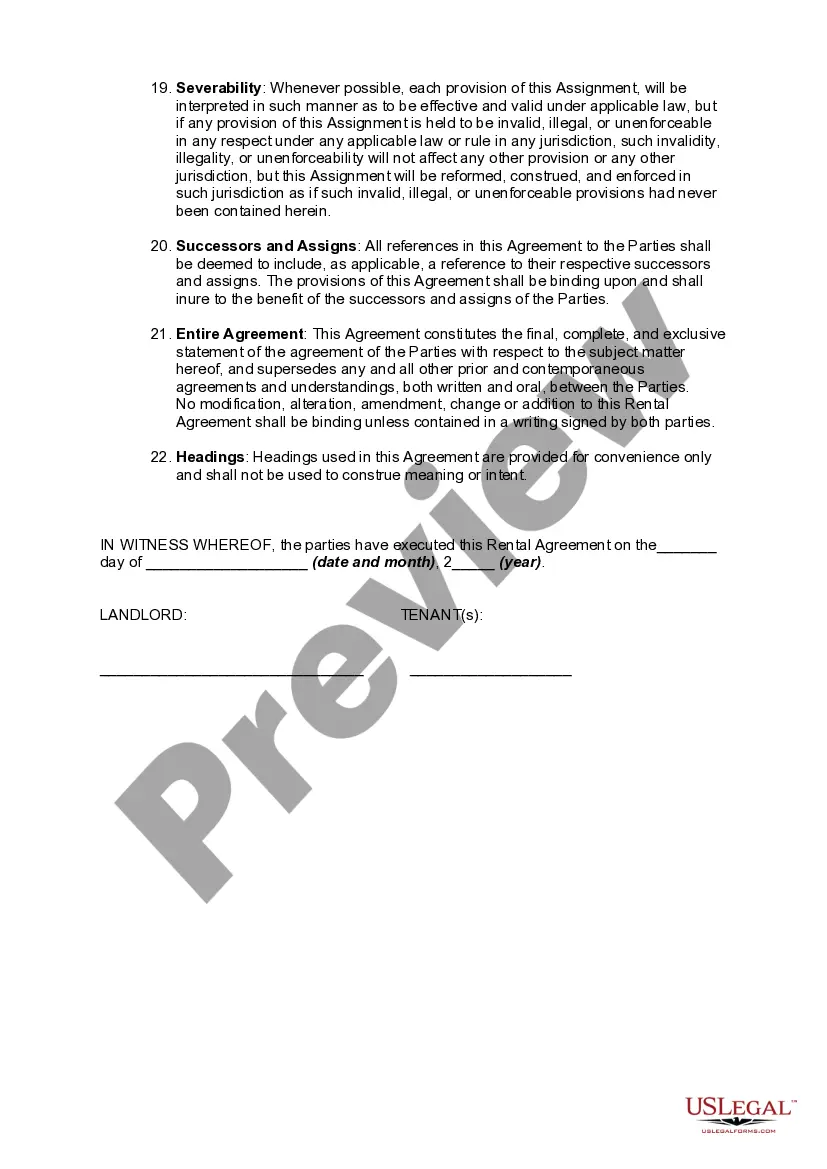
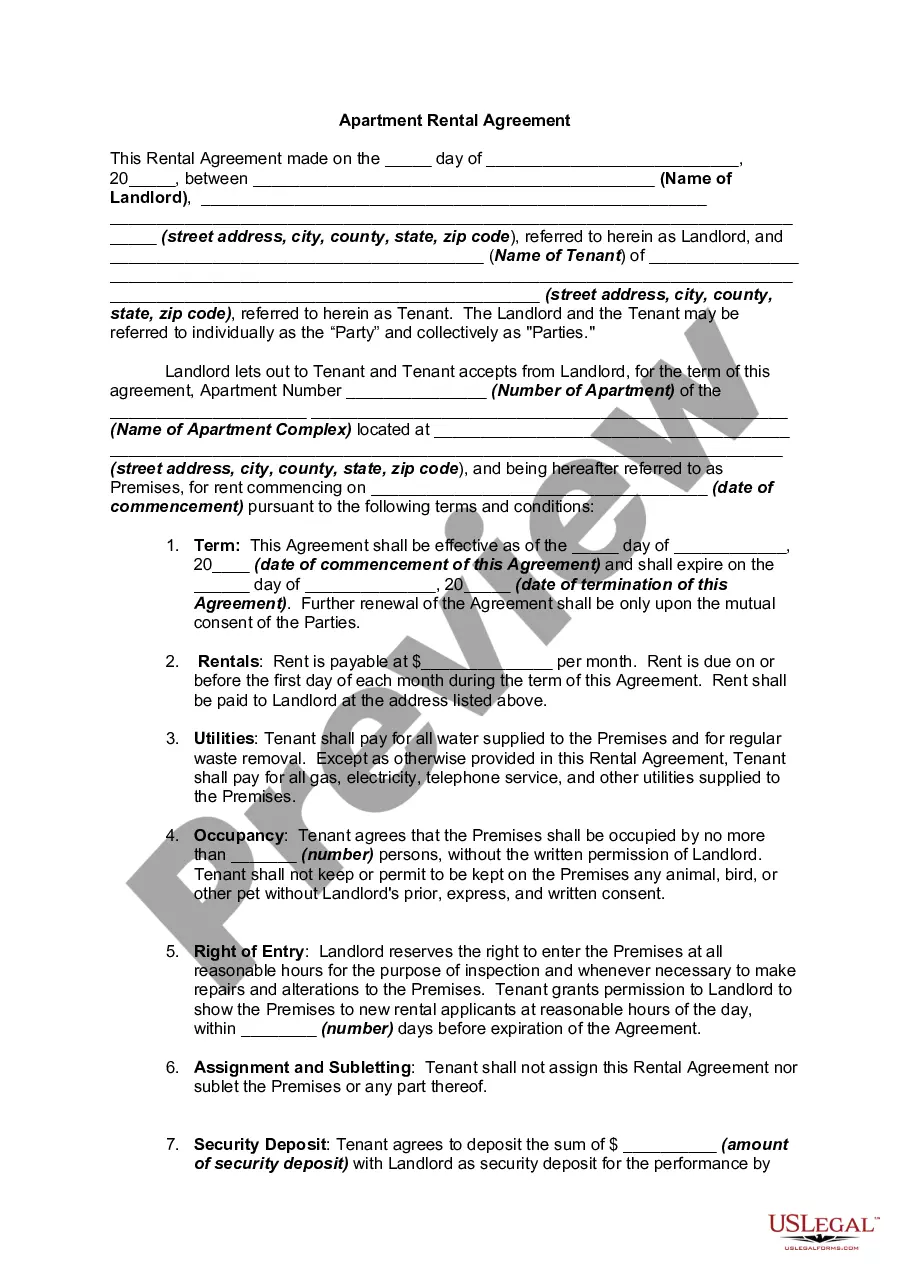
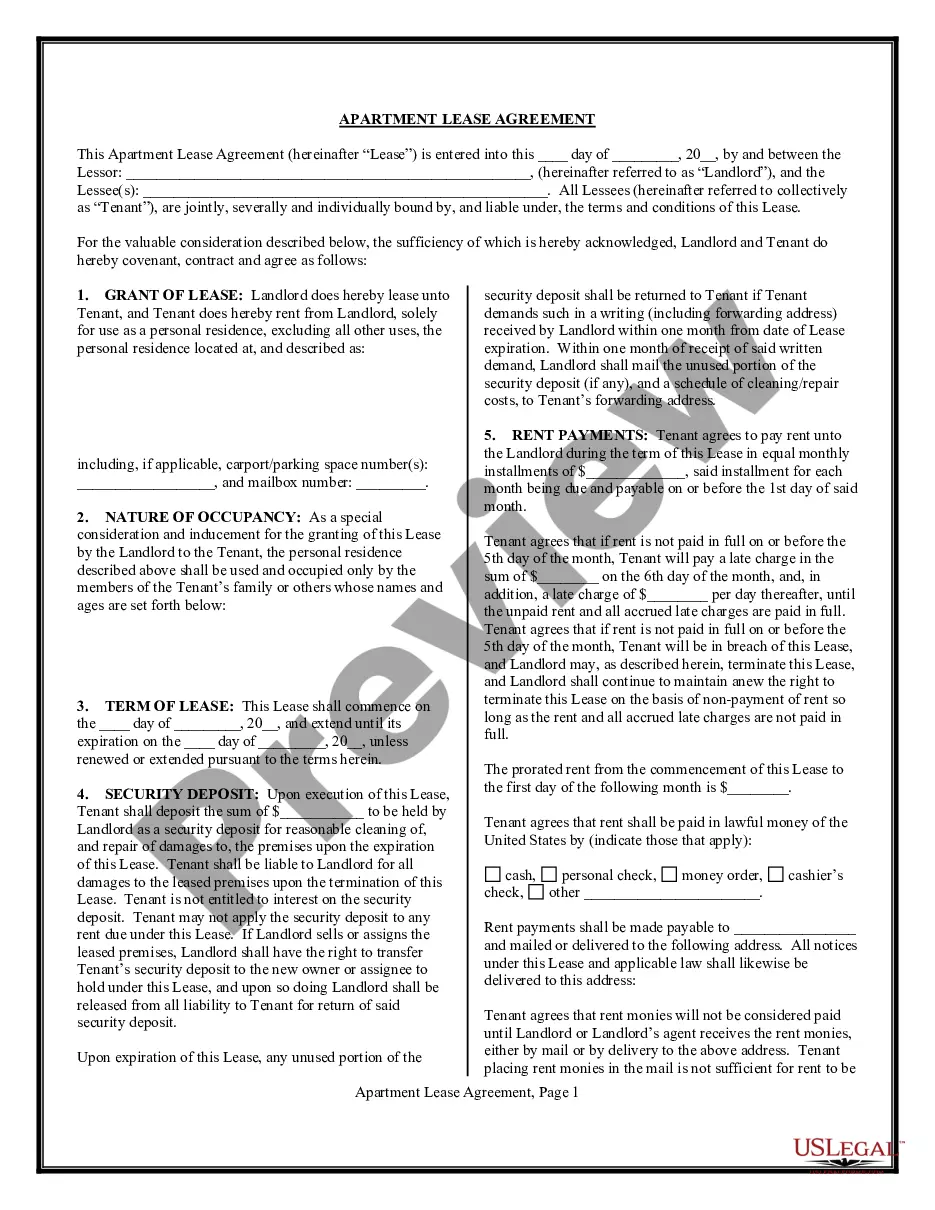
Apartment Lease For In Franklin
Description

Get your form ready online
Our built-in tools help you complete, sign, share, and store your documents in one place.
Make edits, fill in missing information, and update formatting in US Legal Forms—just like you would in MS Word.
Download a copy, print it, send it by email, or mail it via USPS—whatever works best for your next step.
Sign and collect signatures with our SignNow integration. Send to multiple recipients, set reminders, and more. Go Premium to unlock E-Sign.
If this form requires notarization, complete it online through a secure video call—no need to meet a notary in person or wait for an appointment.
We protect your documents and personal data by following strict security and privacy standards.

Make edits, fill in missing information, and update formatting in US Legal Forms—just like you would in MS Word.

Download a copy, print it, send it by email, or mail it via USPS—whatever works best for your next step.

Sign and collect signatures with our SignNow integration. Send to multiple recipients, set reminders, and more. Go Premium to unlock E-Sign.

If this form requires notarization, complete it online through a secure video call—no need to meet a notary in person or wait for an appointment.

We protect your documents and personal data by following strict security and privacy standards.
Looking for another form?








Form popularity
FAQ
Landlords may refuse to renew a lease only under certain enumerated circumstances, such as when the tenant is not using the premises as a primary residence.
The landlord of an intention not to renew the lease. (General Obligations Law § 5-905). If you have lived in your apartment for less than one year, or have a lease for less than one year, your landlord must provide you with 30 days advanced notice before raising your rent or not renewing your lease.
A 60-day notice is required for tenants who have lived in an apartment for more than one year, but less than two years, or have a lease of at least one year, but less than two years. Tenants who have lived in a unit for more than two years, or have a lease of at least two years, must get a 90-day notice.
No limit on how much your landlord can increase your rent. However, your landlord must give you advanced written notice before they can raise your rent 5% or more. advance written notice. This applies to month-to-month tenants without a lease as well.
If the lease doesn't mention a notice period, most states have default timelines that landlords and tenants must follow. For example, in California, landlords must give 60 days' notice to tenants if they don't plan to renew the lease.
Your landlord must give you at least 30 days notice if they are not planning to renew your lease or will raise your rent by more than 5%. If you have been living in your home for over a year, your landlord must give at least 60 days notice.
Tenants without a lease agreement also have the right to privacy. The landlord cannot enter your rental property without your consent, except in emergencies or other legally allowed circumstances. The landlord must provide reasonable notice before entering the rental property for repairs, inspections, or other reasons.
Visit the NYC Housing Connect website to view and apply to housing lotteries. Call 311 or 212-NEW-YORK (212-639-9675) for help. You can also can get information about NYC Housing Development Corporation-financed developments that are accepting applications for apartments.
The housing company will have to disclose during the application process that a surcharge will be calculated at the time of annual income affidavit review. The surcharge is based on 7 times the annual rent for households of 1 to 3 persons and 8 times the annual rent for households of 4 or more persons.
How to Avoid Fees When Breaking a Lease 6 Ways to Avoid Fees When Breaking a Lease. 1 – Communicate with your property management or landlord. 2 – Help find a replacement tenant. 3 – Know local real estate laws. 4 – Try to compromise. 5 – Make sure your landlord is in compliance.
