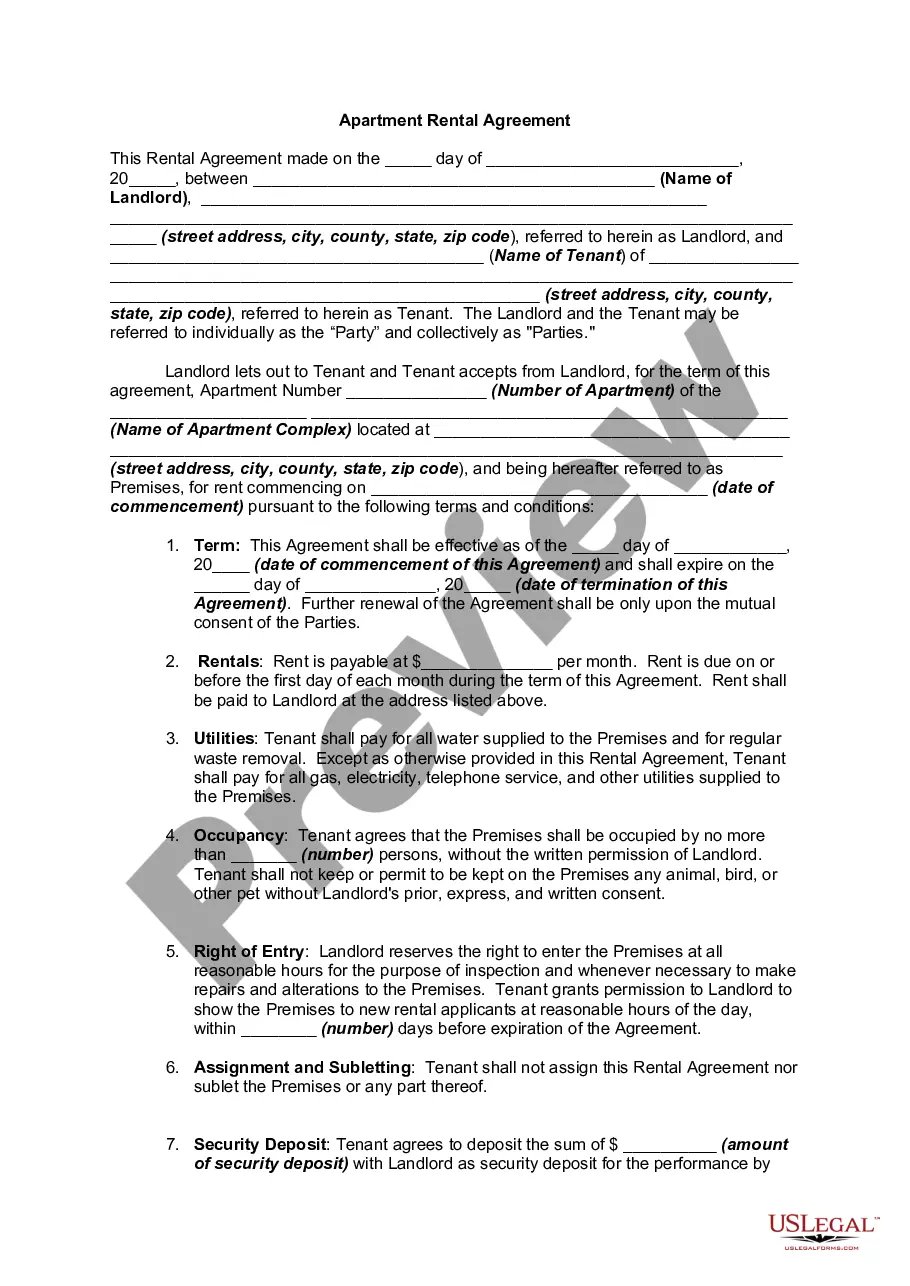
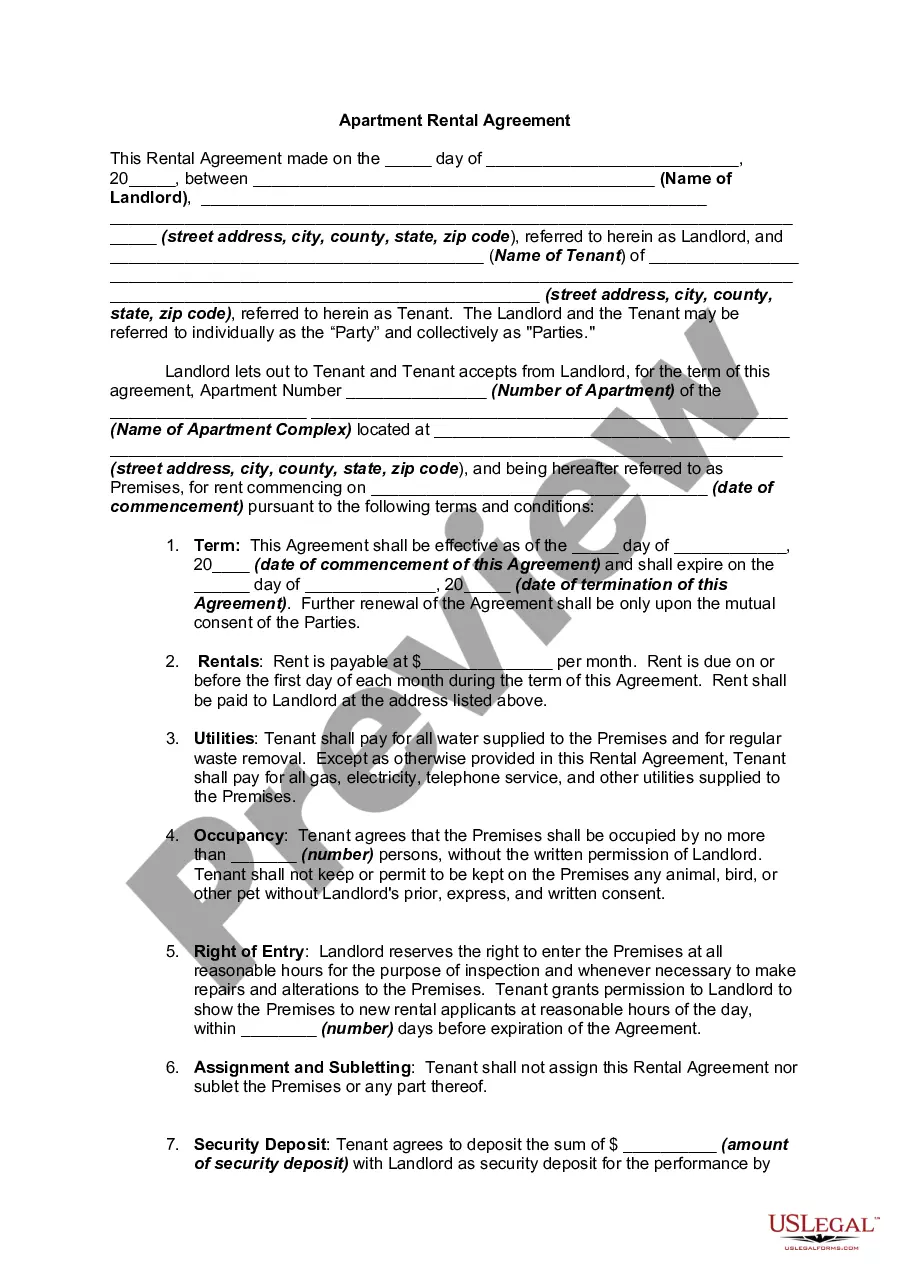
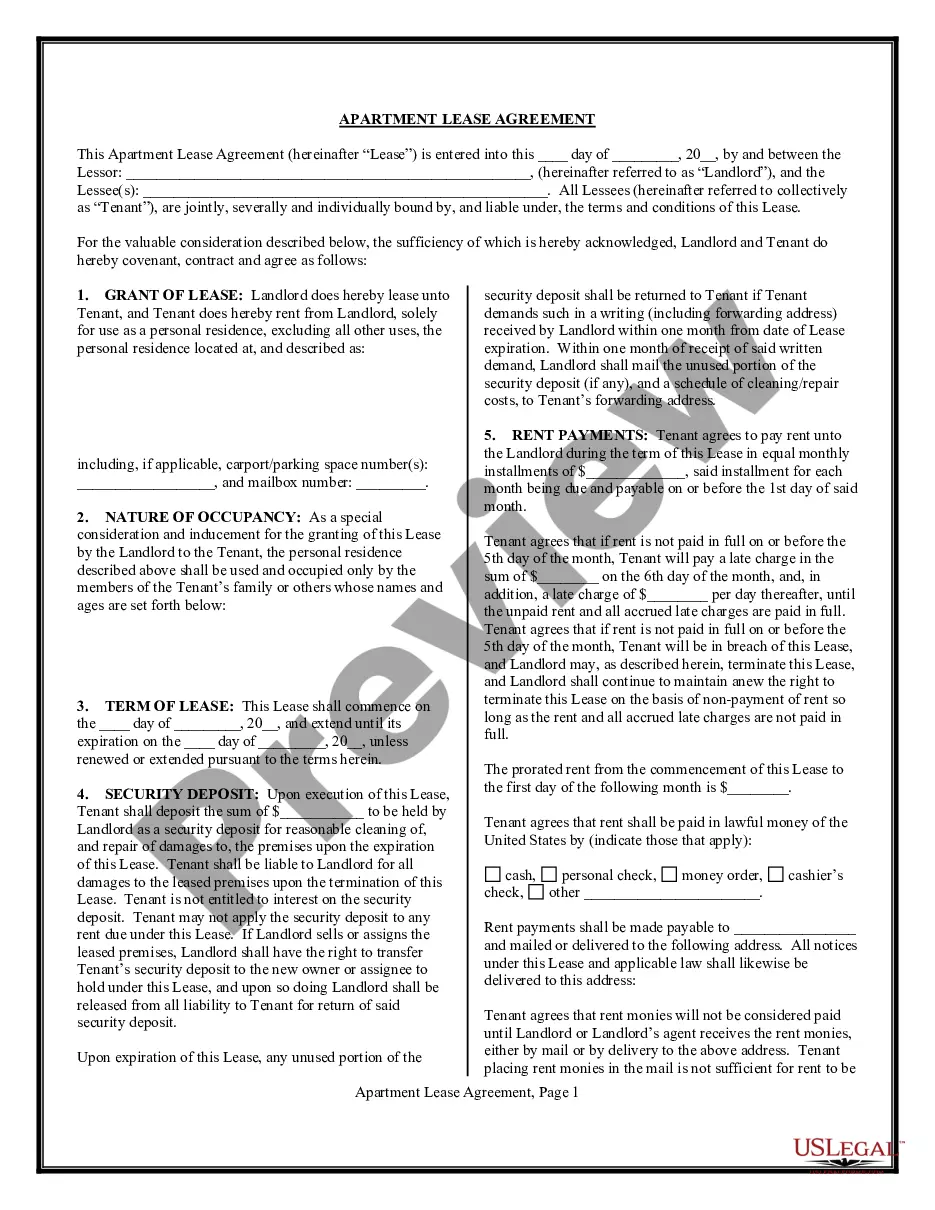
Apartment Lease Format In Chicago
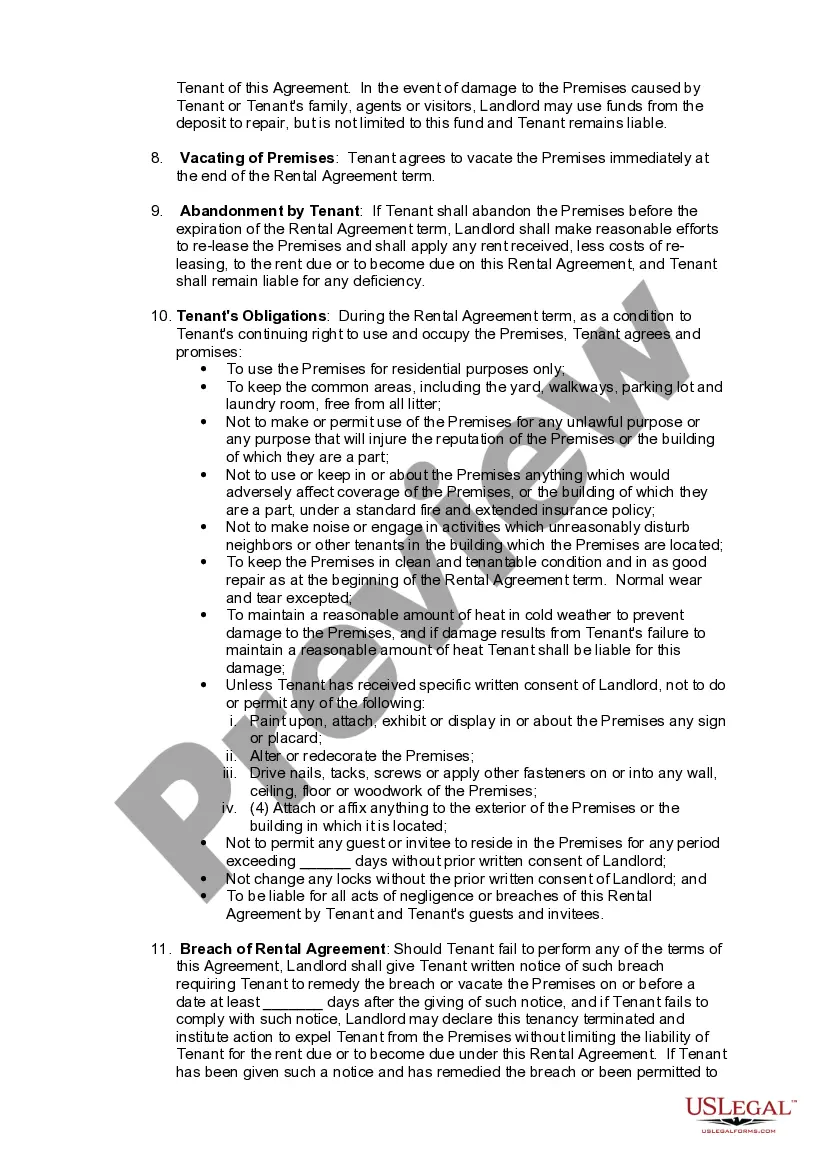
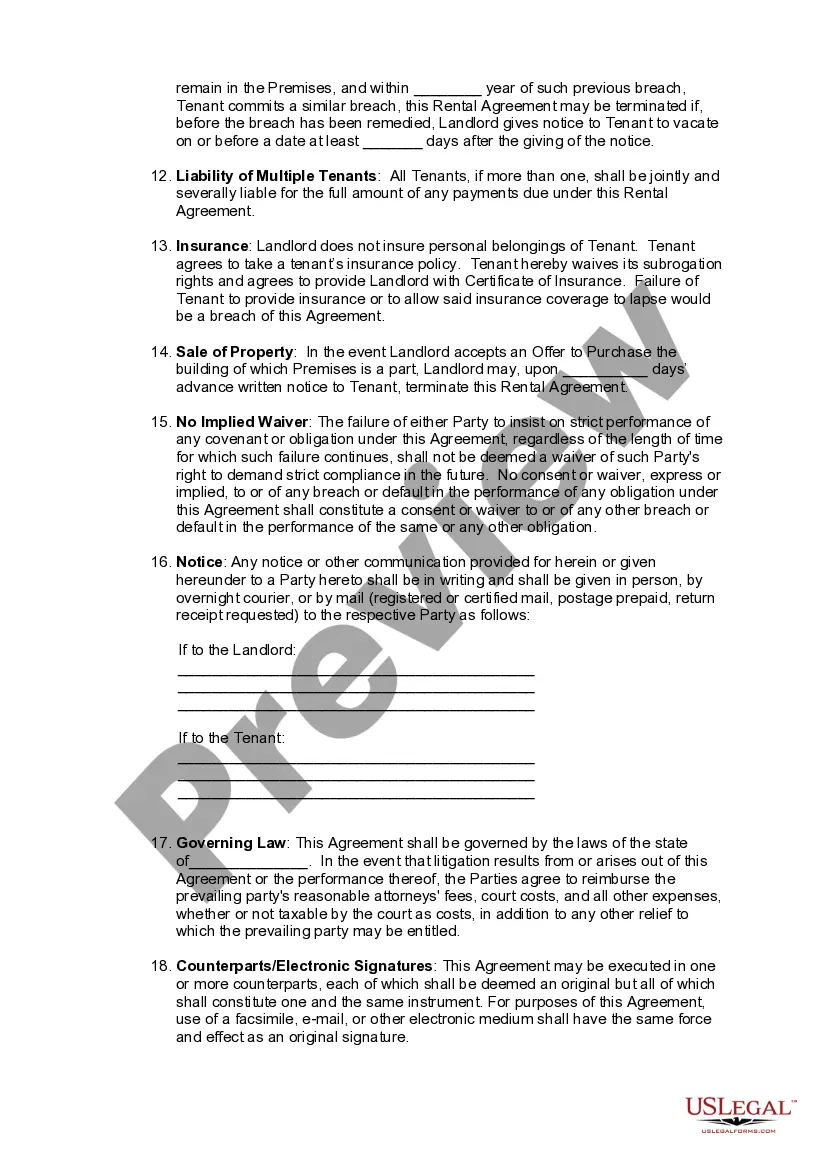
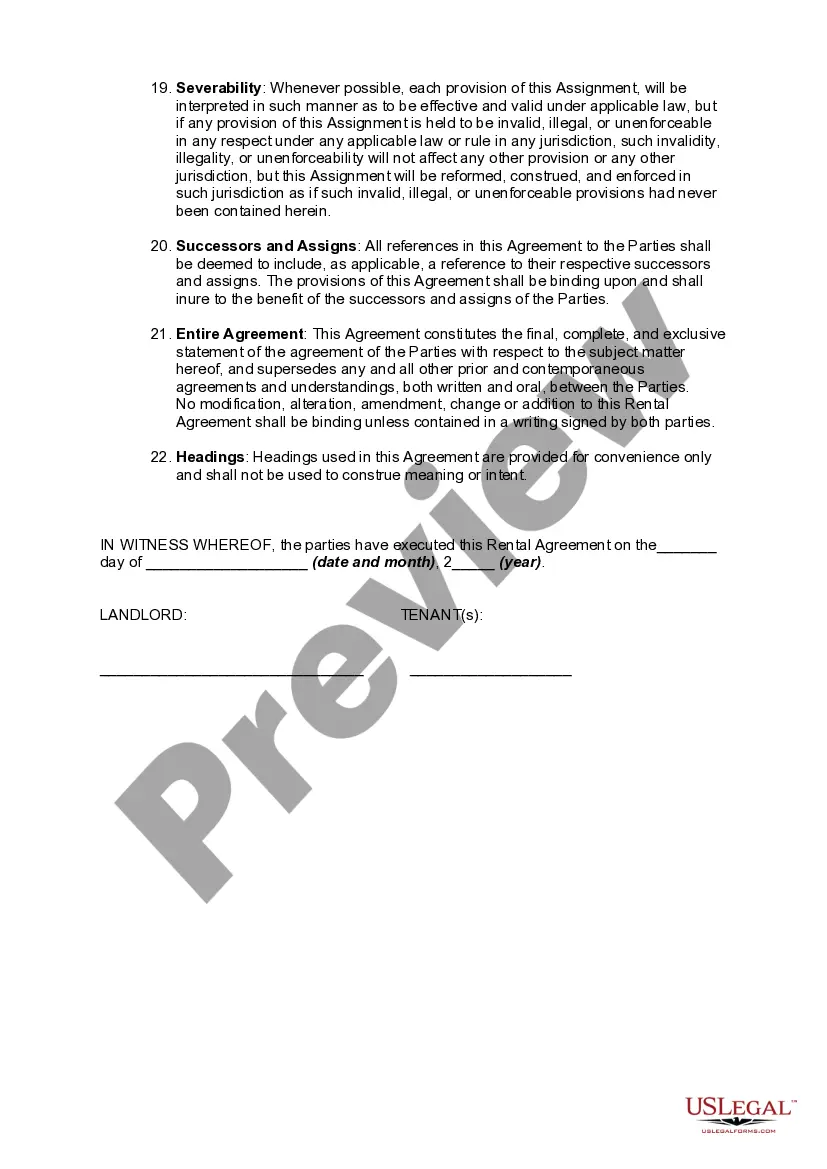
Description
Get your form ready online
Our built-in tools help you complete, sign, share, and store your documents in one place.
Make edits, fill in missing information, and update formatting in US Legal Forms—just like you would in MS Word.
Download a copy, print it, send it by email, or mail it via USPS—whatever works best for your next step.
Sign and collect signatures with our SignNow integration. Send to multiple recipients, set reminders, and more. Go Premium to unlock E-Sign.
If this form requires notarization, complete it online through a secure video call—no need to meet a notary in person or wait for an appointment.
We protect your documents and personal data by following strict security and privacy standards.

Make edits, fill in missing information, and update formatting in US Legal Forms—just like you would in MS Word.

Download a copy, print it, send it by email, or mail it via USPS—whatever works best for your next step.

Sign and collect signatures with our SignNow integration. Send to multiple recipients, set reminders, and more. Go Premium to unlock E-Sign.

If this form requires notarization, complete it online through a secure video call—no need to meet a notary in person or wait for an appointment.

We protect your documents and personal data by following strict security and privacy standards.
Looking for another form?









Form popularity
FAQ
1. Assured Shorthold Tenancy (AST) Assured Shorthold Tenancies, or ASTs, are the most common agreement for private rentals, typically lasting six to twelve months. With an AST, your landlord is required to protect your deposit in a government-approved scheme.
Here are 16 steps on how to make a lease agreement: Include the contact information of both parties. Include property details. Outline property utilities and services. Define the lease term. Disclose the monthly rent amount and due date. Detail the penalties and late fees. Describe any additional or services fees.
A gross lease is a type of lease agreement where the landlord pays all the property expenses, including the property taxes, insurance, maintenance, and repairs. This type of lease is most often used with residential property (Option A).
How to Structure a Lease Purchase Step One: Determine Lease Agreement Length. One of the most important aspects of a lease agreement is how long it will last. Step Two: Consider a Security Deposit. Step Three: Tax and Insurance Responsibility. Step Four: Include Rent Credit Details. Step Five: Address Miscellaneous Terms.
The Illinois standard residential lease agreement is a contract that creates a legally binding rental arrangement between a landlord and their tenant. These agreements are for a fixed period of time, and they outline all the necessary rights and obligations of the parties to help avoid any conflicts or legal disputes.
Fixed-Term Leases A fixed-term lease is the most traditional lease. They're called fixed term because tenants and landlords are agreeing to abide by the lease for a fixed amount of time, normally six to 14 months.
How to Write a Lease Agreement Names. Every contract should include the full names of all the parties involved, meaning the tenants and landlord. Description and Address of Rental Property. Term of the Tenancy. Price of Rent. Mandatory Disclosures. Subletting. Tenant Obligations. Breaking of the Lease.
It is possible to draft your own lease agreement, but you are leaving yourself open to issues.
Follow these nine steps, and you'll be ready to tackle the renting process with confidence. Determine your budget. Identify your priorities. Ensure you have a good credit score. Search for an apartment. Take an apartment tour. Submit your rental application. Complete a background check. Read and sign the lease.
