Texas Beneficiaries With Trusts
Description
Get your form ready online
Our built-in tools help you complete, sign, share, and store your documents in one place.
Make edits, fill in missing information, and update formatting in US Legal Forms—just like you would in MS Word.
Download a copy, print it, send it by email, or mail it via USPS—whatever works best for your next step.
Sign and collect signatures with our SignNow integration. Send to multiple recipients, set reminders, and more. Go Premium to unlock E-Sign.
If this form requires notarization, complete it online through a secure video call—no need to meet a notary in person or wait for an appointment.
We protect your documents and personal data by following strict security and privacy standards.

Make edits, fill in missing information, and update formatting in US Legal Forms—just like you would in MS Word.

Download a copy, print it, send it by email, or mail it via USPS—whatever works best for your next step.

Sign and collect signatures with our SignNow integration. Send to multiple recipients, set reminders, and more. Go Premium to unlock E-Sign.

If this form requires notarization, complete it online through a secure video call—no need to meet a notary in person or wait for an appointment.

We protect your documents and personal data by following strict security and privacy standards.
Looking for another form?









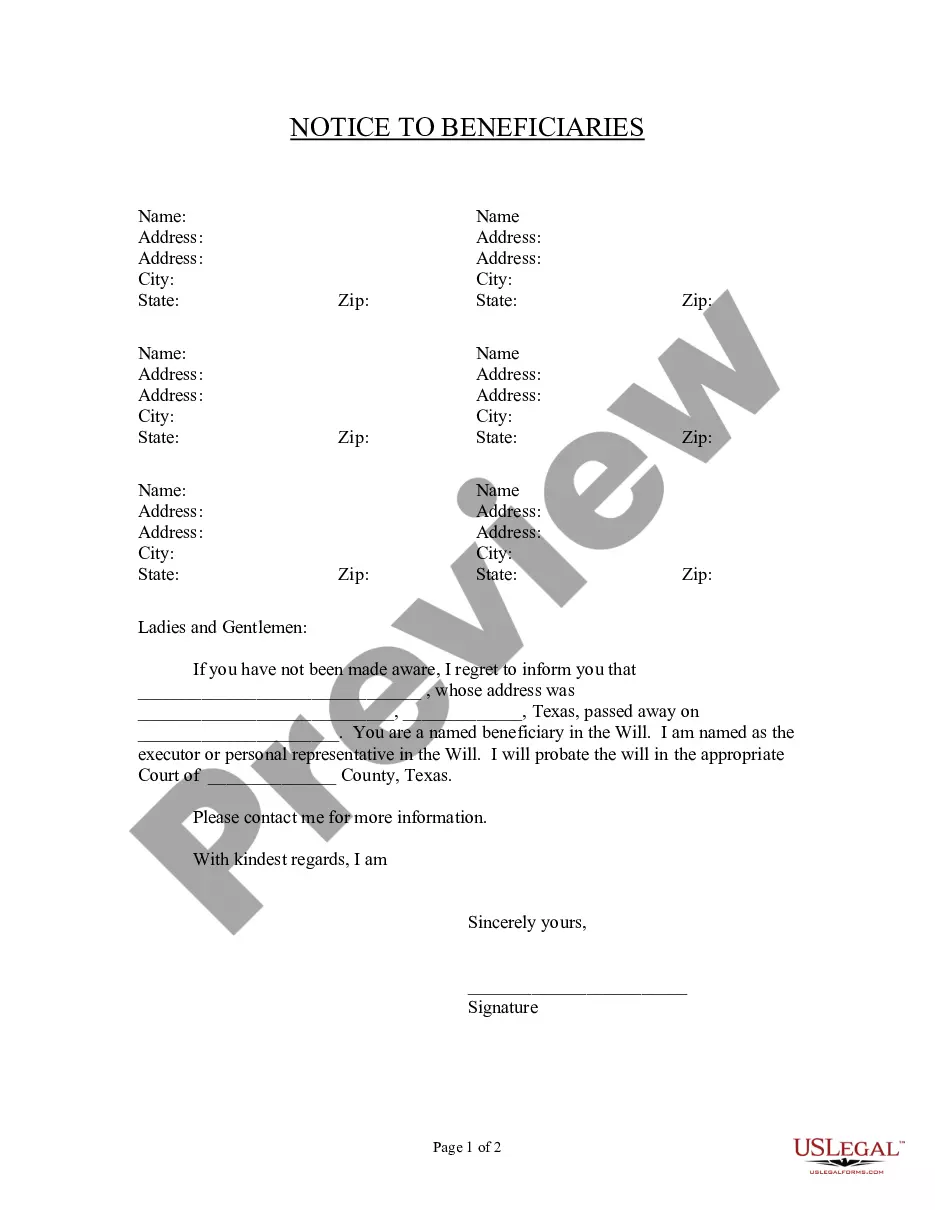
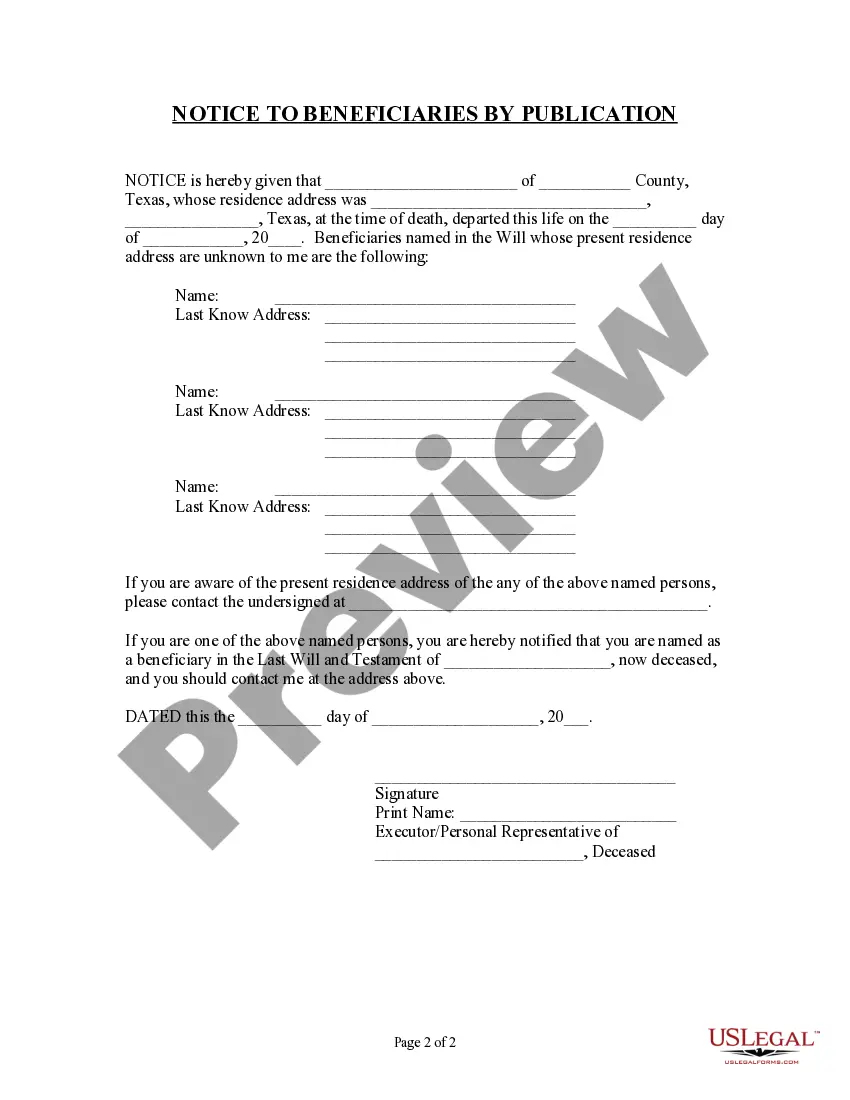
How to fill out Texas Notice To Beneficiaries Of Being Named In Will?
Legal documents administration can be daunting, even for the most adept professionals.
If you're seeking a Texas Beneficiaries With Trusts and lack the time to dedicate to finding the appropriate and current version, the procedures can be challenging.
Access a wealth of articles, guides, and resources pertinent to your circumstances and requirements.
Save time and effort searching for the documents you need, and use US Legal Forms’ advanced search and Preview feature to find Texas Beneficiaries With Trusts and download it.
Select a subscription option, choose the file format you prefer, and Download, complete, eSign, print, and submit your documents. Benefit from the US Legal Forms online library, backed by 25 years of expertise and dependability. Transform your routine document management into a simple and user-friendly process today.
- If you have a subscription, Log In to your US Legal Forms account, search for the document, and download it.
- Check the My documents section to view the documents you have previously downloaded and manage your files as needed.
- If you're new to US Legal Forms, register for a free account and gain unlimited access to all platform benefits.
- After downloading your desired document, ensure it is the correct one by previewing it and reviewing its description.
- Confirm that the template is valid in your state or county.
- Click Buy Now when you're ready.
- Utilize state- or county-specific legal and business documents.
- US Legal Forms meets all your requirements, from individual to corporate paperwork, all in one location.
- Employ cutting-edge tools to complete and manage your Texas Beneficiaries With Trusts.
Form popularity
FAQ
The grantor can opt to have the beneficiaries receive trust property directly without any restrictions. The trustee can write the beneficiary a check, give them cash, and transfer real estate by drawing up a new deed or selling the house and giving them the proceeds.
Income beneficiaries are the persons entitled to receive income (and sometimes principal) from the trust while it is being administered. Remainder beneficiaries are the persons entitled to receive the principal (and sometimes accumulated undistributed income) from the trust upon termination.
A beneficiary of trust is the individual or group of individuals for whom a trust was created. The person who creates a trust also determines the trust beneficiary and appoints a trustee to manage the trust in the beneficiary's best interests.
To leave property to your living trust, name your trust as beneficiary for that property, using the trustee's name and the name of the trust. For example: John Doe as trustee of the John Doe Living Trust, dated January 1, 20xx.
A trustee is required to send a copy of the Trust and its amendments, if there are any amendments, to the beneficiaries of the Trust and heirs of the settlor (i.e., the person who created the Trust), within 60 days of a written request.