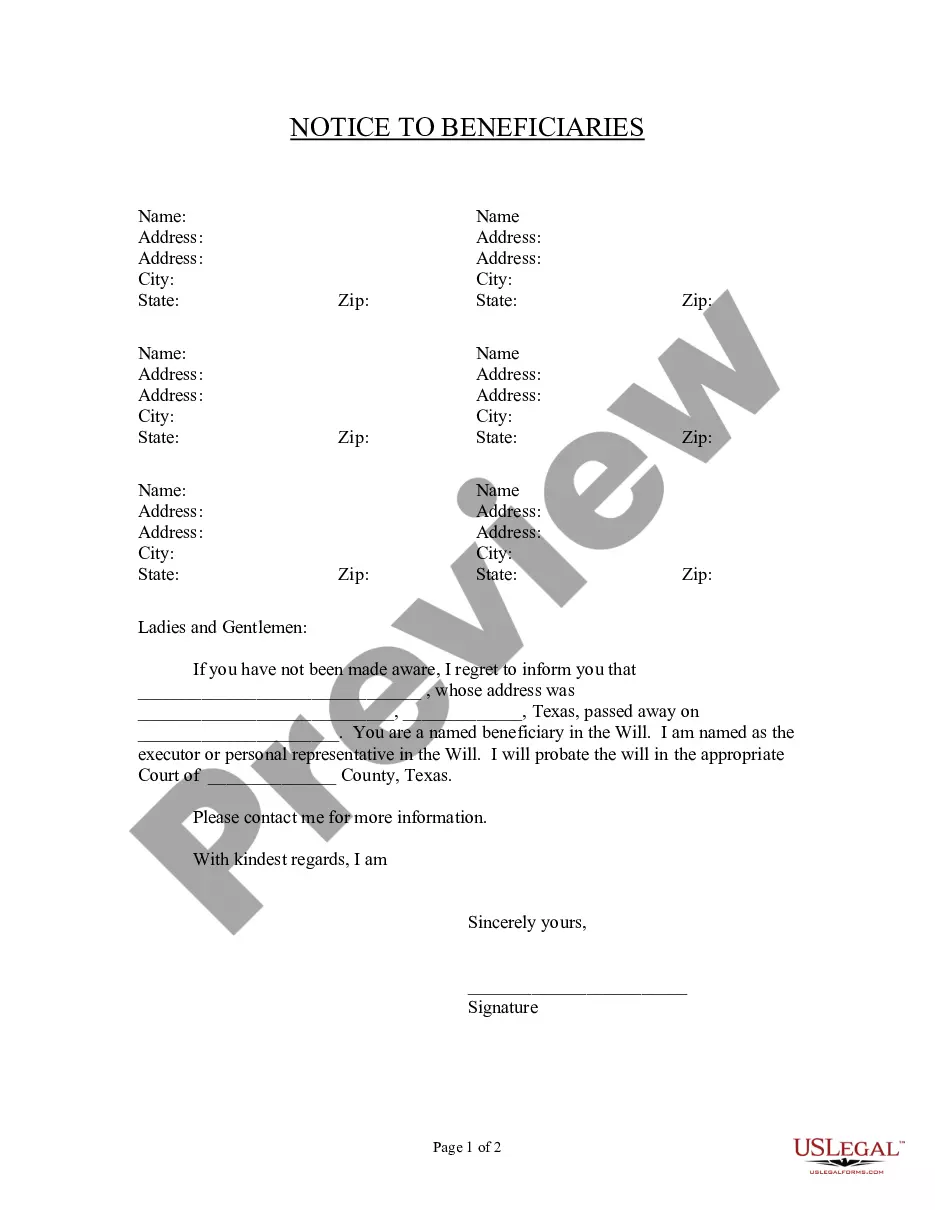
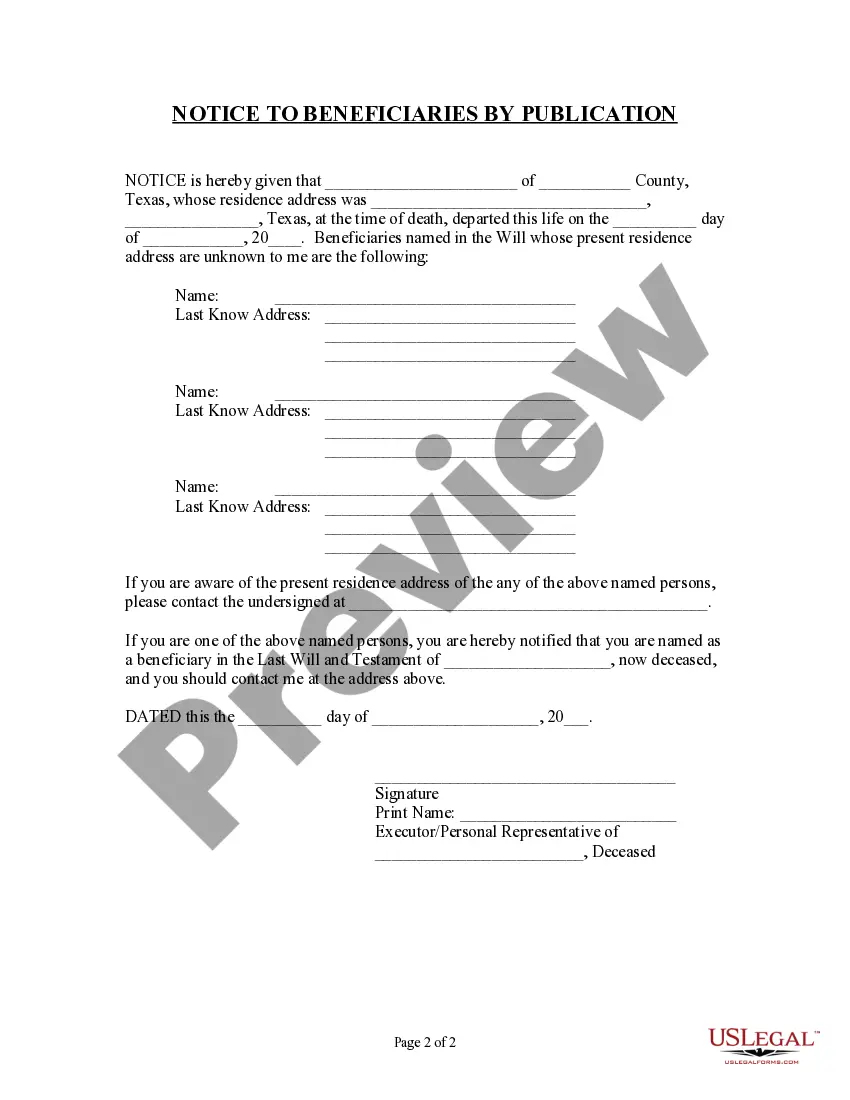
Texas Beneficiaries Tx With Spouse
Description
Get your form ready online
Our built-in tools help you complete, sign, share, and store your documents in one place.
Make edits, fill in missing information, and update formatting in US Legal Forms—just like you would in MS Word.
Download a copy, print it, send it by email, or mail it via USPS—whatever works best for your next step.
Sign and collect signatures with our SignNow integration. Send to multiple recipients, set reminders, and more. Go Premium to unlock E-Sign.
If this form requires notarization, complete it online through a secure video call—no need to meet a notary in person or wait for an appointment.
We protect your documents and personal data by following strict security and privacy standards.

Make edits, fill in missing information, and update formatting in US Legal Forms—just like you would in MS Word.

Download a copy, print it, send it by email, or mail it via USPS—whatever works best for your next step.

Sign and collect signatures with our SignNow integration. Send to multiple recipients, set reminders, and more. Go Premium to unlock E-Sign.

If this form requires notarization, complete it online through a secure video call—no need to meet a notary in person or wait for an appointment.

We protect your documents and personal data by following strict security and privacy standards.
Looking for another form?








How to fill out Texas Notice To Beneficiaries Of Being Named In Will?
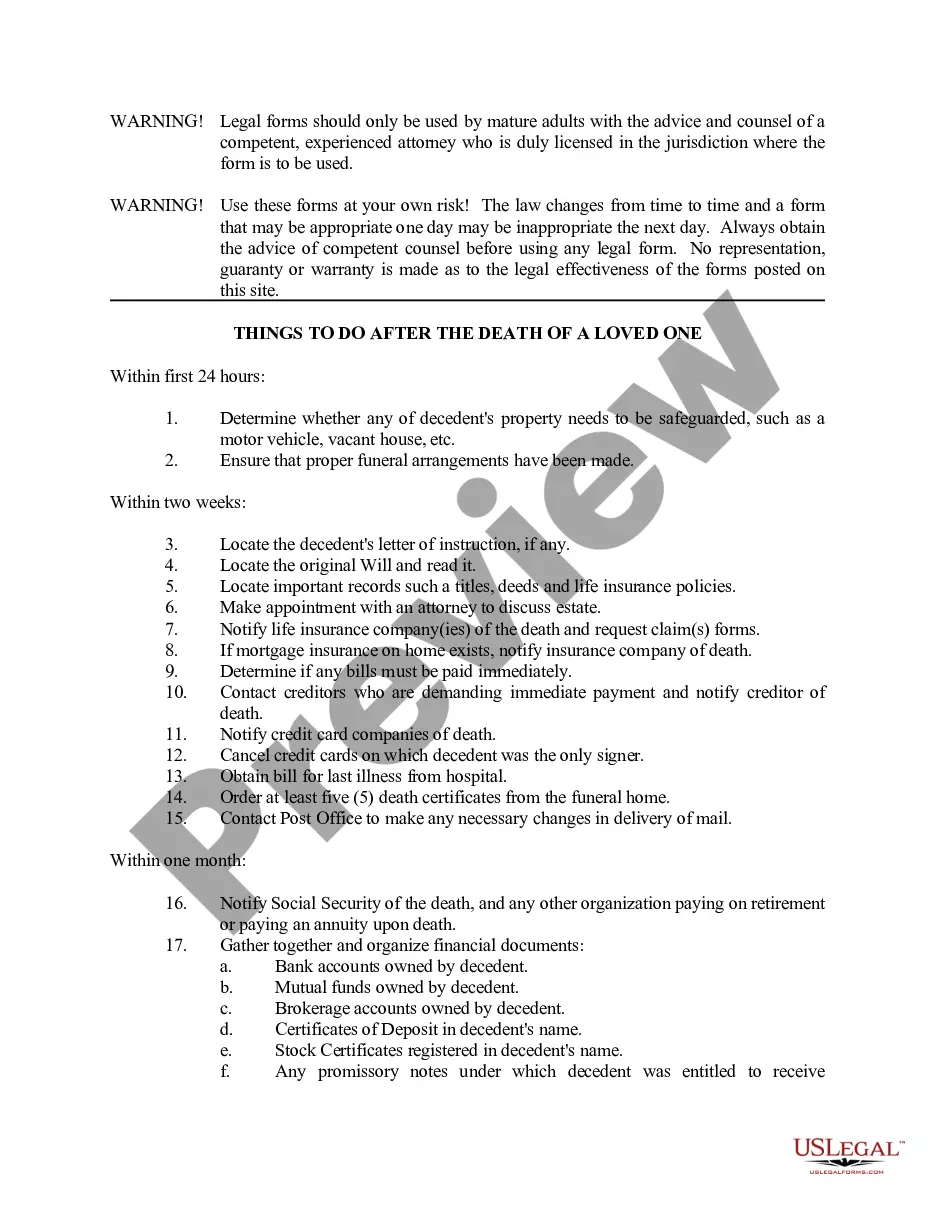
The Texas Beneficiaries Tx With Spouse you observe on this site is a reusable formal template crafted by expert attorneys in compliance with federal and local regulations.
For over 25 years, US Legal Forms has supplied individuals, enterprises, and legal experts with more than 85,000 authenticated, state-specific documents for any business and personal scenario. It’s the fastest, simplest, and most reliable method to acquire the paperwork you require, as the service assures the utmost level of data protection and malware defense.
Select the format you desire for your Texas Beneficiaries Tx With Spouse (PDF, DOCX, RTF) and save the document on your device.
- Search for the document you require and review it.
- Browse through the sample you looked for and preview it or examine the form description to ensure it meets your requirements. If it doesn’t, use the search bar to find the correct one. Click Buy Now once you have located the template you need.
- Register and Log In.
- Choose the pricing plan that fits you and create an account. Use PayPal or a credit card to make a swift payment. If you already possess an account, Log In and verify your subscription to continue.
- Obtain the editable template.
Form popularity
FAQ
In Texas, certain rules apply to life insurance beneficiaries, including who is automatically designated as the primary beneficiary. By default, if a policyholder has a spouse, they will be designated as the primary beneficiary of the policy, unless the policyholder specifically designates someone else in writing.
If you are a resident of certain states, you may be required to list your spouse as your primary beneficiary and designate him or her to receive at least 50 percent of the benefit. In some states, you can name someone else with your spouse's written permission.
A primary beneficiary is the person (or persons) first in line to receive the death benefit from your life insurance policy ? typically your spouse, children or other family members.
Naming Your Spouse as Your Beneficiary In Texas, your spouse cannot inherit from you after you divorce unless you make an affirmative statement that that is what you want. But Texas law does not govern your 401(k), 403(b), 457 or other ?qualified? (meaning tax deferred) funds.
Spousal Inheritance When a Will is in Place Community property includes the assets the couple acquired together during their marriage. Generally speaking, each spouse has a right to half of the community property and so, this is automatically distributed to a widow after their spouse's death.