Mortgage Holder Lender For Intermediaries
Description
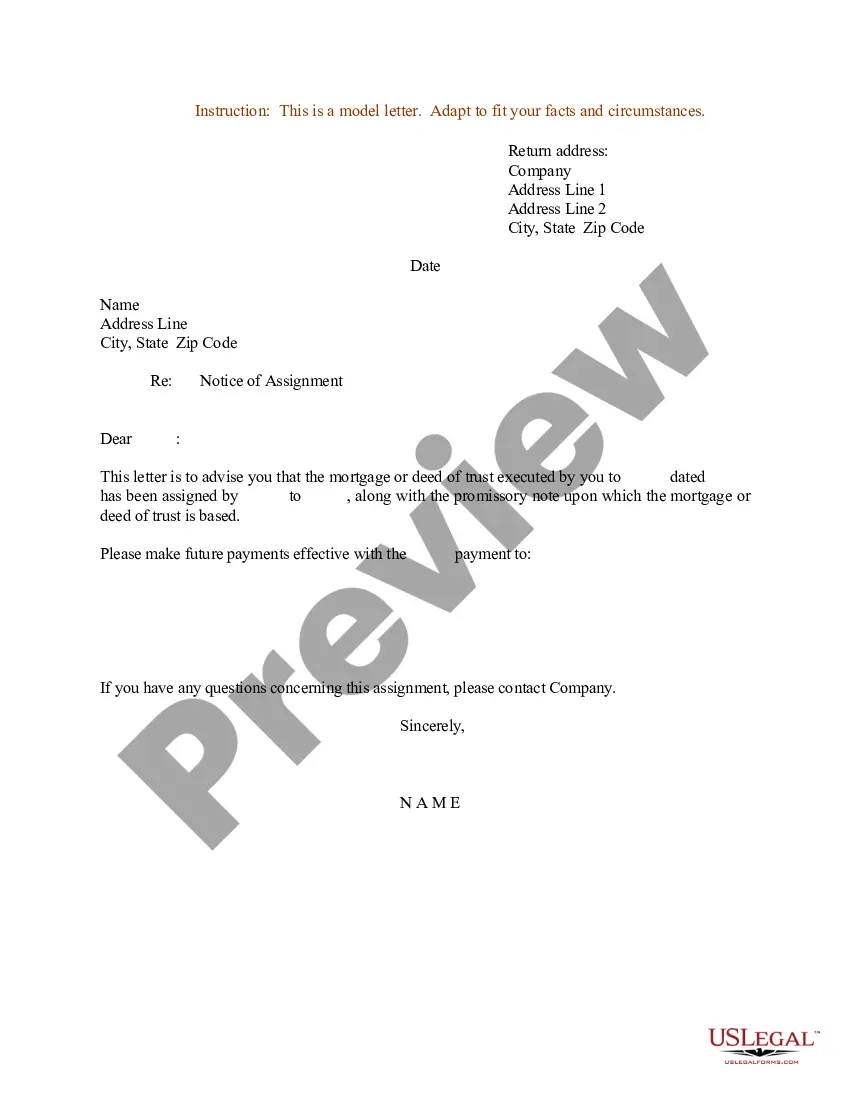
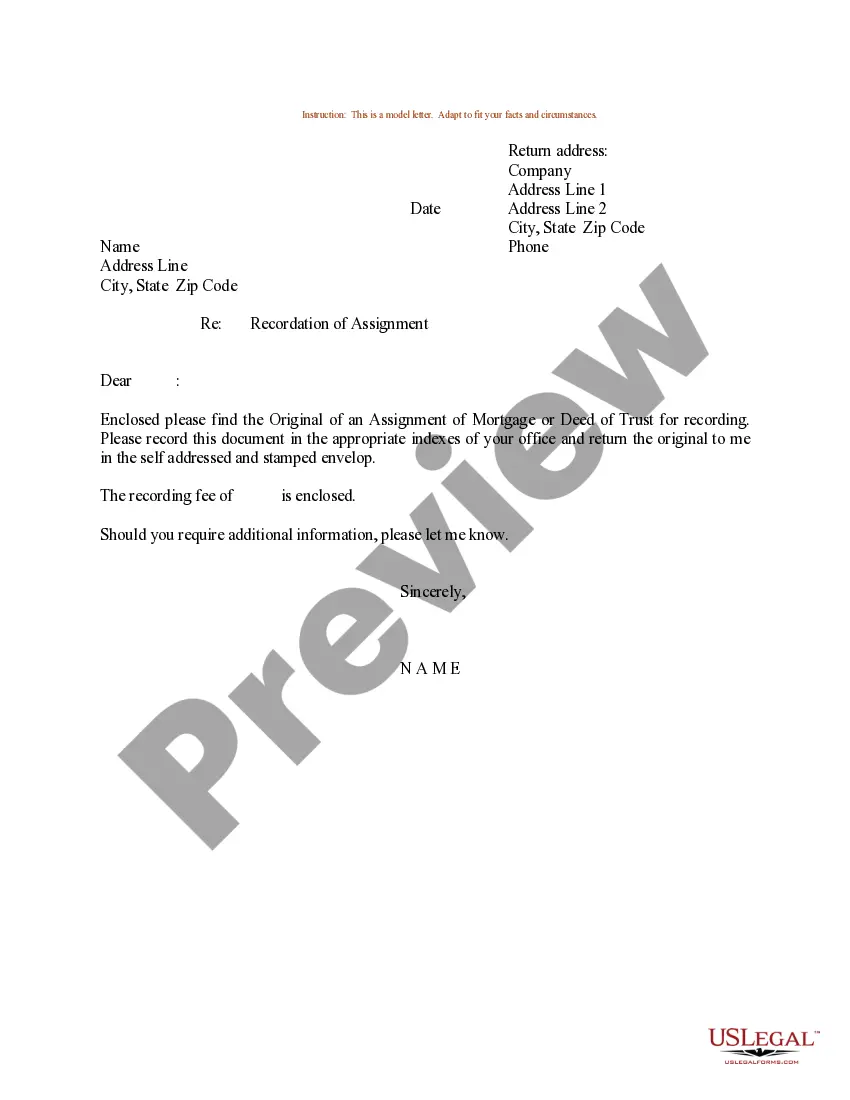
Get your form ready online
Our built-in tools help you complete, sign, share, and store your documents in one place.
Make edits, fill in missing information, and update formatting in US Legal Forms—just like you would in MS Word.
Download a copy, print it, send it by email, or mail it via USPS—whatever works best for your next step.
Sign and collect signatures with our SignNow integration. Send to multiple recipients, set reminders, and more. Go Premium to unlock E-Sign.
If this form requires notarization, complete it online through a secure video call—no need to meet a notary in person or wait for an appointment.
We protect your documents and personal data by following strict security and privacy standards.

Make edits, fill in missing information, and update formatting in US Legal Forms—just like you would in MS Word.

Download a copy, print it, send it by email, or mail it via USPS—whatever works best for your next step.

Sign and collect signatures with our SignNow integration. Send to multiple recipients, set reminders, and more. Go Premium to unlock E-Sign.

If this form requires notarization, complete it online through a secure video call—no need to meet a notary in person or wait for an appointment.

We protect your documents and personal data by following strict security and privacy standards.
Looking for another form?
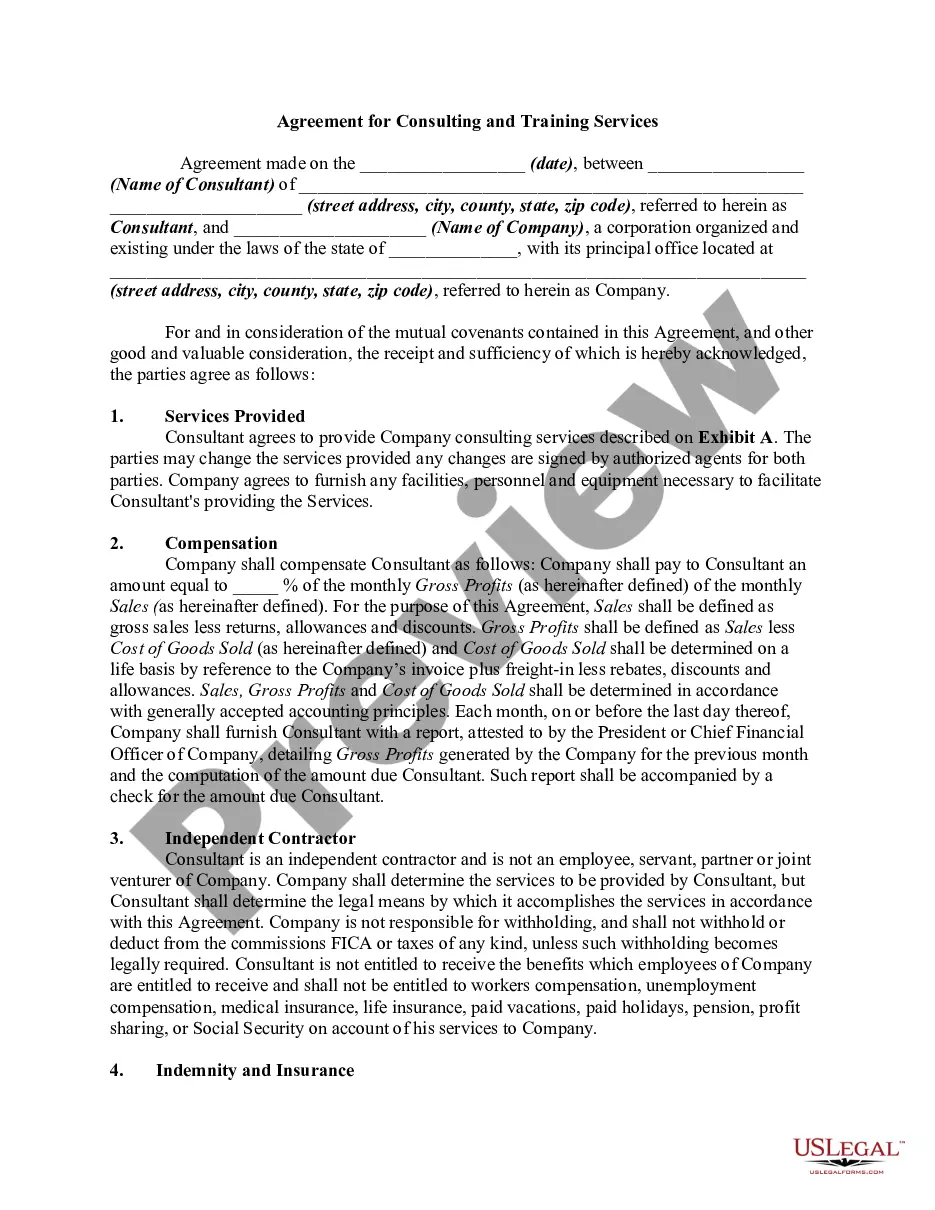



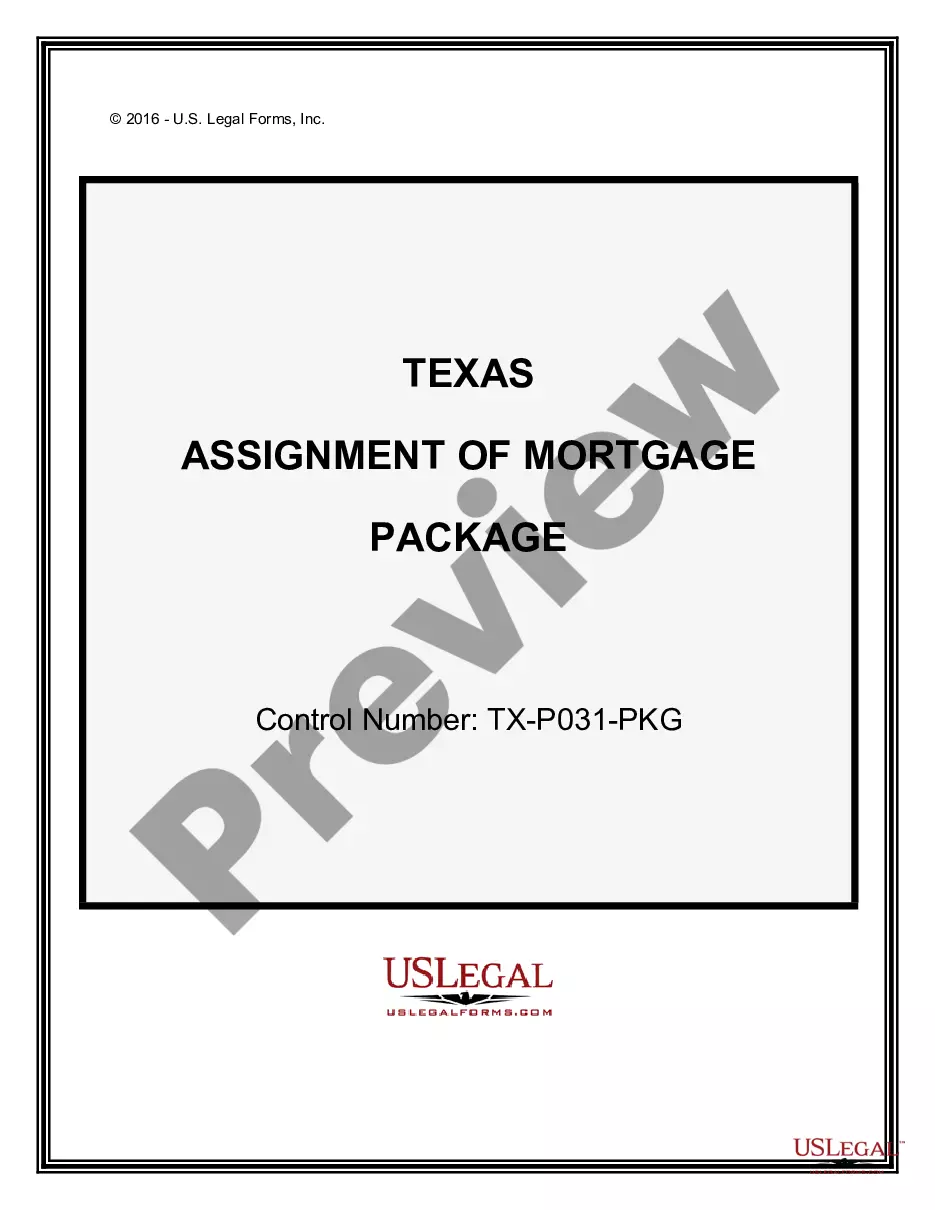
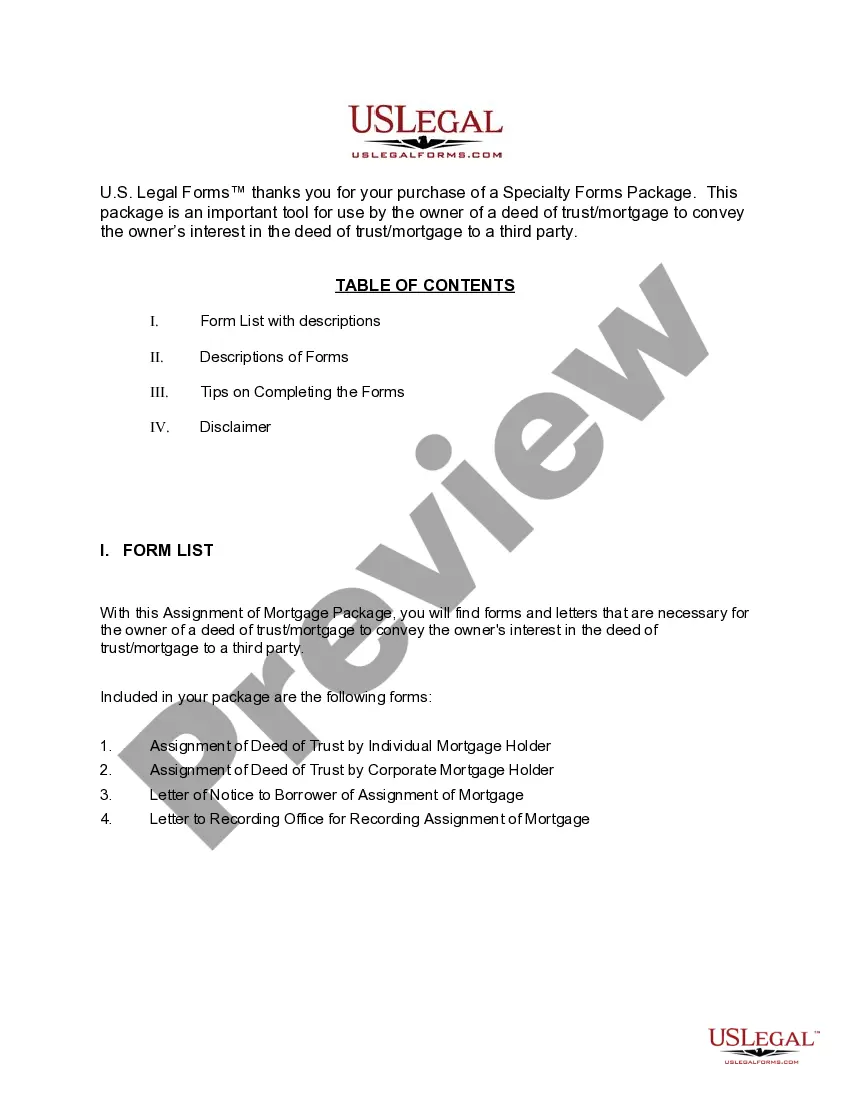
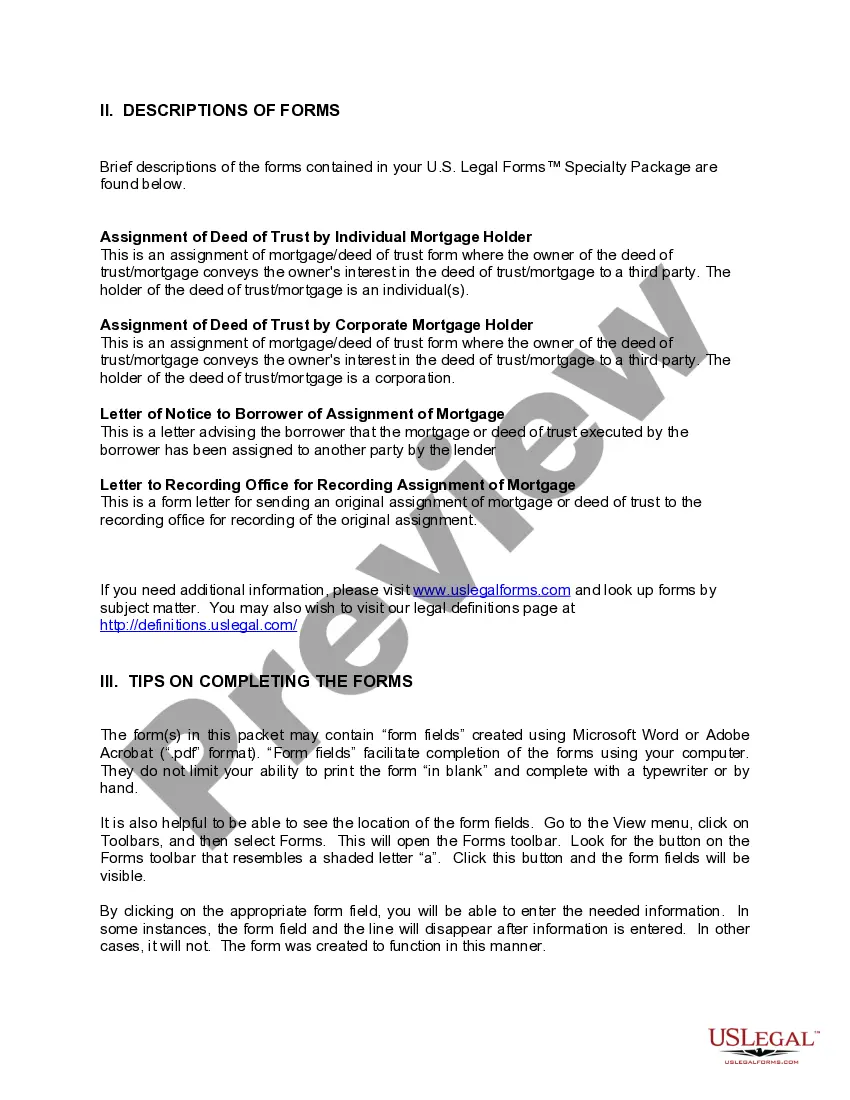
How to fill out Texas Assignment Of Mortgage Package?
Finding a reliable source to obtain the latest and most suitable legal templates is a significant part of navigating bureaucracy.
Identifying the correct legal documents requires precision and meticulousness, which is why sourcing samples of Mortgage Holder Lender For Intermediaries solely from trustworthy providers, such as US Legal Forms, is essential.
Once the document is on your device, you can modify it using the editor or print it to complete it by hand. Eliminate the hassle of legal paperwork. Explore the vast collection of US Legal Forms to discover legal templates, verify their applicability to your circumstances, and download them right away.
- Use the library navigation or search box to locate your template.
- Review the document’s details to determine if it meets your state and region's requirements.
- If available, preview the document to confirm it matches your interest.
- If the Mortgage Holder Lender For Intermediaries does not fit your needs, return to search for the correct document.
- Once you are confident about the form’s relevance, download it.
- If you are a registered user, click Log in to verify and access your chosen forms in My documents.
- If you haven’t created an account yet, click Buy now to acquire the form.
- Choose the pricing option that best suits your preferences.
- Continue with the registration process to finalize your purchase.
- Complete your payment using the selected method (credit card or PayPal).
- Choose the format for downloading Mortgage Holder Lender For Intermediaries.
Form popularity
FAQ
To contact the mortgage works for intermediaries, you can visit their official website, where you’ll find relevant information and contact options. It’s a straightforward process to reach out via their customer service or support channels. You might also want to explore platforms like uslegalforms, which can connect you with various intermediaries in the mortgage field for quick assistance.
The intermediary between a lender and a borrower is often a mortgage broker or a mortgage credit intermediary. These professionals play a crucial role in simplifying communication and negotiation. By serving as the liaison, they help borrowers present their financial situations effectively while also ensuring lenders get the necessary information. If you need assistance, uslegalforms can help you connect with qualified intermediaries.
Finding a mortgage holder involves checking public records at local government offices or using online resources dedicated to property information. When searching, look for the name of the mortgage holder lender for intermediaries listed in the documents. Using a reliable source like uslegalforms can simplify this process and ensure you have the correct information.
To find out who is on a mortgage, you can access property records at your local county recorder's office or an online property database. This information typically reveals the names associated with the mortgage and the lender. For a more streamlined process, consider utilizing platforms like uslegalforms, which can help guide you through the necessary steps.
Yes, you can look up someone else's mortgage through public records. These records are accessible at local government offices or various online databases. While you may not see personal financial details, you can identify the mortgage holder lender for intermediaries associated with the property.
You can find out who holds the mortgage on a property by checking public records at the county courthouse or online through local property record websites. This information typically includes the name of the mortgage holder lender for intermediaries. Alternatively, you can contact the property owner directly, if possible, to ask about their mortgage details.
Yes, a mortgage lender can also serve as a mortgage credit intermediary. This dual role allows them to provide additional services to both borrowers and other lenders. By leveraging their position, mortgage holder lenders for intermediaries can enhance their offerings, ensuring clients receive seamless service throughout the mortgage process.
An intermediary acts as a bridge between the borrower and the lender, facilitating communication and transactions. By understanding the intermediary's role, you can simplify the often complicated mortgage process. This structure allows mortgage holder lenders for intermediaries to streamline transactions, ensuring both parties remain informed and satisfied.
The terms mortgage holder and mortgagee are often used interchangeably, but they can have distinct meanings. A mortgage holder is the entity that physically holds the mortgage document, while the mortgagee is the lender that has the legal right to the debt. In simpler terms, the mortgage holder is the party that benefits from the mortgage terms, making it important for intermediaries to understand both roles within the mortgage process.