Planning Will Attorney With The Department
Description

Get your form ready online
Our built-in tools help you complete, sign, share, and store your documents in one place.
Make edits, fill in missing information, and update formatting in US Legal Forms—just like you would in MS Word.
Download a copy, print it, send it by email, or mail it via USPS—whatever works best for your next step.
Sign and collect signatures with our SignNow integration. Send to multiple recipients, set reminders, and more. Go Premium to unlock E-Sign.
If this form requires notarization, complete it online through a secure video call—no need to meet a notary in person or wait for an appointment.
We protect your documents and personal data by following strict security and privacy standards.

Make edits, fill in missing information, and update formatting in US Legal Forms—just like you would in MS Word.

Download a copy, print it, send it by email, or mail it via USPS—whatever works best for your next step.

Sign and collect signatures with our SignNow integration. Send to multiple recipients, set reminders, and more. Go Premium to unlock E-Sign.

If this form requires notarization, complete it online through a secure video call—no need to meet a notary in person or wait for an appointment.

We protect your documents and personal data by following strict security and privacy standards.
Looking for another form?








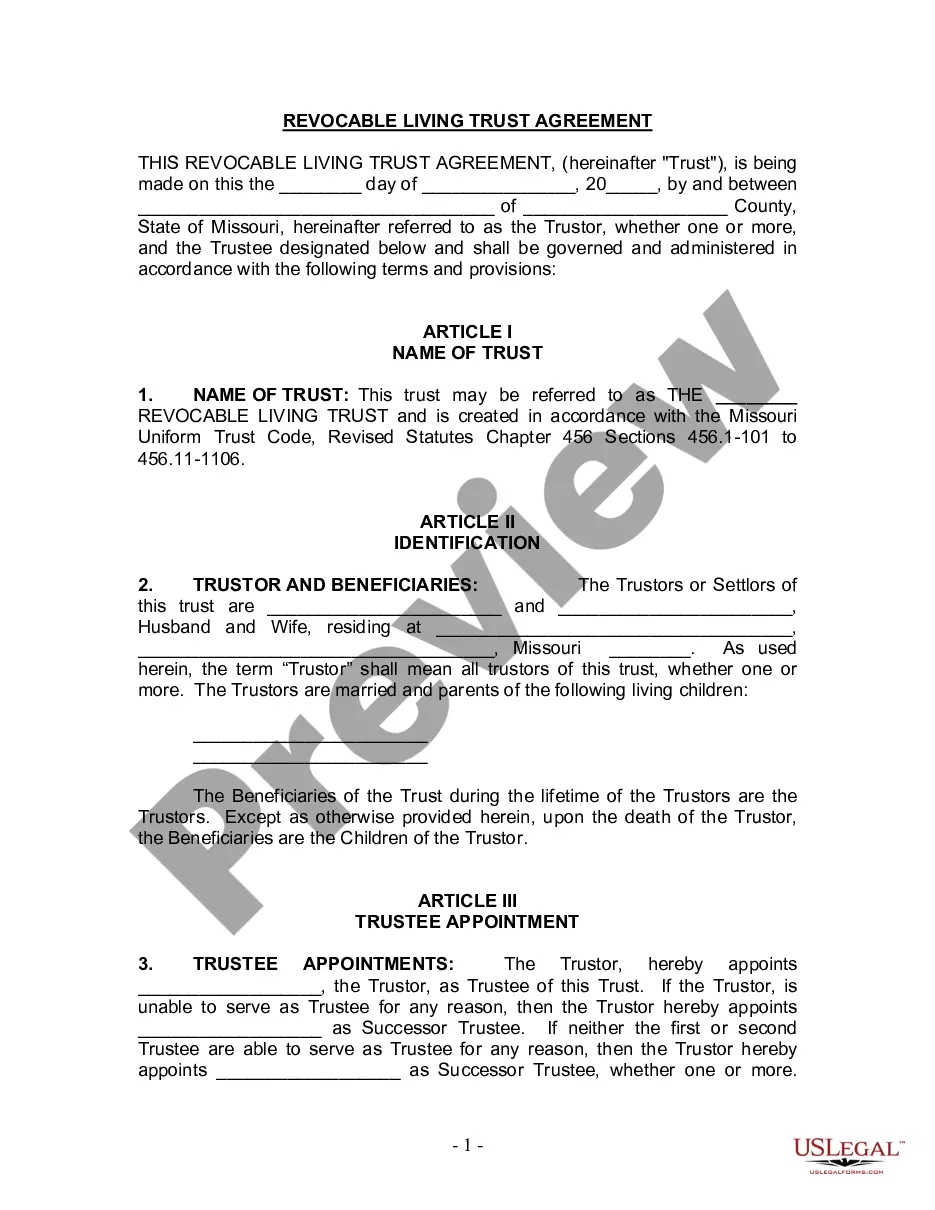
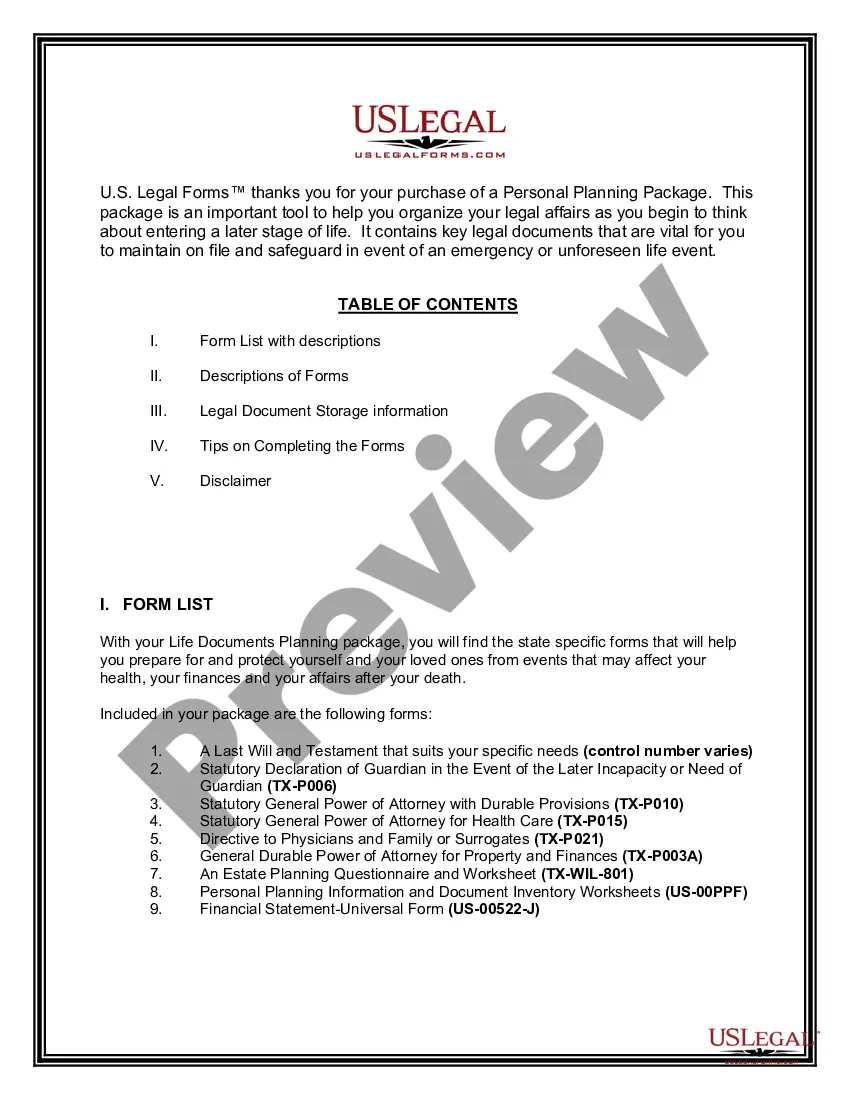
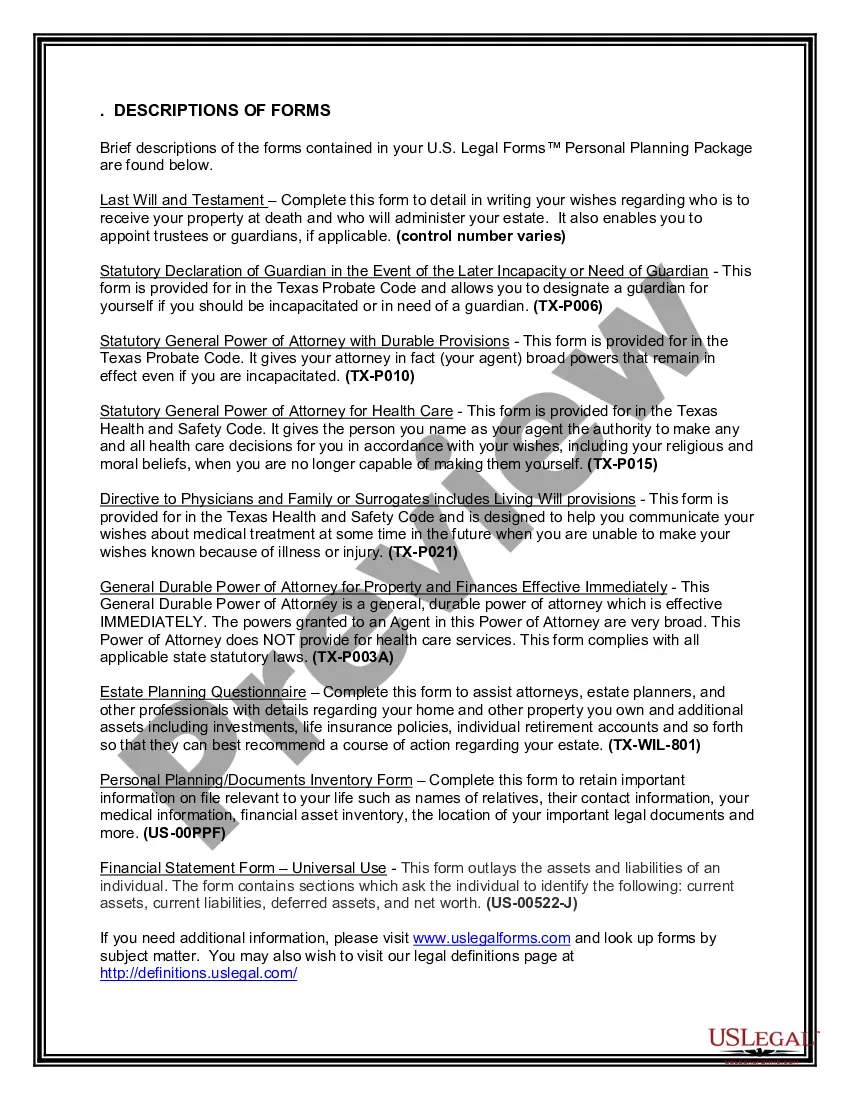
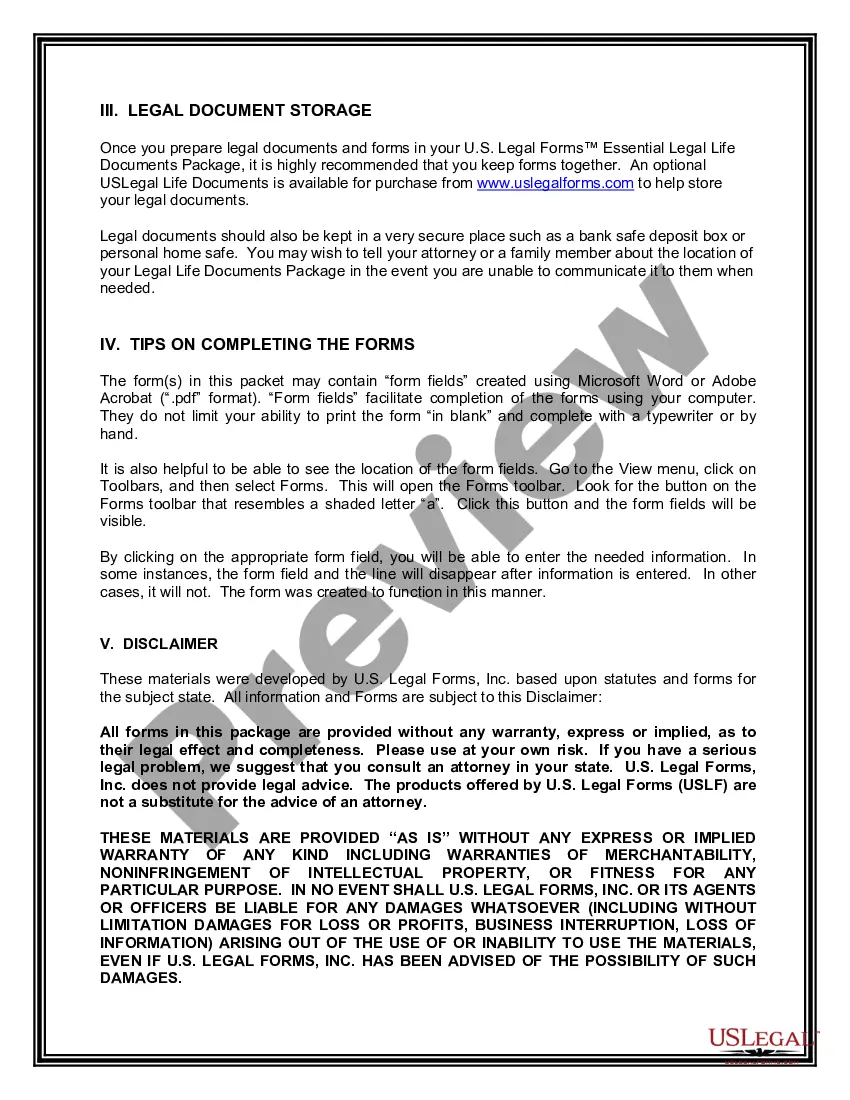
How to fill out Texas Life Documents Planning Package, Including Will, Power Of Attorney And Living Will?
- If you are a returning user, log into your account and verify your subscription is active. If not, simply renew it to access the needed form template by clicking the Download button.
- For new users, start by reviewing the Preview mode of the form. Make sure it aligns with your requirements and complies with local jurisdiction rules.
- If you need a different template, utilize the Search tab to find the right one that suits your needs.
- Once you find the correct document, click on the Buy Now button and select your preferred subscription plan. Create an account to gain access to the comprehensive library.
- Proceed to checkout by entering your payment details, either through credit card or PayPal.
- Finally, download the form to your device and refer to it anytime from the My Forms section of your profile.
Using US Legal Forms allows users to access a more extensive selection of forms at competitive costs compared to other services. In addition, you can consult premium experts to ensure your documents are completed accurately.
Ready to take the next step in your legal journey? Start exploring the extensive library of US Legal Forms today!
Form popularity
FAQ
The 5 by 5 rule in estate planning allows individuals to effectively manage trust distributions while maintaining tax benefits. This rule permits beneficiaries to withdraw up to $5,000 from a trust each year without incurring gift taxes. A planning will attorney with the department can help you understand how this rule applies to your specific situation and ensure compliance with current tax laws. This strategic approach allows for greater flexibility in managing trust assets while safeguarding your estate's value.
The estate planning process consists of assessing your assets, determining your goals, choosing your beneficiaries, selecting an executor, creating necessary documents, discussing your plan with loved ones, and regularly reviewing your plan. Engaging a planning will attorney with the department simplifies these steps, as they provide crucial assistance in drafting wills, trusts, and other legal documents. They ensure your wishes are clearly outlined and legally binding. By collaborating with an attorney, you can achieve peace of mind knowing your estate is well-planned.
The seven steps of the planning process include defining your objectives, identifying resources, evaluating options, making decisions, implementing the plan, monitoring progress, and revising as necessary. When working with a planning will attorney with the department, you benefit from their expertise in guiding you through these phases. They help clarify your goals and ensure that your plan aligns with legal regulations. Each step involves careful consideration to create a functional and effective plan.
A probate lawyer focuses on the legal process of administering a deceased person's estate, including probate court proceedings. In contrast, an estate lawyer, also known as an estate planning attorney, helps clients prepare for the distribution of their assets through wills, trusts, and other documents. While both roles are important, their focuses differ significantly. Engaging a planning will attorney with the department can streamline your estate planning and probate processes.
To hire an estate planning attorney, begin by researching qualified professionals in your area. Look for reviews and ask for recommendations from friends or family. Schedule consultations with potential attorneys to discuss your needs and assess their approach. A planning will attorney with the department can provide tailored guidance based on your specific situation.
In Ohio, the estate typically pays the probate attorney fees. This means that the costs come from the assets of the deceased before distribution to the heirs. If the estate lacks sufficient funds, the personal representative may cover the fees upfront and later seek reimbursement. Engaging a planning will attorney with the department can help clarify the expectations around these expenses.
Common mistakes include not including all assets, failing to update the will, and not clearly identifying beneficiaries. Additionally, people sometimes assume that DIY wills are sufficient without legal guidance. Consulting a planning will attorney with the department can help you avoid these pitfalls and create a comprehensive will that stands the test of time.
The estate planning process typically includes these steps: assessing your assets, determining your goals, choosing beneficiaries, selecting an executor, creating a will, considering trusts, and reviewing your plans regularly. This methodical approach will help you secure your legacy. Engaging a planning will attorney with the department can streamline this process and ensure you cover all aspects.
Yes, an attorney can assist in filing a will with the appropriate court, usually during the probate process. However, it is important to note that some states allow individuals to file their wills without an attorney. Collaborating with a planning will attorney with the department can provide peace of mind and ensure that all procedures are followed correctly.
You should avoid including things like funeral instructions or certain non-probate assets in your will. Instead, consider using other documents for those topics, such as a living will or health care directive. A planning will attorney with the department can guide you on what belongs in your will and what should be covered elsewhere.