Eviction Forms Printable Form California
Description
Get your form ready online
Our built-in tools help you complete, sign, share, and store your documents in one place.
Make edits, fill in missing information, and update formatting in US Legal Forms—just like you would in MS Word.
Download a copy, print it, send it by email, or mail it via USPS—whatever works best for your next step.
Sign and collect signatures with our SignNow integration. Send to multiple recipients, set reminders, and more. Go Premium to unlock E-Sign.
If this form requires notarization, complete it online through a secure video call—no need to meet a notary in person or wait for an appointment.
We protect your documents and personal data by following strict security and privacy standards.

Make edits, fill in missing information, and update formatting in US Legal Forms—just like you would in MS Word.

Download a copy, print it, send it by email, or mail it via USPS—whatever works best for your next step.

Sign and collect signatures with our SignNow integration. Send to multiple recipients, set reminders, and more. Go Premium to unlock E-Sign.

If this form requires notarization, complete it online through a secure video call—no need to meet a notary in person or wait for an appointment.

We protect your documents and personal data by following strict security and privacy standards.
Looking for another form?

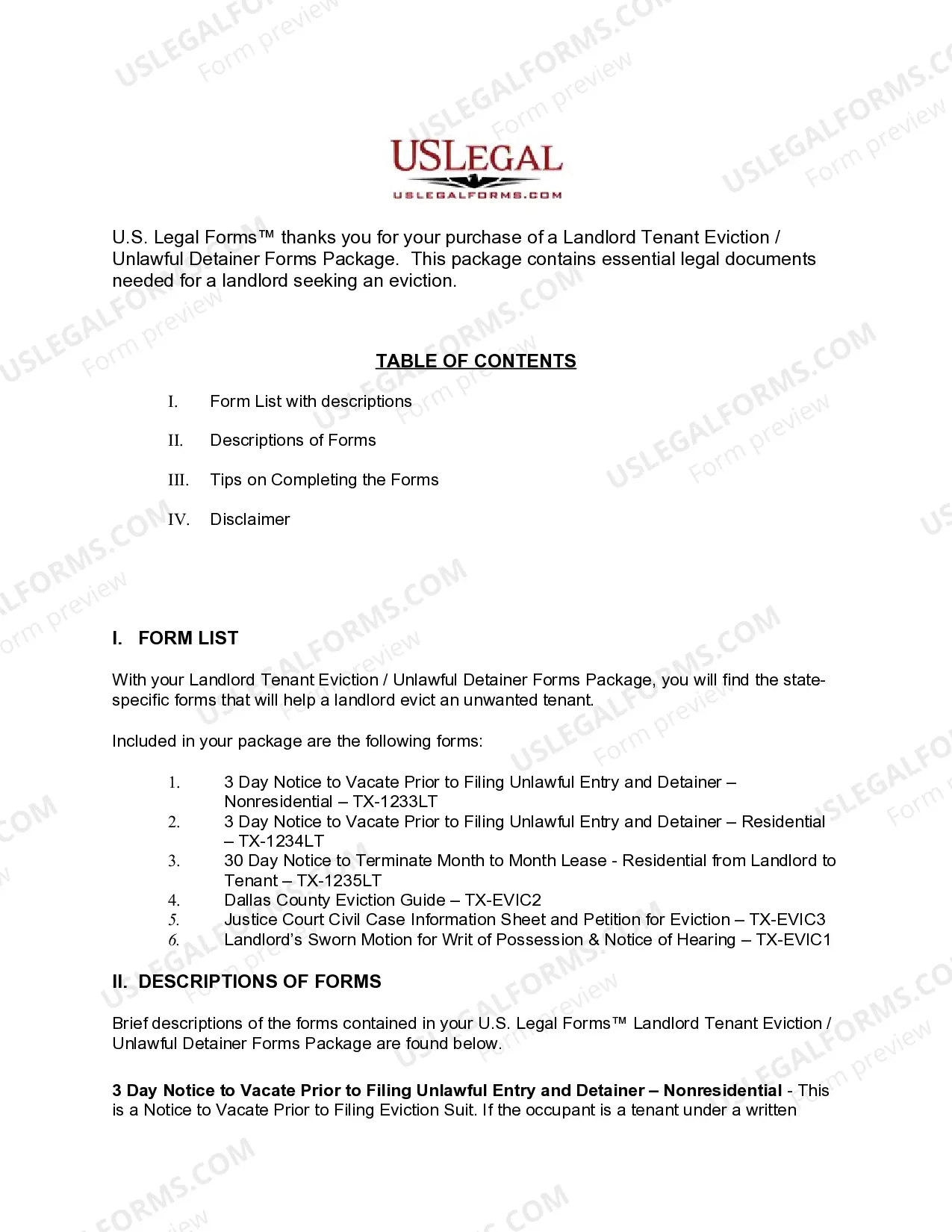
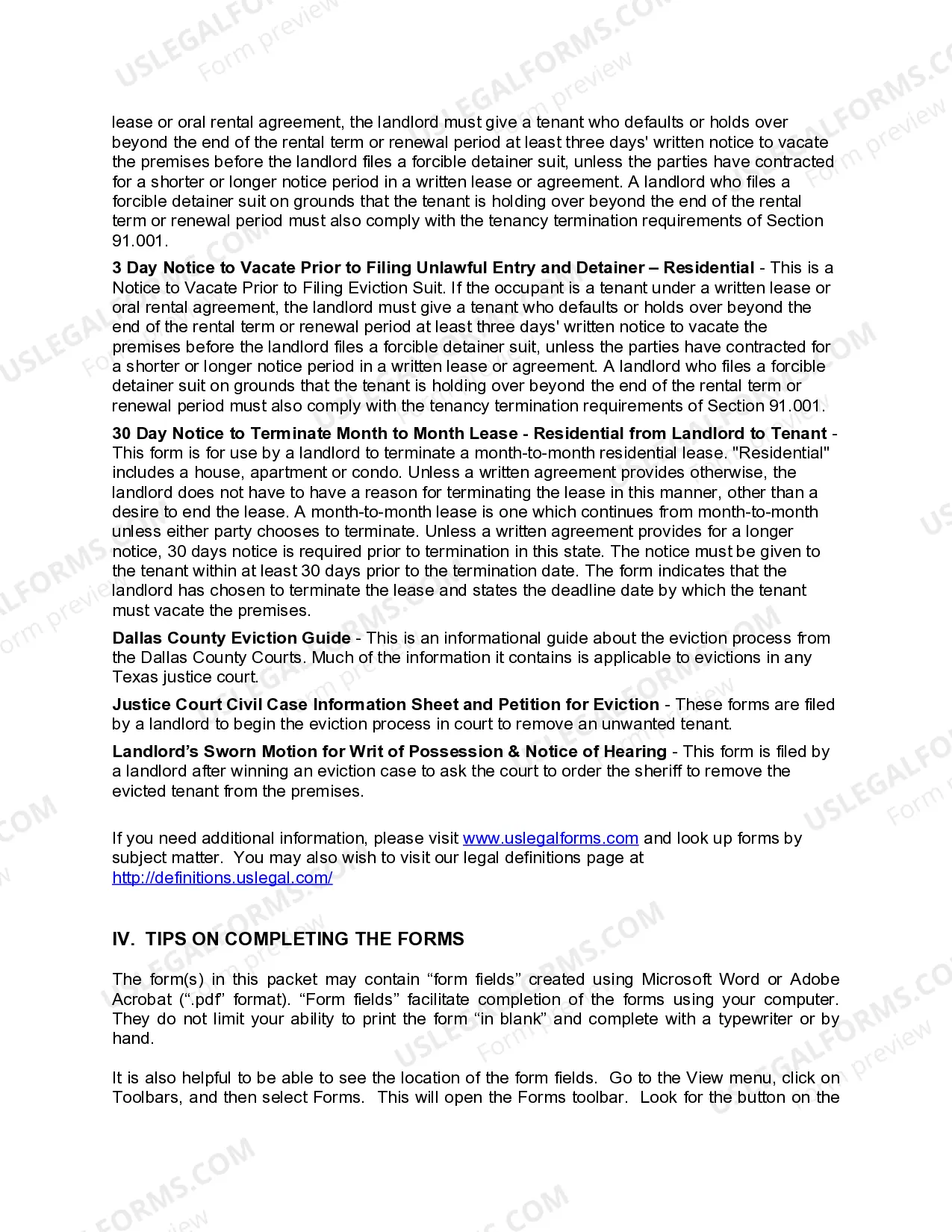
How to fill out Texas Landlord Tenant Eviction / Unlawful Detainer Forms Package?
The Eviction Forms Printable Form California presented on this page is a reusable legal template created by expert attorneys in accordance with federal and state statutes and regulations.
For over 25 years, US Legal Forms has supplied individuals, businesses, and legal professionals with more than 85,000 verified, state-specific documents for any business and personal needs. It’s the quickest, easiest, and most dependable method to acquire the paperwork you require, as the service ensures bank-level data security and anti-malware safeguards.
Complete and sign the document. Print the template to fill it out manually. Alternatively, use an online multifunctional PDF editor to swiftly and accurately complete and sign your form with a valid signature. Download your documents again whenever necessary. Access the My documents tab in your profile to redownload any previously saved forms. Subscribe to US Legal Forms to have verified legal templates for all of life’s situations readily available.
- Search for the document you need and verify it.
- Browse through the sample you sought and preview it or examine the form description to confirm it meets your requirements. If it doesn't, utilize the search function to find the suitable one. Click Buy Now when you’ve found the template you need.
- Register and Log In.
- Select the pricing option that fits you and create an account. Use PayPal or a credit card for swift payment. If you already possess an account, Log In and check your subscription to proceed.
- Acquire the editable template.
- Choose the format you prefer for your Eviction Forms Printable Form California (PDF, Word, RTF) and save the document on your device.
Form popularity
FAQ
A tenant in California can absolutely win an unlawful detainer case if they can prove in court that there is no legal ground for the eviction or if the landlord has not followed the correct procedure for the eviction.
But, your landlord can still require you to move out for one of the ?no-fault? reasons listed in the law. If your landlord evicts you for one of these reasons, they must first give you one month's rent or waive one month's rent to help you move out.
Pay a filing fee You'll need to pay a fee of $240-$450 to the clerk when you file your forms. If you can't afford the fee, you can ask for a fee waiver. Each tenant named in the Answer needs to pay a filing fee or ask for a fee waiver.
The Notice must be in writing and include: The date the tenancy will end ("be terminated") Detailed reason(s) for the eviction. That if the tenant doesn't move out within 90 days the owner may start a court case to evict them and that they can give their side of the story then.
To respond to the eviction case, you start with filling out an Answer or other response forms. Then, you file them with the court. This gives you the chance to tell the judge if there are any legal reasons your landlord can't evict you and tell your side of the story at a court trial.