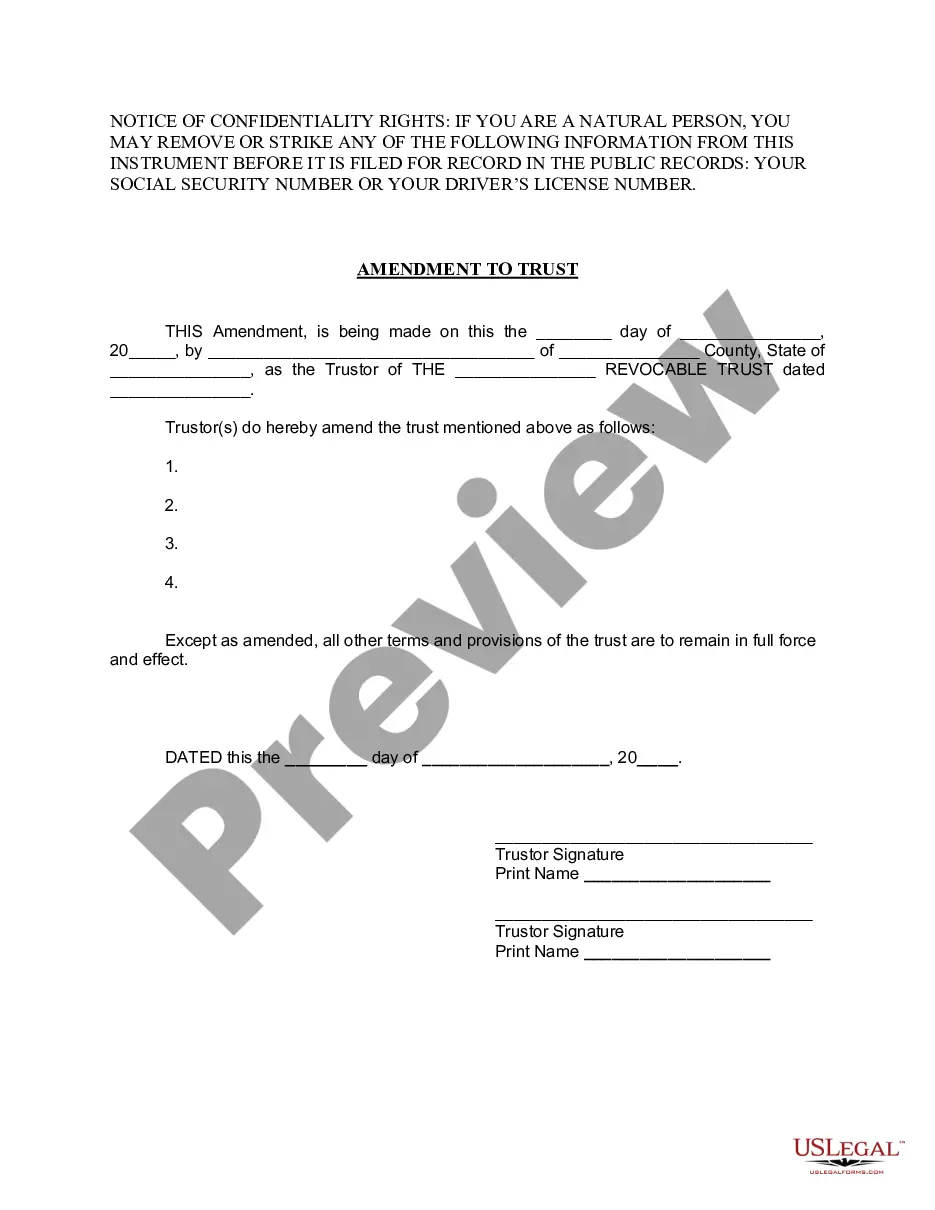
Texas Living Trust Form
Description


Get your form ready online
Our built-in tools help you complete, sign, share, and store your documents in one place.
Make edits, fill in missing information, and update formatting in US Legal Forms—just like you would in MS Word.
Download a copy, print it, send it by email, or mail it via USPS—whatever works best for your next step.
Sign and collect signatures with our SignNow integration. Send to multiple recipients, set reminders, and more. Go Premium to unlock E-Sign.
If this form requires notarization, complete it online through a secure video call—no need to meet a notary in person or wait for an appointment.
We protect your documents and personal data by following strict security and privacy standards.

Make edits, fill in missing information, and update formatting in US Legal Forms—just like you would in MS Word.

Download a copy, print it, send it by email, or mail it via USPS—whatever works best for your next step.

Sign and collect signatures with our SignNow integration. Send to multiple recipients, set reminders, and more. Go Premium to unlock E-Sign.

If this form requires notarization, complete it online through a secure video call—no need to meet a notary in person or wait for an appointment.

We protect your documents and personal data by following strict security and privacy standards.
Looking for another form?




Form popularity
FAQ
Filing a living trust in Texas involves creating the Texas living trust form and transferring your assets into it. You should carefully draft the trust document to reflect your wishes, and possibly seek legal assistance to ensure compliance with Texas laws. Once completed, you can fund the trust by changing the title of your assets. Consider using platforms like US Legal Forms to simplify the process.
Generally, a living trust does not need to be recorded in Texas. However, if the trust holds real estate, you may want to record the Texas living trust form with the county clerk to provide public notice of the ownership. Recording can help avoid potential disputes over the property. It is a good idea to consult a legal expert for specific advice.
While trusts offer many benefits, there are some disadvantages to consider. Creating a Texas living trust form requires time and paperwork, which some may find cumbersome. Additionally, maintaining the trust may involve ongoing management and possibly fees. It's essential to weigh these factors against the benefits to determine if a trust is right for you.
Creating a living trust without a lawyer in Texas is straightforward, especially with the right resources. You can use online platforms, like US Legal Forms, to obtain a Texas living trust form. These forms guide you step by step, ensuring that you complete all necessary details accurately. Just follow the instructions carefully, and you will have a valid trust.
Placing your house in a trust in Texas can simplify the transfer of ownership after your passing. This can help your loved ones avoid the lengthy probate process. Additionally, using a Texas living trust form can provide privacy, as the trust details do not become public record. It’s an effective way to manage and protect your assets.
One downside is that assets placed in a trust become less accessible during the grantor's lifetime. This could be a problem if financial needs arise unexpectedly. Additionally, the process of setting up a trust requires initial time and sometimes legal fees. However, the long-term Benefits of a Texas living trust form can often outweigh these temporary challenges.
Trust funds carry a few risks, such as potential misunderstandings among beneficiaries regarding distribution. If the trust document is not clear or is improperly drafted, disputes may arise. Another risk includes tax implications that may vary based on asset types. It’s crucial to use a well-structured Texas living trust form to clearly define intentions and avoid future issues.
While trusts offer many benefits, one downside may be the ongoing management and maintenance required. Keeping the trust updated with new assets and changes in circumstances can be burdensome. Additionally, without proper guidance, mistakes in documentation can lead to complications. Using a Texas living trust form from a reliable platform can help mitigate some of these risks.
In Texas, you do not need to register a living trust with the state, but you need to ensure that your Texas living trust form is properly filled out and signed. To fund the trust, individuals must transfer assets into it, which often requires changing the title of properties and accounts. Consulting with an estate planning expert may help streamline this process and ensure accuracy.
One common mistake is failing to fund the trust properly. Simply completing a Texas living trust form does not automatically transfer assets into the trust. Parents need to ensure that all intended assets, like real estate and bank accounts, are titled in the name of the trust. Neglecting this step can leave parts of their estate vulnerable to probate.
