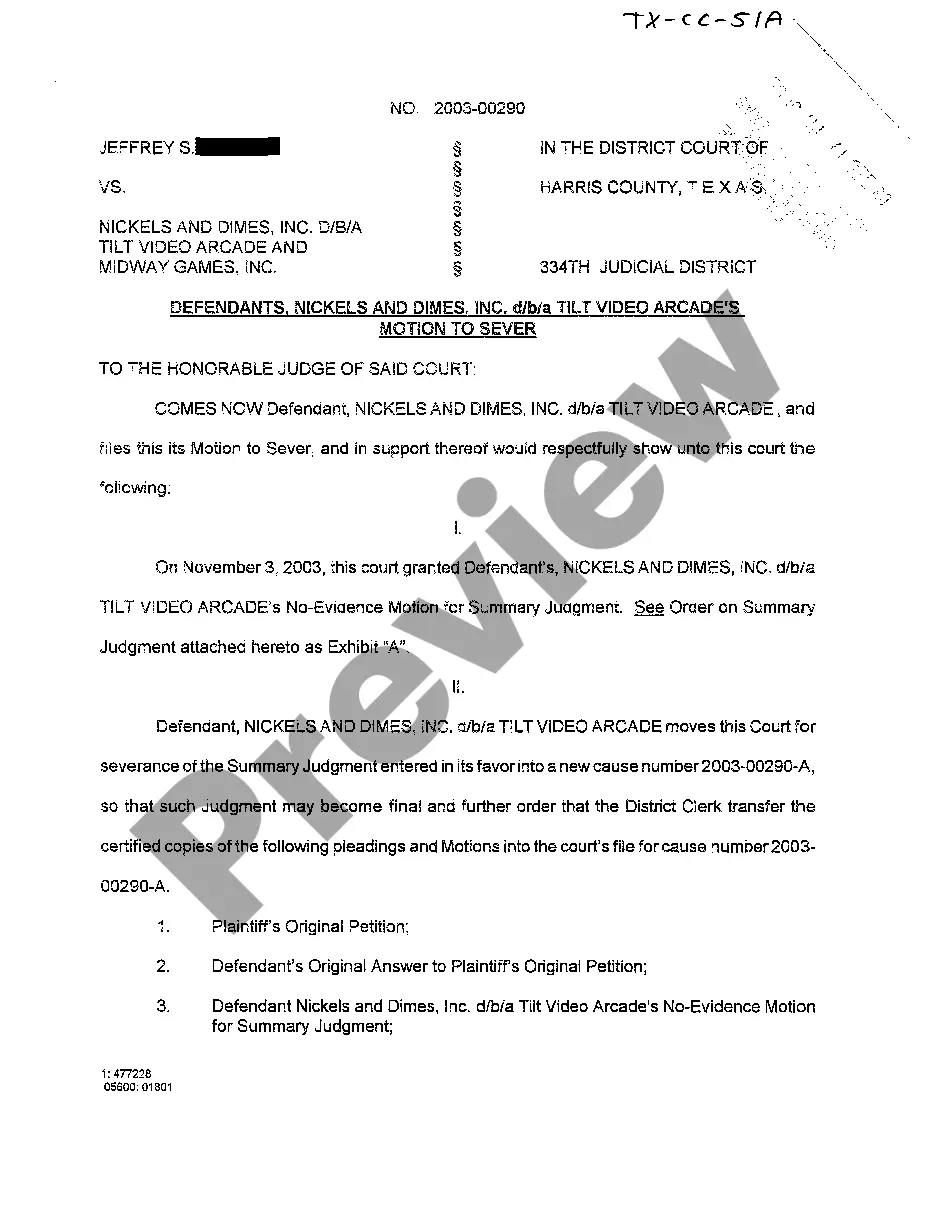
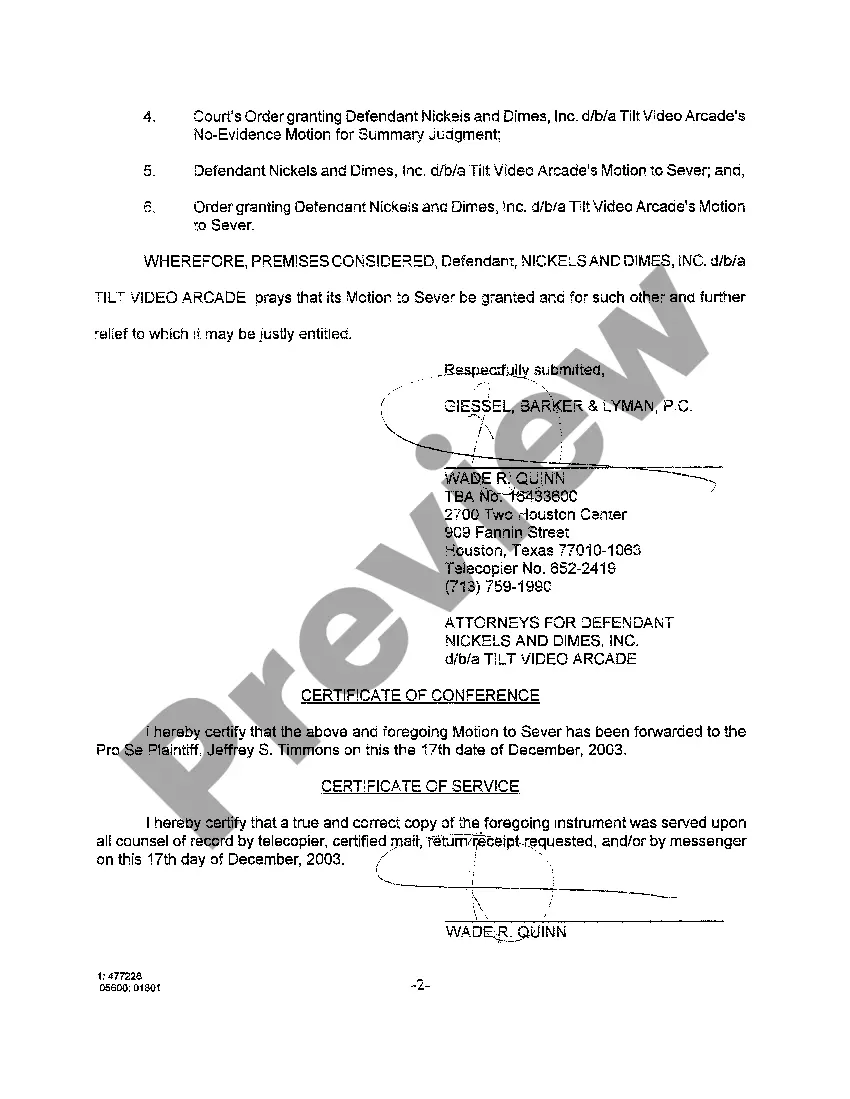
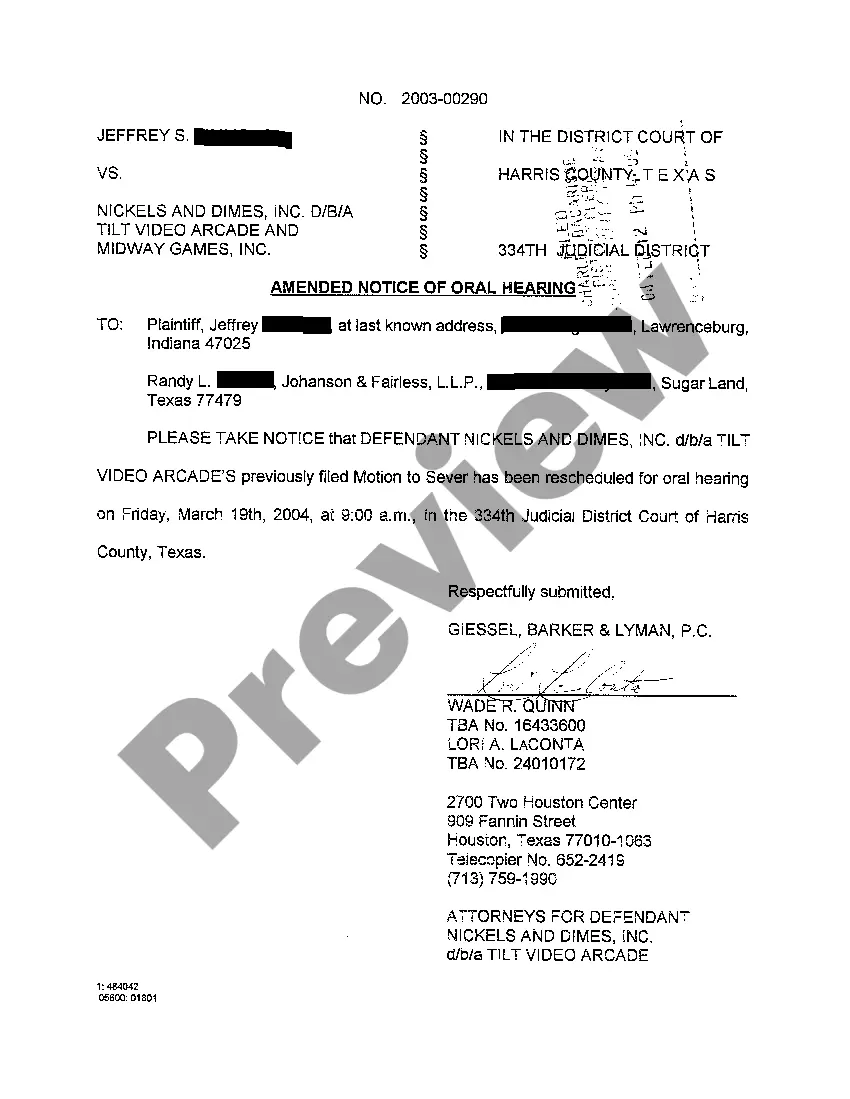
Motion To Sever Texas Rules Of Civil Procedure
Description

How to fill out Texas Defendant's Motion To Sever?
Legal documents management can be overwhelming, even for seasoned professionals.
If you are seeking a Motion To Sever Texas Rules Of Civil Procedure and lack the time to search for the correct and updated edition, the process can be daunting.
Access a repository of articles, tutorials, guides, and resources related to your situation and requirements.
Save time and effort looking for the documents you need and use US Legal Forms’ advanced search and Review tool to locate Motion To Sever Texas Rules Of Civil Procedure and obtain it.
Confirm that the sample is valid in your state or county, then select Buy Now when you are ready, choose a monthly subscription plan, select the format you need, and Download, fill out, eSign, print, and send your document. Experience the US Legal Forms online catalog, supported by 25 years of expertise and reliability. Streamline your daily document management in a seamless and user-friendly manner starting today.
- If you have a subscription, Log In to your US Legal Forms account, locate the form, and obtain it.
- Visit the My documents tab to view the documents you have previously saved and organize your folders as needed.
- If it’s your first time with US Legal Forms, create an account and enjoy unlimited access to all the platform’s features.
- Here are the steps to follow after finding the form you need.
- Ensure this is the correct form by previewing it and reviewing its details.
- Access state- or county-specific legal and business documents.
- US Legal Forms addresses all needs you may have, from personal to corporate paperwork, in one place.
- Utilize sophisticated tools to complete and oversee your Motion To Sever Texas Rules Of Civil Procedure.
Form popularity
FAQ
Rule 251 allows a party to file a motion for a new trial after a judgment is rendered. The rule specifies the timeline and conditions under which this motion may be filed. It is essential to understand this rule to protect your rights after a trial outcome.
Rule 215 addresses discovery procedures and the consequences of failing to comply. It establishes that parties must attend discovery conferences and respond to requests for information. Familiarity with this rule helps prevent delays and complications during the discovery phase.
Rule 248 provides guidelines on court settings and the absence of parties. It states that if a party fails to appear, the court may dismiss the case. Being aware of this rule is essential for ensuring that your presence is accounted for during civil proceedings in Texas.
Rule 684 addresses the requirements for a motion for summary judgment in Texas. It details the necessary components, including evidence that demonstrates there are no genuine issues of material fact. Understanding this rule is vital when seeking to resolve cases efficiently through summary judgment.
Rule 2.13 of the Texas Rules of Disciplinary Procedure outlines the process for handling grievances against attorneys. This rule establishes a framework for investigating complaints and determining if disciplinary action is necessary. Proper adherence to this rule is crucial for maintaining high standards in legal practice in Texas.
If you do choose to legally change your name, the process is simple. You must file the petition in your county of residence. If you are an adult wanting to change your name, download the Petition of Adult to Change Name form or pick up a copy at the probate division.
(a) The Supreme Court shall have exclusive jurisdiction of appeals from judgments, rulings, and orders of the Superior Court, administrative agencies, boards, commissions, and officers unless otherwise provided by law.
You can contact the court by phone, in writing, in person, or by sending an email to JUD.VJB@vermont.gov. A motion is a request in writing asking the court to consider doing something specific in your case. All motions must identify the request and give specific reasons for the request.
The Environmental Division and Judicial Bureau are courts of limited jurisdiction, hearing cases on environmental matters and low level civil violations, respectively. The Vermont Superior Court is the trial court of general jurisdiction. The Vermont Supreme Court is the highest court in the state.
The Vermont Supreme Court adopted Administrative Order 49 in March 2020 to mitigate the risks to public health from the COVID-19 pandemic while maintaining the Judiciary's obligation to protect individual rights, maintain the rule of law, and administer justice.