General Denial Texas Template For Divorce
Description

Form popularity
FAQ
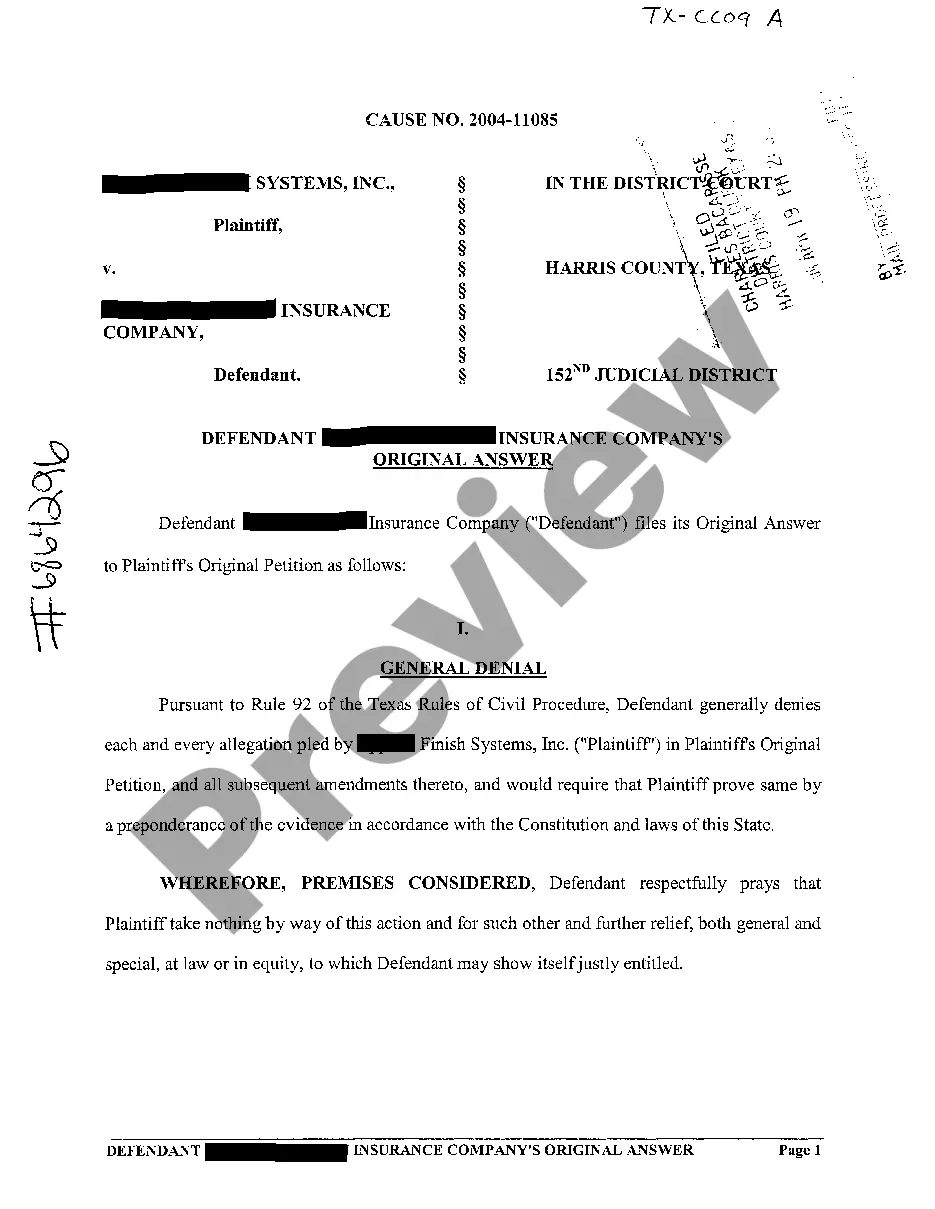
A general denial in Texas for divorce is a formal declaration by the respondent indicating disagreement with the claims or relief sought by the petitioner. This allows the respondent to contest any claims without providing a specific defense. For guidance, a General denial Texas template for divorce can streamline the process and ensure proper legal language is used.
To write a general denial in Texas, you should start by clearly identifying the court and parties involved. Next, state that you deny all claims made in the divorce petition. It is advisable to utilize a General denial Texas template for divorce, which provides a structured format and ensures that you include all necessary information.
A general denial answer in a Texas divorce is a legal response where the respondent denies the claims made by the petitioner. This response allows the individual to contest the terms of the divorce without admitting to any allegations. Using a General denial Texas template for divorce helps ensure that your response meets legal standards.
Yes, a divorce can be denied in Texas if the petition is not correctly filed or if the court finds no valid reasons for the divorce. The process requires adherence to specific legal protocols to avoid denials. A General denial Texas template for divorce can assist you in presenting your case appropriately.
General relief in a Texas divorce refers to the request for any relief the court deems fair based on the case's circumstances. This may include custody arrangements, property division, or spousal support. Utilizing a General denial Texas template for divorce can help outline your requests clearly in court.
A divorce may be denied in Texas for several reasons, including failure to meet residency requirements, lack of proper grounds for divorce, or procedural errors in filing. It is essential to follow legal protocols to ensure a divorce is granted. If you encounter delays or denials, consider using a General denial Texas template for divorce to address issues effectively.
To write and file a general denial as a respondent, start by obtaining the general denial Texas template for divorce. This template provides a clear structure that includes necessary information, such as your name, case number, and a statement denying each allegation made against you. After completing the document, make sure to file it with the appropriate court and serve a copy to your ex-spouse. Using a template can simplify this process, ensuring you meet all legal requirements accurately.
When a respondent enters a general denial, it indicates that they are disputing the allegations presented in the divorce petition. This means that they are not admitting to any claims made against them and are seeking to contest the petition's terms. By using a General denial texas template for divorce, the respondent can clearly outline their position and operate within the legal framework. This method creates a foundation for further negotiations or court proceedings.
A general denial in an answer refers to a respondent's formal response to a divorce petition, where they deny all claims made by the petitioner. This approach is often utilized when the respondent wishes to contest the petition without providing specific details. Utilizing a General denial texas template for divorce can simplify this process, ensuring that the respondent addresses all necessary points effectively. This strategy can foster a more balanced response during divorce proceedings.
To file a general denial in family court in Texas, start by obtaining the appropriate form, such as the General denial Texas template for divorce. Complete the form by providing the necessary information about your case. After filing the general denial with the court, ensure you serve a copy to the other party involved. This step is crucial for formally contesting claims in your divorce proceedings.