Declination To Serve As Trustee Form With Trust
Description
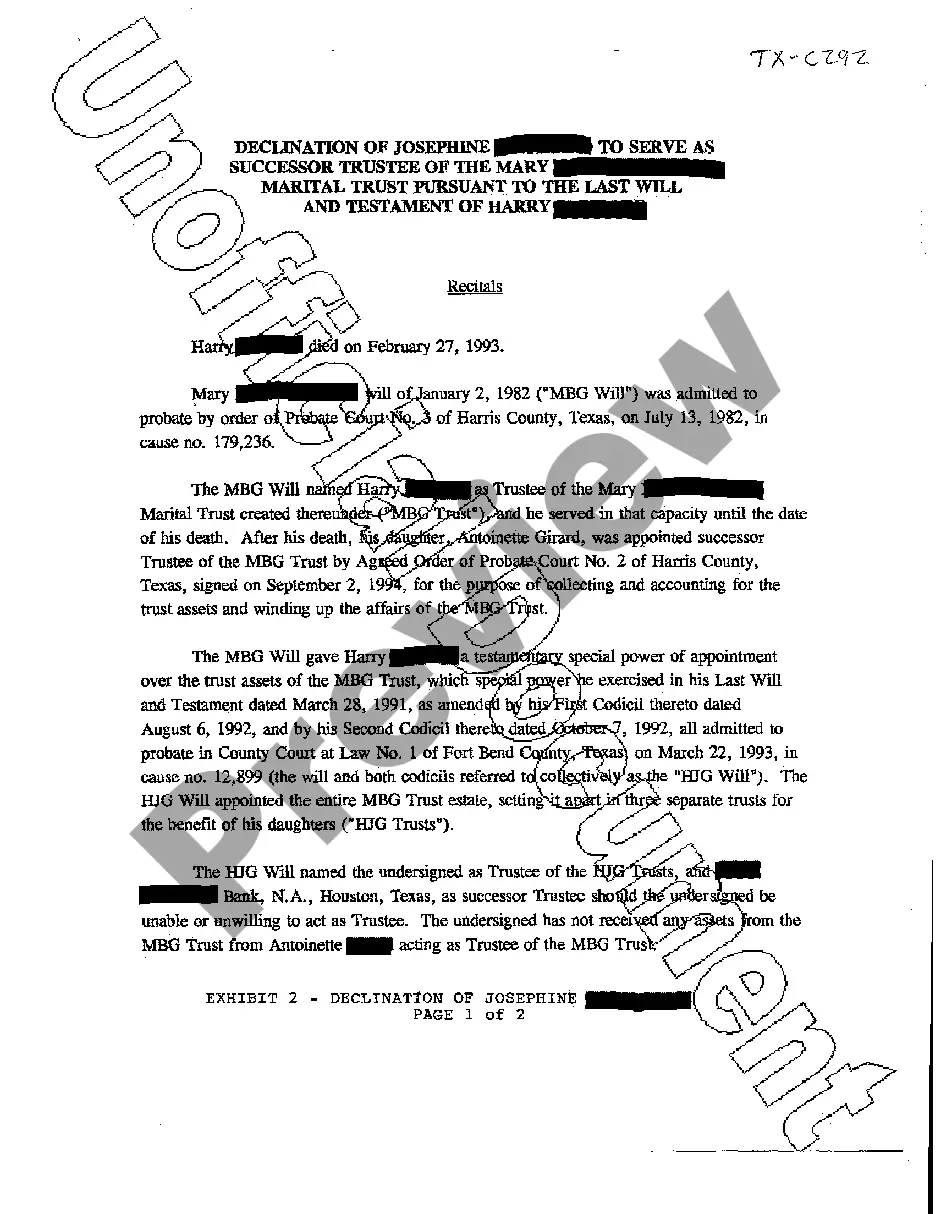
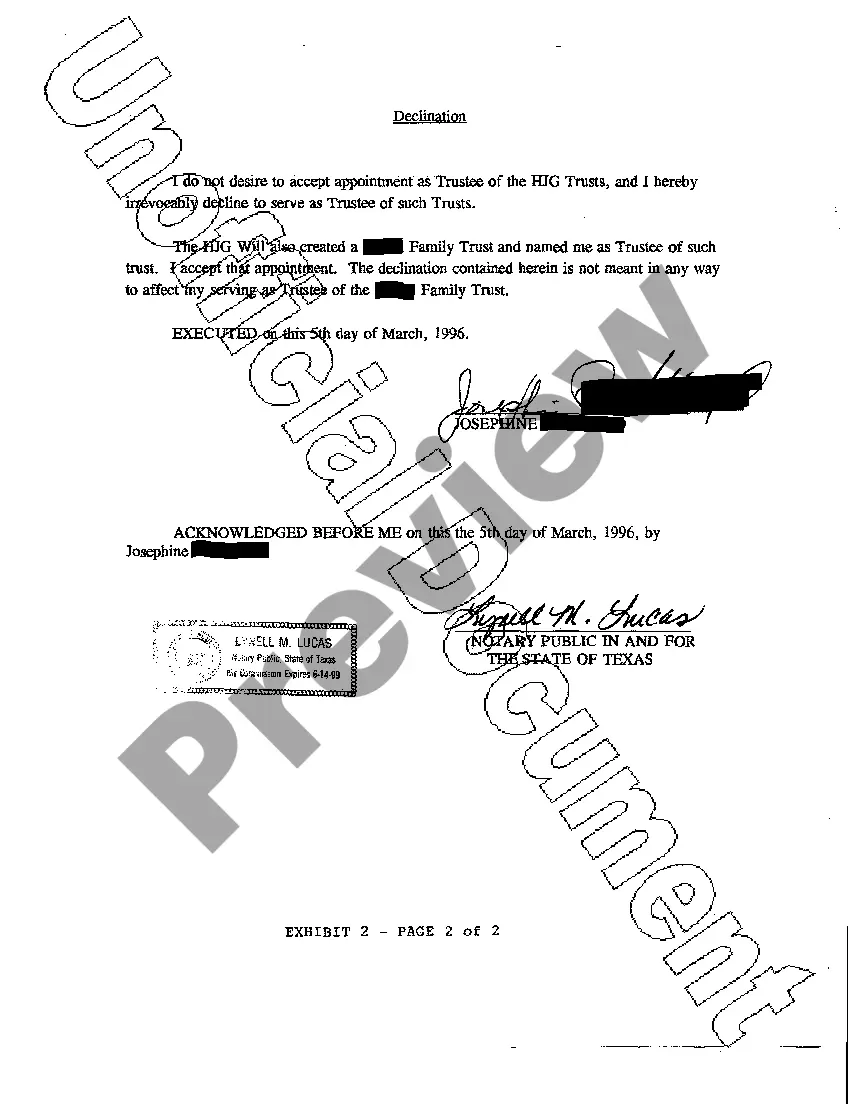
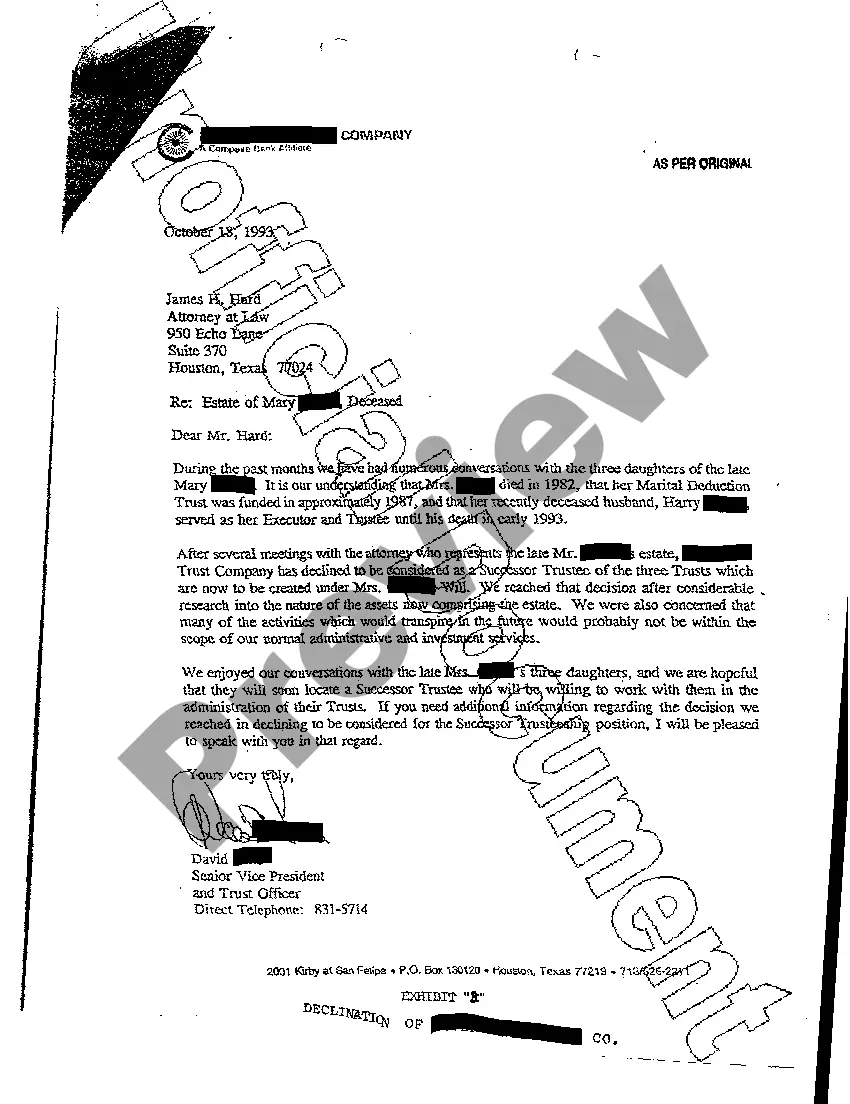



How to fill out Texas Recitals Regarding Declination To Serve As Successor Trustee?
Obtaining legal templates that adhere to federal and local laws is crucial, and the internet provides numerous choices to select from.
However, what is the purpose of squandering time looking for the aptly drafted Declination To Serve As Trustee Form With Trust sample online when the US Legal Forms digital library already compiles such templates in one location.
US Legal Forms is the largest virtual legal library with over 85,000 fillable templates crafted by attorneys for any business and personal situation. They are straightforward to navigate with all documents categorized by state and intended use.
Utilize the search function at the top of the page to find an alternative sample if necessary.
- Our experts stay informed about legislative updates, ensuring you can always trust your documents are current and compliant when obtaining a Declination To Serve As Trustee Form With Trust from our site.
- Acquiring a Declination To Serve As Trustee Form With Trust is quick and simple for both existing and new users.
- If you possess an account with an active subscription, Log In and download the needed document sample in the correct format.
- If you are a newcomer to our site, follow the steps below.
- Review the template using the Preview option or through the text description to confirm it meets your requirements.
Form popularity
FAQ
Although the law often does not require you to provide a formal written rejection of the role, it is optimal to provide written notice of your decision to all relevant parties, including the person who created the trust (if still living) and the beneficiaries of the trust.
Successor Trustee is the person or institution who takes over the management of a living trust property when the original trustee has died or become incapacitated. The exact responsibilities of a successor trustee will vary depending on the instructions left by the creator of the trust (called the Grantor).
A document used to decline an appointment as trustee of a revocable or irrevocable inter vivos trust or a testamentary trust. This Standard Document can be used to decline an appointment as a successor or additional trustee made in a trust instrument or by an outside appointment document.
Successor Trustee is the person or institution who takes over the management of a living trust property when the original trustee has died or become incapacitated. The exact responsibilities of a successor trustee will vary depending on the instructions left by the creator of the trust (called the Grantor).
Updated on . Written by Ashley Kilroy. A trustee is an individual appointed to administer assets or property for the benefit of a third party. A trustee could be appointed for the purpose of bankruptcy, a charity or certain kinds of retirement plans, but the most common is a trust.