Name Change For Social Security
Description



Get your form ready online
Our built-in tools help you complete, sign, share, and store your documents in one place.
Make edits, fill in missing information, and update formatting in US Legal Forms—just like you would in MS Word.
Download a copy, print it, send it by email, or mail it via USPS—whatever works best for your next step.
Sign and collect signatures with our SignNow integration. Send to multiple recipients, set reminders, and more. Go Premium to unlock E-Sign.
If this form requires notarization, complete it online through a secure video call—no need to meet a notary in person or wait for an appointment.
We protect your documents and personal data by following strict security and privacy standards.

Make edits, fill in missing information, and update formatting in US Legal Forms—just like you would in MS Word.

Download a copy, print it, send it by email, or mail it via USPS—whatever works best for your next step.

Sign and collect signatures with our SignNow integration. Send to multiple recipients, set reminders, and more. Go Premium to unlock E-Sign.

If this form requires notarization, complete it online through a secure video call—no need to meet a notary in person or wait for an appointment.

We protect your documents and personal data by following strict security and privacy standards.
Looking for another form?








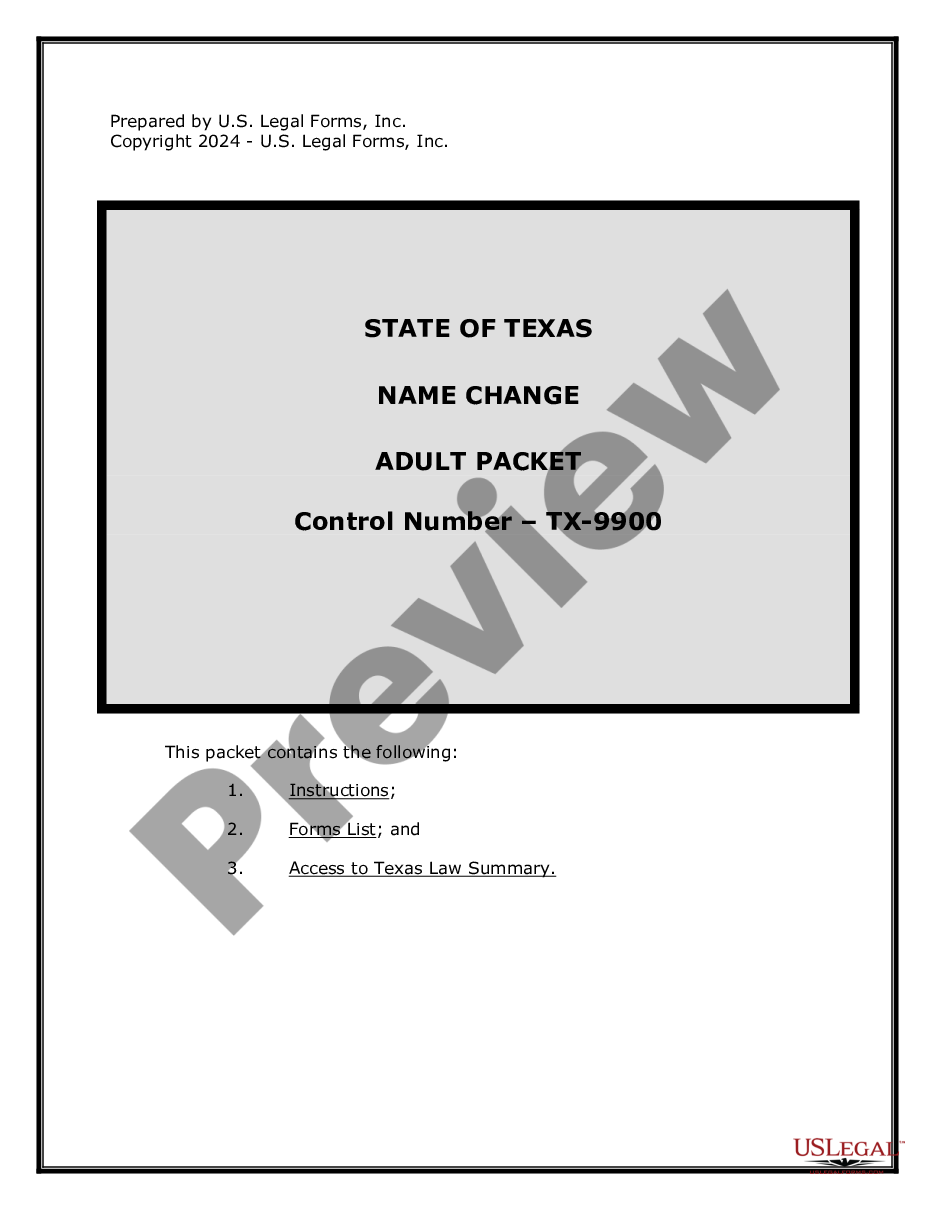
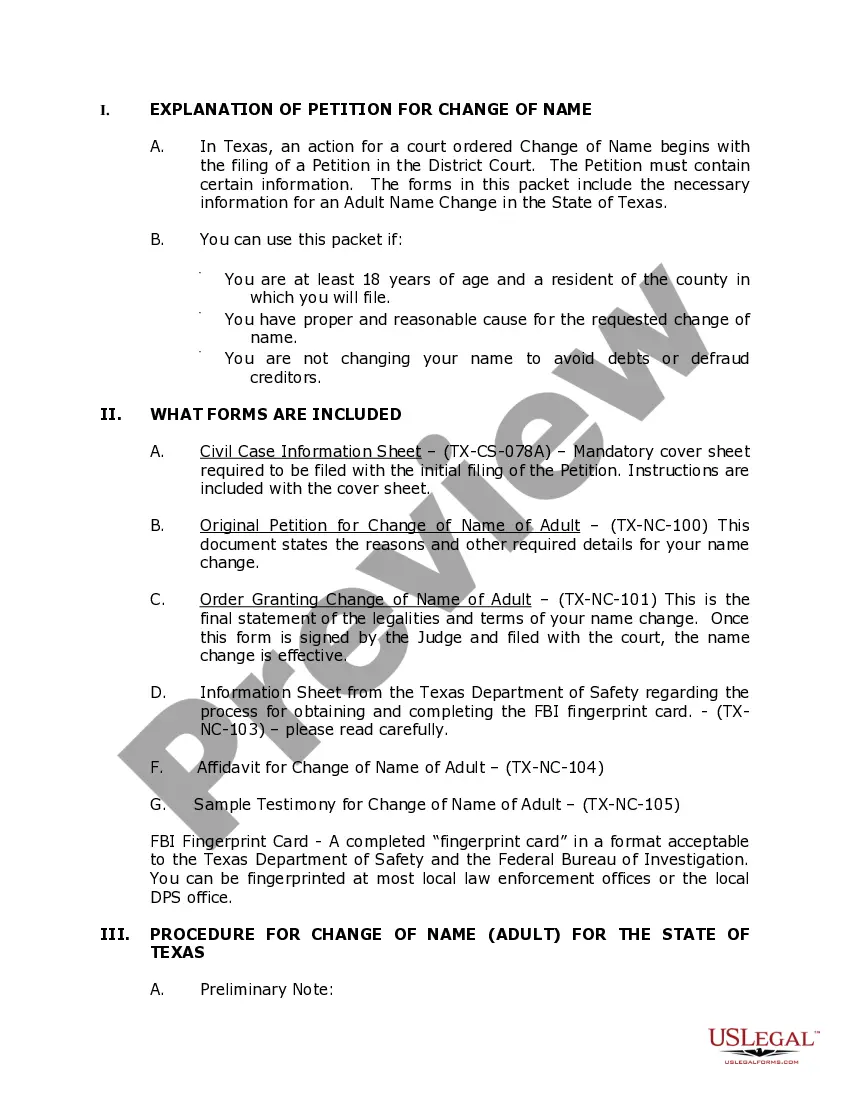
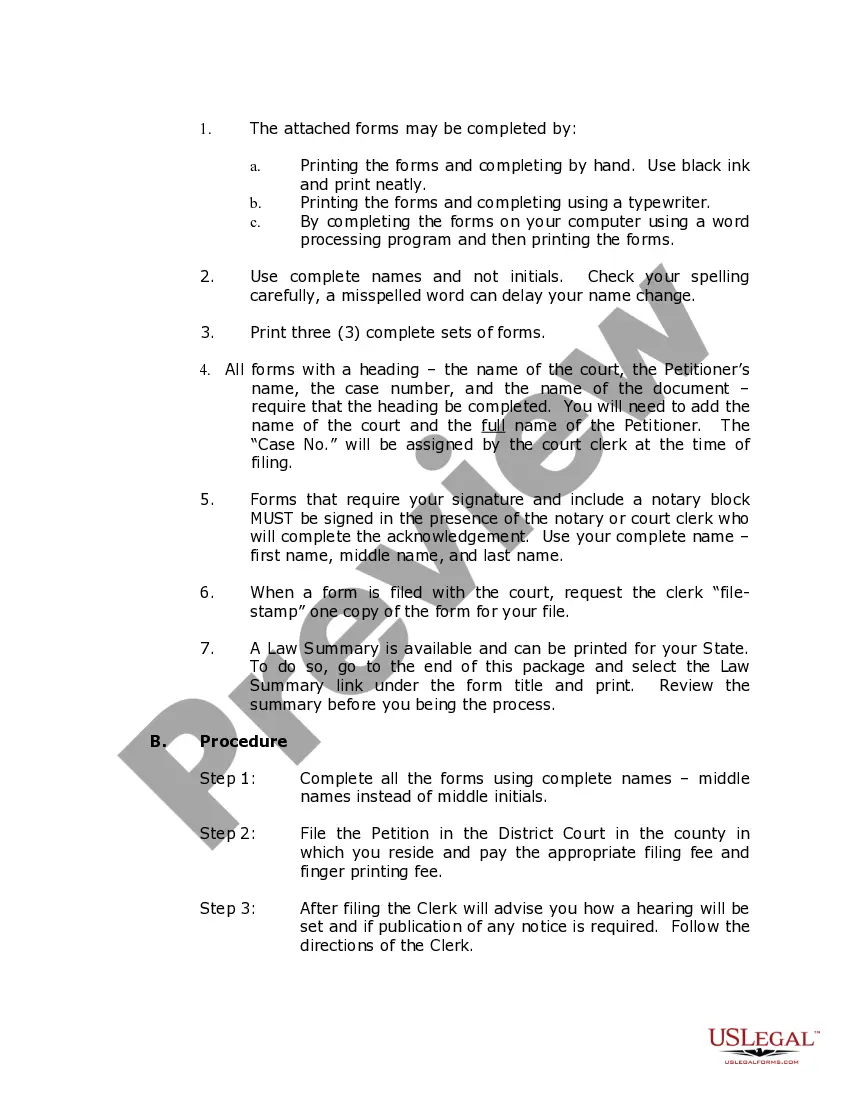
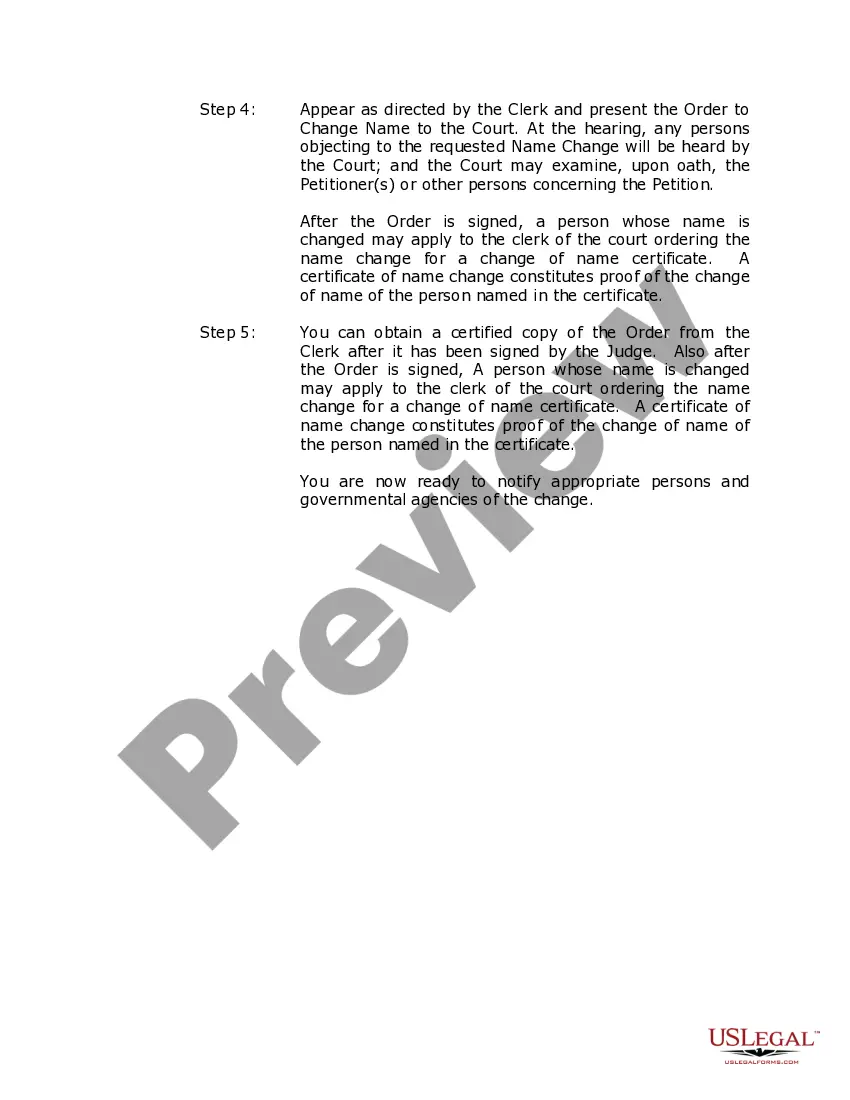
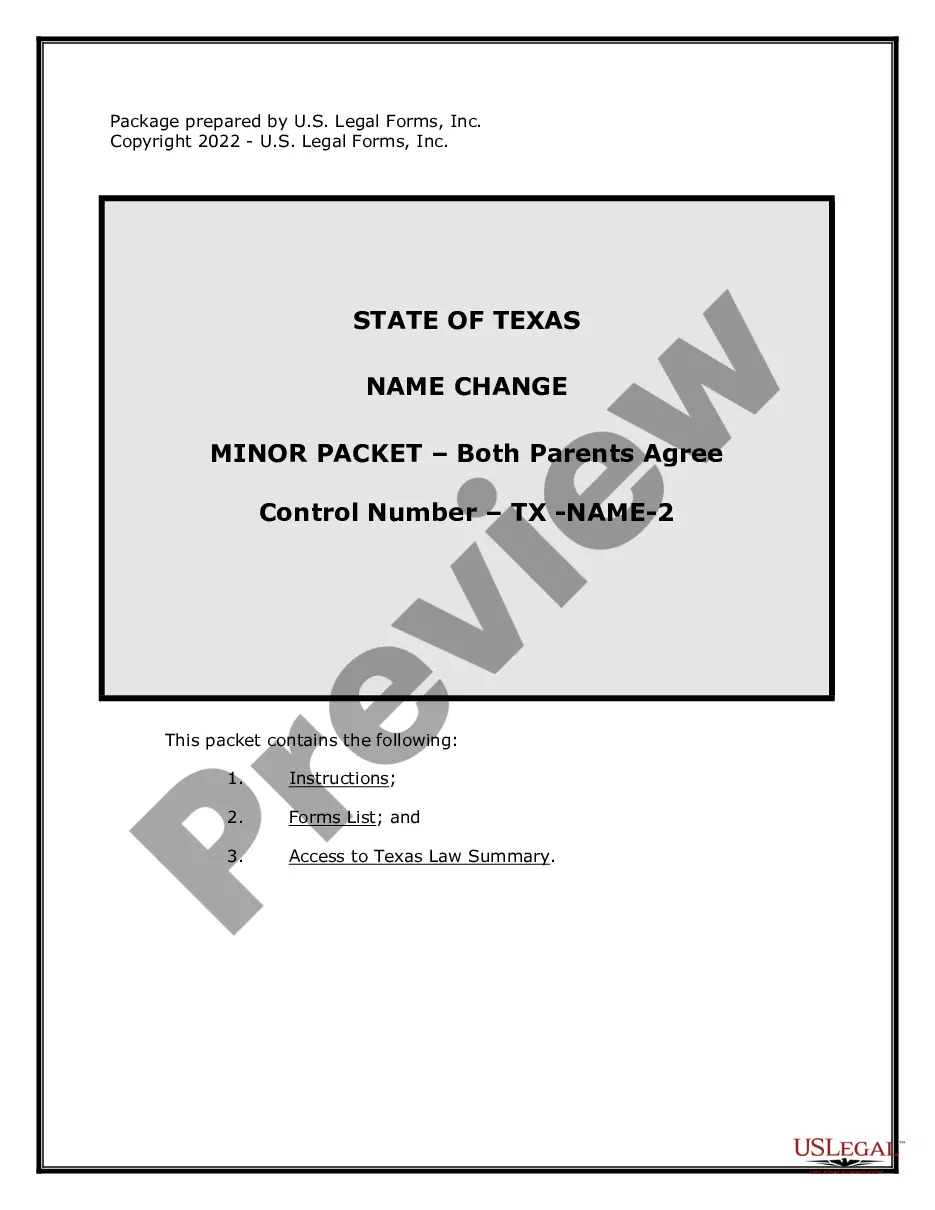
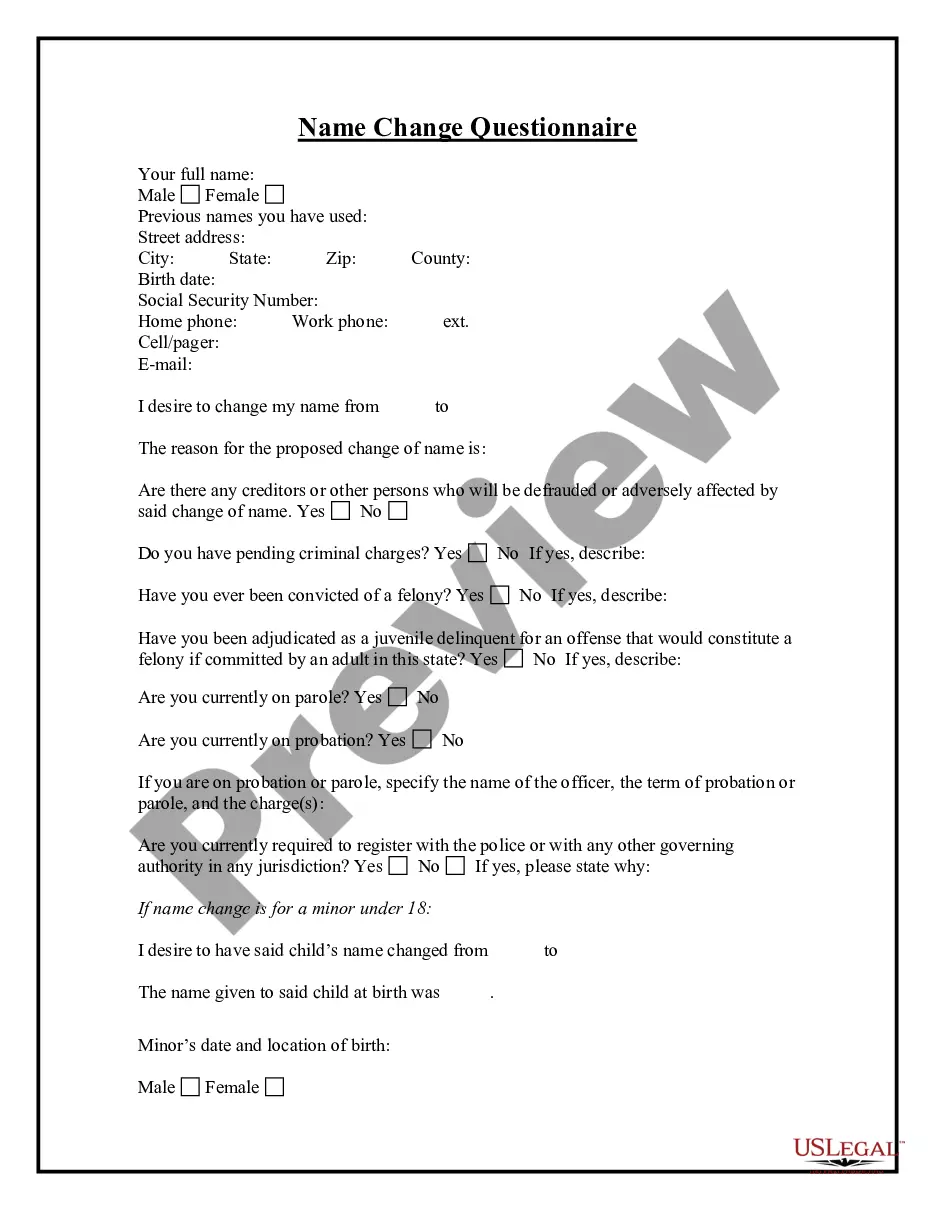
How to fill out Texas Name Change Instructions And Forms Package For An Adult?
The Alteration of Name For Social Security you observe on this webpage is a versatile legal template crafted by skilled attorneys in accordance with federal and local statutes.
For over 25 years, US Legal Forms has supplied individuals, businesses, and legal practitioners with more than 85,000 confirmed, state-specific documents for any business and personal situation. It’s the quickest, simplest, and most reliable method to acquire the paperwork you require, as the service ensures bank-level data security and anti-malware safeguards.
Select the format you wish for your Alteration of Name For Social Security (PDF, Word, RTF) and save the document on your device.
- Locate the document you require and examine it.
- Browse through the file you searched and preview it or verify the form description to ensure it meets your requirements. If it does not, use the search bar to find the appropriate one. Click Buy Now when you have found the template you require.
- Register and Log In.
- Choose the pricing plan that fits your needs and create an account. Use PayPal or a credit card to make a quick payment. If you already possess an account, Log In and review your subscription to proceed.
- Acquire the editable template.
Form popularity
FAQ
The law says that parents must support their child from the time the child is born until the child turns 18. If you have a child?even if you didn't know about a child that you fathered?you can be required to pay child support from the time of the child's birth.
But if your child is still in high school, or in an equivalent vocational school when he or she turns 18, your child support responsibility continues until your child graduates or turns 19 years old ? whichever comes first. Your child support obligation ends if your child dies or is emancipated.
Requests should be submitted to the clerk of court where the case was filed. You may submit your request in person or by mail to the court. A complete list of Alaska Court System contact information is available at: .
Though there is no strict age guideline under Alaska law, children are not generally mature enough to make reasoned decisions about which parent to live with until they are teenagers. Even then, a judge will look at the reason the teenager is expressing a preference for one parent over another.
Under California law, you pay child support until the child turns 18, or 19 if the child is unmarried and still attending high school full time. Under special circumstances, the court may order child support to continue after the child is an adult.
The parents cannot agree to waive child support or to have a specific amount that is lower than the calculated amount. The parents can agree on what is reasonable income to use for a parent for the calculation which should be based on their earnings and current and past employment history.
Rule 90.3 says that the portion of an adjusted annual income over $126,000 will not be used in calculating the child support amount, unless the other parent presents evidence showing the higher income should be used in the calculation. If the cap is used, the AI will be $126,000 for the calculation.
Though there is no strict age guideline under Alaska law, children are not generally mature enough to make reasoned decisions about which parent to live with until they are teenagers. Even then, a judge will look at the reason the teenager is expressing a preference for one parent over another.