Texas City 1947
Description


Get your form ready online
Our built-in tools help you complete, sign, share, and store your documents in one place.
Make edits, fill in missing information, and update formatting in US Legal Forms—just like you would in MS Word.
Download a copy, print it, send it by email, or mail it via USPS—whatever works best for your next step.
Sign and collect signatures with our SignNow integration. Send to multiple recipients, set reminders, and more. Go Premium to unlock E-Sign.
If this form requires notarization, complete it online through a secure video call—no need to meet a notary in person or wait for an appointment.
We protect your documents and personal data by following strict security and privacy standards.

Make edits, fill in missing information, and update formatting in US Legal Forms—just like you would in MS Word.

Download a copy, print it, send it by email, or mail it via USPS—whatever works best for your next step.

Sign and collect signatures with our SignNow integration. Send to multiple recipients, set reminders, and more. Go Premium to unlock E-Sign.

If this form requires notarization, complete it online through a secure video call—no need to meet a notary in person or wait for an appointment.

We protect your documents and personal data by following strict security and privacy standards.
Looking for another form?









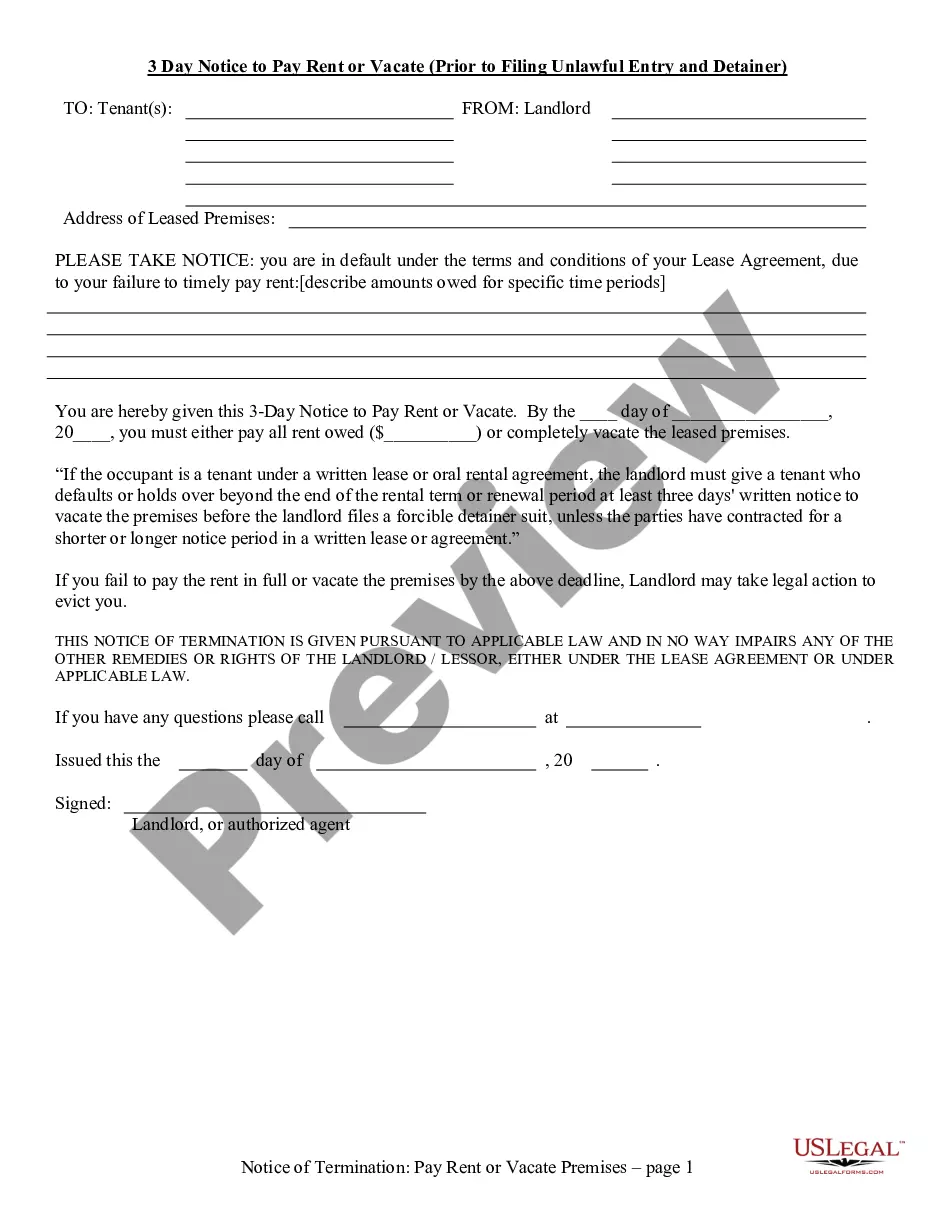
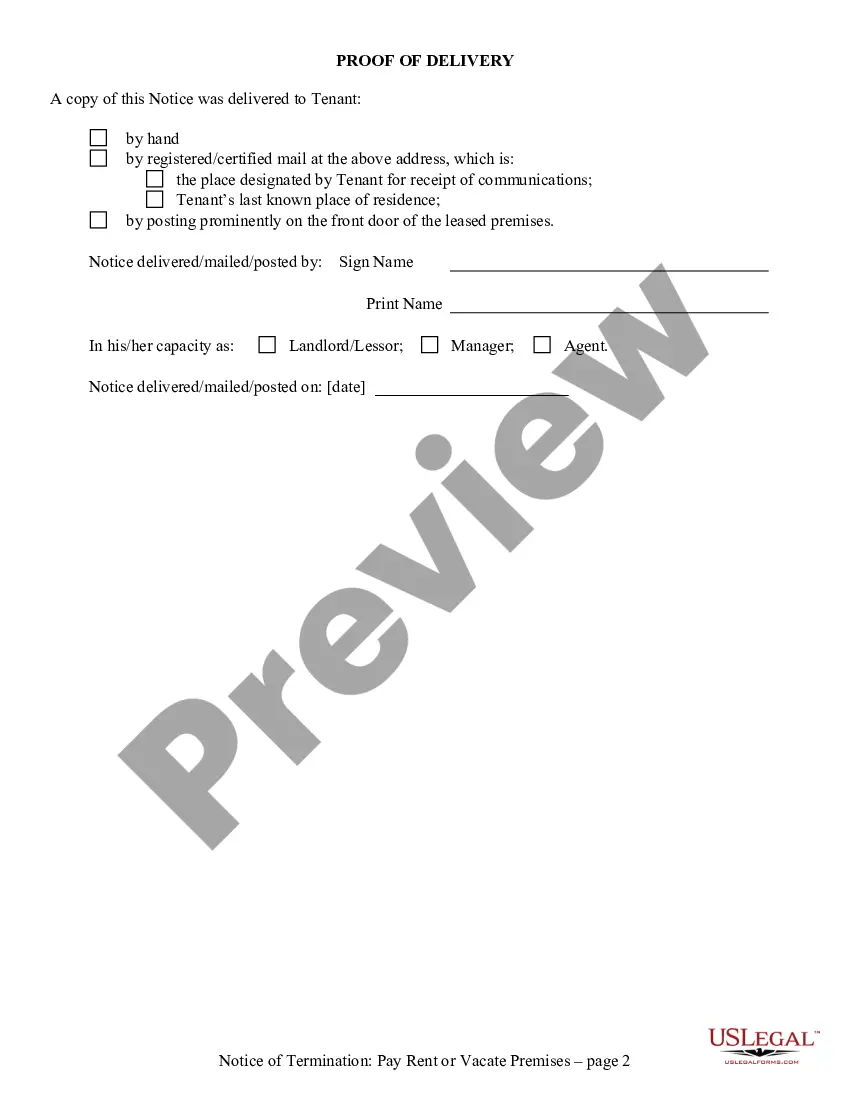
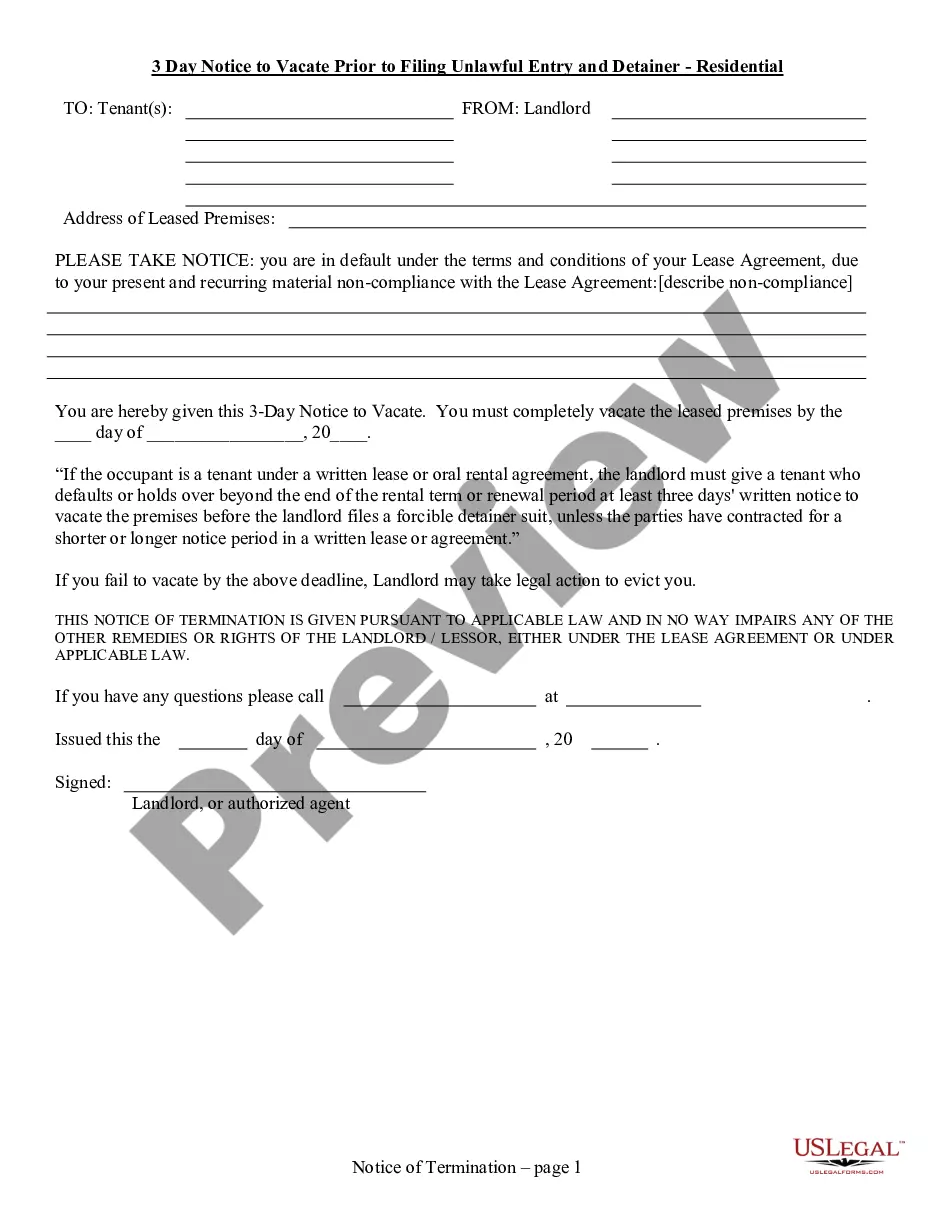
How to fill out Texas 3 Day Notice To Pay Rent Or Vacate (Prior To Filing Unlawful Entry And Detainer) - Residential?
- If you're a returning user, log into your account. Ensure your subscription is active and click the Download button for the desired form template.
- For first-time users, begin by browsing the form description and preview mode to verify you’ve picked the right document that aligns with your local regulations.
- If your initial choice doesn’t meet your needs, utilize the Search function above to find a more suitable template and confirm it matches your requirements.
- Proceed to purchase the selected document. Click the Buy Now button and select your preferred subscription plan. Remember to create an account for full access.
- Complete your purchase by entering your credit card information or utilizing your PayPal account.
- Once purchased, download and save the template to your device. You can always access it later in the My Forms section of your profile.
In conclusion, US Legal Forms provides a powerful resource for those seeking efficient legal documentation solutions. With a diverse and easily navigable form library, users can ensure their legal needs are met with confidence.
Start exploring your options today to simplify your legal processes and enhance accuracy in your documents!
Form popularity
FAQ
Texas city 1947 was primarily marked by the catastrophic disaster resulting from an explosion in the port area. The explosions caused widespread devastation and led to numerous changes in safety regulations for handling hazardous materials. Understanding these events helps to commemorate those affected and emphasizes the importance of safety in industrial practices.
Texas Independence occurred much earlier than the events of Texas city 1947, culminating in the Texas Revolution from 1835 to 1836. During this time, Texas fought for autonomy from Mexico, leading to the establishment of the Republic of Texas. This history has shaped Texas's identity and fostered a spirit of resilience that continues today.
The Texas City disaster of 1947 resulted in the tragic loss of over 500 lives, making it one of the deadliest industrial incidents in U.S. history. Thousands more were injured, and many families were deeply affected. The event served as a grim reminder of the potential dangers associated with industrial operations in Texas city 1947.
The explosion in Texas city 1947 was primarily caused by poorly handled ammonium nitrate aboard a cargo ship. After a fire broke out on the vessel, the unstable materials ignited, leading to a series of explosions that shook the entire area. This incident highlighted the crucial need for stricter safety measures in chemical storage and handling.
On April 16, 1947, a series of explosions took place in Texas city 1947, leading to one of the deadliest industrial disasters in U.S. history. A ship carrying ammonium nitrate caught fire, which triggered a chain reaction resulting in massive blasts across the area. The consequences were devastating, affecting many lives and properties in Texas City.
In Texas city 1947, a catastrophic event occurred that changed the landscape of the area. The Texas City disaster was marked by massive explosions and fires, primarily involving ammonium nitrate stored at a local fertilizer factory. This tragic event left a lasting impact on the community, raising awareness about safety in industrial practices.
The 1947 Texas City explosion claimed the lives of around 600 individuals, along with causing extensive injuries to thousands more. The explosion occurred when ammonium nitrate exploded in the port area of Texas City, leading to devastation in both the immediate vicinity and surrounding neighborhoods. This incident marks a significant moment in industrial safety and accident prevention measures. Learning about the Texas City 1947 explosion can inform present-day safety protocols.
The fire in Texas City was primarily triggered by the ignition of ammonium nitrate aboard a Liberty ship named the SS Grandcamp. The situation escalated rapidly, leading to an explosive chain reaction that caused widespread destruction. This tragic event highlights deficiencies in safety protocols during the transportation of hazardous materials. Understanding the causes of the Texas City 1947 disaster can help prevent similar incidents in the future.
The Texas City disaster of 1947 resulted in the tragic loss of approximately 600 lives. This catastrophic event involved a massive explosion that devastated much of the Texas City port. In addition to those who died, thousands were injured, making it one of the deadliest industrial accidents in U.S. history. The Texas City 1947 incident remains a poignant reminder of the importance of safety regulations.
The fertilizer disaster in Texas City refers to the catastrophic explosion of ammonium nitrate at a plant in 1947. This event stands as one of the most significant industrial accidents in American history, leading to a reevaluation of chemical safety regulations. Farmers and industrial workers became acutely aware of the dangers related to chemical handling in the aftermath. Continued education on safety measures remains critical to prevent future incidents.