Impairs Contracted Deadline With The New
Description

Get your form ready online
Our built-in tools help you complete, sign, share, and store your documents in one place.
Make edits, fill in missing information, and update formatting in US Legal Forms—just like you would in MS Word.
Download a copy, print it, send it by email, or mail it via USPS—whatever works best for your next step.
Sign and collect signatures with our SignNow integration. Send to multiple recipients, set reminders, and more. Go Premium to unlock E-Sign.
If this form requires notarization, complete it online through a secure video call—no need to meet a notary in person or wait for an appointment.
We protect your documents and personal data by following strict security and privacy standards.

Make edits, fill in missing information, and update formatting in US Legal Forms—just like you would in MS Word.

Download a copy, print it, send it by email, or mail it via USPS—whatever works best for your next step.

Sign and collect signatures with our SignNow integration. Send to multiple recipients, set reminders, and more. Go Premium to unlock E-Sign.

If this form requires notarization, complete it online through a secure video call—no need to meet a notary in person or wait for an appointment.

We protect your documents and personal data by following strict security and privacy standards.
Looking for another form?
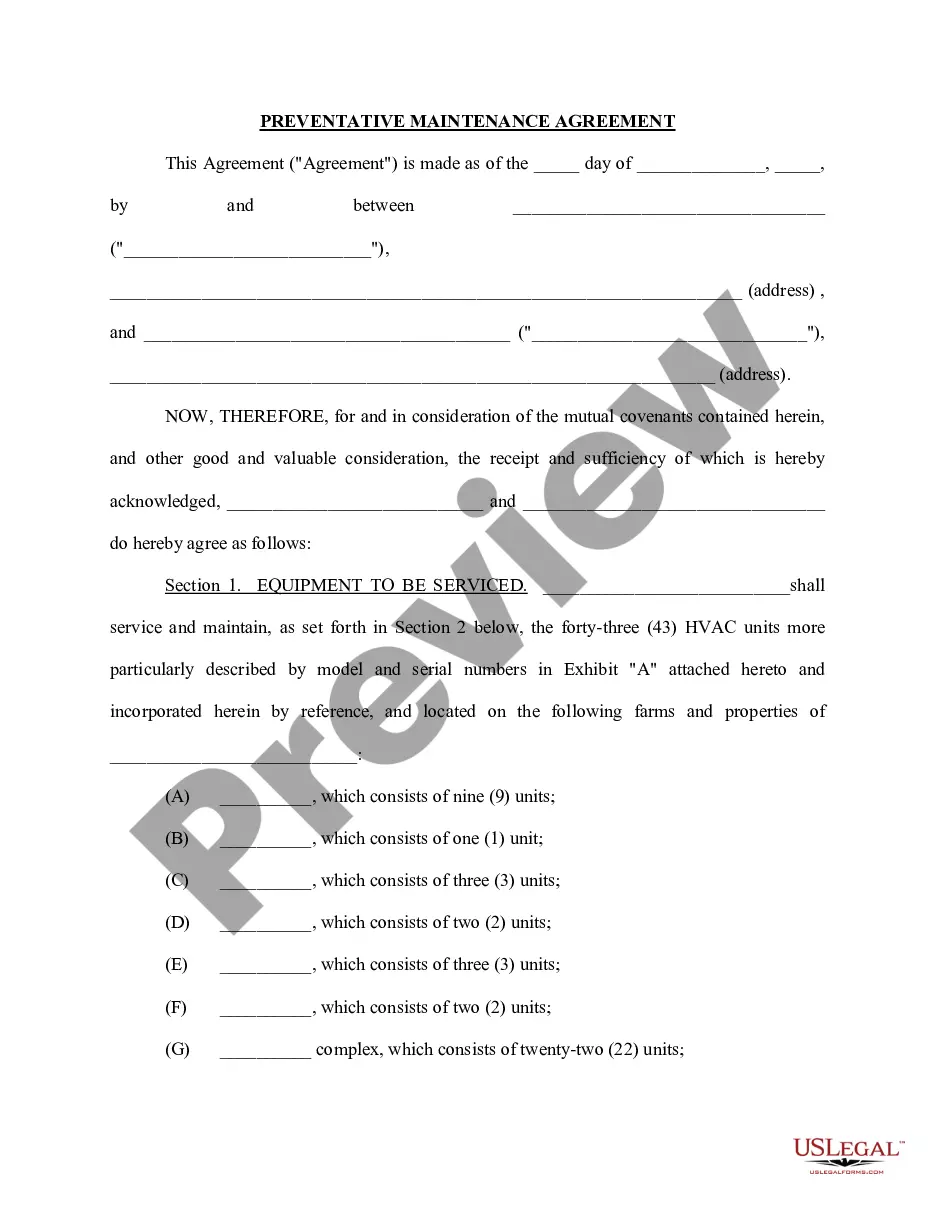






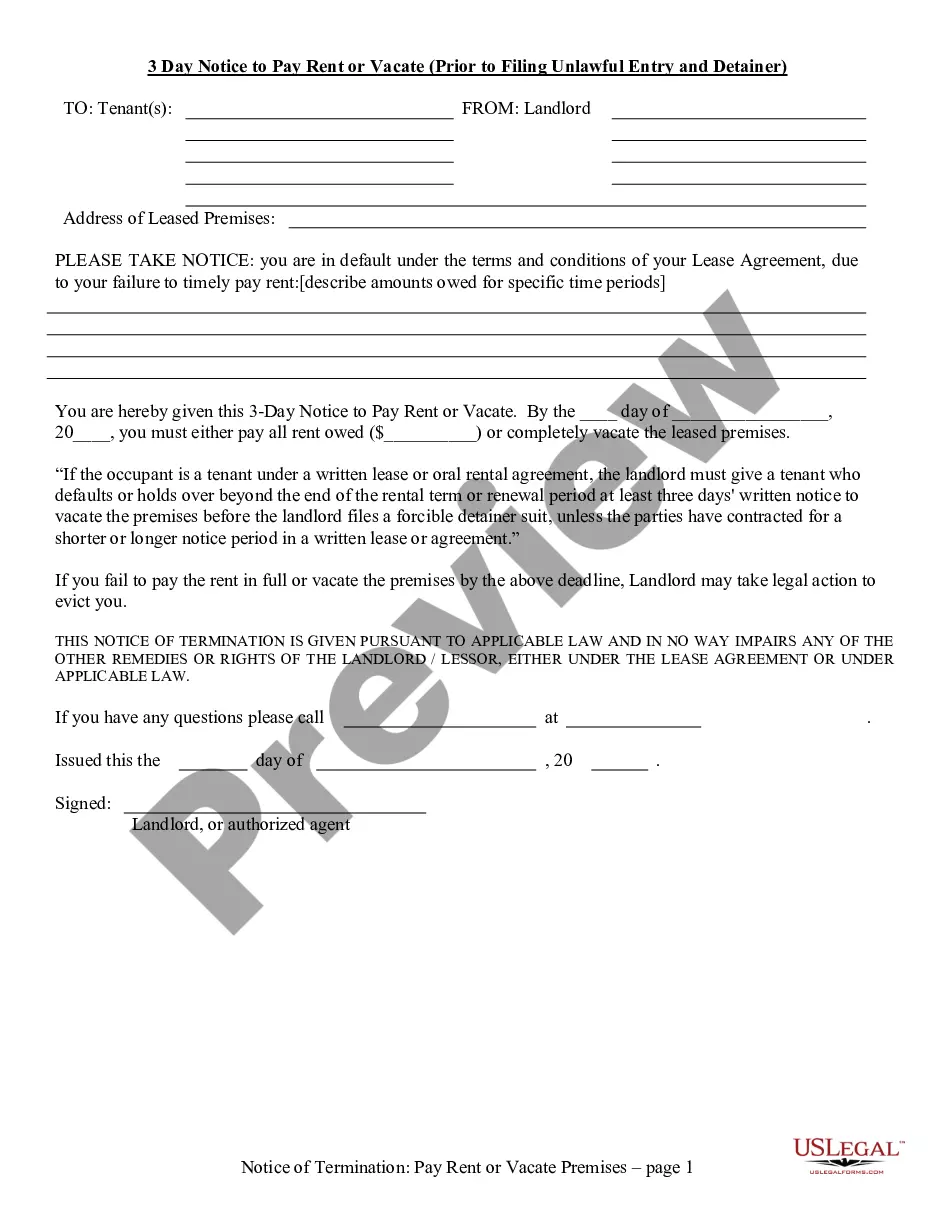
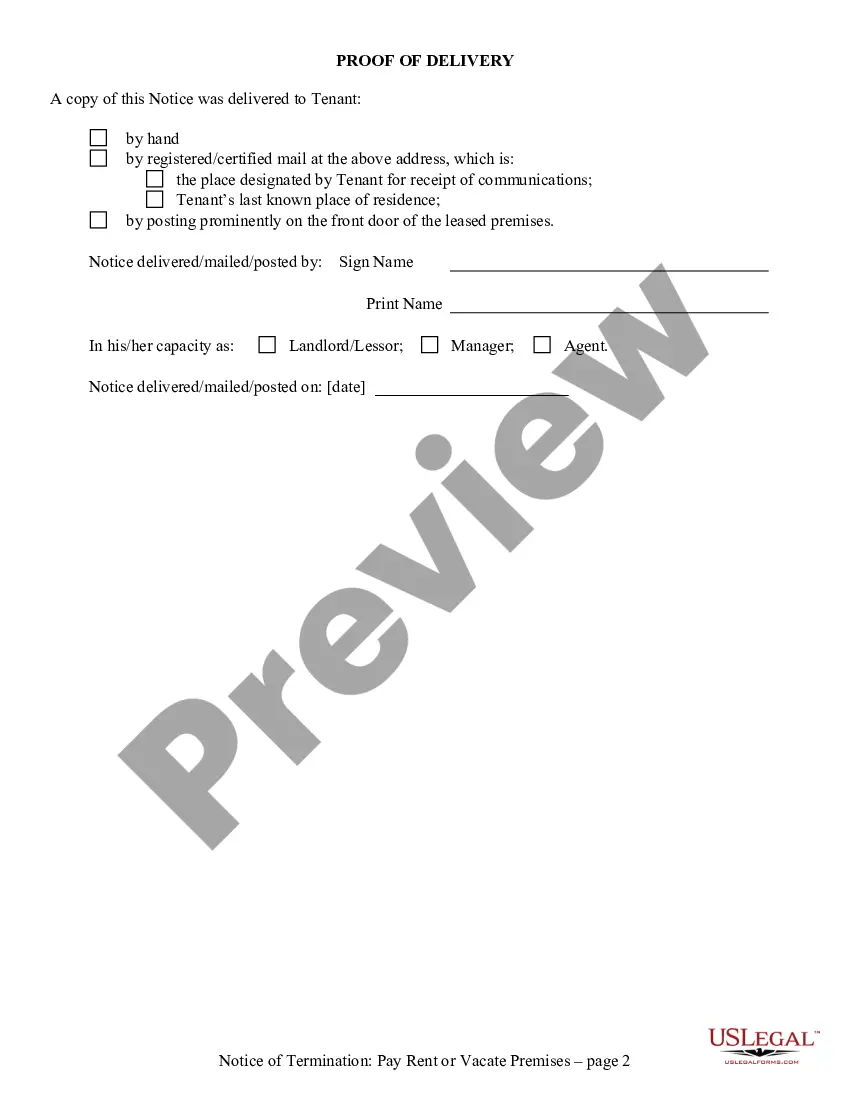
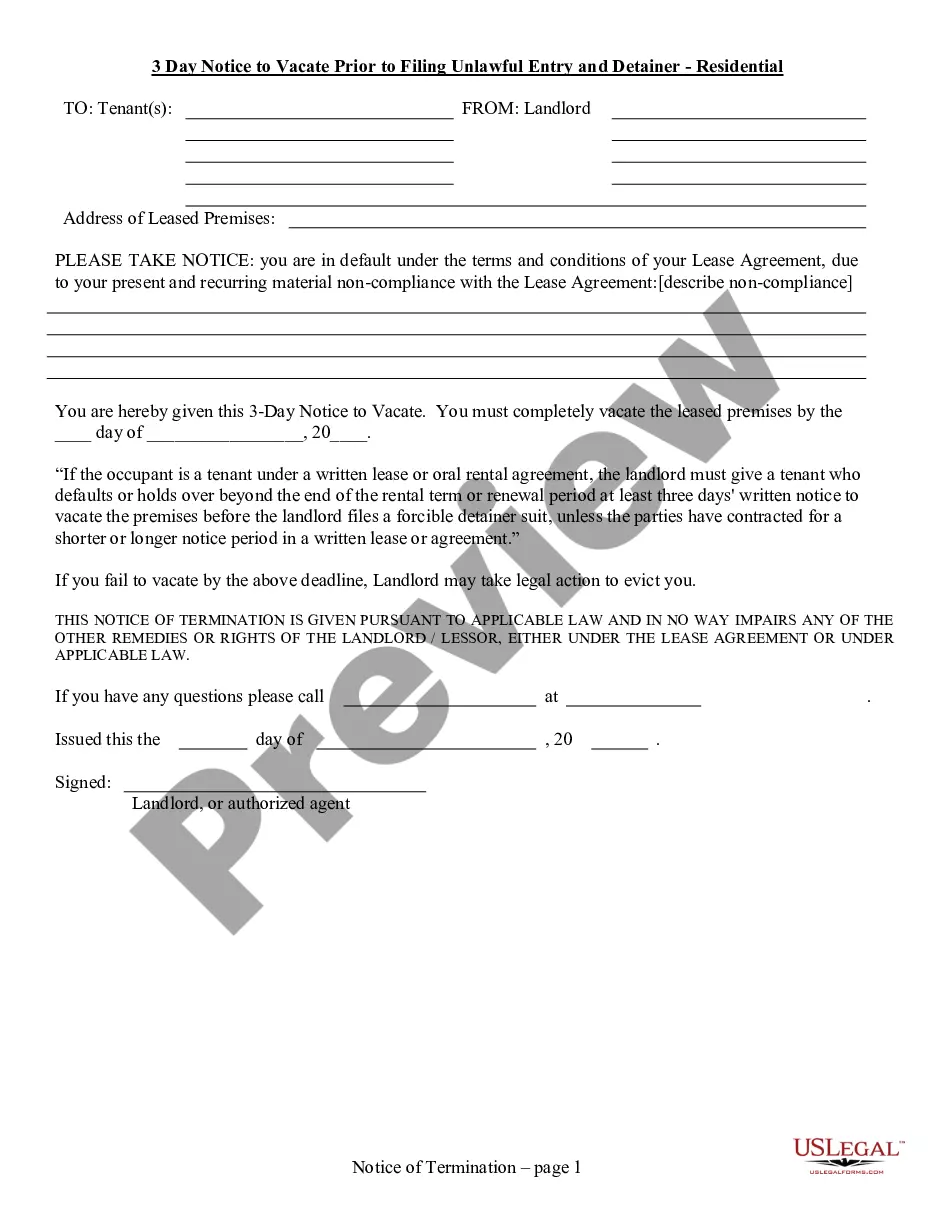
How to fill out Texas 3 Day Notice To Pay Rent Or Vacate (Prior To Filing Unlawful Entry And Detainer) - Residential?
- If you’re a returning user, log in to your account and click the Download button for the required form. Ensure your subscription is still active; renew if necessary.
- For first-time users, begin by exploring the preview and descriptions of forms. Confirm you select a template that aligns with your specific needs and local jurisdiction requirements.
- Should you need a different form, utilize the Search tab to find the correct document. If it fits your requirements, proceed to the next step.
- Select and purchase the document by clicking the Buy Now button, then choose your preferred subscription plan. Account registration is required to access the resources.
- Complete the payment process using your credit card or PayPal account to finalize your subscription.
- After purchase, download the form to your device for completion and access it anytime through the My Forms menu in your profile.
US Legal Forms stands out with its robust collection, offering users more templates at competitive prices. Plus, you can access premium expert assistance for form completion, ensuring legally sound documents every time.
In conclusion, utilizing US Legal Forms provides a streamlined and effective way to manage your legal documentation. Don't let deadlines stress you out—start your journey today!
Form popularity
FAQ
The substitution of one contract for another is commonly known as contract replacement. This legal action swaps out the old contract for a new one, which ideally should address any prior issues. However, it’s crucial to manage how this replacement may impair contracted deadlines with the new document. Being proactive in this process ensures that all parties stay on track.
When one contract entirely replaces another, it is referred to as contract substitution. This process may be necessary when the original agreement no longer meets the needs of the parties involved. Such a substitution can impair contracted deadlines with the new agreement if it does not align with the project timeline. Thus, careful consideration is necessary to avoid disruptions.
Another term for changing a contract is amending the contract. This process is vital in addressing issues that may arise during the contract's life. Proper amendments can prevent situations that impair contracted deadlines with the new stipulations. Always ensure that both parties agree to these changes to maintain a smooth working relationship.
If a contractor does not meet a deadline, it can result in various consequences depending on the contract terms. Common outcomes include penalties, additional costs, or even legal action. This failure can impair contracted deadlines with the new terms, potentially affecting the overall project timeline. Understanding these implications is crucial for all parties involved.
When you change an agreement, it is often referred to as a contract modification. This process allows parties to alter specific terms within the contract. In some cases, this modification can impair contracted deadlines with the new terms, leading to adjustments in project timelines. It's essential to document these changes clearly to avoid any confusion.
The unilateral contract rule states that one party makes a promise in exchange for the performance of an act by another party. If the act is not performed, the contract may not be enforced. This rule can become complex, especially if it impairs the contracted deadline with the new agreement. Understanding this balance is crucial for both parties to honor their obligations.
When a contract is impaired, it indicates that it cannot be fully executed as intended due to various reasons, such as external circumstances or misunderstandings. This impairment can affect the contracted deadline with the new terms and make the contract unenforceable. Identifying the reasons for impairment early can help parties navigate potential resolutions. Utilizing platforms like USLegalForms can provide guidance in these situations.
Typically, one party cannot unilaterally amend a contract without the other’s consent. Attempting to do so can create confusion and possibly impair the contracted deadline with the new specifications. For effective changes, both parties should discuss and document any necessary amendments. Collaboration can prevent misunderstandings and protect everyone involved.
When one party makes a unilateral mistake, it usually does not affect the overall validity of the contract. However, if the mistake impairs the contracted deadline with the new terms, the mistaken party may have limited recourse. They may need to prove that the mistake significantly alters the agreement's essence. Clear and precise language in contracts can help avoid such issues.
One party generally cannot unilaterally change the terms of a contract without consent from the other party. If one side attempts to alter key aspects, it may impair the contracted deadline with the new terms and lead to disputes. Both parties must agree and document any amendments to ensure legal validity. Clear communication is key in these situations.