Texas Condominium Insured For Damages
Description


Get your form ready online
Our built-in tools help you complete, sign, share, and store your documents in one place.
Make edits, fill in missing information, and update formatting in US Legal Forms—just like you would in MS Word.
Download a copy, print it, send it by email, or mail it via USPS—whatever works best for your next step.
Sign and collect signatures with our SignNow integration. Send to multiple recipients, set reminders, and more. Go Premium to unlock E-Sign.
If this form requires notarization, complete it online through a secure video call—no need to meet a notary in person or wait for an appointment.
We protect your documents and personal data by following strict security and privacy standards.

Make edits, fill in missing information, and update formatting in US Legal Forms—just like you would in MS Word.

Download a copy, print it, send it by email, or mail it via USPS—whatever works best for your next step.

Sign and collect signatures with our SignNow integration. Send to multiple recipients, set reminders, and more. Go Premium to unlock E-Sign.

If this form requires notarization, complete it online through a secure video call—no need to meet a notary in person or wait for an appointment.

We protect your documents and personal data by following strict security and privacy standards.
Looking for another form?






How to fill out Texas Financing?
- Log in to your US Legal Forms account. If you're a returning user, ensure your subscription is current; renew if necessary.
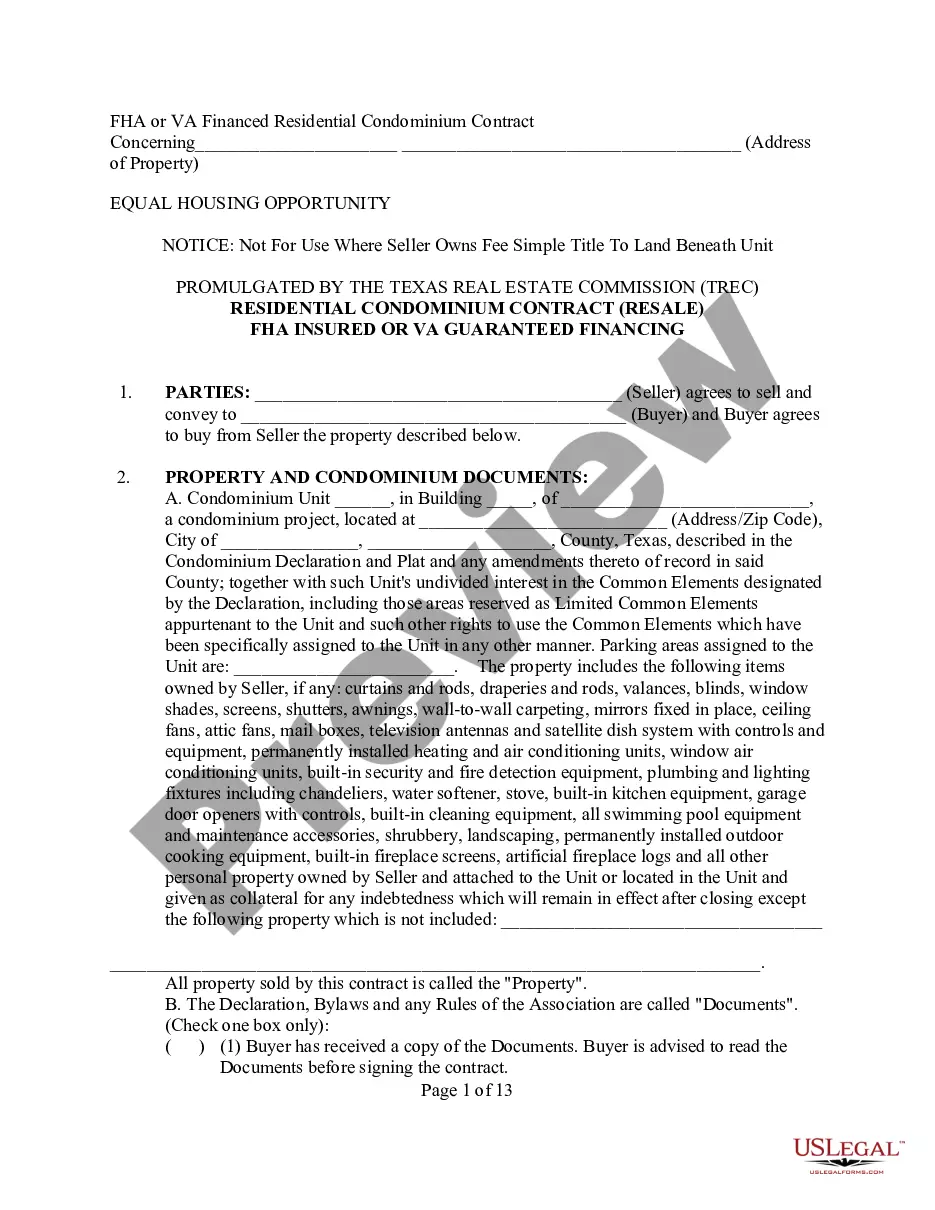
- Review the form options. Use the Preview mode to verify that you select the correct Texas condominium insurance document that meets your local requirements.
- If needed, search for alternatives. Utilize the search feature to find another form that better fits your needs.
- Proceed to purchase your selected form. Choose a subscription plan and create an account if you haven't already.
- Complete your transaction. Fill in your payment information, either by credit card or PayPal.
- Download your document. Once payment is confirmed, save the form to your device for easy access. You can also find it under the My Forms section in your account.
US Legal Forms empowers individuals and attorneys to quickly execute legal documents, offering a robust collection of over 85,000 fillable and editable forms. With the assistance of premium experts, you can ensure your Texas condominium is adequately prepared for any potential damages.
Don't wait until it's too late! Access US Legal Forms today to safeguard your Texas condominium. Start your journey to peace of mind now!
Form popularity
FAQ
The unit coverage form typically includes coverage for your personal property, loss of use, and additional living expenses if your condo becomes uninhabitable. It also provides liability coverage for accidents that may occur within your unit. Understanding the specifics of your policy helps ensure your Texas condominium is insured for damages, ensuring you are well-protected.
Yes, having condo insurance is essential for protecting your assets and peace of mind. A standard condo policy covers your personal property, liability, and improvements made to your unit. Without this protection, you could face significant financial challenges in the event of damages or accidents, making it vital to have your Texas condominium insured for damages.
As a condo owner in Texas, you are responsible for insuring your unit's interior and your personal belongings. Additionally, you are liable for any damages caused to others within your unit, which highlights the importance of having a robust condo insurance policy. This policy will help ensure your Texas condominium is insured for damages, protecting your investment.
In a Texas condominium, condo insurance responsibility lies primarily with the individual unit owners. Each owner is responsible for obtaining their own insurance policy, which should include coverage for personal property and liability. Your HOA's master policy does not cover your belongings, so securing a separate policy is crucial to ensure your Texas condominium is insured for damages.
In a Texas condominium, the insurance system generally divides responsibility between the homeowner's association and the individual unit owners. The association typically covers the building's structure and common areas, while unit owners must secure insurance for their personal property and any interior improvements. This means it is essential for you to understand your HOA's policy to ensure your Texas condominium is insured for damages that might occur.
As mentioned earlier, you have two years to file a property damage claim in Texas. This timeframe applies equally to owners of a Texas condominium insured for damages. Prompt action within this period is essential for preserving your ability to seek compensation for any losses incurred.
Condo insurance should typically include coverage for the interior of your unit, personal property, liability protection, and loss of use. When selecting a policy for your Texas condominium insured for damages, it's vital to ensure these elements are adequately covered. Reviewing options through platforms like USLegalForms can help you find the right policy.
A general rule of thumb for condo insurance is to choose a policy that covers both the interior and any personal belongings. If you have a Texas condominium insured for damages, ensure that the policy protects against common risks like fire, flooding, and theft. This coverage provides peace of mind and financial stability.
A common rule of thumb for condo reserves suggests that associations should maintain at least 10% to 30% of their annual operating budget in reserves. This principle helps ensure that a Texas condominium insured for damages can adequately address unexpected repairs or significant upkeep. Adequate reserves safeguard the property against financial risks.
Texas law allows property owners to seek compensation for damages through insurance claims or legal action. Property owners, including those of a Texas condominium insured for damages, should understand their rights and responsibilities under these laws. Knowing the legal framework can help you make informed decisions about protecting your investment.