Texas Family Contract For Service
Description

Get your form ready online
Our built-in tools help you complete, sign, share, and store your documents in one place.
Make edits, fill in missing information, and update formatting in US Legal Forms—just like you would in MS Word.
Download a copy, print it, send it by email, or mail it via USPS—whatever works best for your next step.
Sign and collect signatures with our SignNow integration. Send to multiple recipients, set reminders, and more. Go Premium to unlock E-Sign.
If this form requires notarization, complete it online through a secure video call—no need to meet a notary in person or wait for an appointment.
We protect your documents and personal data by following strict security and privacy standards.

Make edits, fill in missing information, and update formatting in US Legal Forms—just like you would in MS Word.

Download a copy, print it, send it by email, or mail it via USPS—whatever works best for your next step.

Sign and collect signatures with our SignNow integration. Send to multiple recipients, set reminders, and more. Go Premium to unlock E-Sign.

If this form requires notarization, complete it online through a secure video call—no need to meet a notary in person or wait for an appointment.

We protect your documents and personal data by following strict security and privacy standards.
Looking for another form?









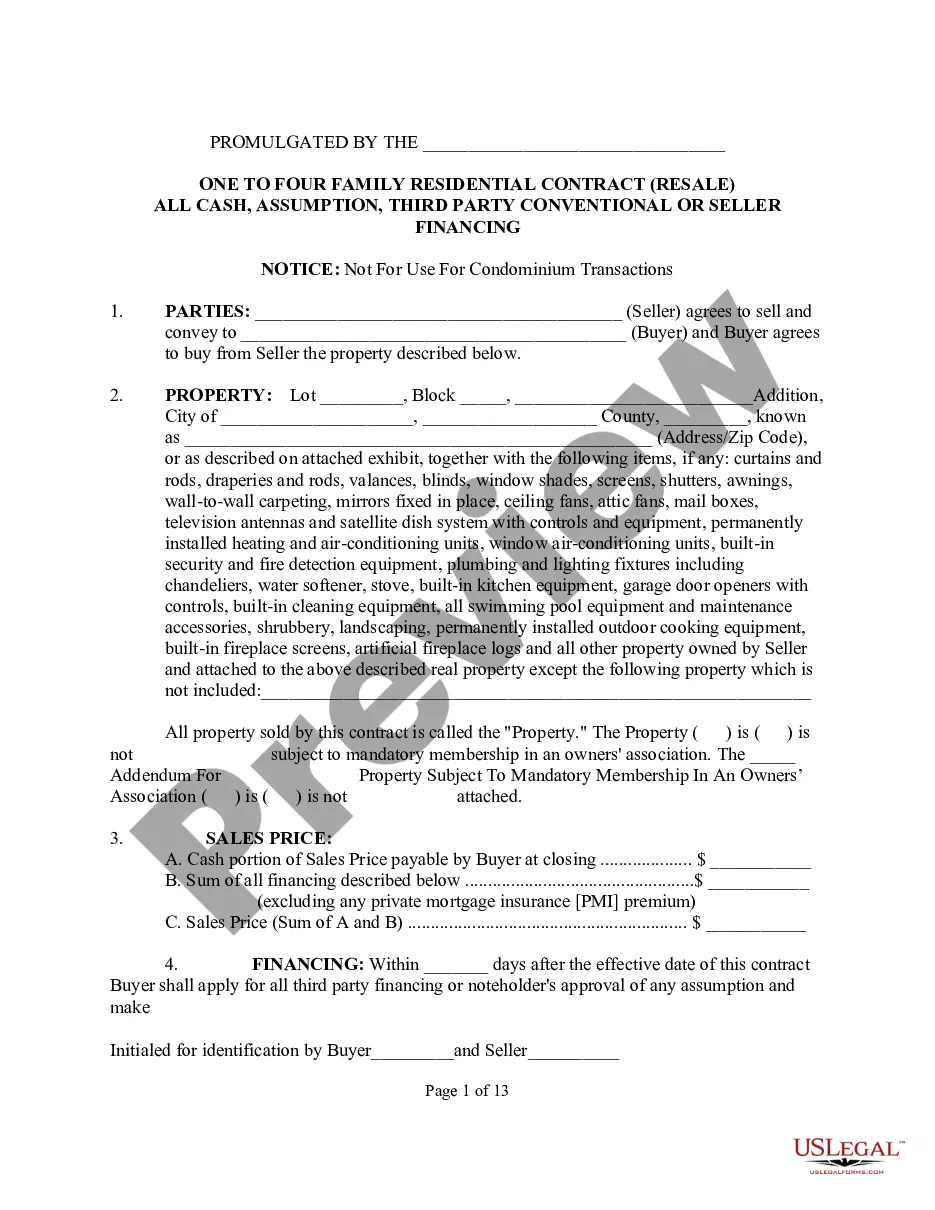
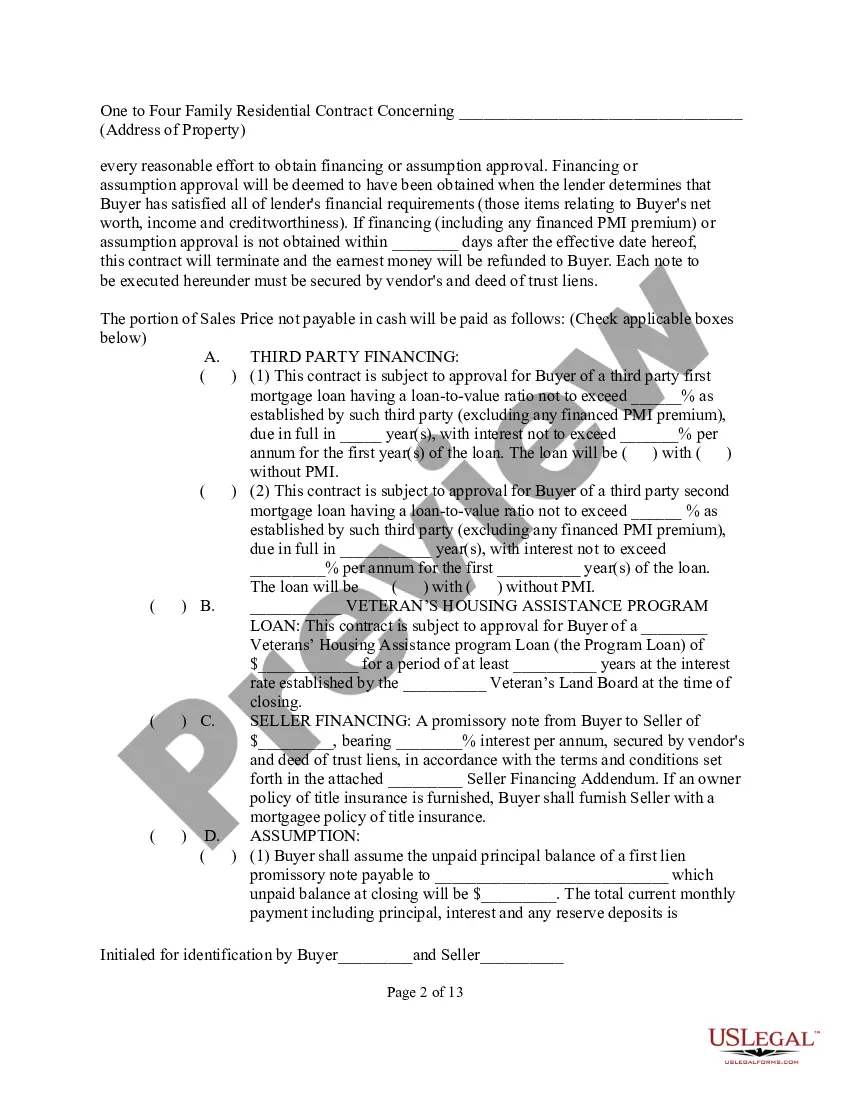
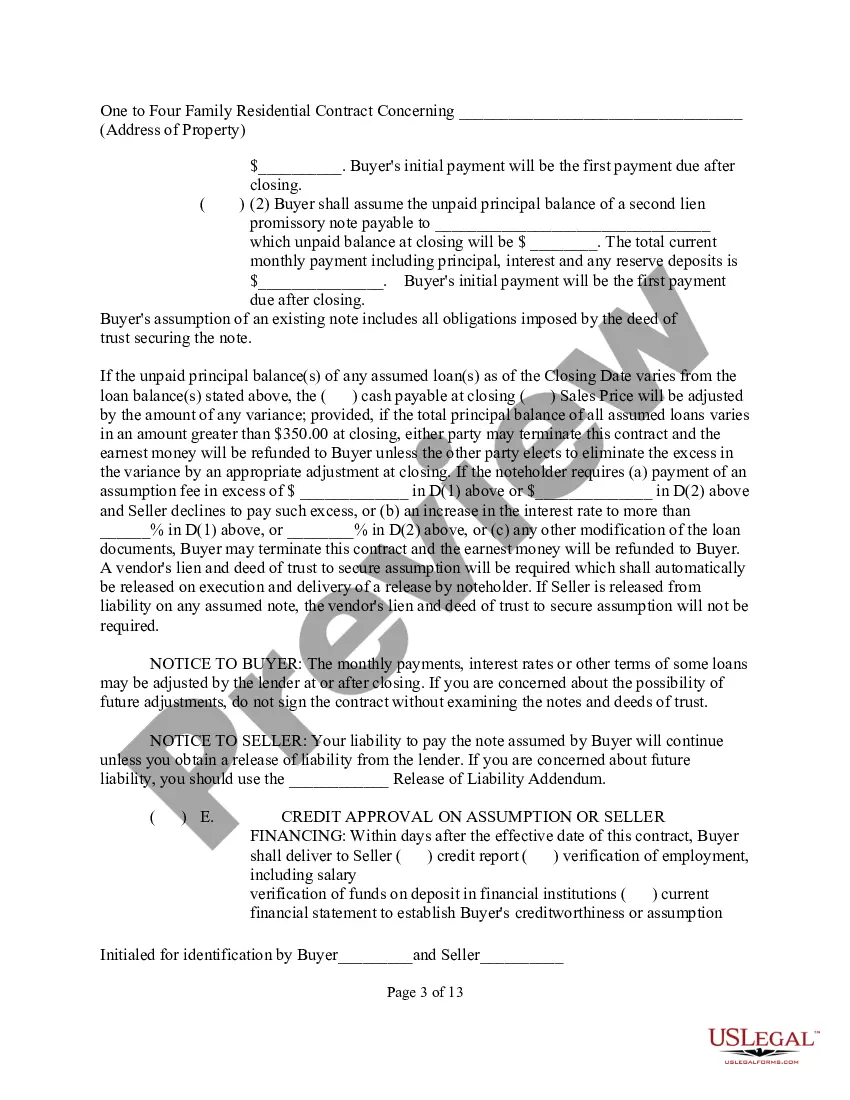
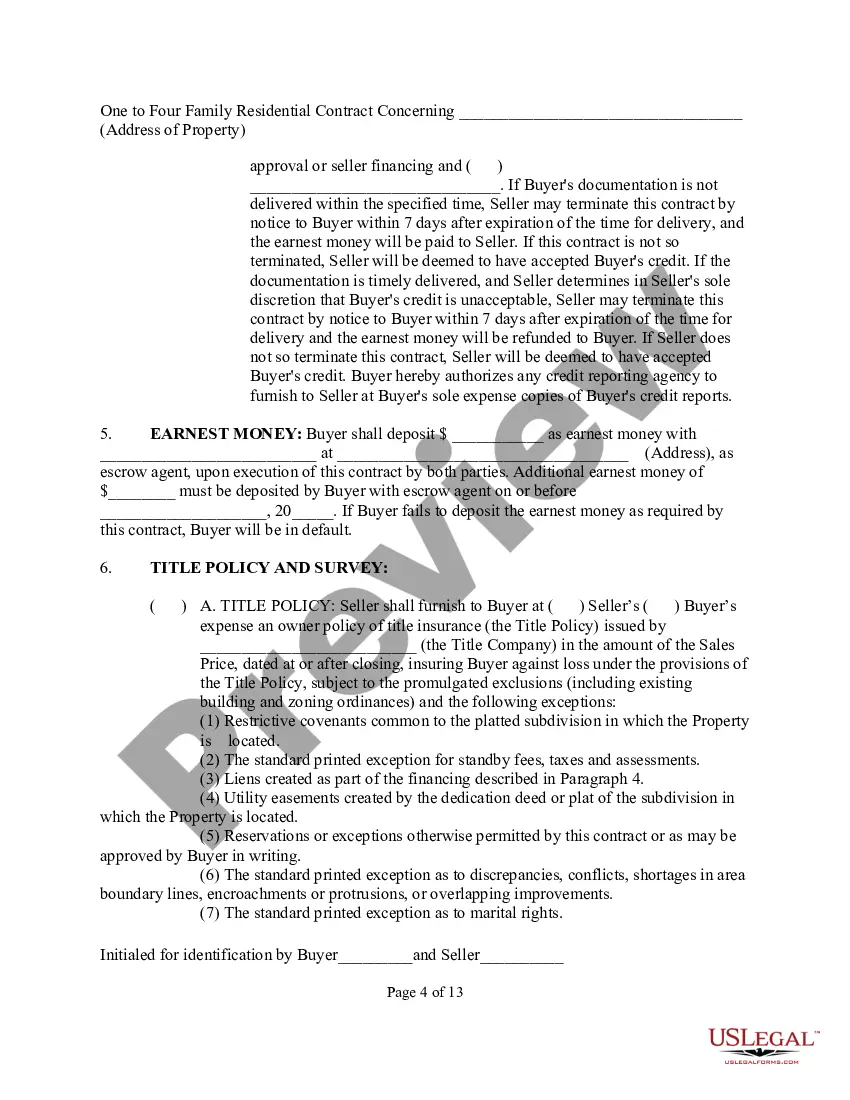
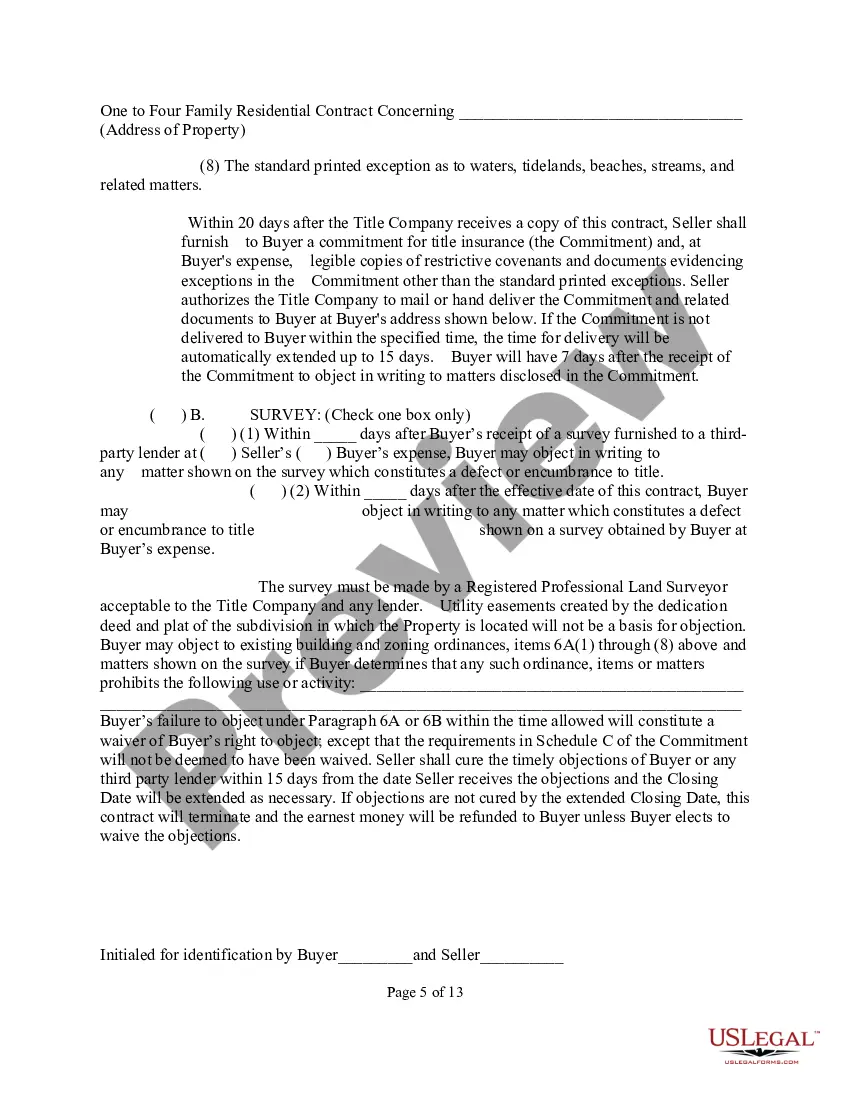
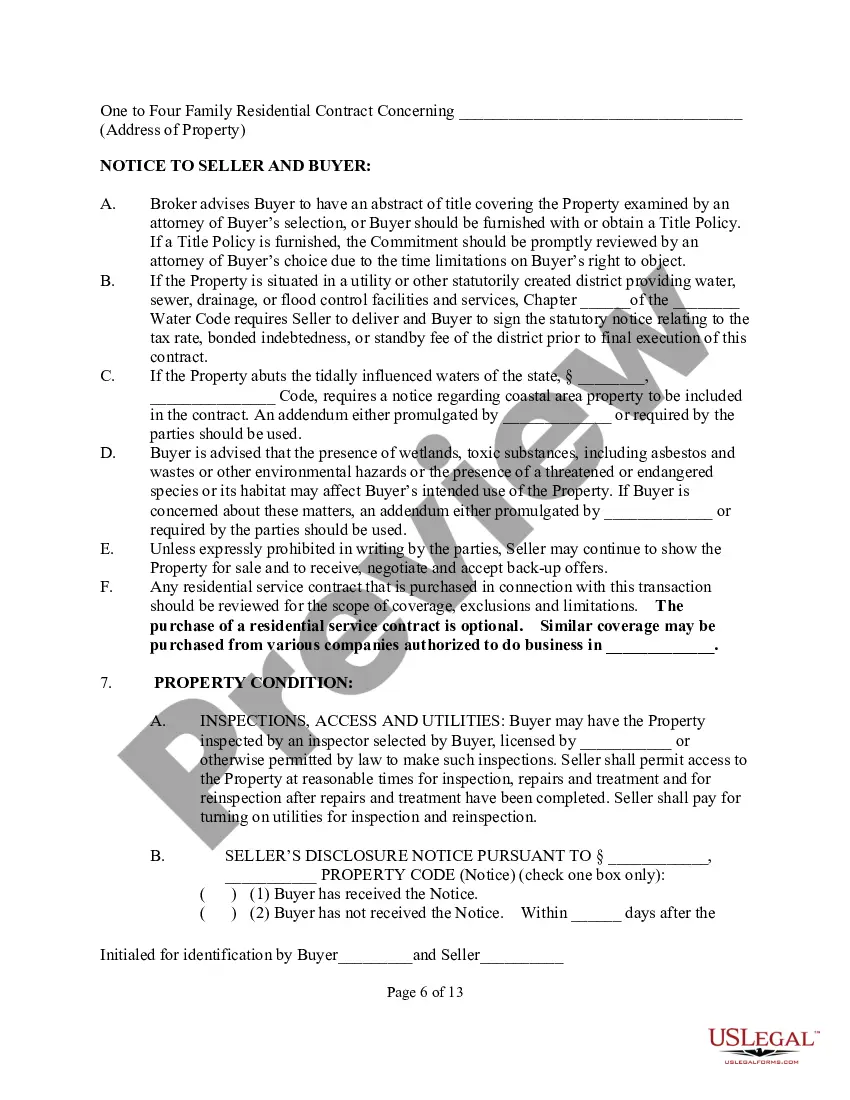
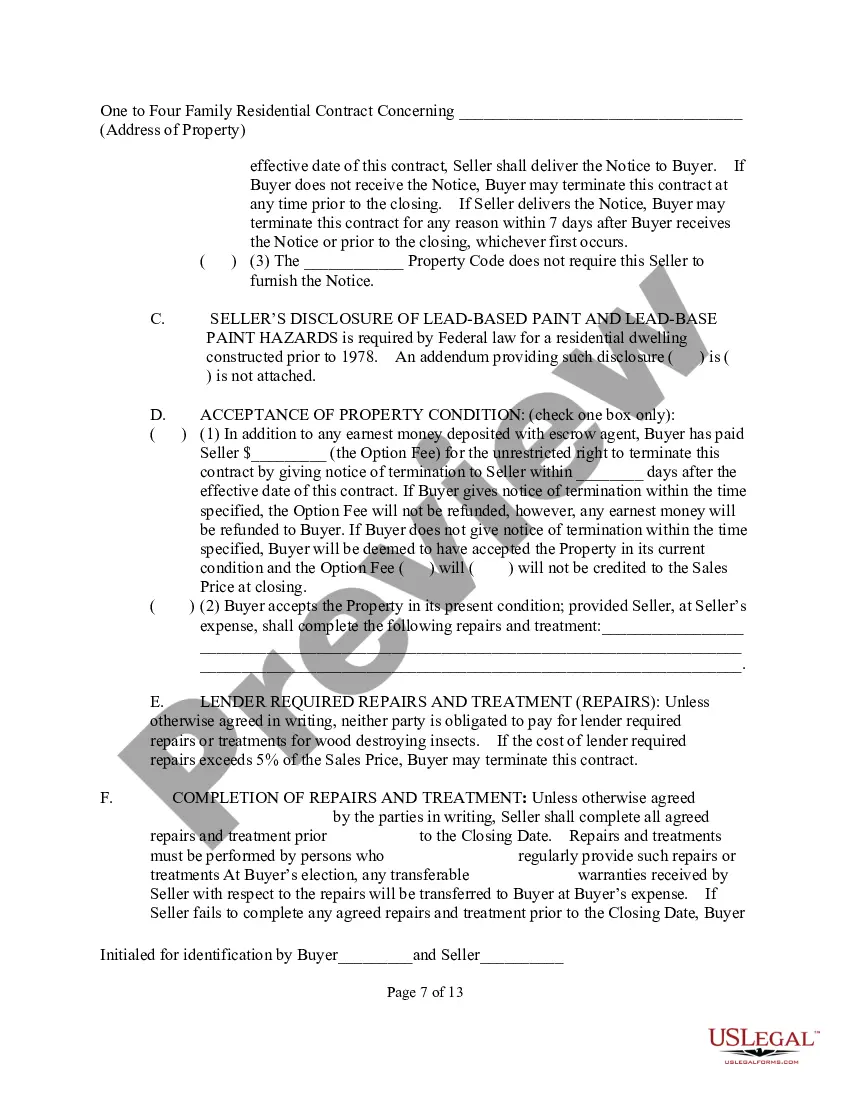
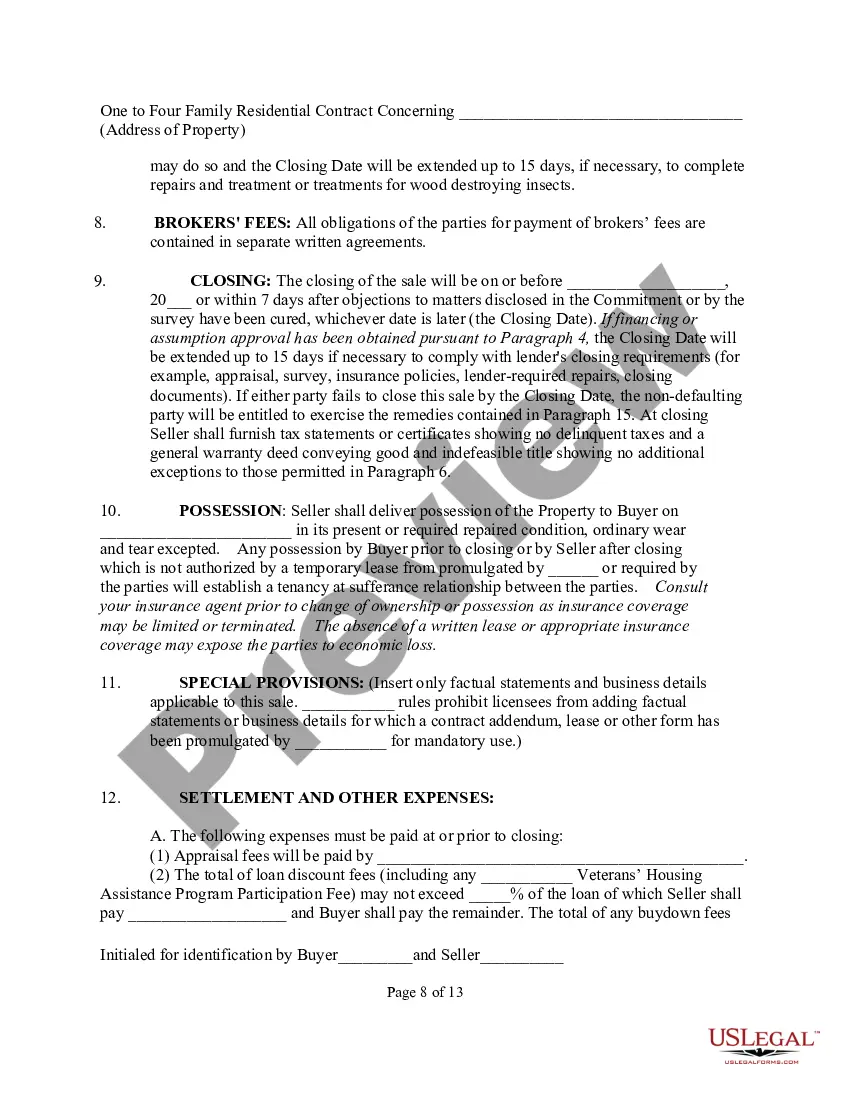
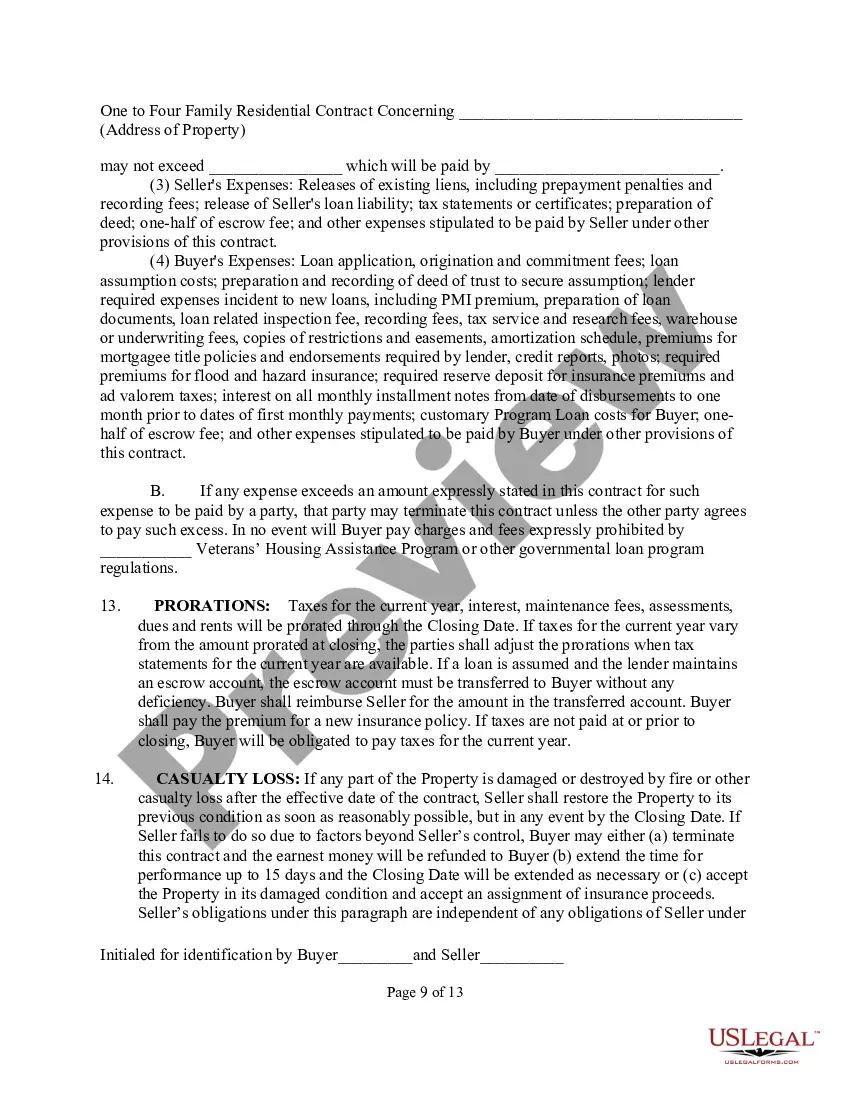
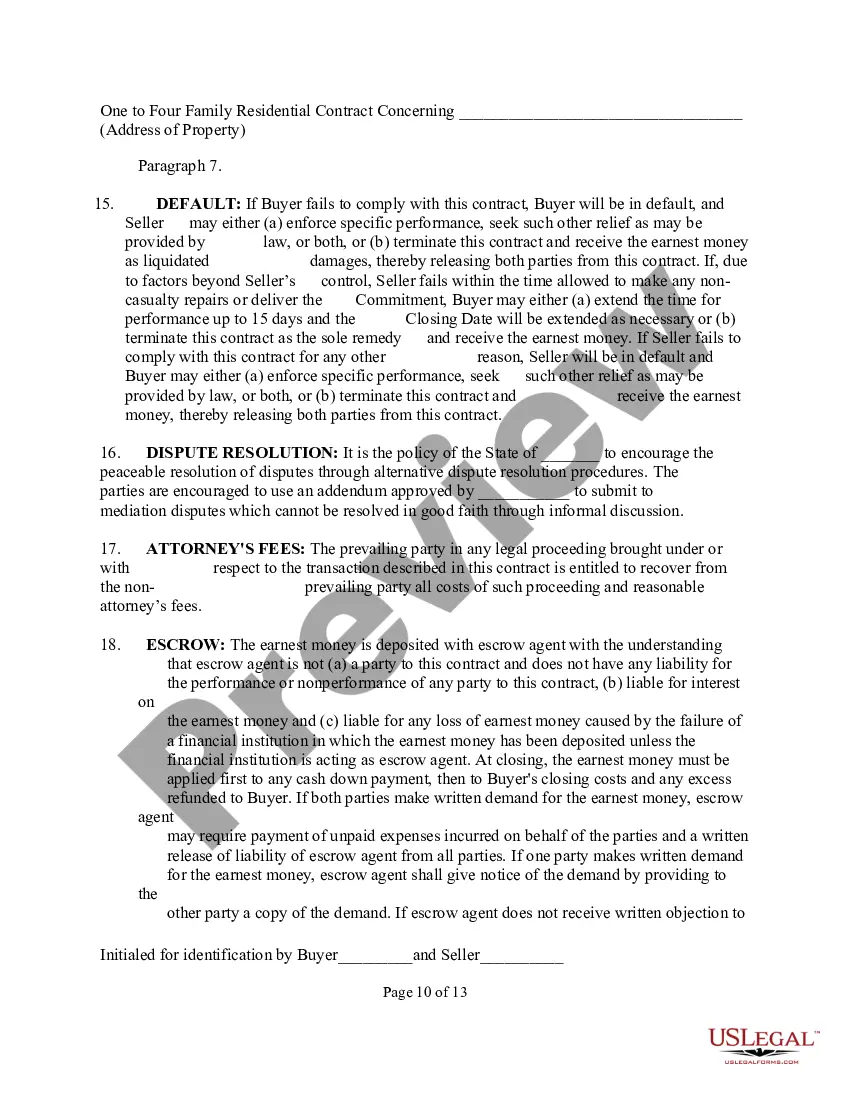
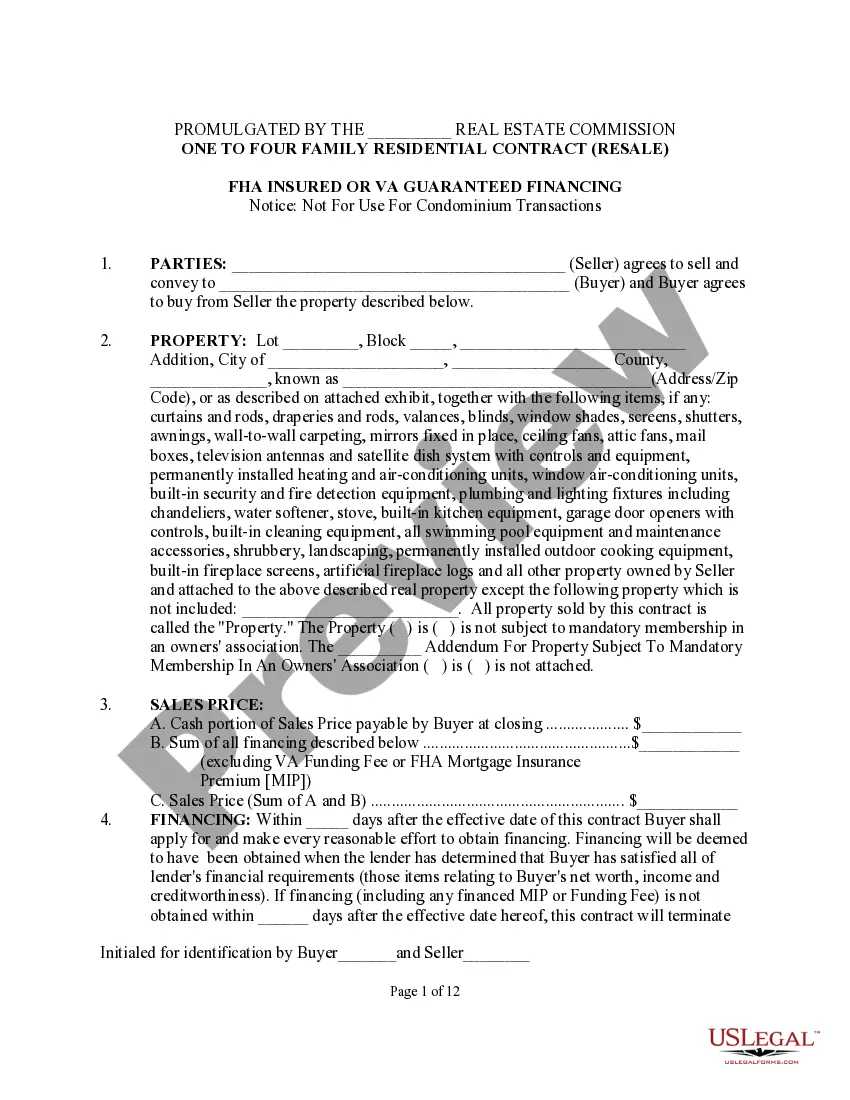
How to fill out Texas One To Four Family Residential Contract - Resale - All Cash, Assumption, Third Party Conventional Or Seller Financing?
- If you're an existing US Legal Forms user, log into your account and access the form template for download. Ensure your subscription is active, or renew it if necessary.
- For first-time users, start by browsing the Preview mode and form description to confirm that you have selected the appropriate template for your needs and local jurisdiction.
- If you need to find an alternative template, utilize the Search tab for a tailored search. Once you find the right form, proceed to the purchasing step.
- Click on the Buy Now button and select your preferred subscription plan to gain access to the extensive library.
- Finally, complete your payment using either your credit card or PayPal account. Make sure to save the downloaded template on your device.
- Access your document anytime through the My Forms section in your account.
US Legal Forms empowers users to create precise and legally sound documents with ease. By offering a vast collection of forms and access to premium support, you can ensure that your Texas family contract for service meets all legal requirements.
Begin the process today and explore the capabilities of US Legal Forms to streamline your legal documentation needs.
Form popularity
FAQ
CPS, or Child Protective Services, focuses on the safety and welfare of children at risk of abuse or neglect. In contrast, CFS, or Community Family Services, aims to provide resources and support to families to enhance their overall functioning. Understanding these distinctions is crucial when considering a Texas family contract for service to ensure the appropriate form of assistance is sought.
Creating a family contract involves discussing roles, responsibilities, and expectations among family members. Start by identifying the key areas you want to address, such as communication, chores, or conflict resolution. Utilizing a Texas family contract for service template can streamline this process and ensure all parties have a clear understanding of their commitments.
Family-based services focus on supporting families in their home environment, emphasizing their strengths and needs. These services can include therapy, education, and case management to help families thrive together. With a Texas family contract for service, you can outline the specific support your family requires, ensuring all needs are met efficiently.
Family services refer to a variety of support programs aimed at promoting the well-being of families. These services often address issues such as parenting, child care, and family counseling. In the context of a Texas family contract for service, these programs are designed to equip families with resources necessary for healthy relationships and effective communication.
An SSCC, or Single Source Continuum Contractor, in Texas is an organization that delivers a coordinated package of services to families in crisis. SSCCs aim to promote stability and support within the family unit, focusing on effective interventions. By implementing a Texas family contract for service, these contractors can better serve the community and ensure families receive comprehensive care. This model emphasizes collaboration to address the needs of families holistically.
Family based services in Texas provide support and assistance to families in need of help. These services aim to strengthen family bonds and improve the overall well-being of family members. By utilizing a Texas family contract for service, families can access a range of resources tailored to their unique situations. This approach ensures that families receive the right support while maintaining their independence.
Indeed, you can write your own real estate contract in Texas. However, it is important to ensure that the contract meets all legal requirements. For many, using a Texas family contract for service template offers an easier, more reliable approach, ensuring essential details and legal considerations are not overlooked.
A one to four family residential contract is a specific type of agreement used in Texas for the sale of residential properties with one to four units. This contract outlines the essential terms of the sale and provides protections for both buyers and sellers. When entering a Texas family contract for service, this contract is often the standard choice for residential transactions.
Paragraph 12 of the TREC 1 to 4 family residential contract addresses various obligations related to closing. This includes the timeframe for closing, which is essential for both buyers and sellers in a Texas family contract for service. It is important to fill out this paragraph accurately to avoid future disputes.
Yes, you can write your own real estate contract in Texas. This means you have the flexibility to tailor the agreement to your specific needs. However, for a valid Texas family contract for service, it is advisable to use a template or consult a professional to ensure compliance with state laws and regulations.