Texas Squatters Rights For Disabled Adults
Description
Get your form ready online
Our built-in tools help you complete, sign, share, and store your documents in one place.
Make edits, fill in missing information, and update formatting in US Legal Forms—just like you would in MS Word.
Download a copy, print it, send it by email, or mail it via USPS—whatever works best for your next step.
Sign and collect signatures with our SignNow integration. Send to multiple recipients, set reminders, and more. Go Premium to unlock E-Sign.
If this form requires notarization, complete it online through a secure video call—no need to meet a notary in person or wait for an appointment.
We protect your documents and personal data by following strict security and privacy standards.

Make edits, fill in missing information, and update formatting in US Legal Forms—just like you would in MS Word.

Download a copy, print it, send it by email, or mail it via USPS—whatever works best for your next step.

Sign and collect signatures with our SignNow integration. Send to multiple recipients, set reminders, and more. Go Premium to unlock E-Sign.

If this form requires notarization, complete it online through a secure video call—no need to meet a notary in person or wait for an appointment.

We protect your documents and personal data by following strict security and privacy standards.
Looking for another form?



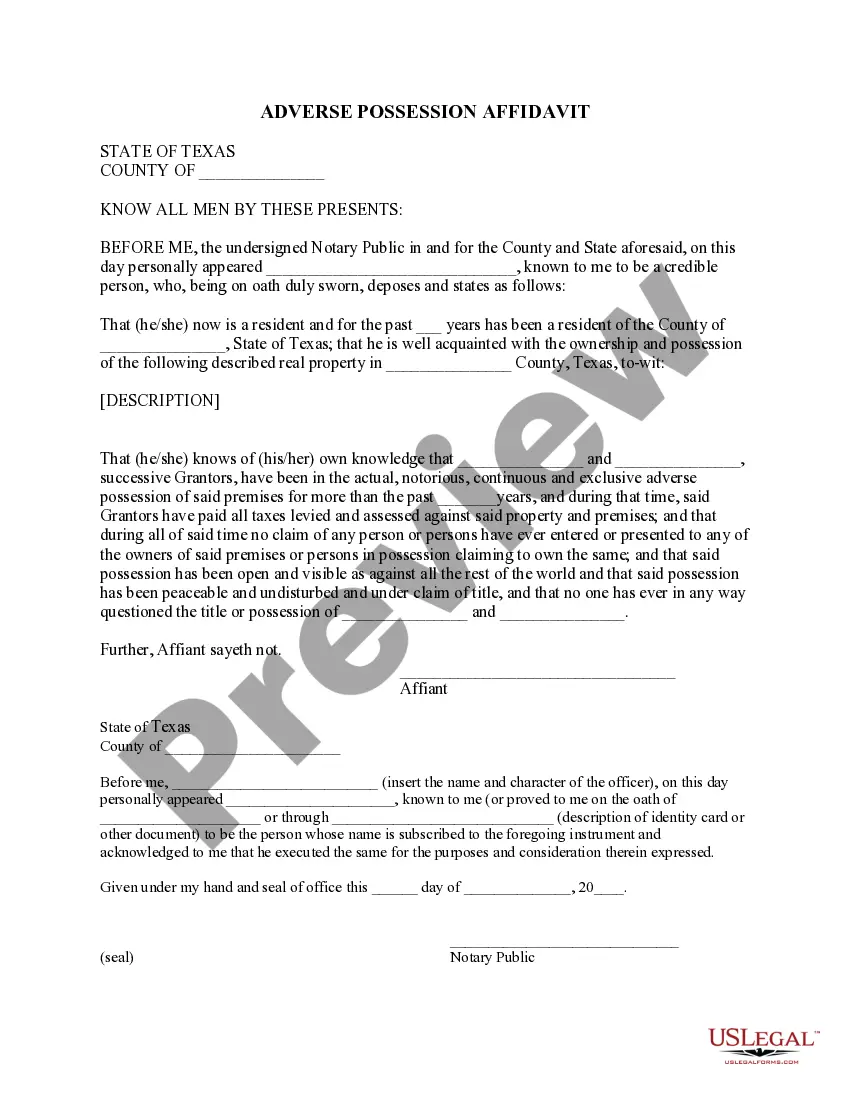
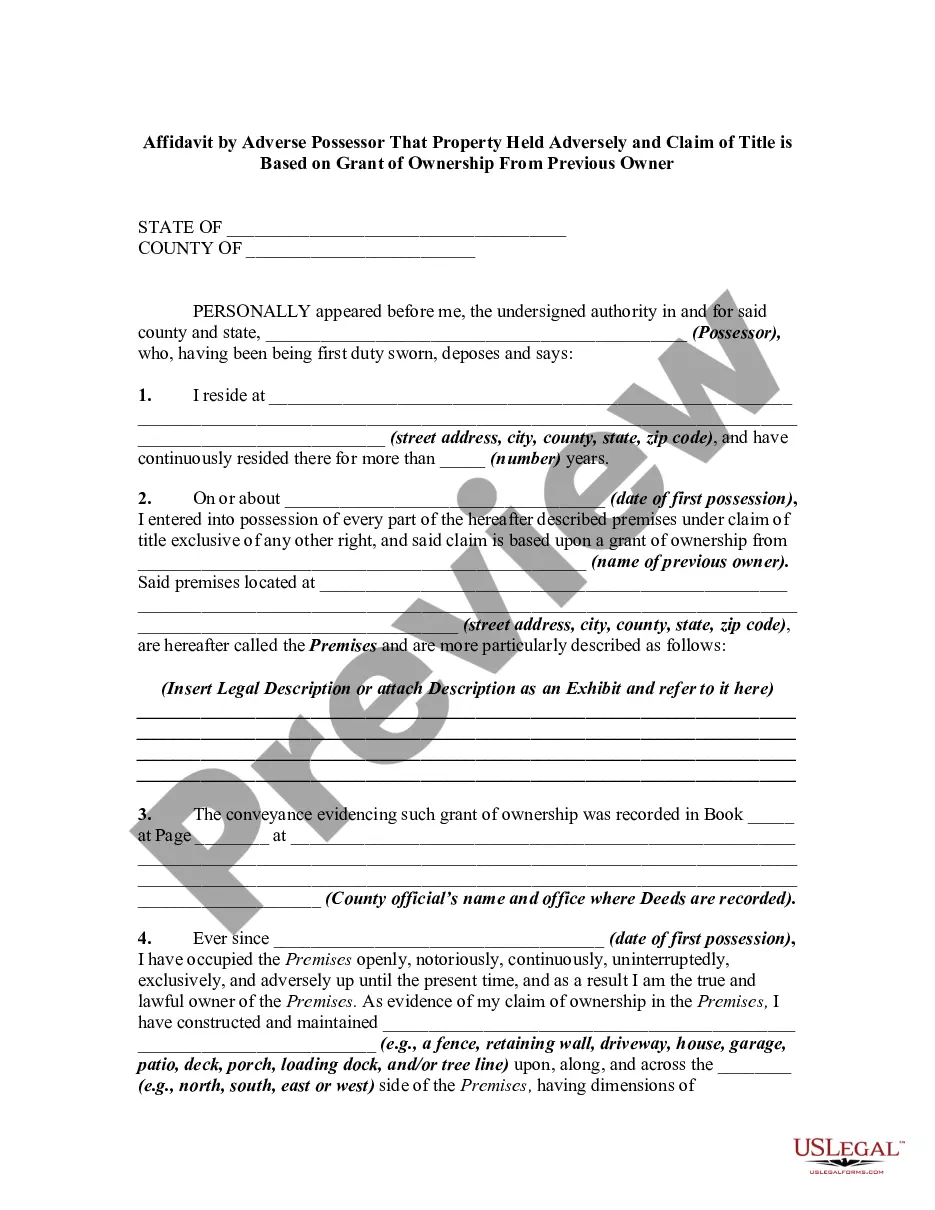
How to fill out Texas Adverse Possession Affidavit - Squatters Rights?
- Start by logging into your US Legal Forms account if you have used the service before. Click the Download button to get the needed form template, ensuring your subscription is active.
- In case this is your first time, begin by checking the Preview mode and form description to confirm that it suits your local requirements.
- If adjustments are needed, utilize the Search tab to find the appropriate template that matches your needs.
- Once you find the right document, click on the Buy Now button and select your preferred subscription plan to proceed.
- Complete your purchase by entering your payment details, either through credit card or PayPal.
- Finally, download the form and save it on your device for easy access, allowing you to revisit it anytime via the My Forms menu.
In conclusion, using US Legal Forms effectively empowers individuals, especially disabled adults in Texas, to navigate their rights and obtain necessary legal documents with ease. The platform’s extensive resources and expert support ensure precision and compliance, making it a vital tool for anyone needing legal assistance.
Start your journey to legal readiness today and explore the benefits provided by US Legal Forms!
Form popularity
FAQ
To file for squatters rights in Texas, you need to establish residency by living in the property for an extended period without the owner's permission. Gather necessary documents, such as proof of residence and any related correspondence. Next, it’s essential to understand the specific procedures and deadlines for your area, as they can vary. Utilizing platforms like US Legal Forms can streamline this process by providing you with the correct forms and guidance, especially regarding Texas squatters rights for disabled adults.
In Texas, the law recognizes a form of property title known as adverse possession. If you occupy a property openly and continuously for at least 10 years, you may claim ownership, but this can be complex, especially for disabled adults. Understanding your rights under Texas squatters rights for disabled adults is vital, as specific conditions apply. For accurate legal guidance and resources, consider visiting UsLegalForms, where you can find helpful tools and information tailored to your situation.
In Texas, a squatter typically must occupy a property for at least five years before they can claim squatters rights. This occupancy needs to be continuous, open, and without the property owner's permission. If you are a disabled adult interested in these rights, understanding the legal framework can help you navigate your unique situation.
To become recognized as a squatter in Texas, an individual must occupy a property without permission for a certain time, usually at least five years. However, this time frame can vary based on the circumstances and local ordinances. For disabled adults, accessing information on the specific requirements related to Texas squatters rights can streamline the process.
Using lethal force against a squatter in Texas is a serious legal matter. While Texas law does allow for self-defense, it typically requires that you face a direct threat. If you find yourself in a situation with a squatter, it's advisable to seek legal guidance rather than resorting to violence.
In Texas, squatters can claim rights if they have occupied a property openly, continuously, and without permission for a certain period. This period typically ranges from five to ten years, depending on local laws. For disabled adults, understanding the specific regulations surrounding Texas squatters rights becomes crucial, as they may have different implications.
In Texas, you can remove a squatter, but the process can be complicated. First, you should give them a formal notice to vacate the property. If they refuse to leave, you may need to file an eviction lawsuit in court. It's essential to follow legal procedures to avoid complications.
Yes, a squatter can potentially take ownership of a property in Texas through adverse possession, but several conditions must be met. Specifically, the squatter must demonstrate continuous and open use of the property for a specified period. Additionally, Texas squatters rights for disabled adults can provide further nuances to these situations. If you find yourself in this situation, seeking legal advice can be invaluable.
Yes, property owners can initiate the legal process to remove a squatter in Texas, but they cannot use force. Utilizing the legal system ensures that you follow proper procedures and avoid potential liabilities. Understanding Texas squatters rights for disabled adults may influence how these cases are handled. It's wise to document the squatter's presence and consult with experienced professionals to navigate the process effectively.
In Texas, the law typically requires a squatter to occupy a property openly for at least 10 years to gain legal title. However, if you are a disabled adult, understanding Texas squatters rights for disabled adults may provide additional protections. It is crucial to maintain continuous and uninterrupted possession during this time. For specific guidance, consider consulting a legal professional or resources on our platform.