Texas Grantors Resident With A Us Citizen
Description
Get your form ready online
Our built-in tools help you complete, sign, share, and store your documents in one place.
Make edits, fill in missing information, and update formatting in US Legal Forms—just like you would in MS Word.
Download a copy, print it, send it by email, or mail it via USPS—whatever works best for your next step.
Sign and collect signatures with our SignNow integration. Send to multiple recipients, set reminders, and more. Go Premium to unlock E-Sign.
If this form requires notarization, complete it online through a secure video call—no need to meet a notary in person or wait for an appointment.
We protect your documents and personal data by following strict security and privacy standards.

Make edits, fill in missing information, and update formatting in US Legal Forms—just like you would in MS Word.

Download a copy, print it, send it by email, or mail it via USPS—whatever works best for your next step.

Sign and collect signatures with our SignNow integration. Send to multiple recipients, set reminders, and more. Go Premium to unlock E-Sign.

If this form requires notarization, complete it online through a secure video call—no need to meet a notary in person or wait for an appointment.

We protect your documents and personal data by following strict security and privacy standards.
Looking for another form?


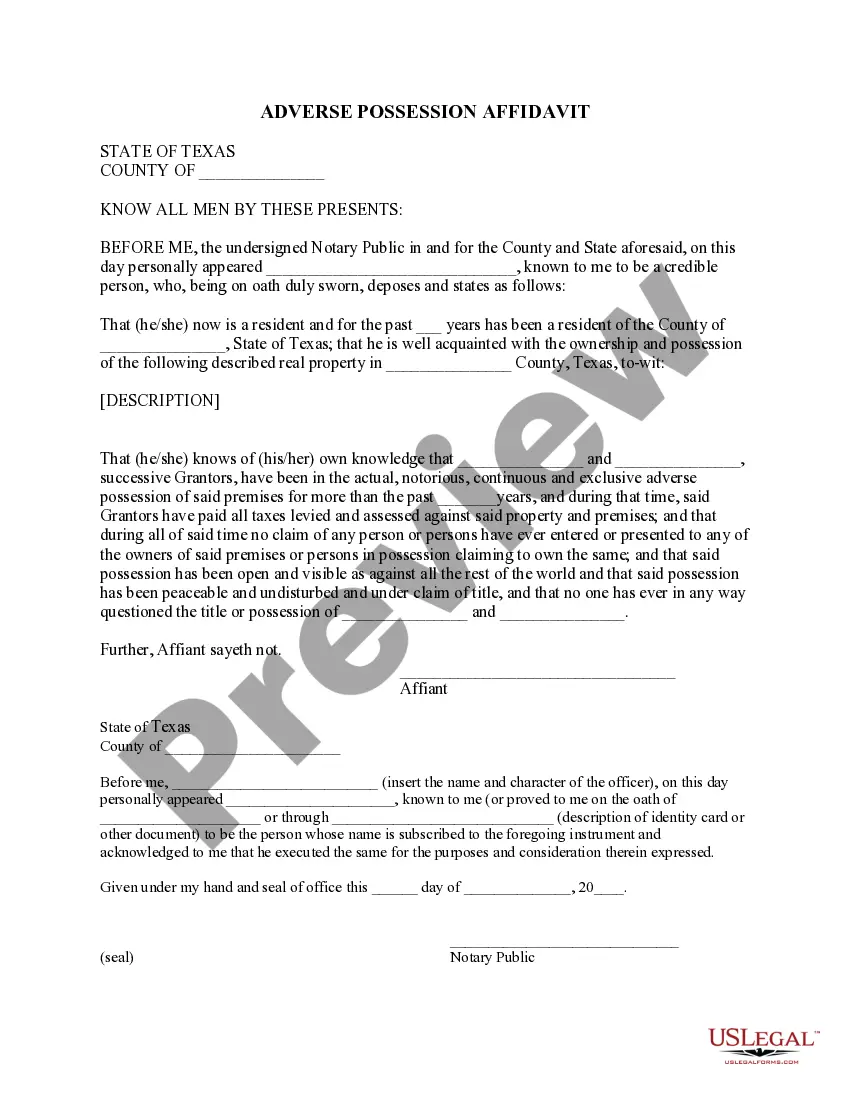
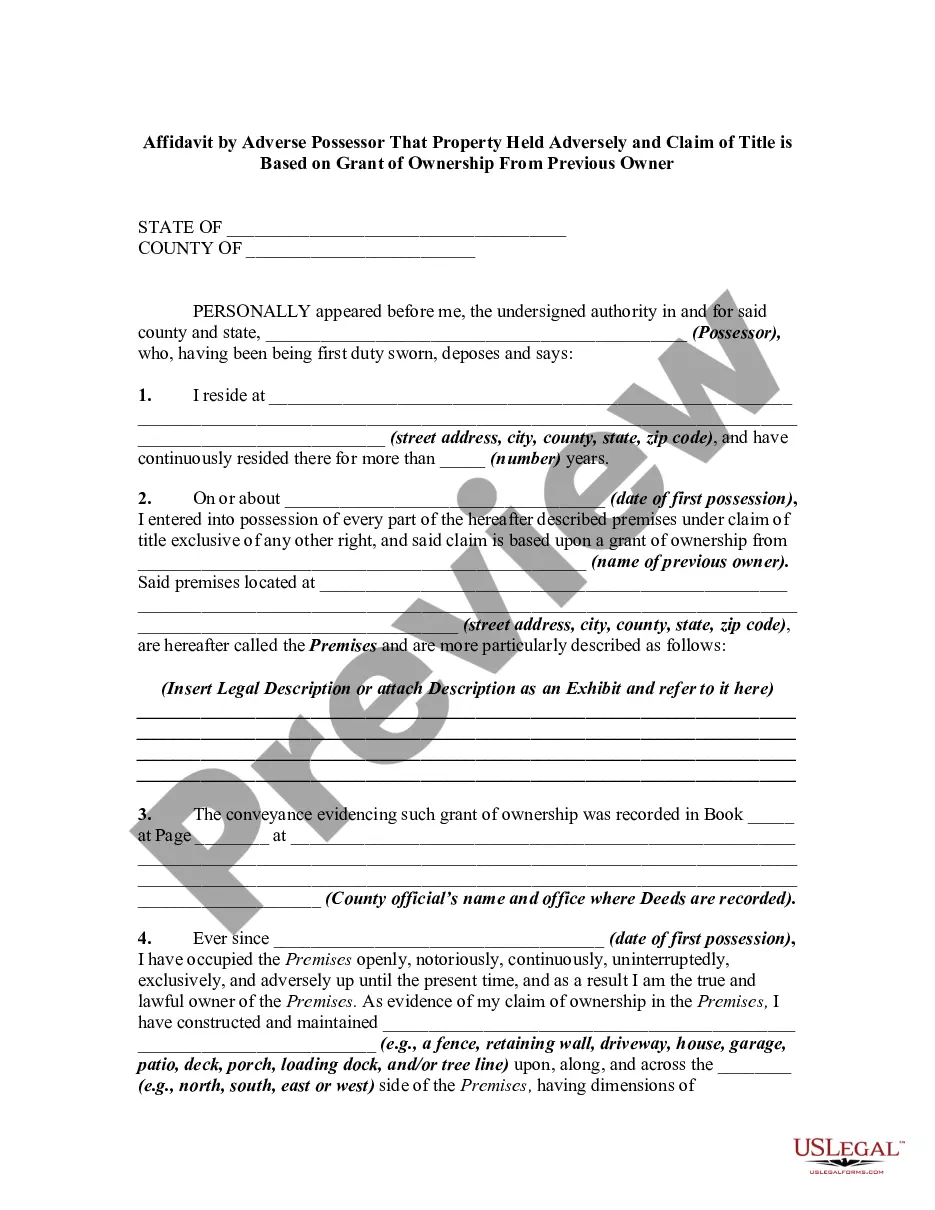
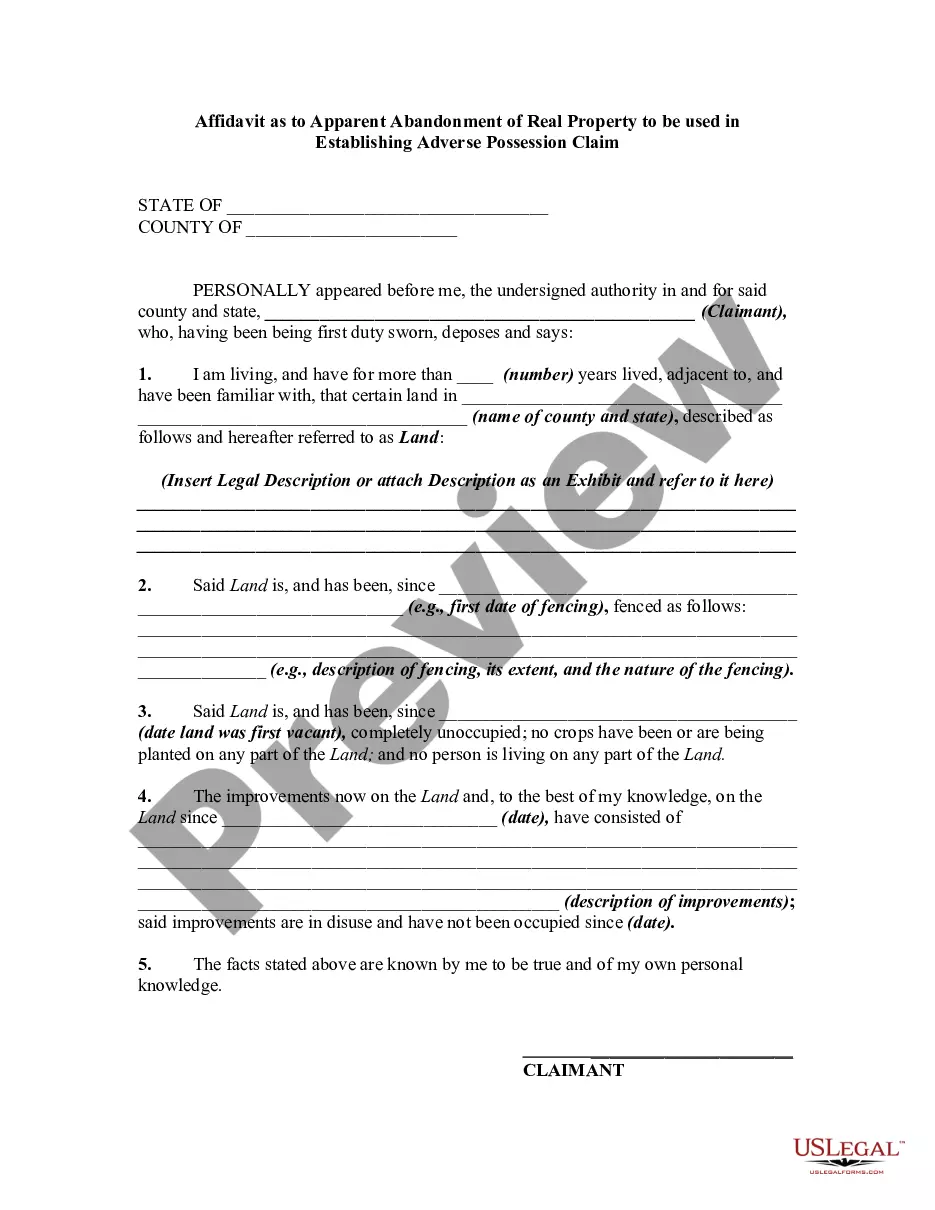
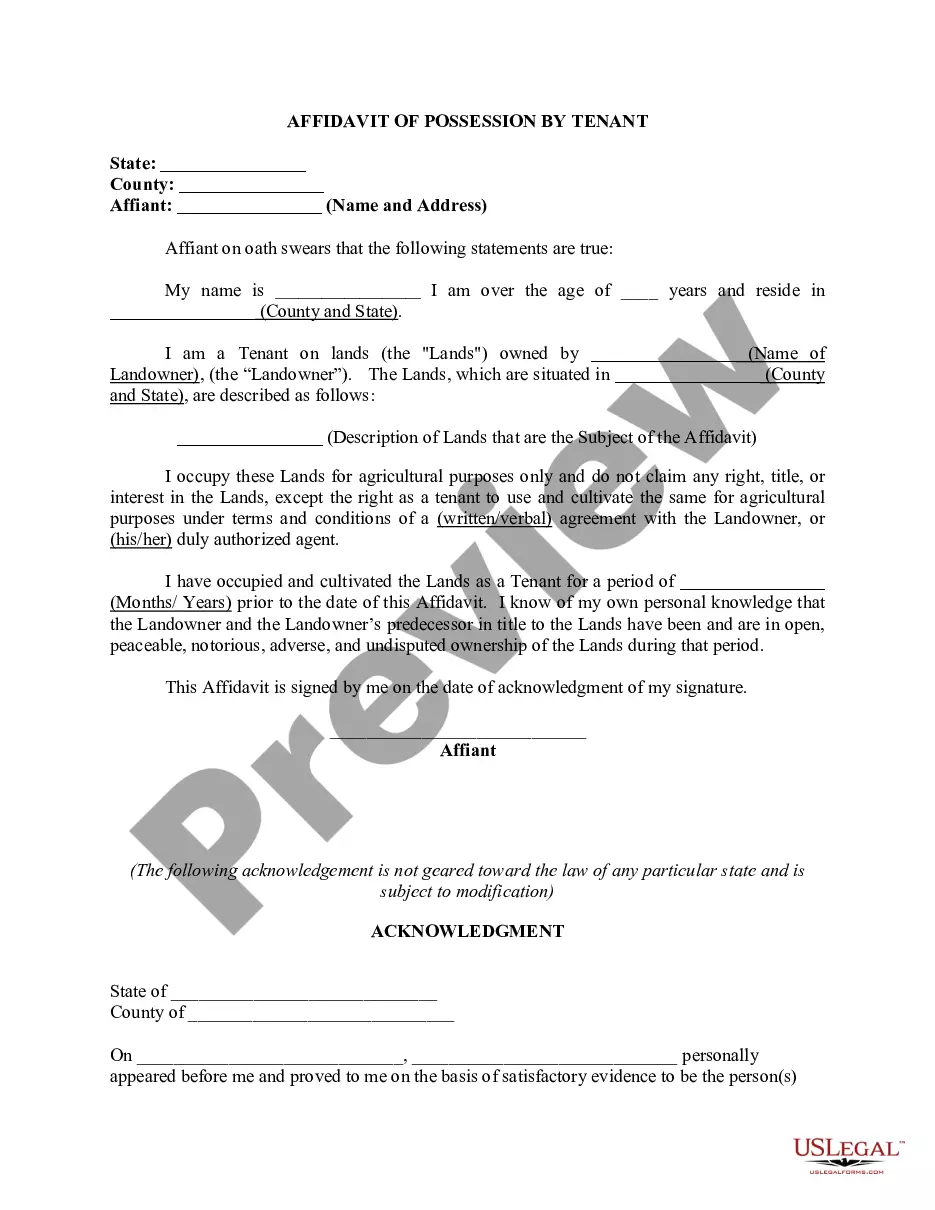
How to fill out Texas Adverse Possession Affidavit - Squatters Rights?
- Log in to your existing US Legal Forms account and check your subscription status. If it's active, proceed to the download section.
- If you are new to US Legal Forms, first browse the extensive library. Utilize the Preview mode to assess form descriptions and confirm they meet Texas regulations.
- Search for alternative templates if needed. Use the Search tab to explore more options until you identify the right form.
- Once you've chosen the appropriate document, click the Buy Now button. Select your preferred subscription plan and create an account to access the forms.
- Complete your purchase using your credit card or PayPal. Keep your payment information secure.
- Download the document onto your device and access it anytime through the 'My Forms' section in your profile for future reference.
In conclusion, US Legal Forms effectively empowers users by providing tools that simplify legal documentation. With a collection of over 85,000 forms and access to expert assistance, you can confidently complete your legal needs.
Get started today and secure your legal documents with ease by visiting US Legal Forms.
Form popularity
FAQ
To be domiciled in Texas, you must establish a permanent home in the state and intend to make it your primary residence. Actions such as obtaining a Texas driver’s license, registering to vote, and taking steps to integrate into the community can affirm your domicile status. If you are among the Texas grantors residents with a US citizen, the process can become more straightforward.
Texas residency is determined by several factors including physical presence, duration of stay, and intent to remain. If you live and participate in community activities in Texas, you can establish your residency. The influence of Texas grantors residents with a US citizen may also play a role in your residency determination.
To qualify as a Texas resident, you need to prove your physical presence in the state and your intent to stay. This may include having a permanent address, employment, or being a student in Texas. If you are a Texas grantors resident with a US citizen, your situation could reinforce your residency claim.
The Texas grant SAP, or Student Assistance Program, has specific requirements including Texas residency status and financial need. If you are a Texas grantors resident with a US citizen, you may qualify for this assistance to support your education. It's essential to review the application criteria and gather required documentation.
Basing your residency on your parents means that you depend on their legal residence to determine your own. If they are Texas grantors residents with a US citizen, you can claim Texas residency as a minor or dependent child. This can simplify processes such as school enrollment and eligibility for state benefits.
Filling out the Texas residency affidavit requires you to provide your personal details and proof of residency. Make sure you include information about where you live, the duration of your stay, and any Texas grantors residents with a US citizen in your life. For guidance, consider using online resources, like USLegalForms, to ensure accuracy.
Yes, a non-US citizen can establish residency in Texas. The state recognizes residency based on physical presence and intent to remain rather than citizenship status. Thus, if a non-citizen meets certain criteria, including time spent in Texas, they can be considered a Texas resident.
If you are a minor and your parents or legal guardian are Texas grantors residents with a US citizen, you may derive your residency from them. This means that your residency status can reflect where they established their legal residence. Understanding this relationship can simplify your residency application in Texas.
Funding from the Texas grants program typically goes to residents who demonstrate financial need and meet the program's academic and residency criteria. This includes Texas grantors who are US citizens pursuing higher education. If you believe you fit this profile, completing your application accurately will be crucial in securing potential funding.
The DHHs grant program primarily supports residents who demonstrate financial need and target specific populations, including Texas grantors who are US citizens. Eligibility often includes having a declared major that aligns with the program’s objectives, so it’s beneficial to research the requirements thoroughly. If you are uncertain about your eligibility, you can seek guidance from your school's financial aid office.