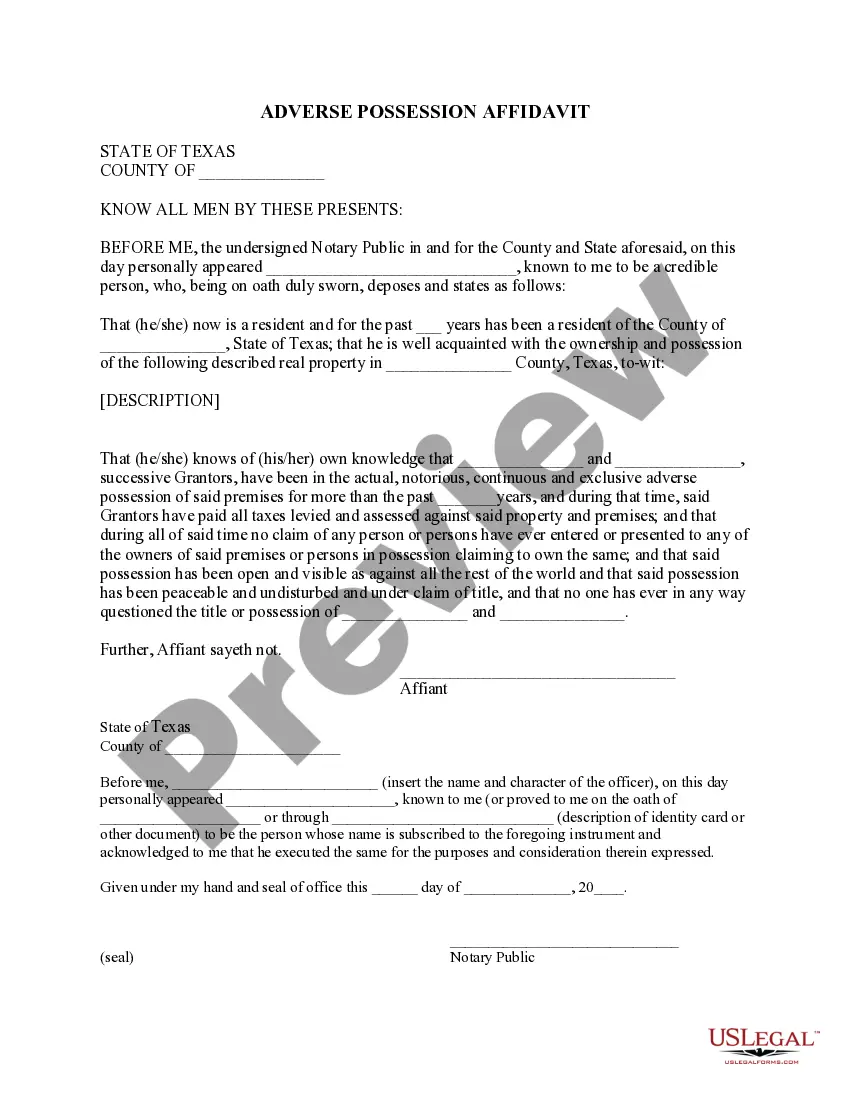
Squatters Rights In Texas Answers
Description
Get your form ready online
Our built-in tools help you complete, sign, share, and store your documents in one place.
Make edits, fill in missing information, and update formatting in US Legal Forms—just like you would in MS Word.
Download a copy, print it, send it by email, or mail it via USPS—whatever works best for your next step.
Sign and collect signatures with our SignNow integration. Send to multiple recipients, set reminders, and more. Go Premium to unlock E-Sign.
If this form requires notarization, complete it online through a secure video call—no need to meet a notary in person or wait for an appointment.
We protect your documents and personal data by following strict security and privacy standards.

Make edits, fill in missing information, and update formatting in US Legal Forms—just like you would in MS Word.

Download a copy, print it, send it by email, or mail it via USPS—whatever works best for your next step.

Sign and collect signatures with our SignNow integration. Send to multiple recipients, set reminders, and more. Go Premium to unlock E-Sign.

If this form requires notarization, complete it online through a secure video call—no need to meet a notary in person or wait for an appointment.

We protect your documents and personal data by following strict security and privacy standards.
Looking for another form?


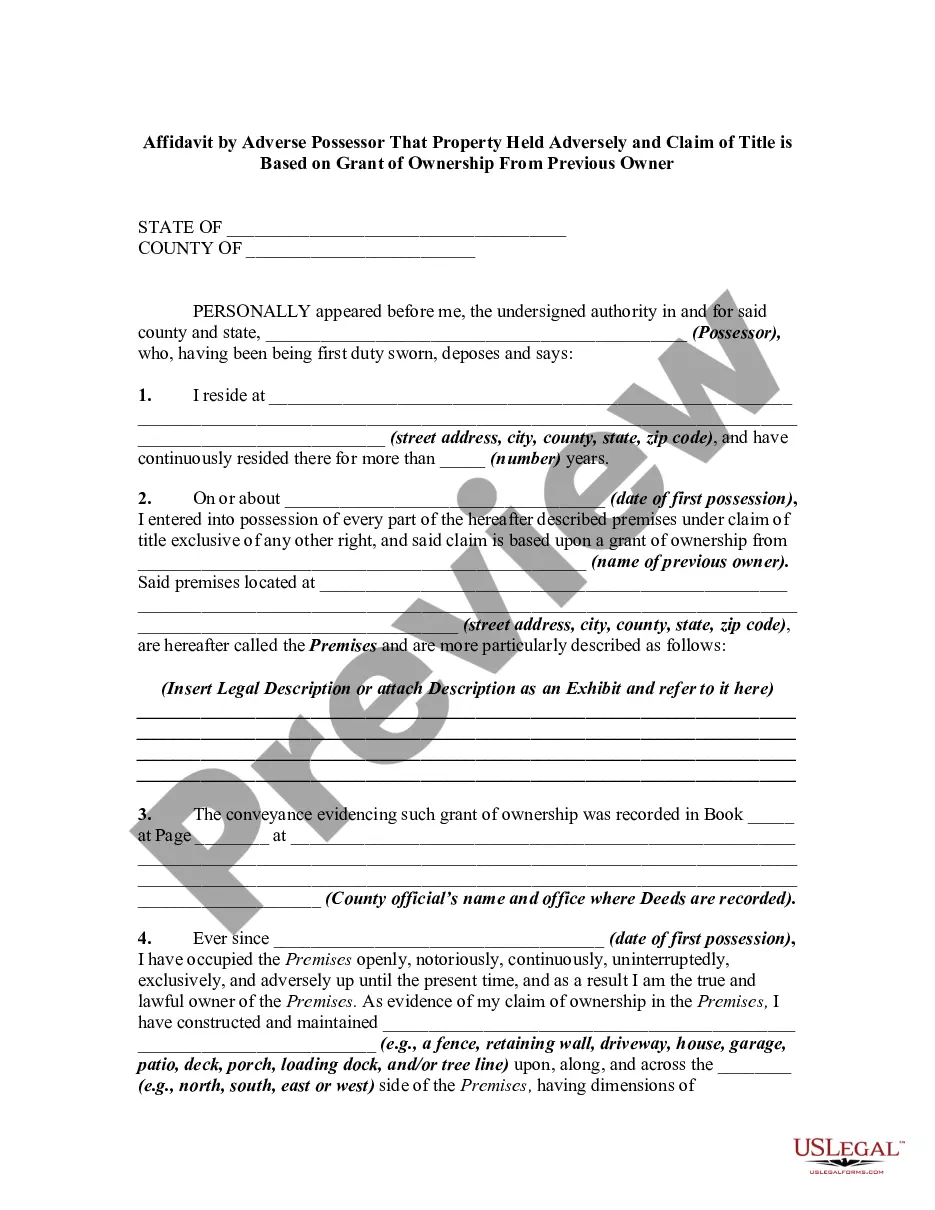
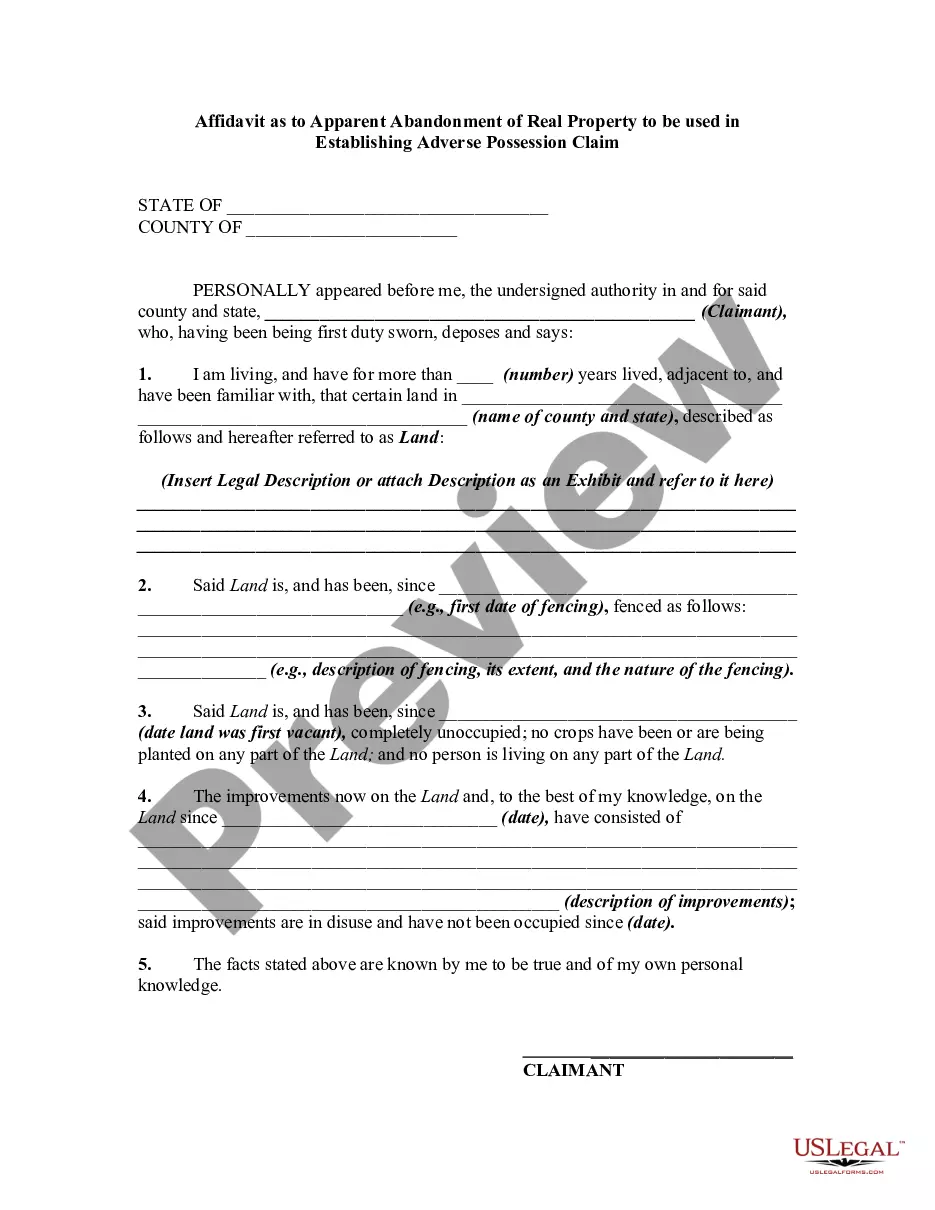
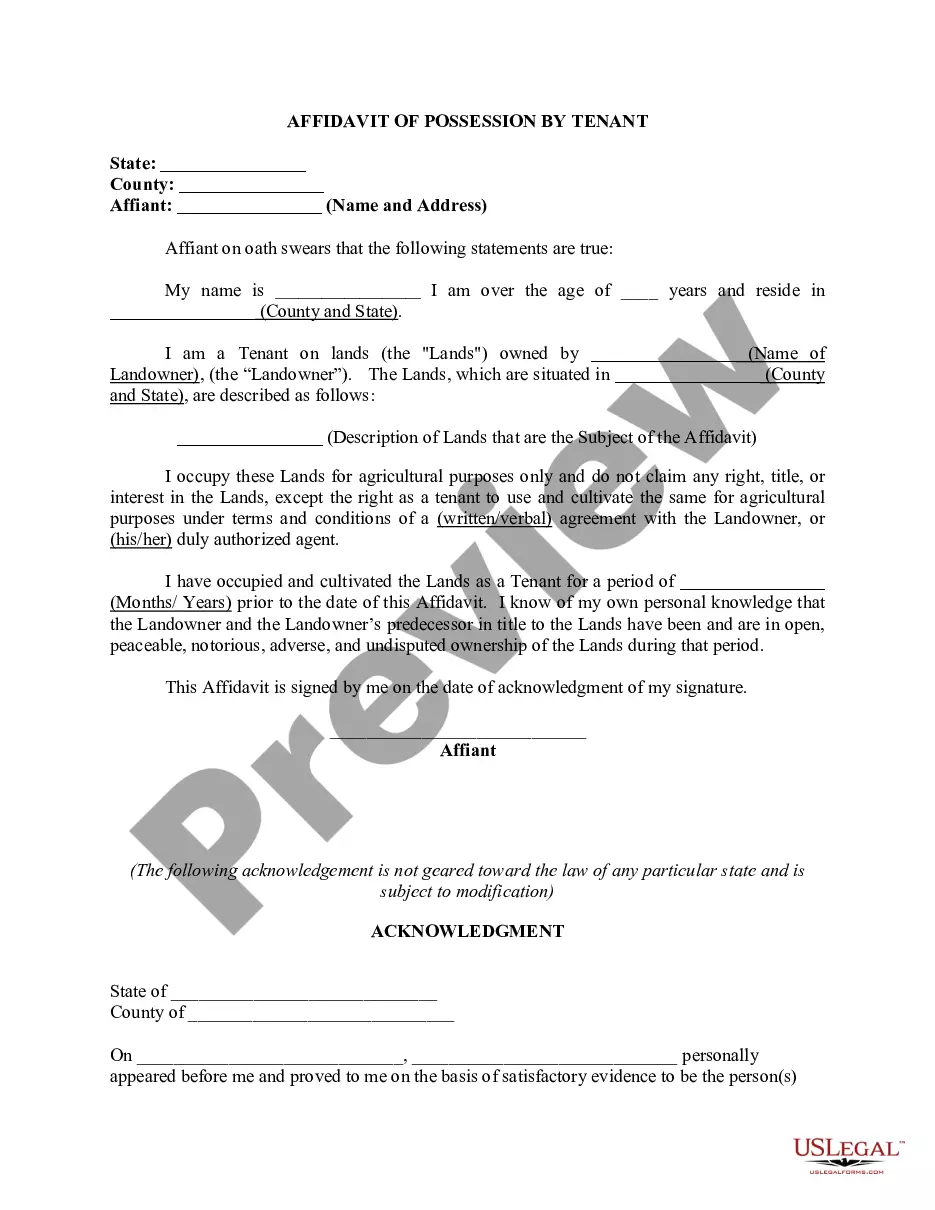
How to fill out Texas Adverse Possession Affidavit - Squatters Rights?
Managing legal paperwork and activities can be a lengthy addition to your schedule.
Rights of Occupants in Texas inquiries and documents like it typically necessitate you to locate them and figure out how to fill them out correctly.
As such, whether you are dealing with financial, legal, or personal issues, utilizing a comprehensive and effective online repository of templates at your disposal will be immensely beneficial.
US Legal Forms is the leading online service of legal templates, featuring over 85,000 state-specific documents and a range of tools that will assist you in completing your paperwork effortlessly.
Are you using US Legal Forms for the first time? Create and establish an account in just a few minutes to gain access to the document library and Rights of Occupants in Texas inquiries. Then, follow the instructions outlined below to finalize your form.
- Explore the database of pertinent documents accessible with just one click.
- US Legal Forms provides you with state- and county-specific templates available at any time for download.
- Protect your document management activities with a premium service that enables you to prepare any form in minutes without incurring extra or concealed fees.
- Simply Log In to your profile, locate Rights of Occupants in Texas inquiries and download it right away from the My documents section.
- You can also retrieve forms you have previously downloaded.
Form popularity
FAQ
To qualify for squatters rights in Texas, an individual must occupy the property openly, continuously, and without the owner’s permission for a set period. The occupation must also be exclusive and not secretive, along with paying property taxes during the possession. These criteria play a significant role in establishing adverse possession claims. For nuanced insights, reviewing squatters rights in Texas answers will prove beneficial.
In Texas, a person generally must occupy a property continuously for at least 10 years to claim squatter’s rights, also known as adverse possession. This time frame can vary based on certain conditions and the nature of the property involved. Knowing these specifics helps property owners protect their interests. For detailed guidance, consider exploring squatters rights in Texas answers for comprehensive information.
Shooting a squatter for trespassing in Texas is not advisable and could result in serious legal repercussions. Texas laws allow for self-defense, but this must be clearly justified as imminent danger. It is crucial to contact law enforcement rather than take matters into your own hands. Understanding squatters rights in Texas answers can guide you in handling disputes peacefully and legally.
To kick out a squatter in Texas, you need to file an eviction lawsuit, also known as a forcible entry and detainer action. After obtaining a court order, you can have the local sheriff assist with the removal. Gathering evidence of your ownership and documenting the squatter’s presence will strengthen your case. Always remember that following the legal process is essential when addressing squatters rights in Texas answers.
Yes, you can kick a squatter out in Texas, but it involves a legal process. Simply removing someone without going through the court may lead to complications. To ensure that you follow the correct steps, familiarize yourself with the eviction process. Understanding squatters rights in Texas answers will help you navigate this situation effectively.
The new squatters law in Texas clarifies the rights and responsibilities of property owners and squatters. Under this law, property owners must take certain steps to reclaim their property if squatters occupy it unlawfully. It’s essential to understand squatters rights in Texas answers to know how this affects you as a property owner or a squatter. For accurate guidance, consider using the USLegalForms platform to access reliable legal documents and information.
The process to evict a squatter in Texas can take several weeks to a few months, depending on various factors. Initially, you must provide a formal notice to the squatter, which can take up to three days if it's a simple eviction notice. After that, legal proceedings may be required, which could extend the timeline based on court schedules. For detailed and reliable information, you can always refer to US Legal Forms for squatters rights in Texas answers and guidance on your specific situation.
To become recognized as a squatter in Texas, the individual generally needs to occupy the property without the owner's consent for at least five years. This period must include continuous residence and some form of open possession. Gaining insights from squatters' rights in Texas answers helps clarify this process, and professional assistance from services like UsLegalForms can provide the necessary guidance to ensure compliance with local regulations.
Filing for squatters' rights in Texas involves demonstrating possession of the property, typically by showing proof of long-term occupancy and fulfilling other legal requirements. This process can be complex, and it is often wise to seek assistance to navigate the local laws effectively. Exploring squatters' rights in Texas answers can empower you, and using platforms like UsLegalForms can streamline your application process.
Yes, a property owner can remove a squatter from their property, but it often requires a legal eviction process. It is illegal to forcibly remove someone without following the correct legal procedures, as this may lead to legal complications. Familiarizing yourself with squatters' rights in Texas answers is crucial for homeowners, and seeking legal advice is advisable to ensure a smooth eviction.