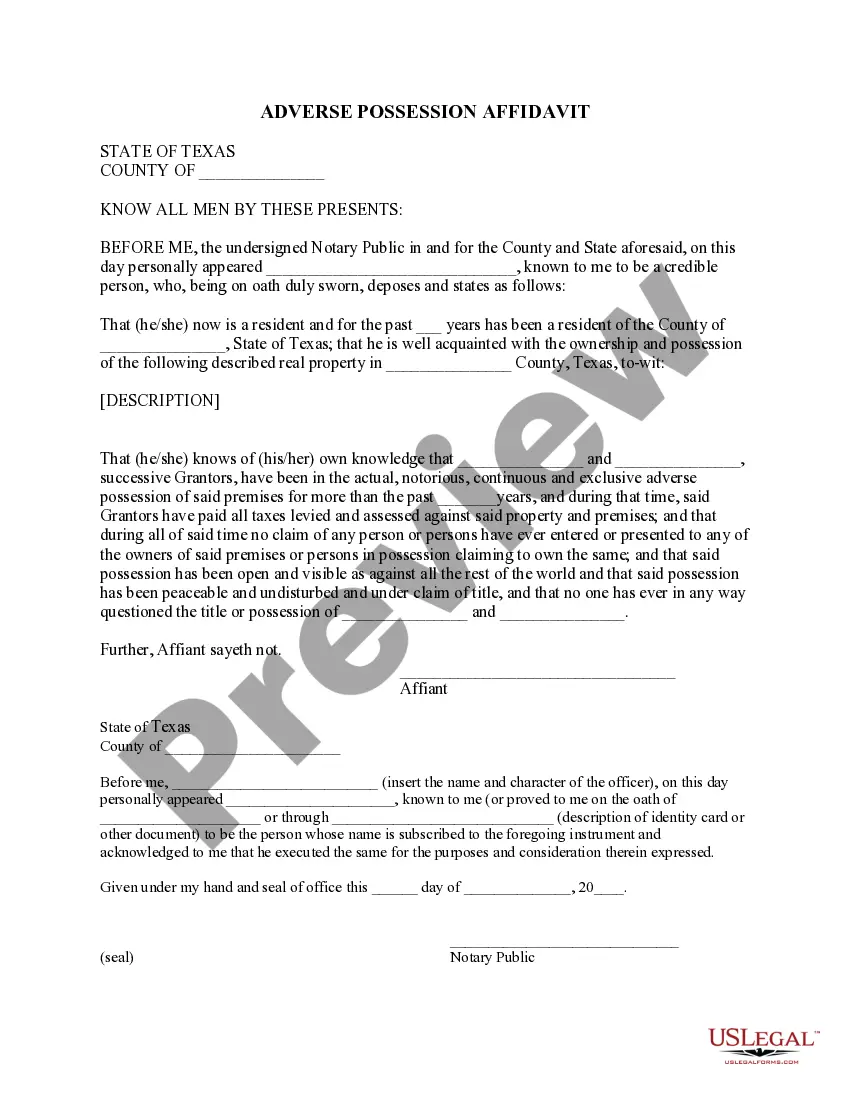
Adverse Possetion
Description
Get your form ready online
Our built-in tools help you complete, sign, share, and store your documents in one place.
Make edits, fill in missing information, and update formatting in US Legal Forms—just like you would in MS Word.
Download a copy, print it, send it by email, or mail it via USPS—whatever works best for your next step.
Sign and collect signatures with our SignNow integration. Send to multiple recipients, set reminders, and more. Go Premium to unlock E-Sign.
If this form requires notarization, complete it online through a secure video call—no need to meet a notary in person or wait for an appointment.
We protect your documents and personal data by following strict security and privacy standards.

Make edits, fill in missing information, and update formatting in US Legal Forms—just like you would in MS Word.

Download a copy, print it, send it by email, or mail it via USPS—whatever works best for your next step.

Sign and collect signatures with our SignNow integration. Send to multiple recipients, set reminders, and more. Go Premium to unlock E-Sign.

If this form requires notarization, complete it online through a secure video call—no need to meet a notary in person or wait for an appointment.

We protect your documents and personal data by following strict security and privacy standards.
Looking for another form?




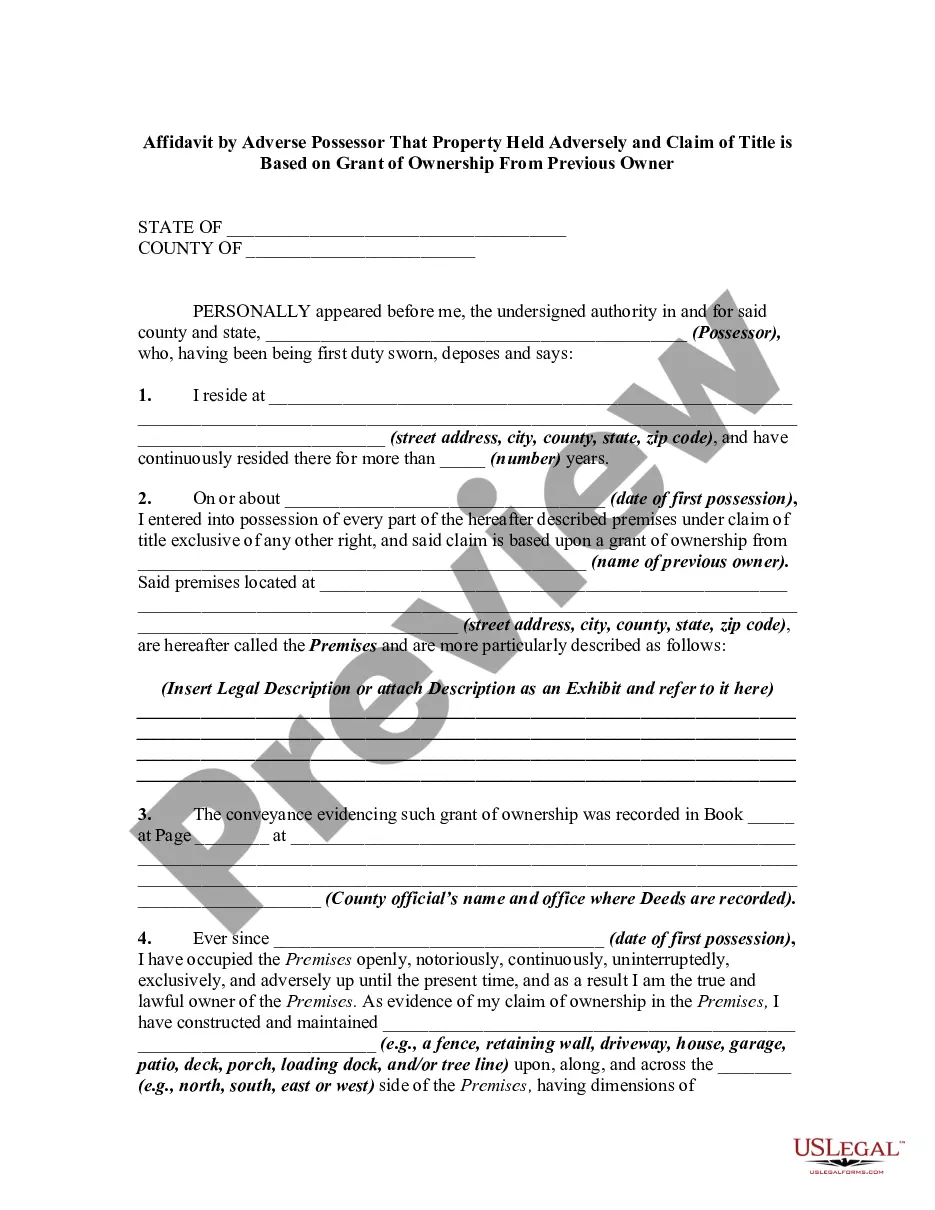
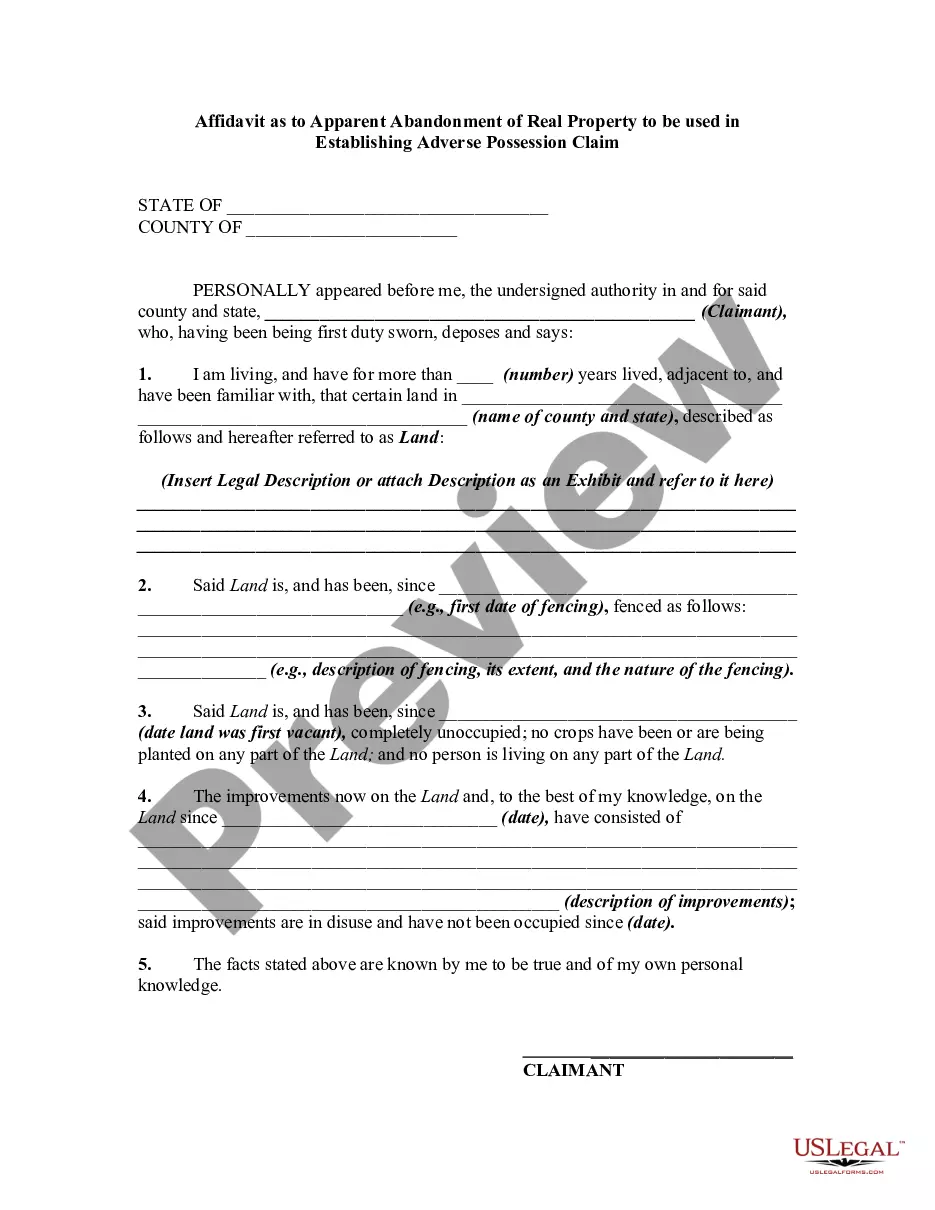
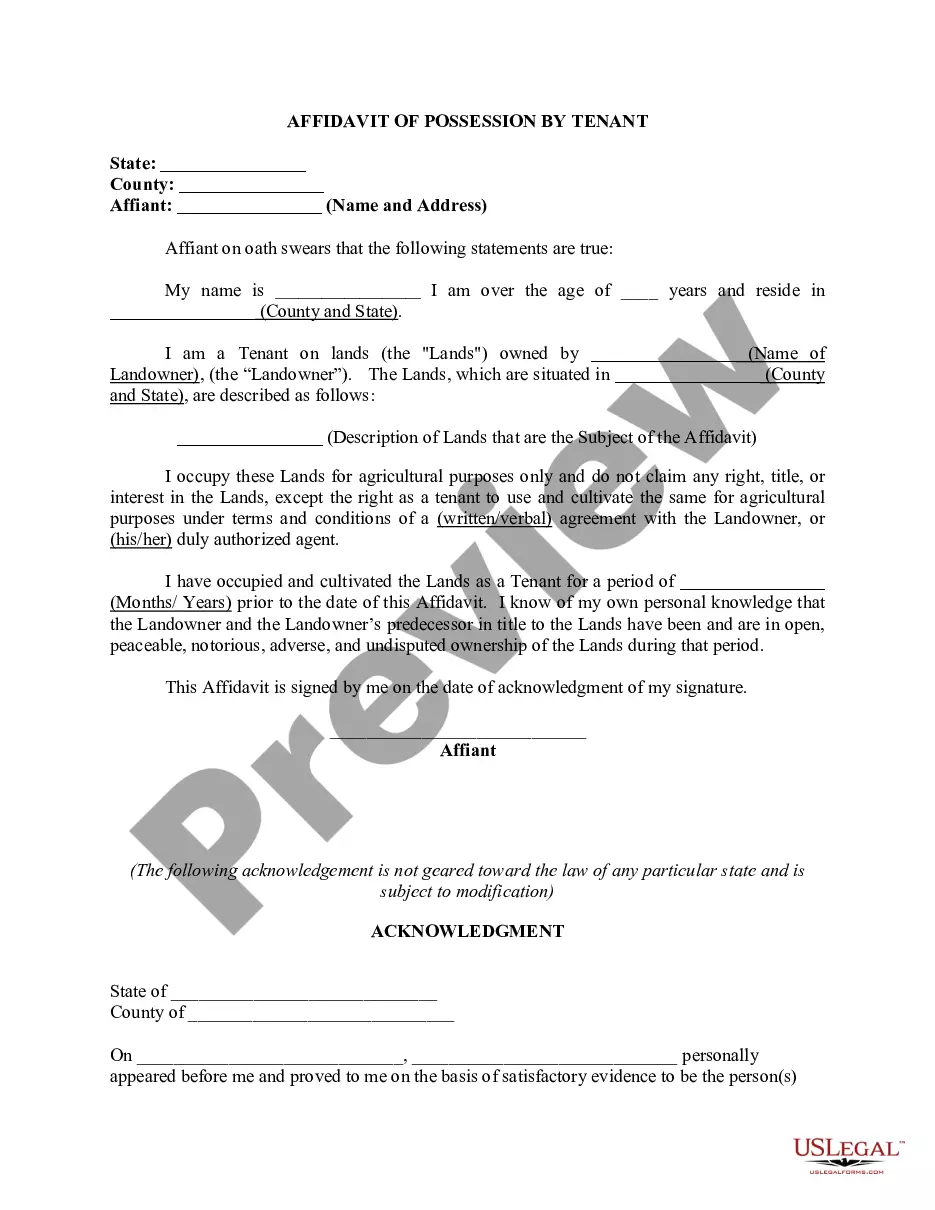
How to fill out Texas Adverse Possession Affidavit - Squatters Rights?
- Log in to your US Legal Forms account if you’re a returning user, and download the required form by clicking the Download button, ensuring your subscription is valid.
- For first-time users, start by reviewing the Preview mode and form descriptions to find the correct document that meets your local jurisdiction's requirements.
- If you need additional templates, use the Search tab to find more forms that may suit your needs.
- Once you've located the right document, click on the Buy Now button and select your desired subscription plan, remember to register your account.
- Complete your purchase by entering your credit card information or utilizing your PayPal account for payment.
- Finally, download the form to your device to fill it out and keep it accessible in the My Forms section of your profile.
US Legal Forms simplifies the legal document process with over 85,000 fillable and editable forms at your fingertips. With a robust library and access to premium experts, you're ensured accurate and legally sound documents.
Take control of your legal needs today by leveraging the resources available at US Legal Forms. Start your journey to effective legal documentation now!
Form popularity
FAQ
Yes, adverse possession can indeed transfer to a new owner. When someone successfully claims ownership of a property through adverse possession, that ownership is legally recognized and can be sold or transferred like any other property. However, the new owner must maintain the same conditions that led to the original claim of adverse possession. For anyone navigating these legal waters, uslegalforms provides essential resources and documents to ensure a smooth transfer process.
Recording an adverse possession claim typically involves filing a legal action in your local court to gain title to the property. You will need to provide evidence of your continuous and open possession, along with any supporting documents that establish your claim. The process can differ by state, so understanding the specific requirements in your area is vital. Platforms like US Legal Forms can offer templates and guidance to help ensure the process is completed correctly.
To beat an adverse possession claim, the true owner must actively assert their rights over the property. This can include regularly checking the land, maintaining it, or even filing a lawsuit if someone is wrongfully occupying it. It is helpful to document your ownership through deeds or other legal means. Engaging with legal services can provide you with insights on how to protect your rights effectively.
An example of an adverse possession claim could involve a person who builds a fence on land they believed was unowned and continuously maintains it for over 20 years. If the actual owner does not challenge this claim during that time, the fence builder may be able to claim ownership of the land through adverse possession. This scenario highlights the importance of being aware of property boundaries and ownership rights. If you find yourself in a similar situation, seeking guidance through US Legal Forms can be beneficial.
To qualify for adverse possession in Georgia, you must possess the land for at least 20 years without the permission of the true owner. Your possession must be continuous, open, and notorious, meaning it should be obvious to others, including the original owner. Additionally, you need to demonstrate an intent to possess the property as your own. Understanding these requirements is crucial, and US Legal Forms can help clarify the process for you.
In Illinois, the process of adverse possession typically requires a minimum of 20 years of continuous, uninterrupted possession of the property. This means you must occupy the land openly and without permission from the rightful owner. It's important to gather evidence during this time to support your claim. If you are considering an adverse possession claim, consult legal resources to navigate the complexities involved.
To claim land that appears unowned, you may want to consider filing for adverse possession. This process requires you to demonstrate continuous and open use of the property for a specific duration, as dictated by state law. It's essential to ensure that no one holds legal title to the land and that you meet all local requirements. Engaging with uslegalforms can provide key insights and templates necessary to initiate your claim respectfully and legally.
As mentioned earlier, adverse possession in Pennsylvania typically requires a 21-year period of possession. During this time, the possessor must adhere to specific legal standards that demonstrate their ownership claim. If you're considering claiming property through adverse possession, it's important to remain informed about the evolving laws and your rights. Consider using uslegalforms to assist you in navigating this complex process.
In Pennsylvania, the five key requirements for adverse possession are actual possession, exclusive possession, open and notorious possession, adverse or hostile use, and continuous possession for 21 years. Each aspect plays a vital role in establishing a legal claim to the property. Meeting these requirements ensures that your claim stands up in court if contested. Utilizing resources available on uslegalforms can help streamline your efforts in understanding these legal frameworks.
In Pennsylvania, the period for adverse possession is 21 years. This time frame requires that the possession of the land be actual, continuous, and exclusive. By meeting these conditions, a possessor can eventually claim ownership of the property in question. For those unfamiliar with the legal process, seeking assistance through platforms like uslegalforms can simplify your journey.