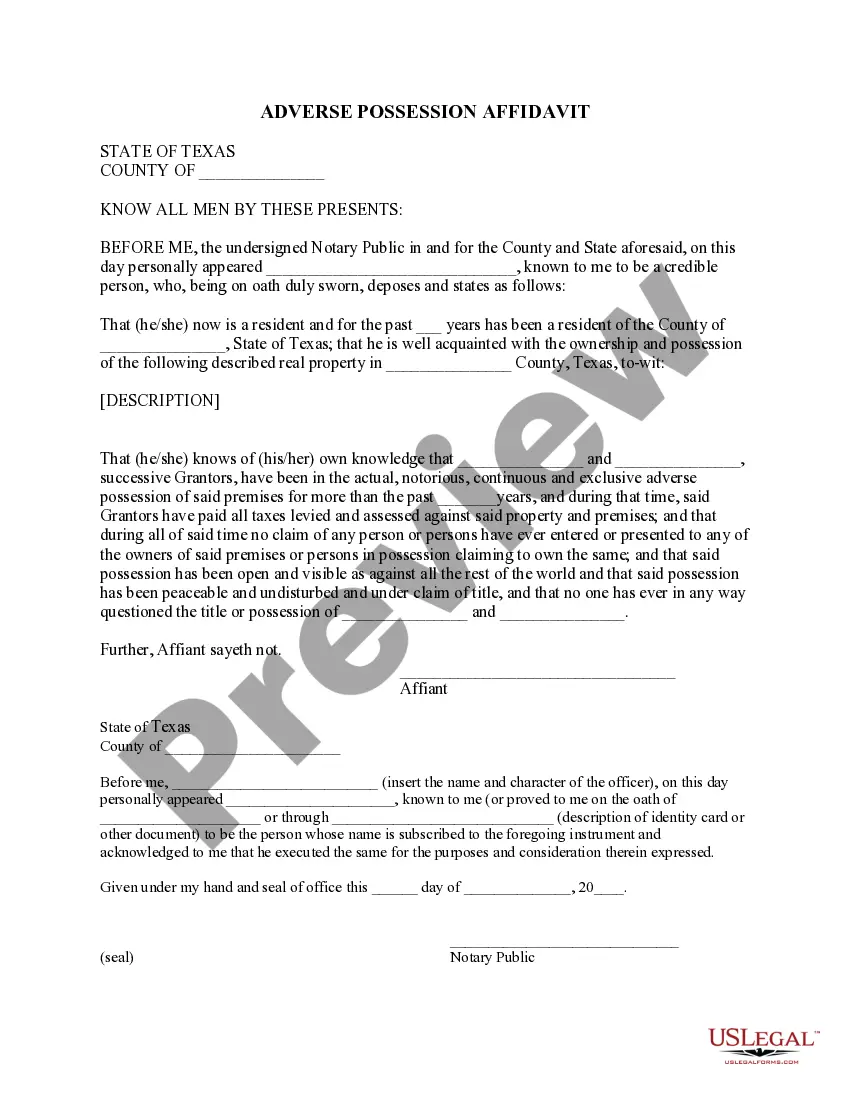
Adverse Possession Draft With Copies
Description
Get your form ready online
Our built-in tools help you complete, sign, share, and store your documents in one place.
Make edits, fill in missing information, and update formatting in US Legal Forms—just like you would in MS Word.
Download a copy, print it, send it by email, or mail it via USPS—whatever works best for your next step.
Sign and collect signatures with our SignNow integration. Send to multiple recipients, set reminders, and more. Go Premium to unlock E-Sign.
If this form requires notarization, complete it online through a secure video call—no need to meet a notary in person or wait for an appointment.
We protect your documents and personal data by following strict security and privacy standards.

Make edits, fill in missing information, and update formatting in US Legal Forms—just like you would in MS Word.

Download a copy, print it, send it by email, or mail it via USPS—whatever works best for your next step.

Sign and collect signatures with our SignNow integration. Send to multiple recipients, set reminders, and more. Go Premium to unlock E-Sign.

If this form requires notarization, complete it online through a secure video call—no need to meet a notary in person or wait for an appointment.

We protect your documents and personal data by following strict security and privacy standards.
Looking for another form?







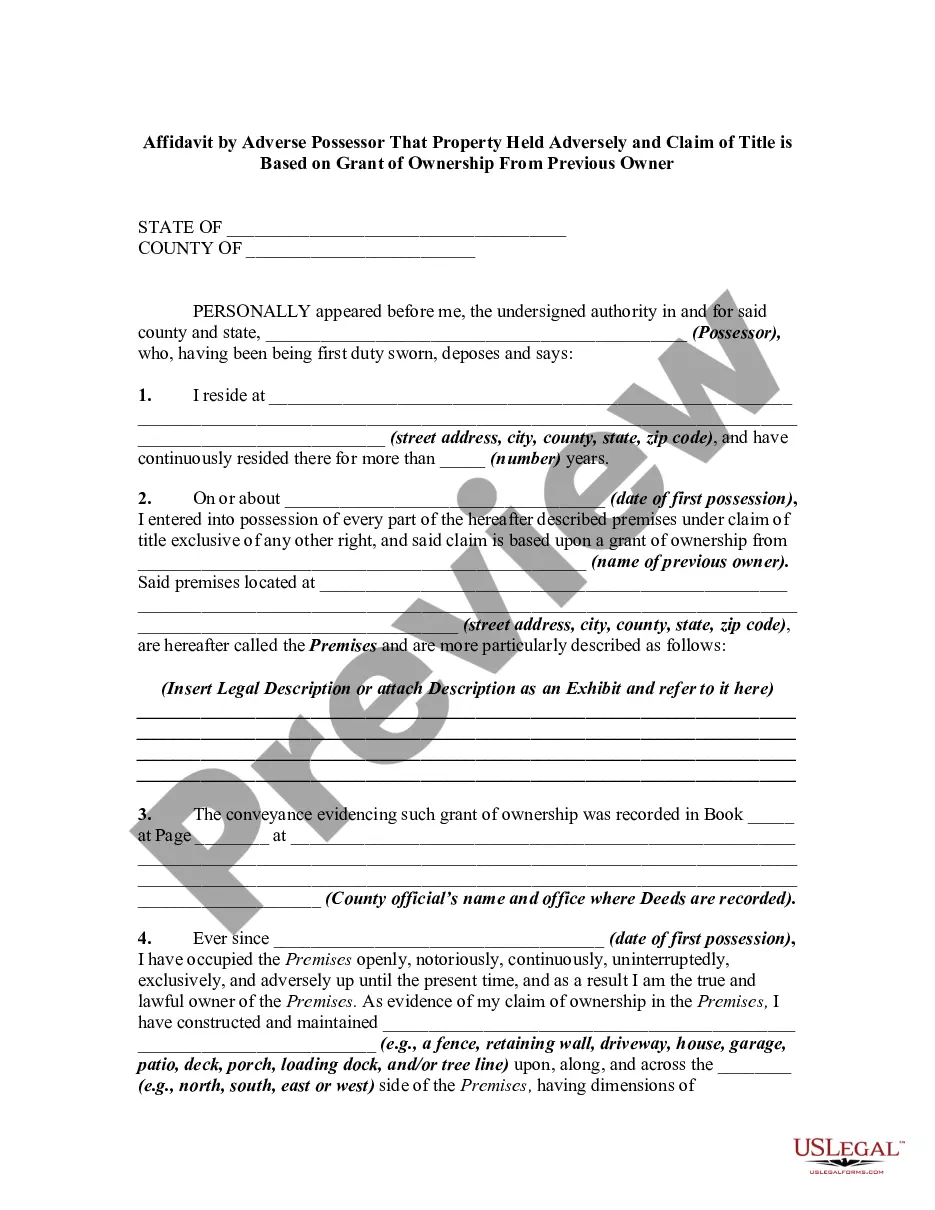
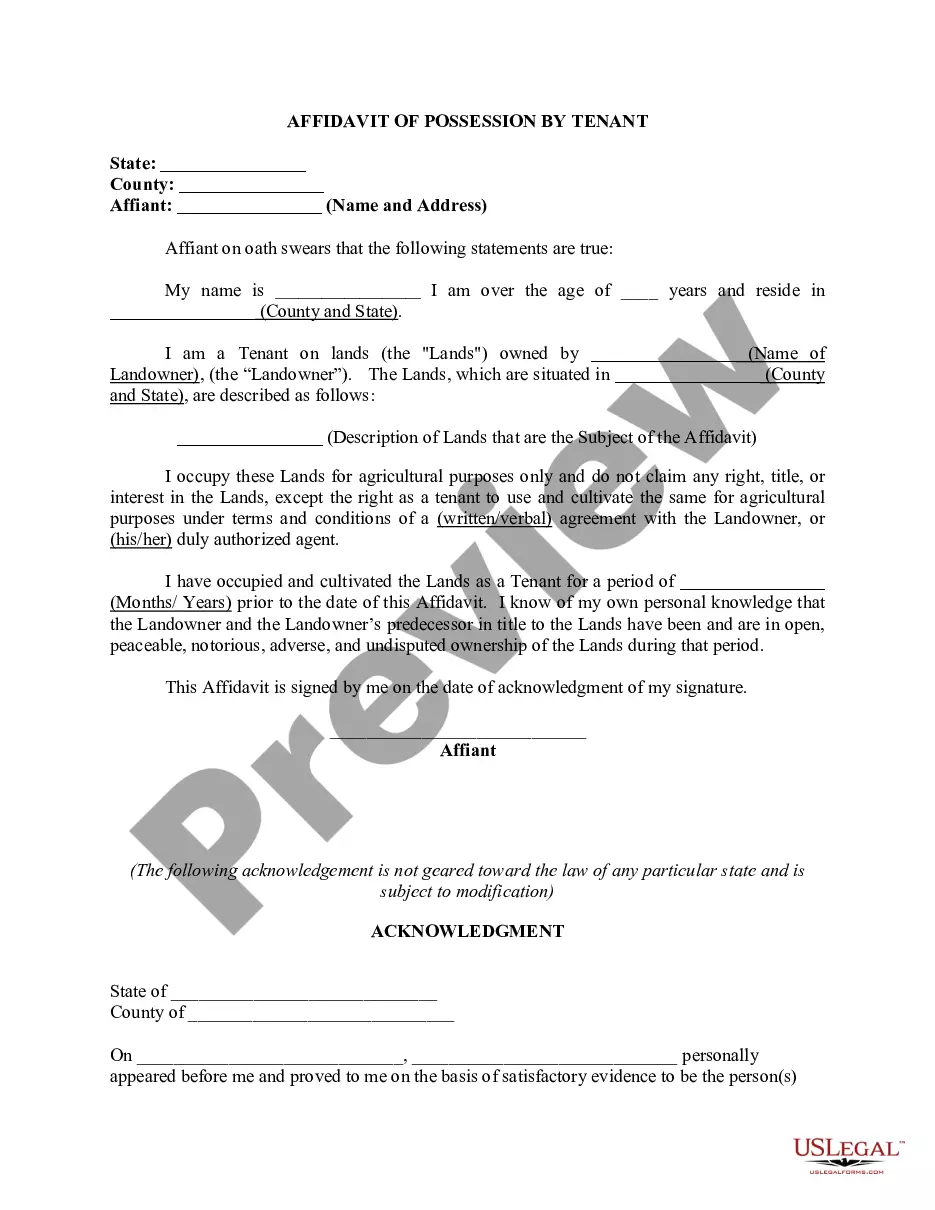
How to fill out Texas Adverse Possession Affidavit - Squatters Rights?
- If you're an existing user, log in to your account and access your required form template from the library by clicking the Download button. Ensure your subscription is active; if not, renew it based on your payment plan.
- For first-time users, start by checking the Preview mode and form description to confirm you've selected the appropriate template that aligns with your local jurisdiction's requirements.
- If adjustments are necessary, utilize the Search tab above to locate another relevant form. Once satisfied with your selection, proceed to the next step.
- To purchase the document, click on the Buy Now button and select your preferred subscription plan. Creating an account will grant you access to the entire library of forms.
- Complete your purchase by entering your credit card information or utilizing your PayPal account for convenience.
- Finally, download your form to your device. Access it anytime you need from the My Forms section of your profile.
In conclusion, US Legal Forms streamlines the process of obtaining essential legal documents like an adverse possession draft with copies. With an extensive catalog of legal forms and expert assistance available, you can ensure your documentation is accurate and compliant.
Don't hesitate to visit US Legal Forms today to secure your legal needs efficiently!
Form popularity
FAQ
The latest Supreme Court decision regarding adverse possession has emphasized the need for clear evidence of all five requirements for a successful claim. While specific cases can vary, the ruling reiterates that courts require substantial proof of continuous, open, and exclusive possession. Using an adverse possession draft with copies may guide you in structuring your evidence to align with the court's expectations.
To prove adverse possession in California, you need to demonstrate that you meet all five requirements established by law. You'll need evidence of your actual use of the property, alongside testimony or documentation showing that your possession was open, notorious, and hostile. Creating a proper adverse possession draft with copies will help present your case more effectively, as it systematically outlines each requirement.
In California, there are five main requirements for establishing adverse possession. First, the possession must be actual and physical. Second, it must be open and notorious, meaning it is visible and obvious. Third, the possession should be exclusive to the possessor. Fourth, it must be hostile, without permission from the original owner. Finally, the possession must be continuous for a minimum of five years. An adverse possession draft with copies can help you outline these requirements clearly.
Yes, adverse possession can transfer to a new owner. When a property is acquired through adverse possession, the new owner inherits the title under the same legal principles. This means that if you obtain the rightful claim through an adverse possession draft with copies, that ownership can indeed be passed on.
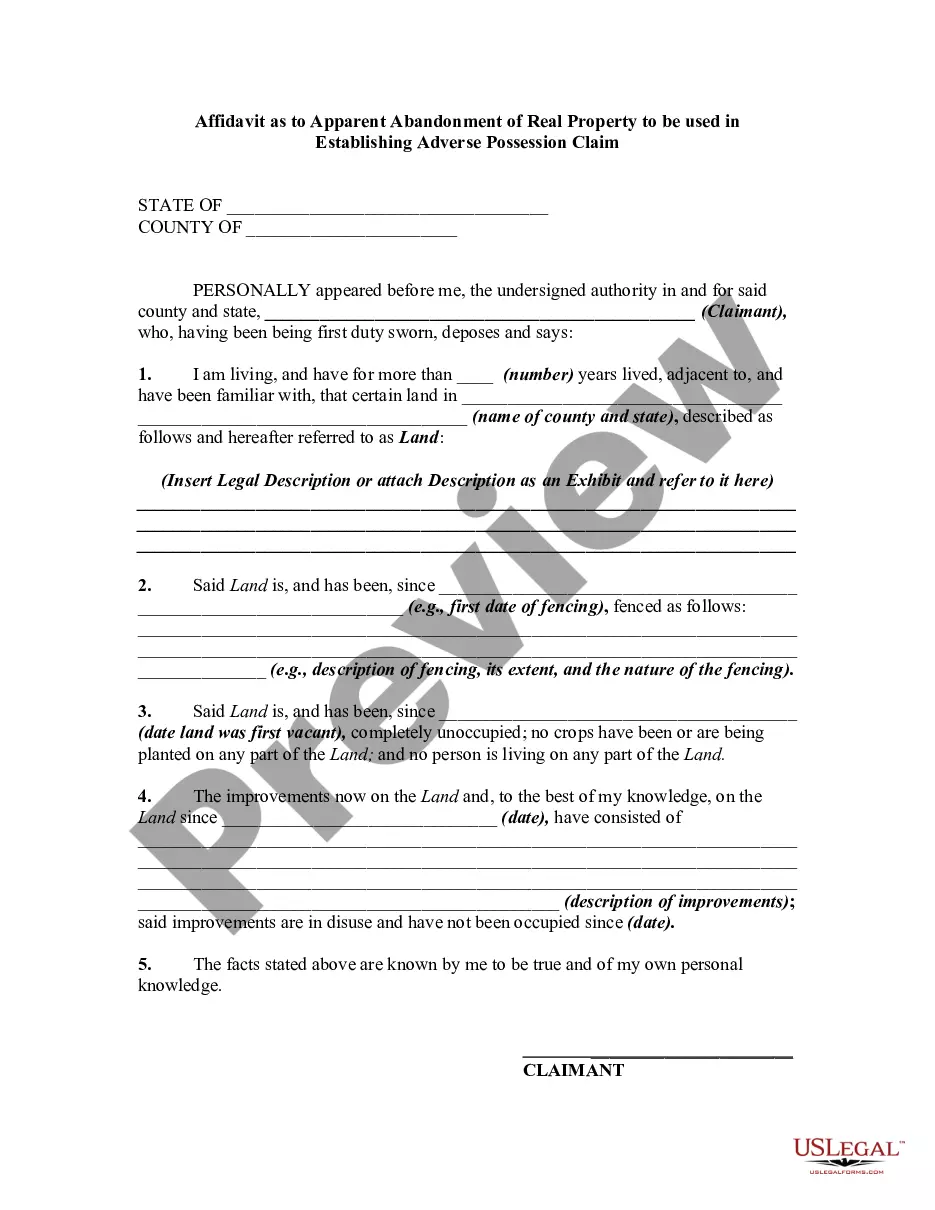
The declaration of adverse possession form is a legal document that allows individuals to claim ownership of a property they have occupied for a certain period. This declaration usually includes details about the property, such as its location and the duration of possession. When creating an adverse possession draft with copies, it is important to ensure that all necessary information is accurate and complete. Using platforms like US Legal Forms can simplify this process, providing you with reliable templates and guidance.
In Minnesota, the period required to establish adverse possession is typically 15 years. During this time, you must continuously occupy the property in question and meet other stipulations set forth by state law. To support your claim, create an adverse possession draft with copies detailing your use and any maintenance performed. Consulting with local attorneys can help clarify expectations for your specific situation.
One common misconception is that paying property taxes is unnecessary to establish an adverse possession claim. However, many jurisdictions require proof of tax payments as a key factor. To ensure you meet all necessary requirements, having an adverse possession draft with copies that outline your situation can be beneficial. Consulting local laws and an expert can clarify any confusion about criteria.
To record an adverse possession, you must file a claim with the appropriate local authorities. This generally involves submitting an adverse possession draft with copies of your evidence, such as affidavits or tax payment records. After filing, a legal review may be necessary to confirm your claim. Working with a legal professional can simplify this process and ensure all requirements are met.
life example of adverse possession might involve a person who has used a vacant lot next to their home for many years. If they build a fence and maintain the lot, they may be able to claim ownership after a statutory period. A wellprepared adverse possession draft with copies of evidence, such as photographs or tax records, can strengthen their legal assertion. Each story varies, so it is vital to understand the specifics.
To claim land that no one appears to own, you will typically need to file an adverse possession claim. This process involves demonstrating that you have occupied the land openly and continuously for a specific period, as defined by state law. An adverse possession draft with copies of evidence supporting your claim can be immensely helpful. Always ensure you are familiar with local property laws and procedures before proceeding.