Exceptions Whomsoever Witnesseth For The
Description
Get your form ready online
Our built-in tools help you complete, sign, share, and store your documents in one place.
Make edits, fill in missing information, and update formatting in US Legal Forms—just like you would in MS Word.
Download a copy, print it, send it by email, or mail it via USPS—whatever works best for your next step.
Sign and collect signatures with our SignNow integration. Send to multiple recipients, set reminders, and more. Go Premium to unlock E-Sign.
If this form requires notarization, complete it online through a secure video call—no need to meet a notary in person or wait for an appointment.
We protect your documents and personal data by following strict security and privacy standards.

Make edits, fill in missing information, and update formatting in US Legal Forms—just like you would in MS Word.

Download a copy, print it, send it by email, or mail it via USPS—whatever works best for your next step.

Sign and collect signatures with our SignNow integration. Send to multiple recipients, set reminders, and more. Go Premium to unlock E-Sign.

If this form requires notarization, complete it online through a secure video call—no need to meet a notary in person or wait for an appointment.

We protect your documents and personal data by following strict security and privacy standards.
Looking for another form?
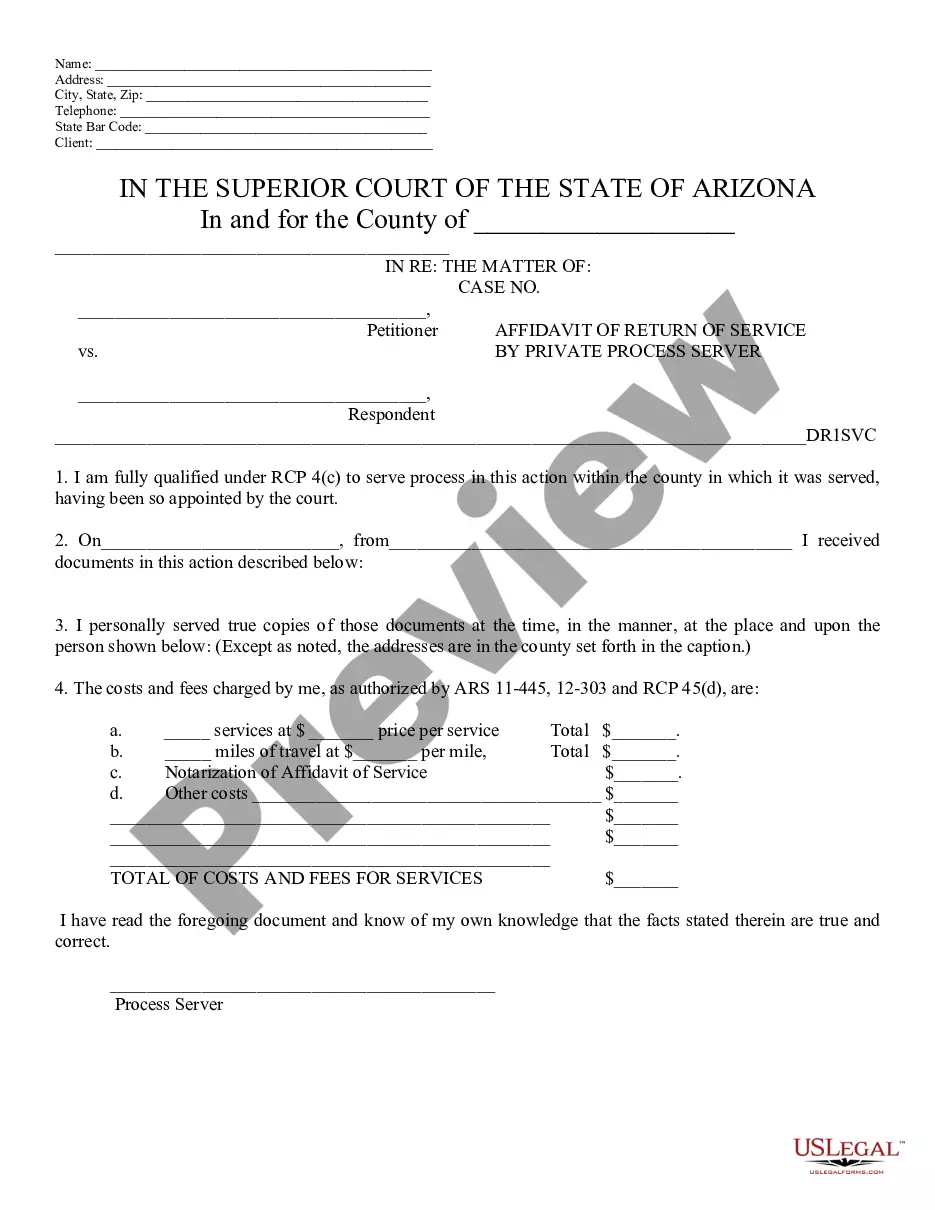







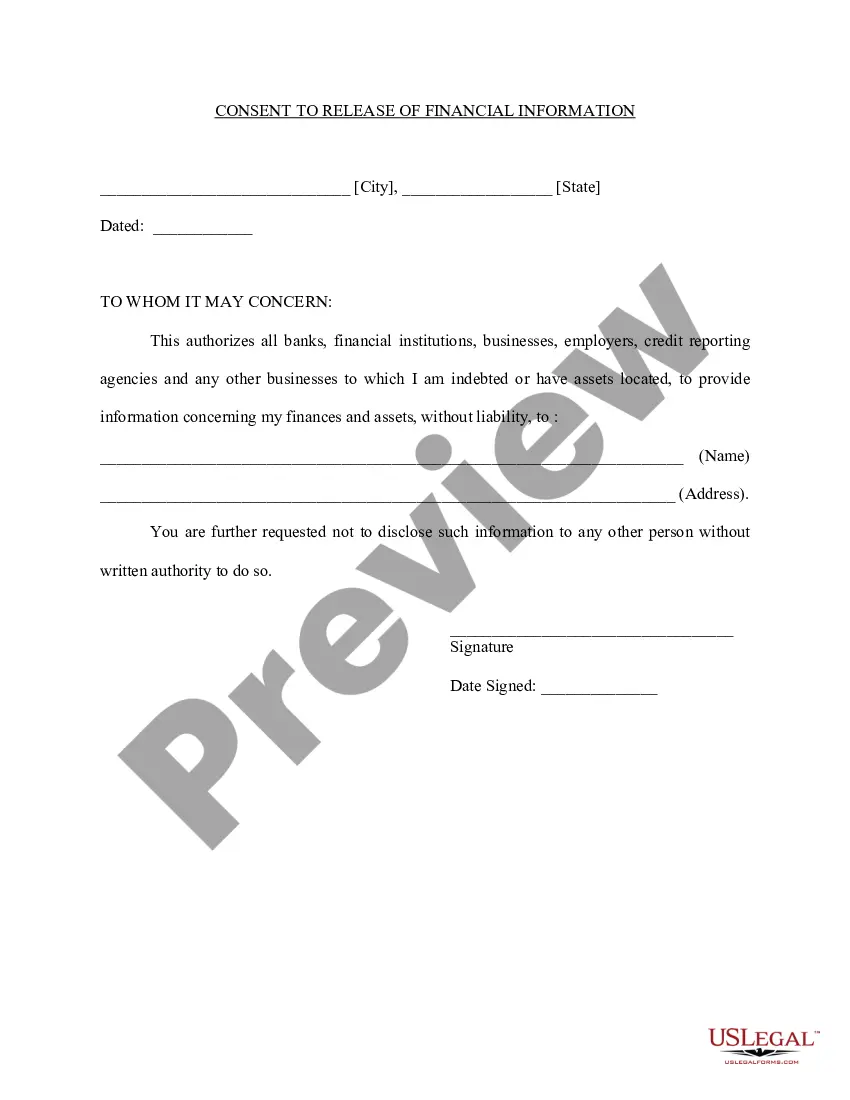
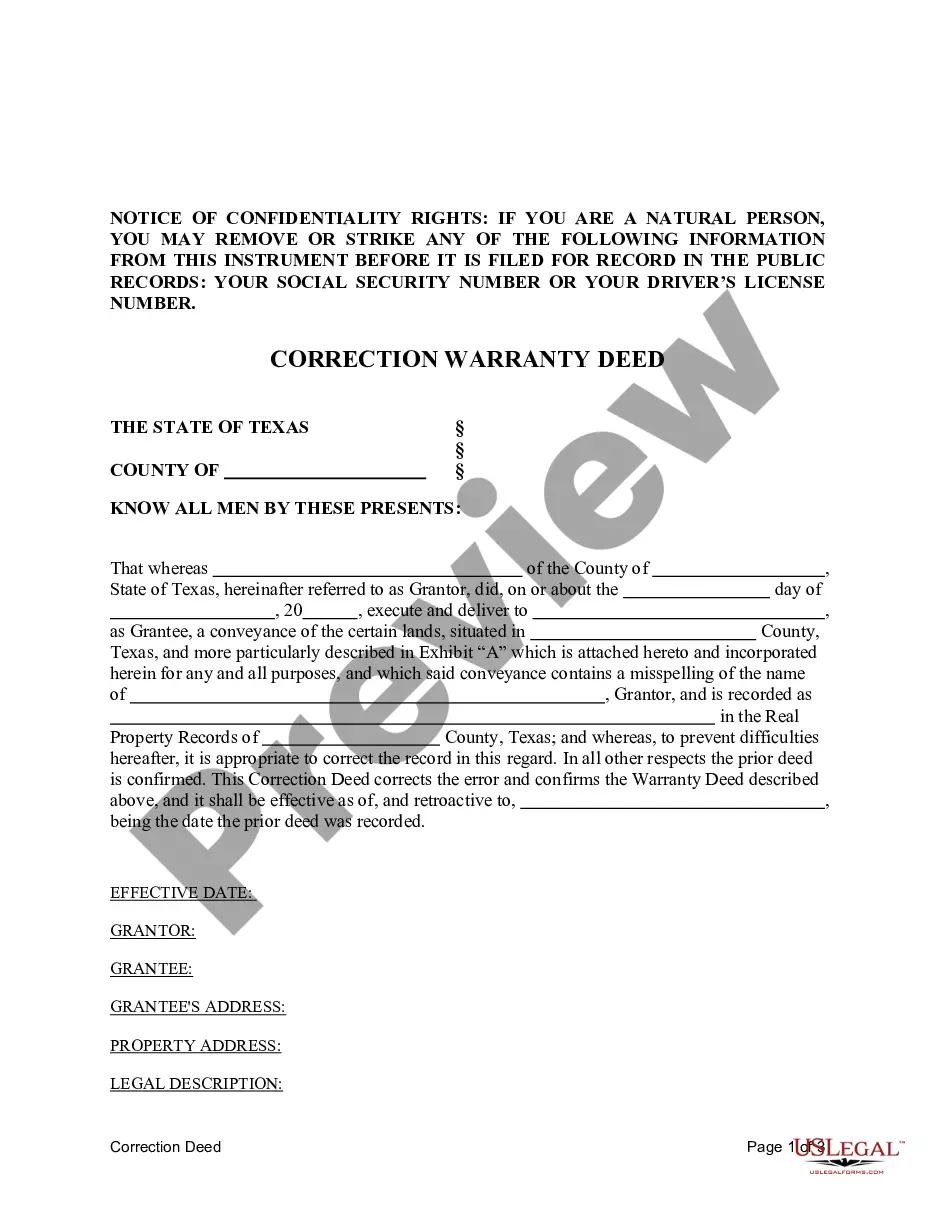
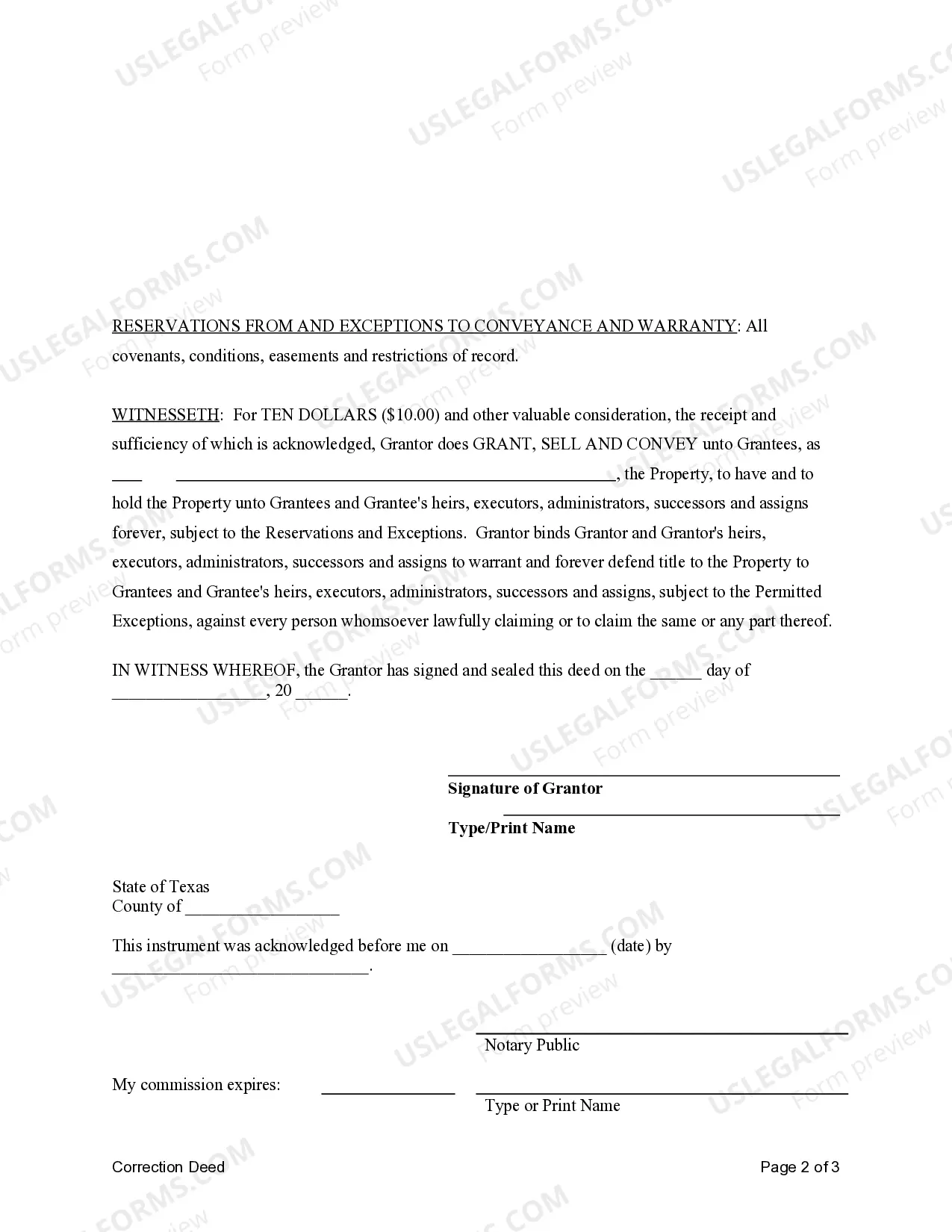
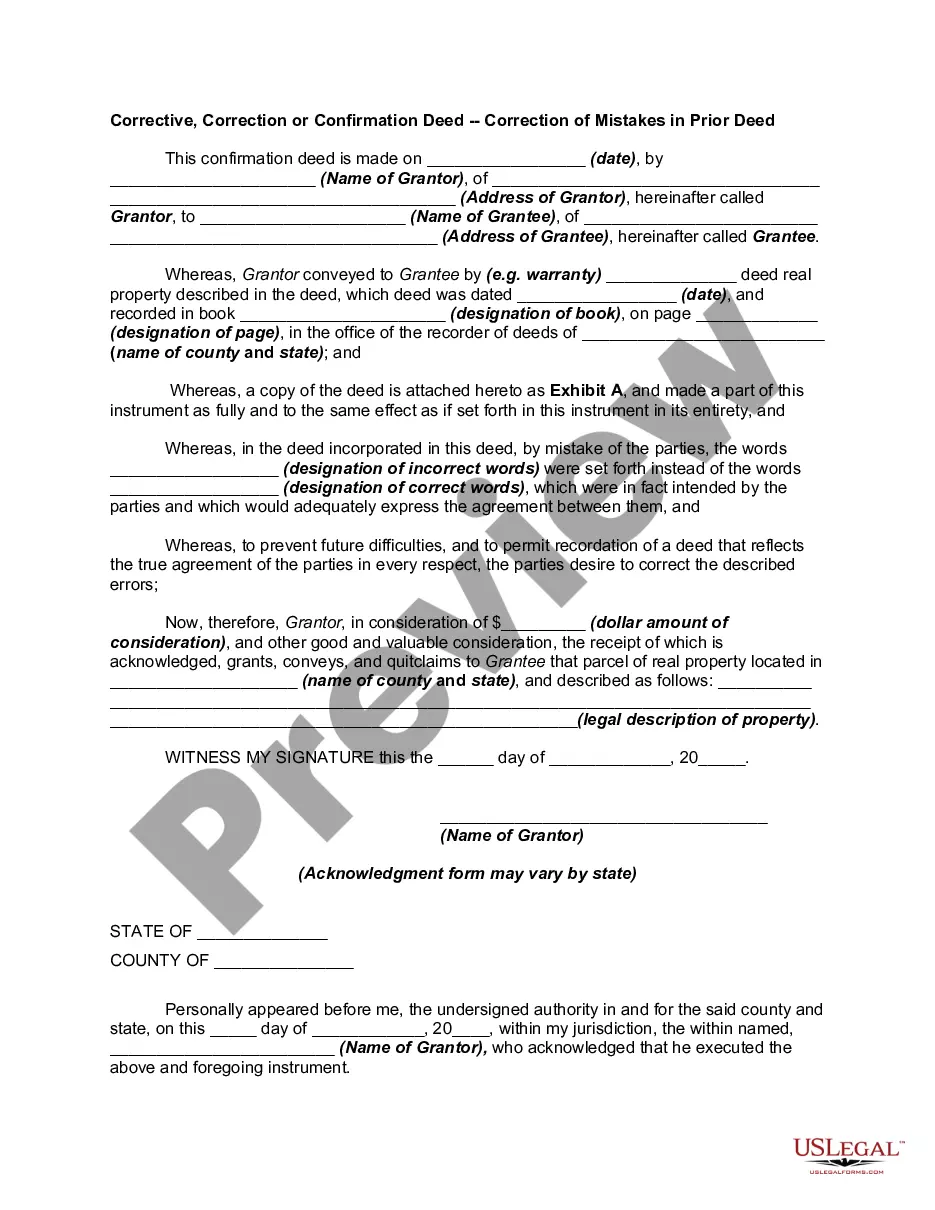
How to fill out Texas Correction Warranty Deed?
Securing a reliable source for the most up-to-date and pertinent legal templates is a significant part of navigating bureaucracy.
Finding the correct legal documents requires accuracy and careful consideration, which is why obtaining samples of Exceptions Whomsoever Witnesseth For The from reputable providers, such as US Legal Forms, is crucial. An incorrect template can lead to wasted effort and prolong your situation.
Eliminate the hassles associated with your legal documentation. Explore the comprehensive catalog of US Legal Forms where you can discover legal templates, assess their relevance to your situation, and download them instantly.
- Utilize the catalog navigation or search tool to find your template.
- Access the form’s details to verify its suitability for your state and region.
- Preview the form, if available, to confirm it meets your needs.
- Return to the search and find the correct template if the Exceptions Whomsoever Witnesseth For The does not meet your criteria.
- If you are confident in the form’s applicability, download it.
- For registered users, click Log in to verify your identity and access selected templates in My documents.
- If you do not have an account yet, click Buy now to purchase the template.
- Select the pricing plan that suits your needs.
- Proceed to register to complete your transaction.
- Finalize your purchase by choosing a payment method (credit card or PayPal).
- Select the file format for downloading Exceptions Whomsoever Witnesseth For The.
- Once you have the document on your device, you may edit it using the editor or print it out and fill it in manually.
Form popularity
FAQ
The rule of exclusion of witnesses is a fundamental legal principle that protects the integrity of witness testimony. It allows parties to prevent witnesses from hearing testimony before they take the stand themselves. This rule ensures that witnesses whomsoever witnesseth for the case provide unbiased and independent accounts. To effectively manage witnesses and related legal procedures, USLegalForms can provide you with essential resources and documentation templates that streamline the process.
The exceptions whomsoever witnesseth for the hearsay rule of evidence provide specific circumstances where out-of-court statements can be admitted. These exceptions often include statements made under belief of imminent death, statements against interest, and excited utterances. Understanding these exceptions enhances your legal arguments and supports the validity of your evidence. For comprehensive guidance on navigating these exceptions, consider using USLegalForms to access resources specifically designed to clarify evidentiary rules.
The exemption from prosecution that witnesses receive in exchange for their testimony is known as 'immunity.' This legal protection encourages witnesses to come forward without fear of legal repercussions. Understanding immunity is essential, particularly when considering the exceptions whomsoever witnesseth for the process.
When you act as a witness in signing a contract, your role is to observe and confirm that the parties involved are signing willingly and understanding the agreement. Your signature indicates that you can validate the execution of the contract if required in the future. This role is especially significant in light of the exceptions whomsoever witnesseth for the contract's enforcement.
'Witnesseth' is used in contracts as a traditional way to mark the start of a binding agreement. It signifies that the parties acknowledge their consent and the terms being agreed upon. This language helps maintain formality in legal documents, especially when discussing the exceptions whomsoever witnesseth for the validity of an agreement.
The confrontation clause guarantees a defendant's right to face their accuser; however, exceptions exist. For example, if a witness is unavailable due to death or illness, their prior statements may be accepted. Understanding these exceptions is vital within legal frameworks, particularly when the exceptions whomsoever witnesseth for the conflict arise.
Using 'witnesseth' effectively requires placing it at the beginning of the statement that specifies the agreement between parties. It typically follows an introductory phrase and leads into the main terms of the contract. Correct usage ensures clarity in what the parties are agreeing to, especially when navigating the exceptions whomsoever witnesseth for the specifics.
If 'witnesseth' feels outdated or formal for your needs, you might consider using simpler phrases like 'witness' or 'this document acknowledges.' Such alternatives can enhance readability while still fulfilling the contractual requirement. Ultimately, the goal remains to articulate the agreement clearly, especially considering the exceptions whomsoever witnesseth for the understanding.
The hearsay rule generally prevents the use of out-of-court statements as evidence. However, there are several exceptions to this rule, including statements made under the belief of impending death or statements against interest. These exceptions are important in legal proceedings, particularly when analyzing testimony in light of the exceptions whomsoever witnesseth for the case.
The term 'witnesseth' is a formal word typically used in contracts to indicate that the parties involved are acknowledging the document and the agreement being made. It sets the stage for the specifics of a binding contract. Understanding this term is crucial for clarity and legality, especially when exploring the exceptions whomsoever witnesseth for the agreement.