Deed Texas Property Foreclosure
Description
Get your form ready online
Our built-in tools help you complete, sign, share, and store your documents in one place.
Make edits, fill in missing information, and update formatting in US Legal Forms—just like you would in MS Word.
Download a copy, print it, send it by email, or mail it via USPS—whatever works best for your next step.
Sign and collect signatures with our SignNow integration. Send to multiple recipients, set reminders, and more. Go Premium to unlock E-Sign.
If this form requires notarization, complete it online through a secure video call—no need to meet a notary in person or wait for an appointment.
We protect your documents and personal data by following strict security and privacy standards.

Make edits, fill in missing information, and update formatting in US Legal Forms—just like you would in MS Word.

Download a copy, print it, send it by email, or mail it via USPS—whatever works best for your next step.

Sign and collect signatures with our SignNow integration. Send to multiple recipients, set reminders, and more. Go Premium to unlock E-Sign.

If this form requires notarization, complete it online through a secure video call—no need to meet a notary in person or wait for an appointment.

We protect your documents and personal data by following strict security and privacy standards.
Looking for another form?





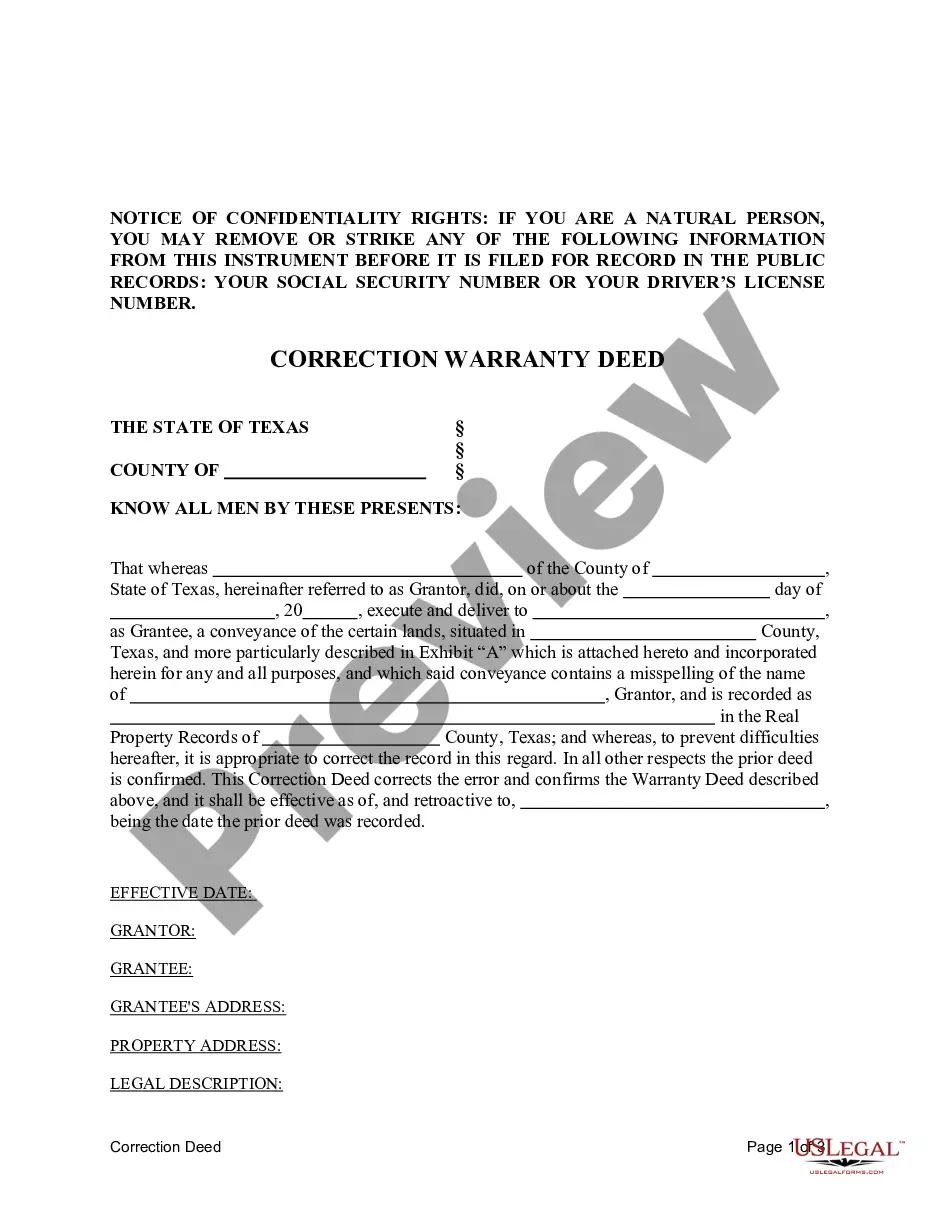
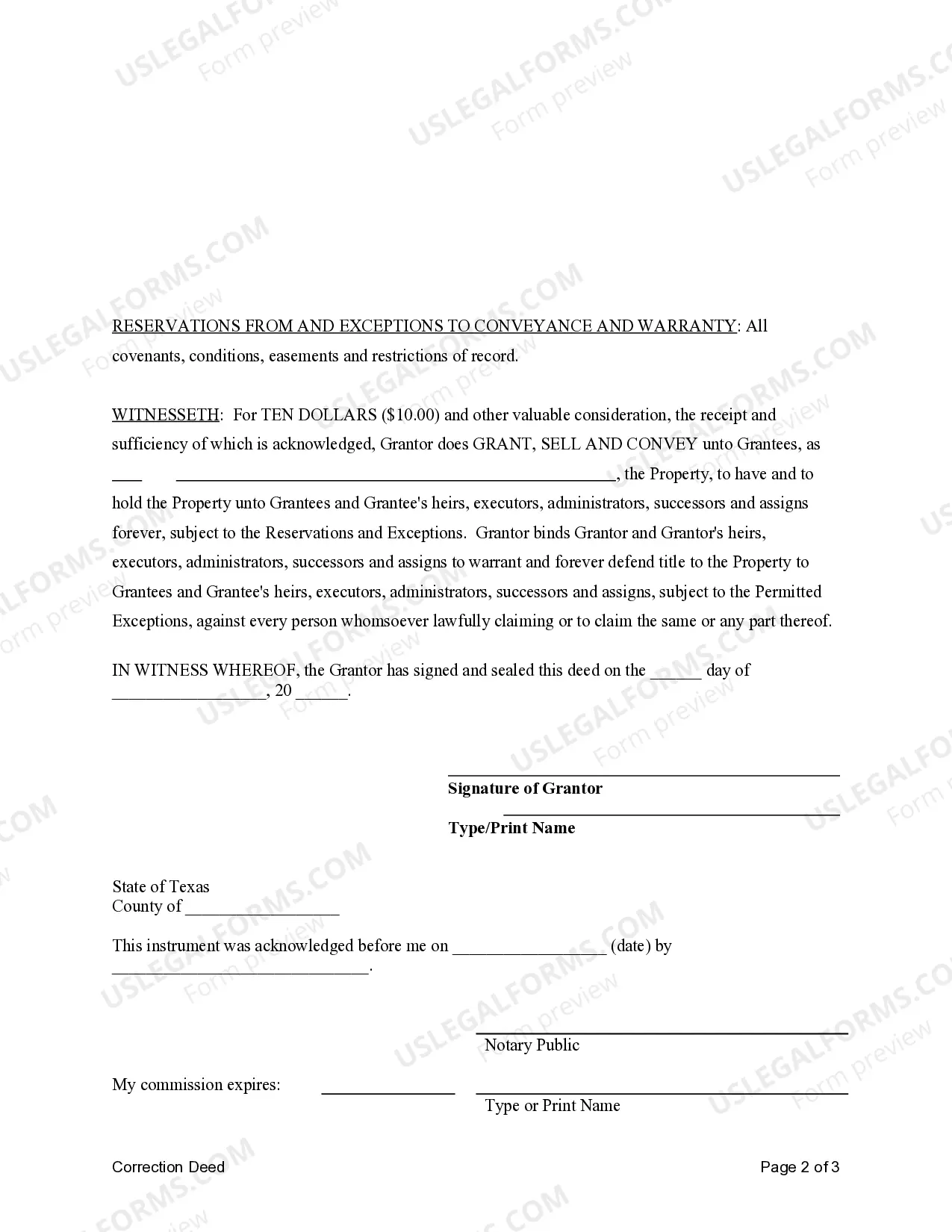
How to fill out Texas Correction Warranty Deed?
Whether for commercial purposes or personal affairs, everyone must confront legal circumstances at some stage in their lives.
Filling out legal documents necessitates meticulous attention, starting from selecting the appropriate form template.
With a vast US Legal Forms library available, you won’t have to waste time searching for the appropriate template online. Utilize the library’s easy navigation to discover the correct form for any situation.
- Obtain the template you require by utilizing the search field or catalog browsing.
- Review the form’s details to ensure it corresponds with your circumstances, state, and locality.
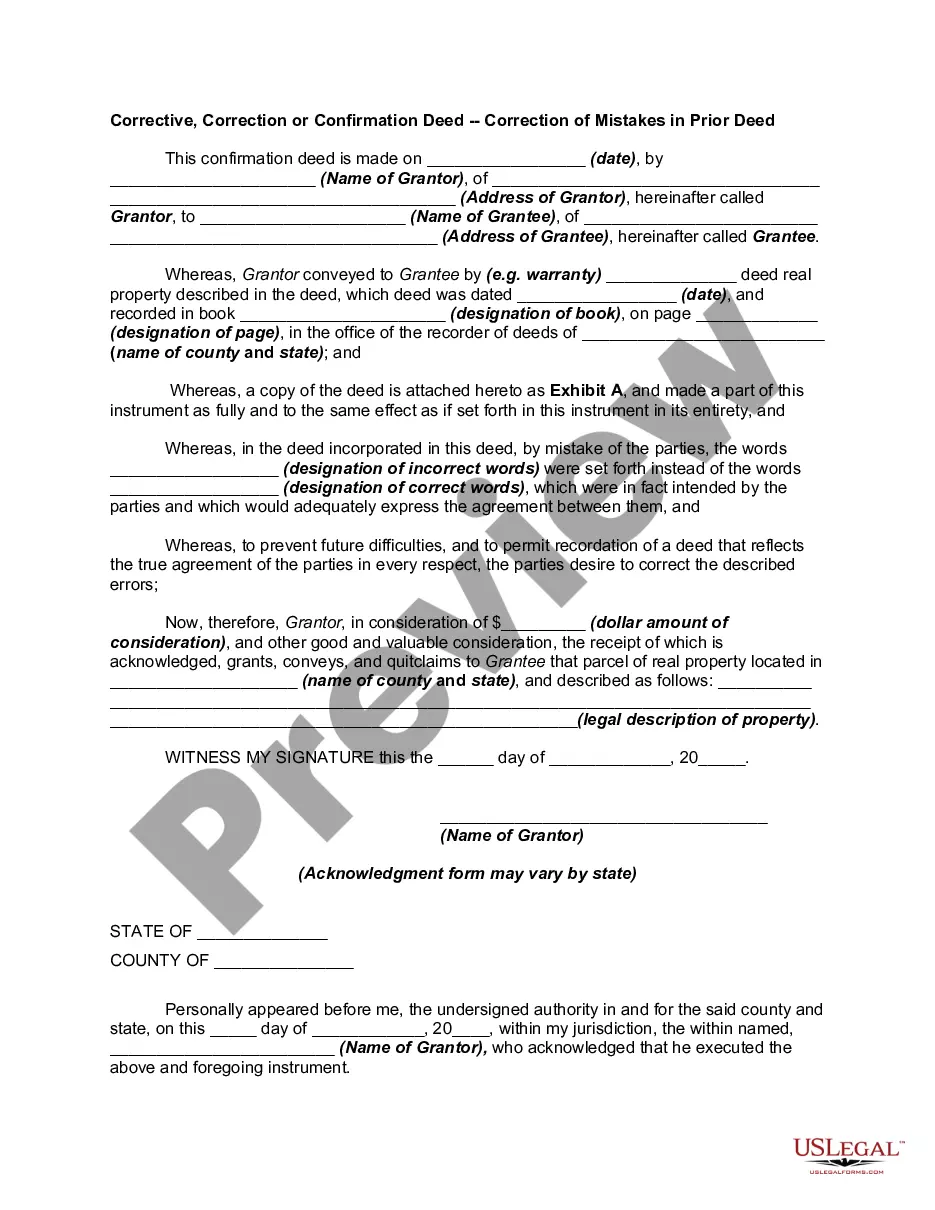
- Click on the form’s preview to view it.
- If it is not the correct form, return to the search tool to find the Deed Texas Property Foreclosure sample you seek.
- Download the document when it fits your requirements.
- If you already possess a US Legal Forms account, simply click Log in to access previously stored documents in My documents.
- In case you do not have an account yet, you can acquire the form by selecting Buy now.
- Select the appropriate pricing option.
- Complete the account registration form.
- Choose your payment method: you may utilize a credit card or PayPal account.
- Select the document format you desire and download the Deed Texas Property Foreclosure.
- Once it is saved, you can fill out the form using editing software or print it and complete it manually.
Form popularity
FAQ
To file a deed in lieu of foreclosure, you must first negotiate the terms with your lender. Once you reach an agreement, complete the deed form that indicates the transfer of property back to the lender. After signing, file the deed with your local county clerk's office. This process is a viable option for those facing deed Texas property foreclosure, as it can help avoid a lengthy foreclosure process.
While it is not legally required to have a lawyer for a deed transfer in Texas, it is highly advisable. A lawyer can help ensure that all documents are correctly prepared and filed, reducing the risk of future disputes. Utilizing a platform like US Legal Forms can also simplify the process, providing you with the necessary forms and guidance for deed Texas property foreclosure.
In a foreclosure situation, you typically receive a special warranty deed or a deed in lieu of foreclosure. This deed transfers ownership from the lender to the new owner after the foreclosure process is complete. Understanding the type of deed involved is essential for anyone navigating deed Texas property foreclosure, as it can affect your rights and responsibilities.
To file a property deed in Texas, you must first complete the deed form accurately. You can find the necessary forms online or through a legal service like US Legal Forms. Once you have filled out the form, take it to your county clerk's office for recording. Remember, ensuring the deed is recorded properly helps protect your ownership rights and is crucial in the context of deed Texas property foreclosure.
Yes, you can prepare your own deed in Texas, but it's essential to ensure that it meets all legal requirements to be valid. Many people choose to use templates or services like US Legal Forms to simplify this process. Utilizing a professional service can help you avoid potential pitfalls and ensure that your deed in a Texas property foreclosure is properly executed. This approach can save time and provide peace of mind during a complex transaction.
In New Jersey, the primary types of deeds include warranty deeds, quitclaim deeds, and bargain and sale deeds. Each deed type offers varying levels of protection and rights to the buyer. While these types differ from those in Texas, understanding them is vital for anyone considering a property transaction. If you're facing foreclosure in another state, knowing the type of deed involved can aid in recognizing your options.
The four primary types of deeds in real estate are warranty deeds, quitclaim deeds, special warranty deeds, and trustee deeds. Each type serves different purposes; for instance, a warranty deed provides the highest level of protection to the buyer. In the context of a deed in Texas property foreclosure, a trustee deed is often utilized. Understanding these types helps in making informed decisions when navigating real estate transactions.
In a foreclosure sale, the most common type of deed used is a trustee's deed. This deed transfers ownership from the trustee to the buyer after the property is sold at auction. It is essential for buyers to understand that a trustee's deed conveys the property as-is, without warranties. Therefore, due diligence is crucial when dealing with a deed in a Texas property foreclosure.
To request a property deed in Texas, you will need to provide specific information about the property, such as its legal description and tax ID number. You can submit your request to the county clerk's office where the property is located, either in person or through their online services. It's advisable to use reliable resources or platforms like USLegalForms to ensure you complete the request accurately and efficiently. This approach can help you effectively manage your deed Texas property foreclosure concerns.
If the bank refuses your request for a deed in lieu of foreclosure, you will need to explore other options to manage your situation. This could involve negotiating a repayment plan, pursuing a short sale, or ultimately facing the foreclosure process. Understanding your rights and options is crucial, and seeking guidance from a legal professional can help. Remember, navigating the deed Texas property foreclosure landscape may require persistence and support.