Texas Rules For Divorce
Description


Get your form ready online
Our built-in tools help you complete, sign, share, and store your documents in one place.
Make edits, fill in missing information, and update formatting in US Legal Forms—just like you would in MS Word.
Download a copy, print it, send it by email, or mail it via USPS—whatever works best for your next step.
Sign and collect signatures with our SignNow integration. Send to multiple recipients, set reminders, and more. Go Premium to unlock E-Sign.
If this form requires notarization, complete it online through a secure video call—no need to meet a notary in person or wait for an appointment.
We protect your documents and personal data by following strict security and privacy standards.

Make edits, fill in missing information, and update formatting in US Legal Forms—just like you would in MS Word.

Download a copy, print it, send it by email, or mail it via USPS—whatever works best for your next step.

Sign and collect signatures with our SignNow integration. Send to multiple recipients, set reminders, and more. Go Premium to unlock E-Sign.

If this form requires notarization, complete it online through a secure video call—no need to meet a notary in person or wait for an appointment.

We protect your documents and personal data by following strict security and privacy standards.
Looking for another form?






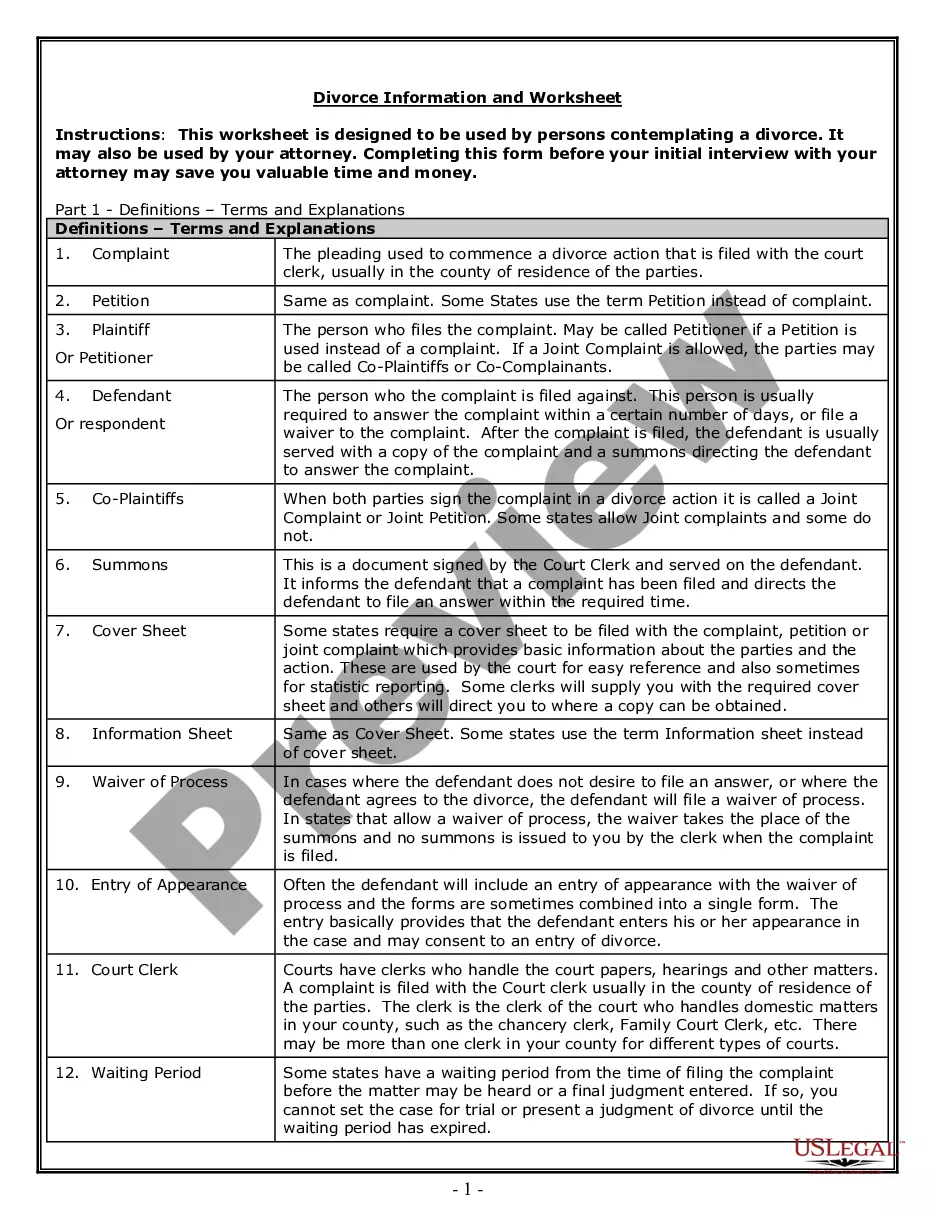
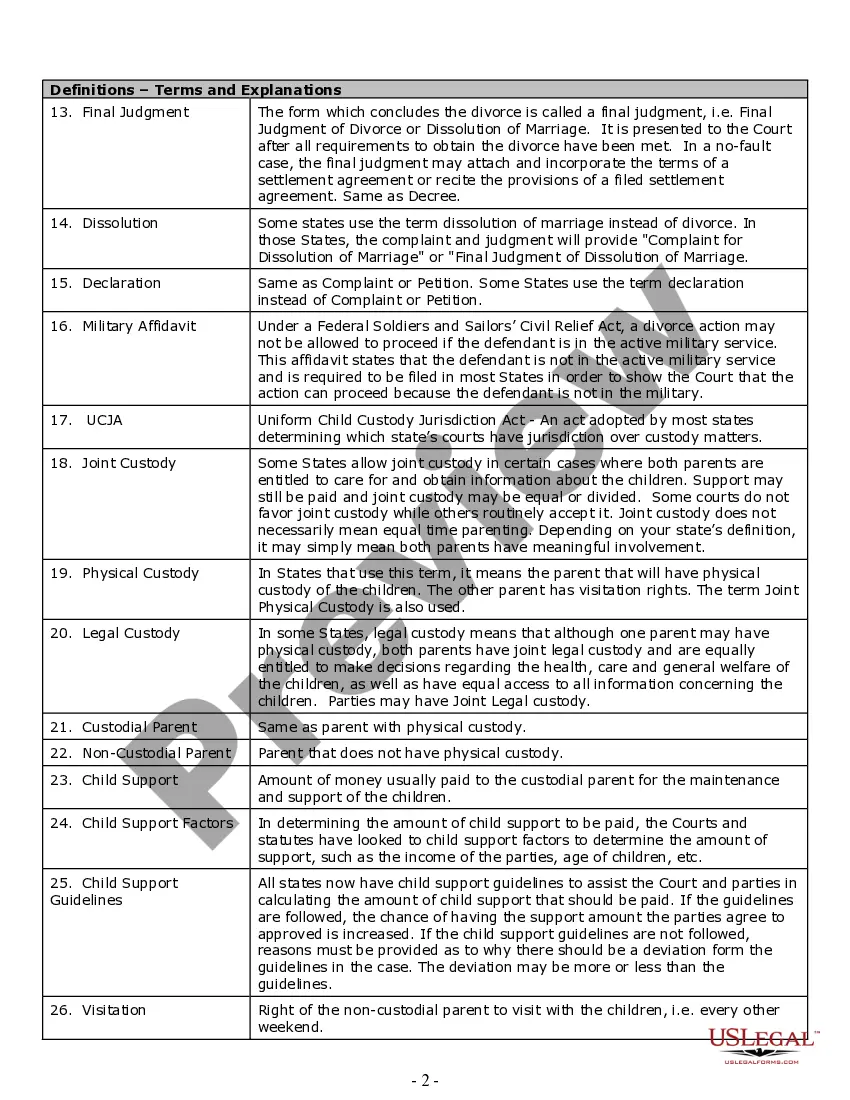
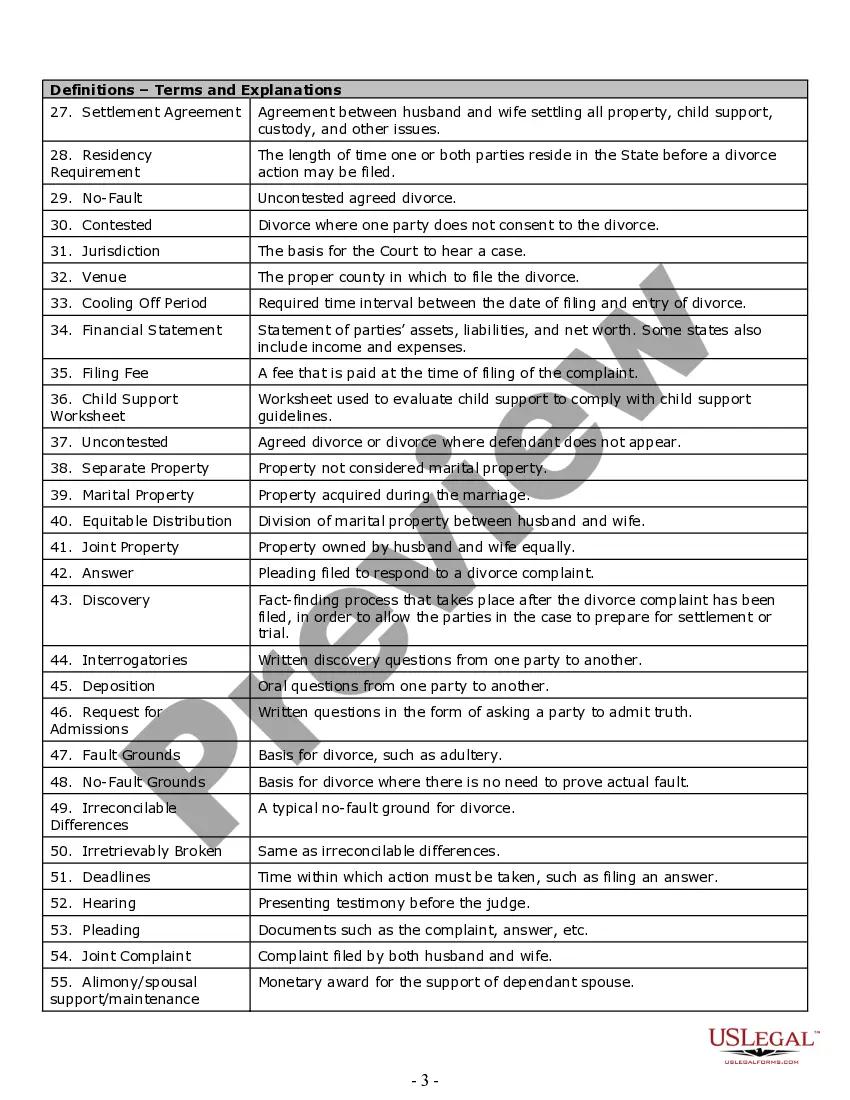
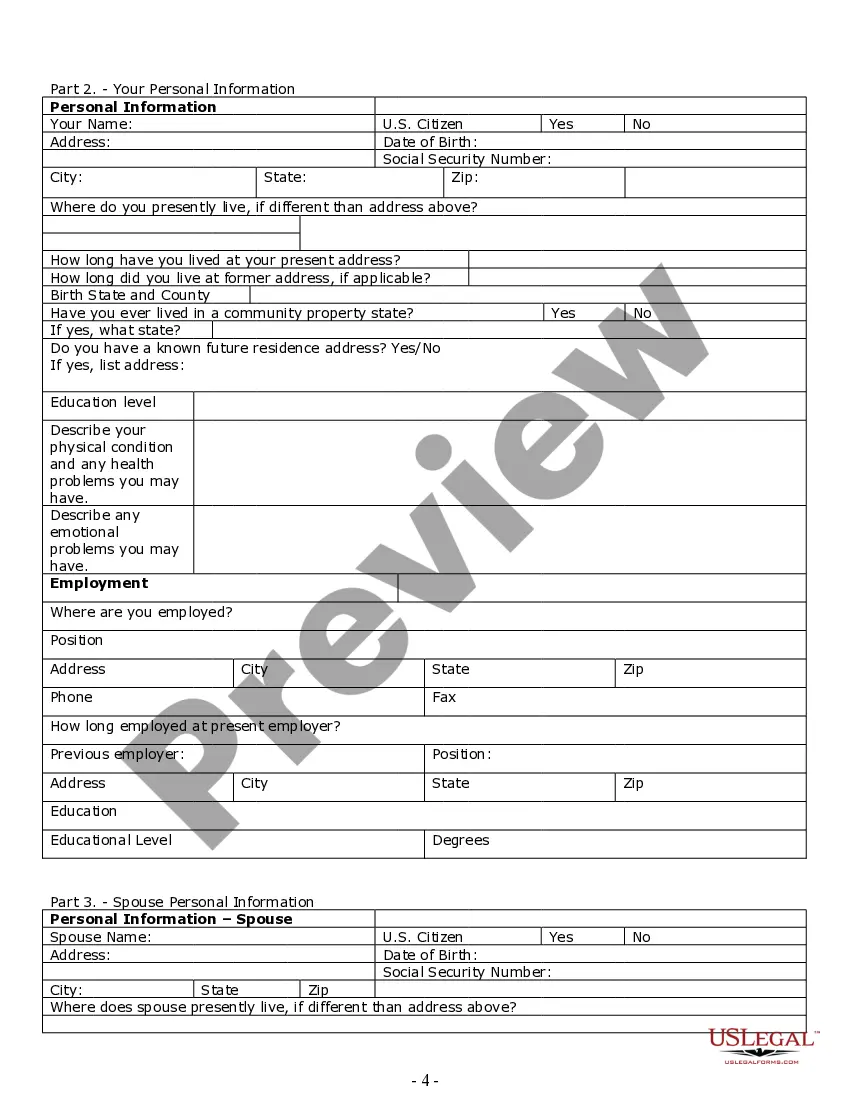
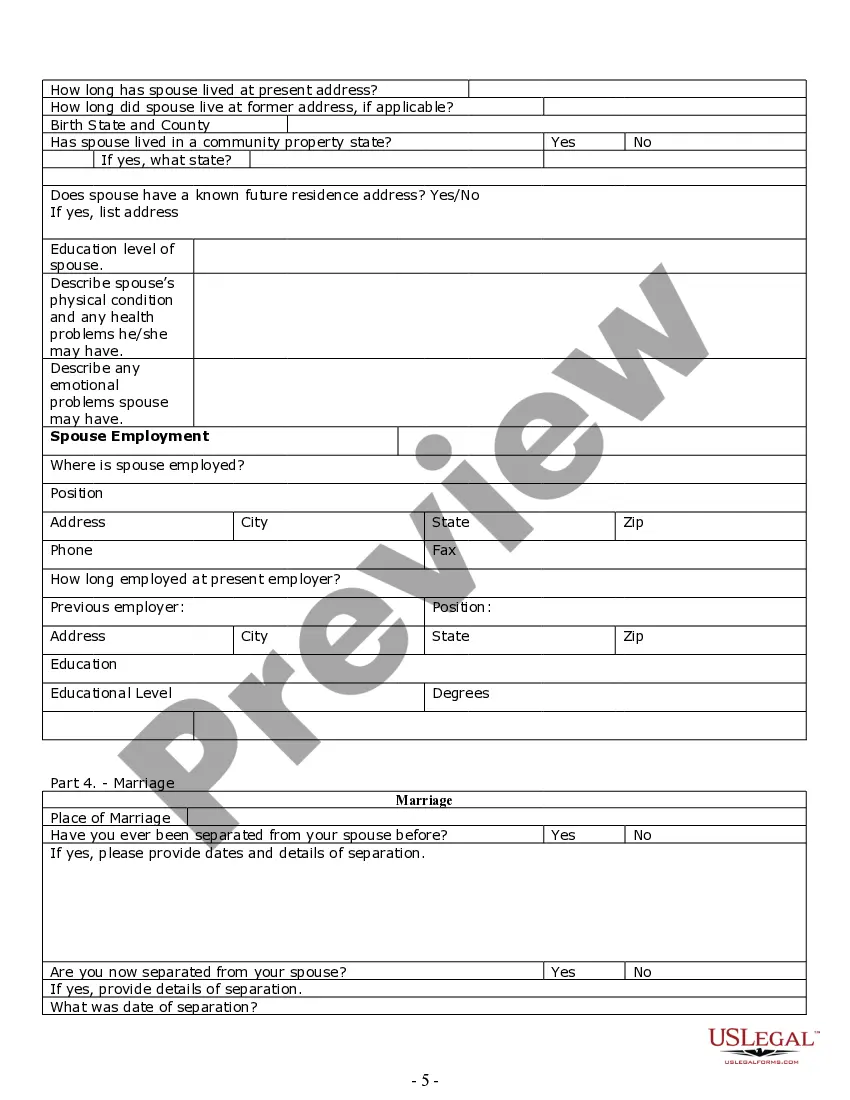
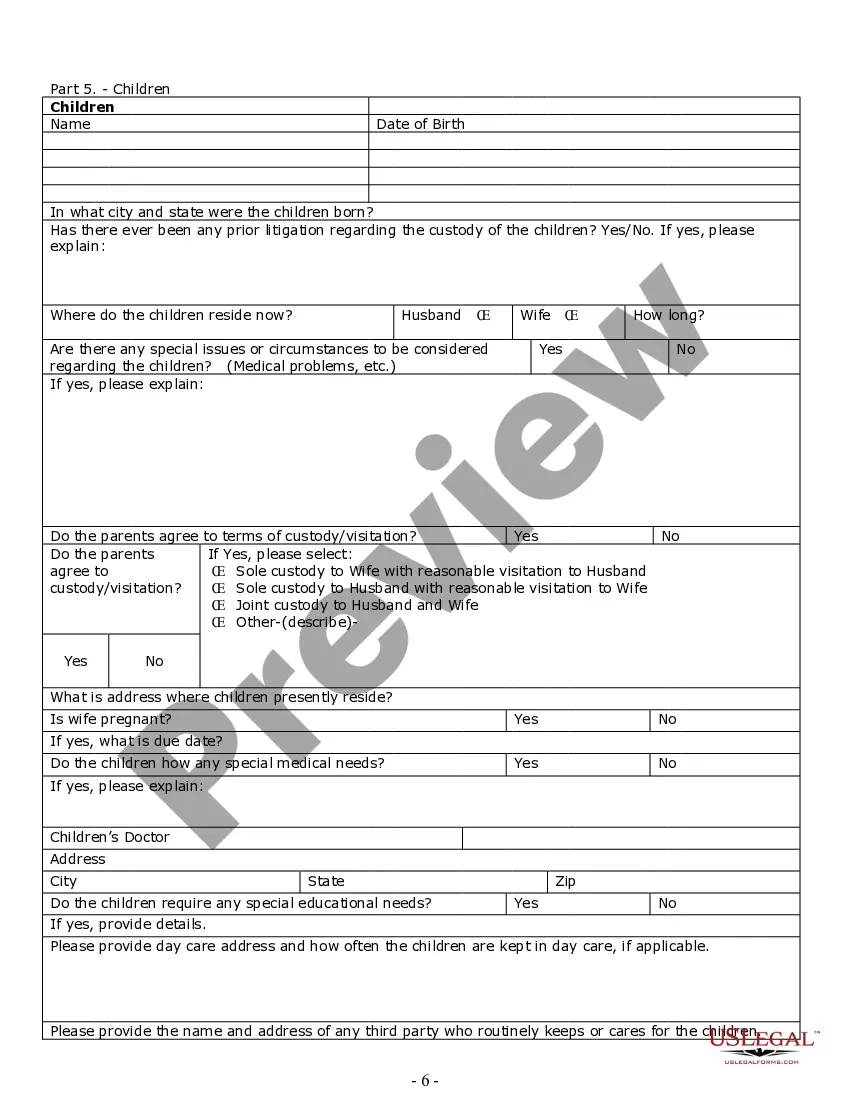
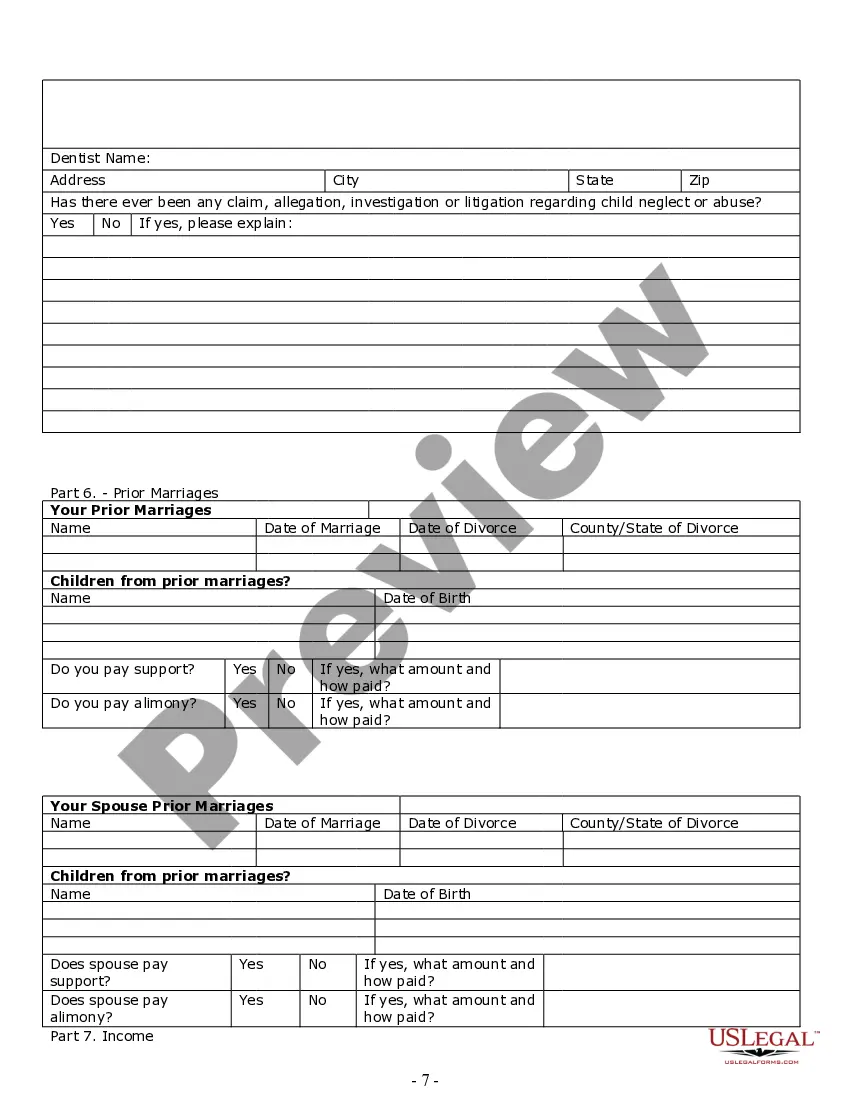
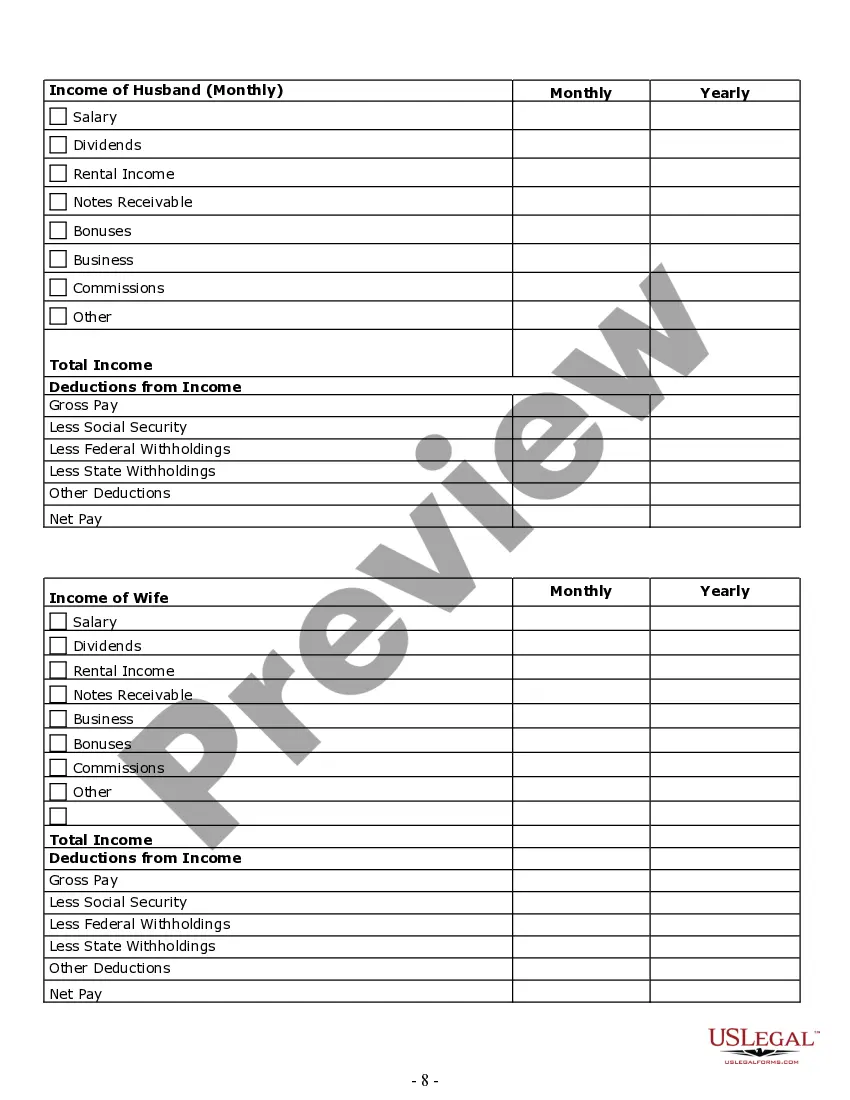
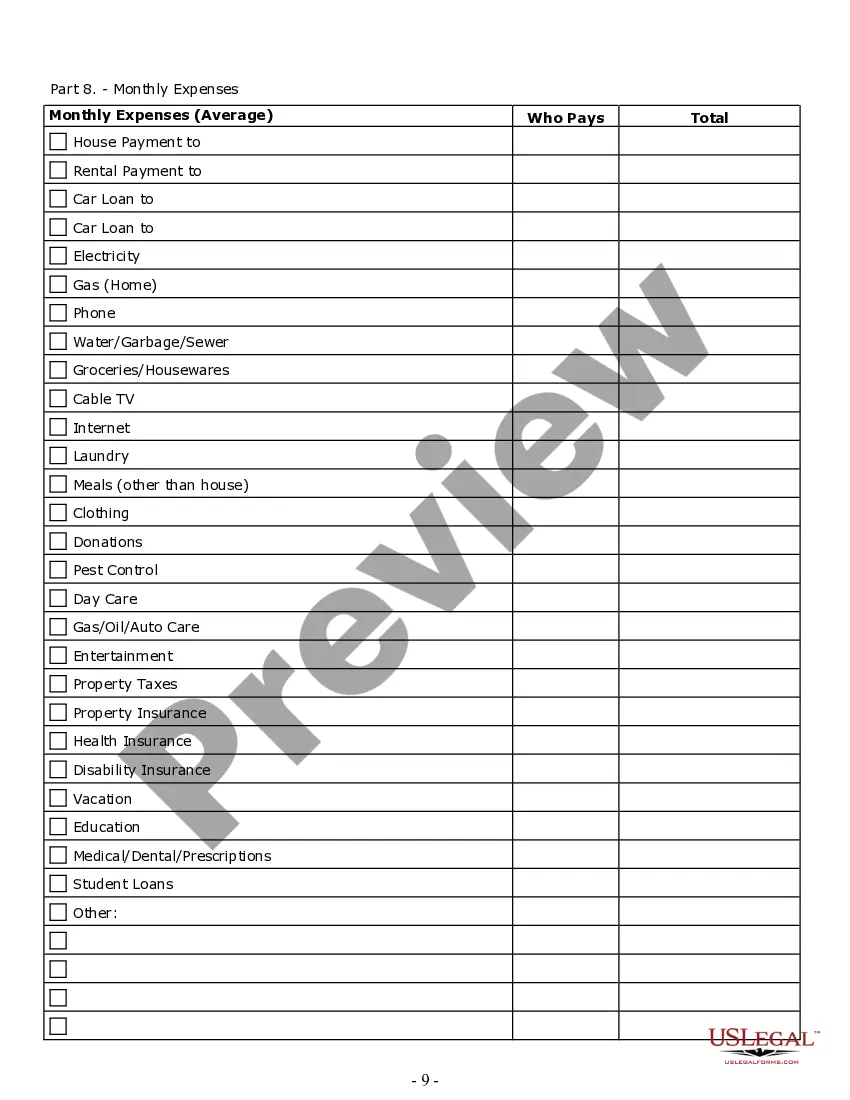
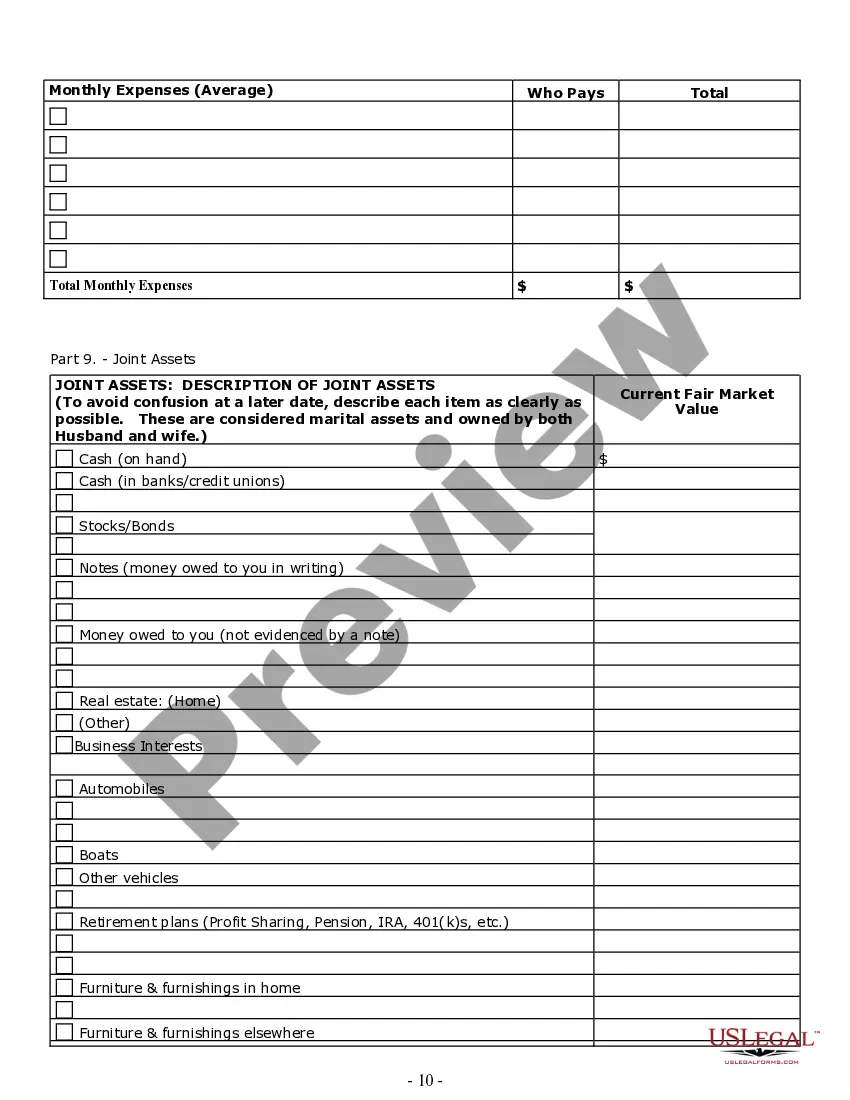
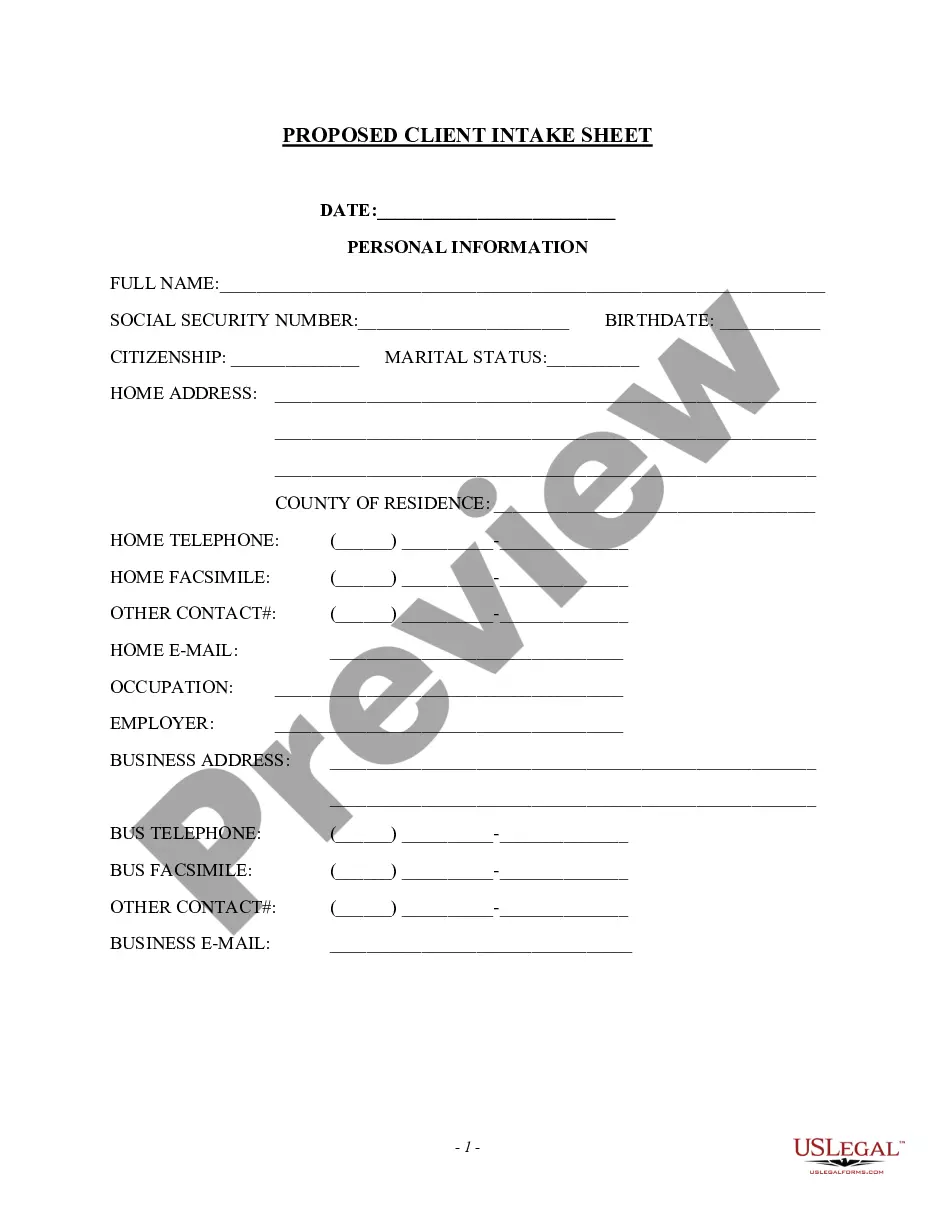
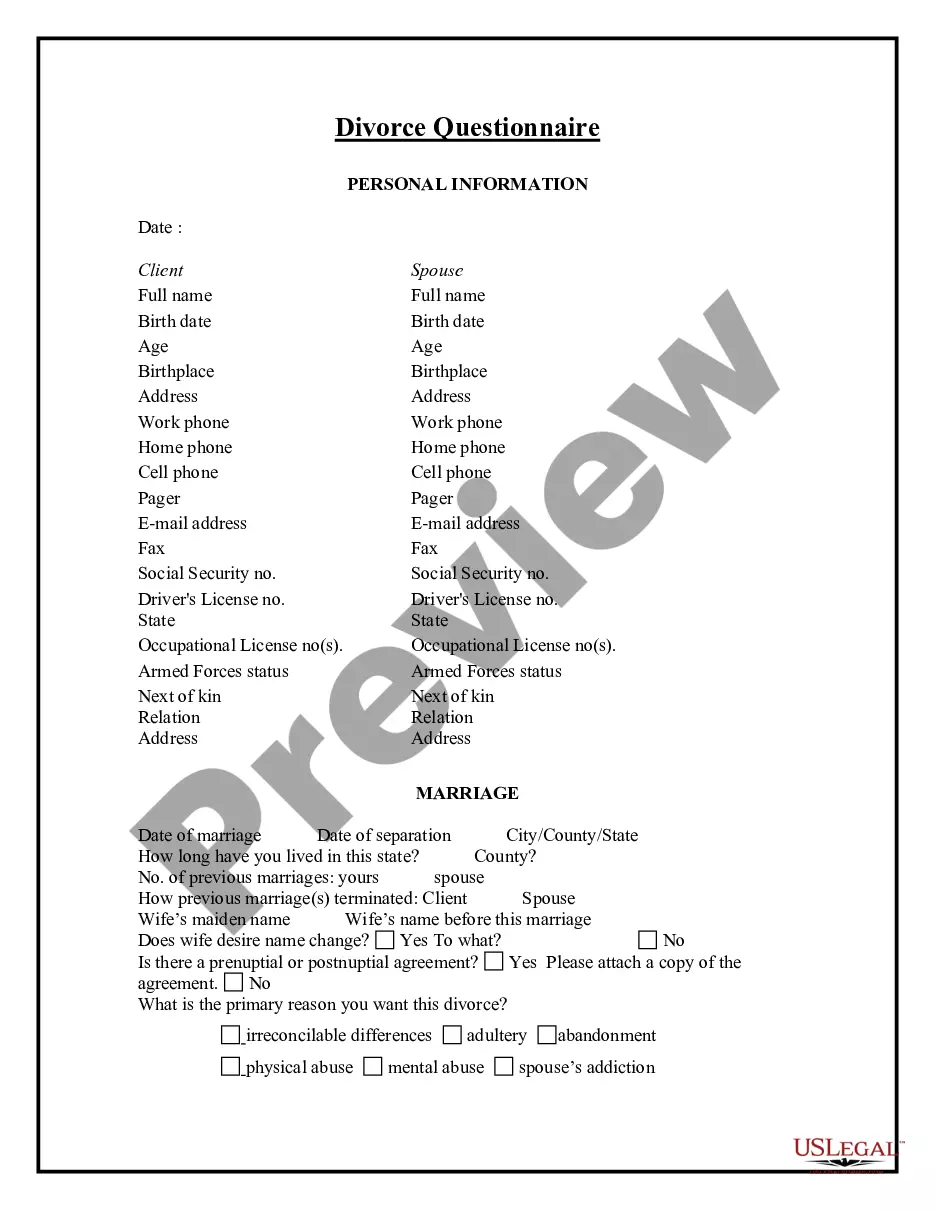
How to fill out Texas Divorce Worksheet And Law Summary For Contested Or Uncontested Case Of Over 25 Pages - Ideal Client Interview Form?
- Visit the US Legal Forms website and log in to your existing account or create a new account if you're a first-time user.
- Explore the Preview mode and form descriptions to identify the correct divorce form that aligns with your specific needs and jurisdiction.
- In case you're unable to find the suitable form, utilize the Search tab to discover other options as per your requirements.
- Select the desired form and click on 'Buy Now' to choose your subscription plan and gain full access to the document library.
- Complete your purchase by entering your payment details—either through credit card or PayPal—and confirm your subscription.
- Once your payment is processed, download the form directly to your device and access it anytime from the 'My Forms' section of your account.
In conclusion, US Legal Forms offers a robust library of over 85,000 customizable legal templates that empower users to navigate the complexities of divorce efficiently. Benefit from expert assistance to ensure your documents are accurate and legally valid.
Start your journey today by visiting US Legal Forms and take the hassle out of legal documentation.
Form popularity
FAQ
Filling out a divorce decree in Texas involves understanding various Texas rules for divorce. First, gather necessary information about you and your spouse, including property and child custody details. Next, use a comprehensive form that outlines your divorce agreements, ensuring that all sections are filled out accurately. Consider utilizing platforms like USLegalForms, which provide guided assistance to help you navigate the process confidently and adhere to Texas rules for divorce.
To initiate a divorce in Texas, you must fulfill several requirements, including stating the grounds for divorce, which can include insupportability, adultery, or cruelty. You'll need to provide proof of residency and file the necessary documents, including a petition. Familiarizing yourself with the Texas rules for divorce can clarify what documentation you require and what steps to take. For assistance, US Legal Forms offers templates and guidance to help you through this process.
Recently, Texas enacted laws aimed at simplifying the divorce process and making it more equitable. These changes include adjustments to spousal support guidelines and property division rules. Staying updated on the latest Texas rules for divorce ensures that you understand your rights and can make informed decisions. US Legal Forms can provide up-to-date resources to help navigate these changes effectively.
In Texas, you do not need to be formally separated for a specific period before filing for divorce. However, the Texas rules for divorce do require a 60-day waiting period from the date of filing before the court can finalize the divorce. This waiting period allows both parties to consider their decision and prepare for the next steps. Being informed about these timelines can aid in making a smoother transition.
Texas rules for divorce consider the equitable division of property rather than a strict 50/50 rule. While many assets acquired during the marriage are viewed as community property, their division depends on various factors, including the length of the marriage and each partner's financial situation. This balanced approach means that the distribution may not be equal but should reflect fairness. To understand your rights and responsibilities, refer to resources like US Legal Forms for guidance.
The Texas rules for divorce state that retirement accounts, such as a 401k, can be divided during the divorce process. While these accounts are typically considered community property, the division depends on when contributions were made during the marriage. It is important to structure this division correctly to avoid tax penalties. To navigate this complexity, consider utilizing a legal platform like US Legal Forms.
In Texas, property division during a divorce does not automatically mean a 50/50 split. Instead, the courts follow community property laws, meaning all property acquired during the marriage is considered joint, but it is divided in a manner deemed fair and just. Factors like individual contributions and child custody may influence this distribution. Knowing these Texas rules for divorce can help prepare you for negotiations.
The Texas rules for divorce outline several requirements, including residency, grounds for divorce, and child custody considerations. To file for divorce in Texas, either spouse must have lived in the state for at least six months. Grounds for divorce can vary, including irreconcilable differences or adultery. Understanding these rules can help streamline your process.
Do not hide assets or income during the divorce process in Texas, as this can lead to legal penalties and future complications. Additionally, avoid making rash comments or engaging in public disputes, which can negatively affect children and your case. Keep emotions in check, remain respectful, and prioritize mediation as a means of resolution. These practices align with Texas rules for divorce and promote a smoother process.
In Texas, a wife is entitled to a fair division of community property, which includes assets and debts acquired during the marriage. Under Texas rules for divorce, she may also seek spousal support if she meets specific criteria. This support can help her maintain her standard of living post-divorce. It's essential to consider legal advice to ensure her rights are fully protected.