Texas Correction Deed Prior Uslegal For The State
Description
Get your form ready online
Our built-in tools help you complete, sign, share, and store your documents in one place.
Make edits, fill in missing information, and update formatting in US Legal Forms—just like you would in MS Word.
Download a copy, print it, send it by email, or mail it via USPS—whatever works best for your next step.
Sign and collect signatures with our SignNow integration. Send to multiple recipients, set reminders, and more. Go Premium to unlock E-Sign.
If this form requires notarization, complete it online through a secure video call—no need to meet a notary in person or wait for an appointment.
We protect your documents and personal data by following strict security and privacy standards.

Make edits, fill in missing information, and update formatting in US Legal Forms—just like you would in MS Word.

Download a copy, print it, send it by email, or mail it via USPS—whatever works best for your next step.

Sign and collect signatures with our SignNow integration. Send to multiple recipients, set reminders, and more. Go Premium to unlock E-Sign.

If this form requires notarization, complete it online through a secure video call—no need to meet a notary in person or wait for an appointment.

We protect your documents and personal data by following strict security and privacy standards.
Looking for another form?

How to fill out Texas Correction Deed - Prior Deed From An Individual To An Individual?
- If you're already a member of US Legal Forms, log in to your account to access your previously purchased documents, ensuring your subscription is active. If it's expired, renew it based on your payment plan.
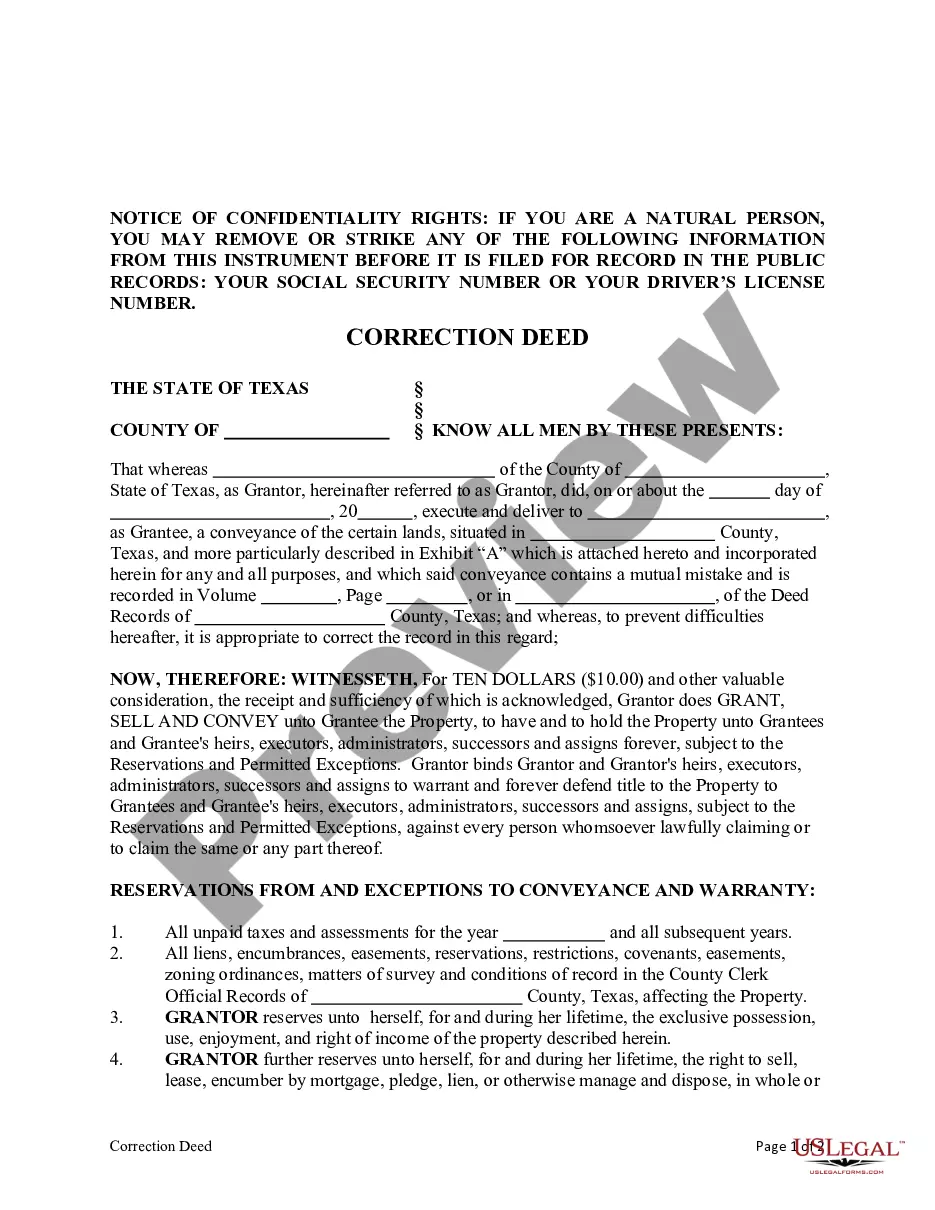
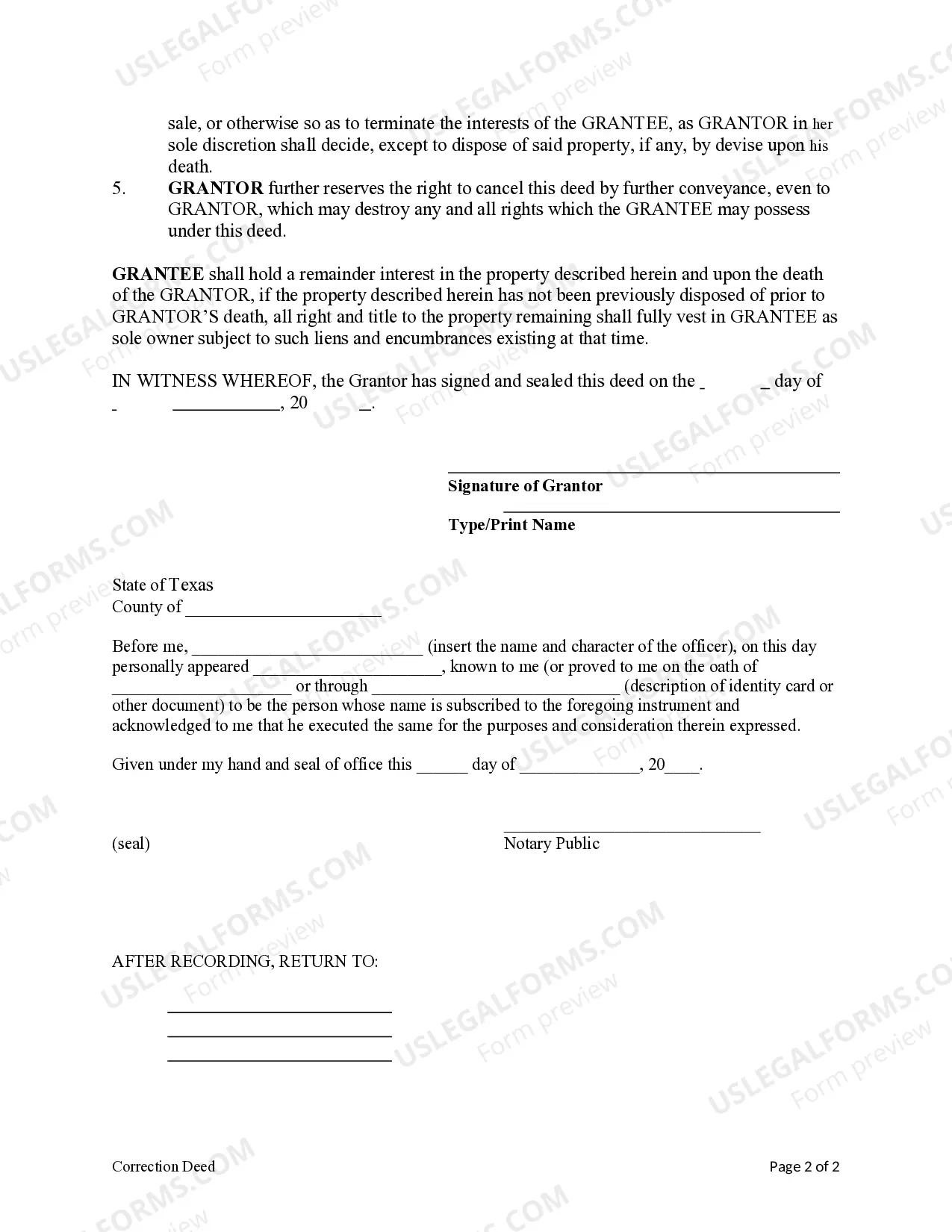
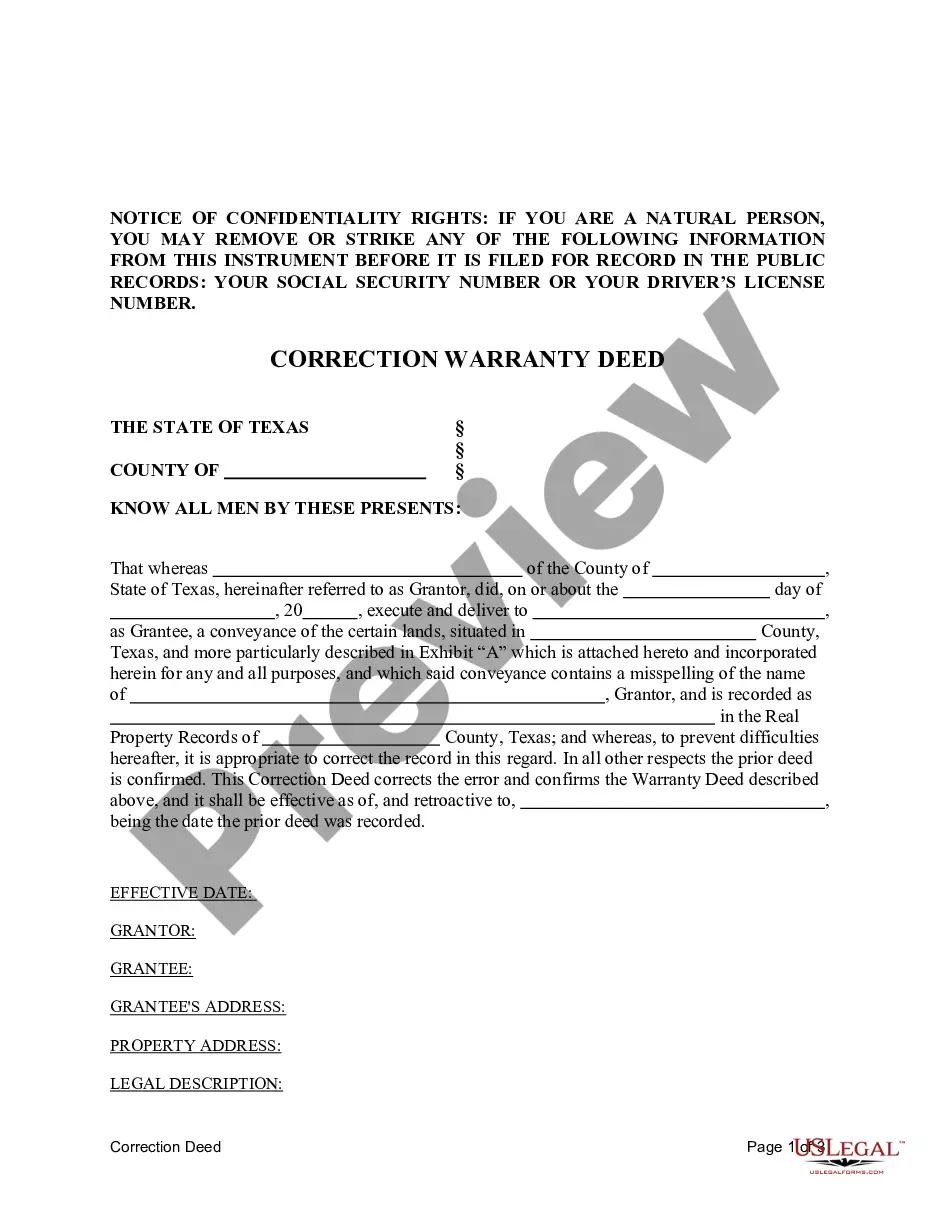
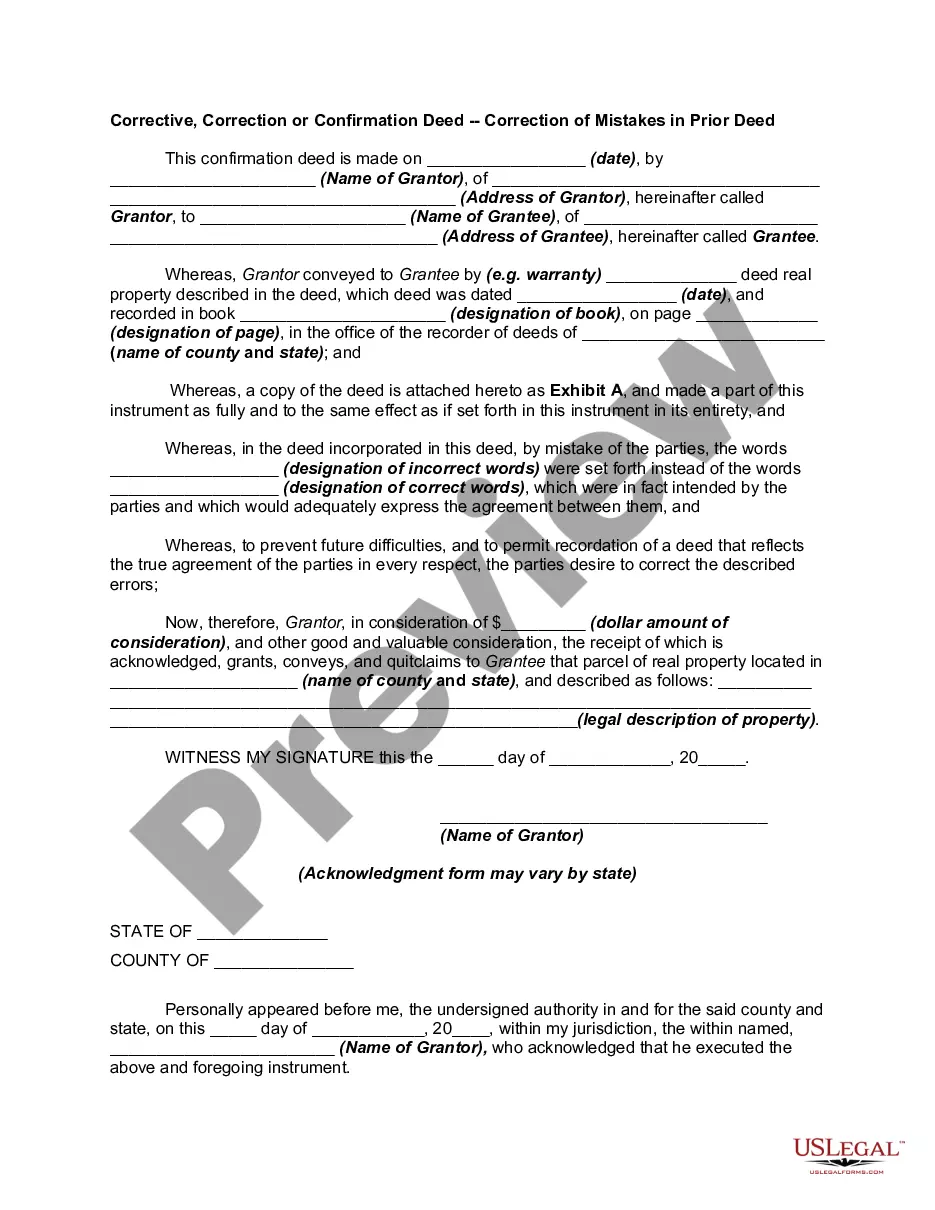
- First-time users should check the Preview mode and detailed form description to confirm the Texas correction deed meets your needs and complies with local requirements.
- If adjustments are needed, utilize the search function to locate an appropriate template. Once confirmed, continue to the next step.
- Purchase the document by clicking the 'Buy Now' button and select your desired subscription plan; ensure you create an account to browse our comprehensive form library.
- Complete your transaction by inputting payment information, whether a credit card or via PayPal, to finalize the subscription.
- Download the necessary Texas correction deed template to your device and access it anytime from the My Forms section in your profile.
In conclusion, US Legal Forms offers an unmatched resource for obtaining essential legal documents, making it easier for users to ensure accuracy and compliance.
Take the first step towards streamlining your legal processes today by visiting US Legal Forms.
Form popularity
FAQ
A correction instrument in Texas is a legal document used to amend a previously recorded deed. It is particularly useful for correcting errors related to names, dates, or property descriptions. Using a Texas correction deed prior uslegal provides a straightforward method to prepare and file this important document.
To update a deed in Texas, you may need to create a new deed that reflects the current information, such as changes in ownership or property boundaries. Ensure that you comply with local laws and file the updated deed with the appropriate county office. For assistance, consider a Texas correction deed prior uslegal for a guided approach.
Correcting a deed in Texas involves drafting a corrective deed that addresses the specific errors you wish to change. You must then file this document with the county clerk where the property is located. Resources such as a Texas correction deed prior uslegal make this process clearer and easier to navigate.
A corrective deed fixes mistakes in an existing deed, while a confirmatory deed reaffirms the original deed's intent without making changes. Both serve important functions in clarifying property ownership. For clarity on Texas correction deeds prior uslegal, consider reviewing both types' usage and implications.
To correct a deed in Texas, you typically need to prepare a corrective deed that clarifies any errors. Ensure to include the original deed's information along with the corrections. Using a Texas correction deed prior uslegal will help ensure that you meet all legal requirements for the state.
A corrective deed example includes cases where a property description has a typographical error, or names are misspelled. The corrective deed serves to rectify these mistakes and ensure accurate ownership records. Utilizing a Texas correction deed prior uslegal can streamline this process and provide clarity.
Yes, you can amend a deed in Texas to correct errors or clarify terms. It is essential to ensure that the amendment complies with state laws. For a Texas correction deed prior uslegal, consider using reliable resources like uslegalforms, which can guide you through the correct process.
A deed can be considered void in Texas for several reasons, such as lack of proper execution or if the property description is inaccurate. Additionally, if the grantor lacked the legal capacity to transfer the property, the deed could be deemed invalid. It is essential to have a Texas correction deed prior uslegal for the state to rectify any issues and ensure your deed stands legally strong. Consulting uslegal resources can provide clarity and support in preserving the validity of your property transaction.
Yes, you can transfer a deed without an attorney in Texas. However, it is crucial to understand the legal requirements to ensure the process is valid. A Texas correction deed prior uslegal for the state can guide you through the necessary steps and forms needed to complete the transfer correctly. Utilizing resources from uslegal can simplify this process and help you avoid potential pitfalls.
In Texas, the two types of warranty deeds are general warranty deeds and special warranty deeds. A general warranty deed offers full protection against any claims on the property, while a special warranty deed only guarantees against issues that arose during the seller's ownership. Understanding these differences is crucial for making an informed decision when transferring property. US Legal Forms provides easy access to both types of warranty deeds to meet your specific needs.