Limited Lliability
Description


Get your form ready online
Our built-in tools help you complete, sign, share, and store your documents in one place.
Make edits, fill in missing information, and update formatting in US Legal Forms—just like you would in MS Word.
Download a copy, print it, send it by email, or mail it via USPS—whatever works best for your next step.
Sign and collect signatures with our SignNow integration. Send to multiple recipients, set reminders, and more. Go Premium to unlock E-Sign.
If this form requires notarization, complete it online through a secure video call—no need to meet a notary in person or wait for an appointment.
We protect your documents and personal data by following strict security and privacy standards.

Make edits, fill in missing information, and update formatting in US Legal Forms—just like you would in MS Word.

Download a copy, print it, send it by email, or mail it via USPS—whatever works best for your next step.

Sign and collect signatures with our SignNow integration. Send to multiple recipients, set reminders, and more. Go Premium to unlock E-Sign.

If this form requires notarization, complete it online through a secure video call—no need to meet a notary in person or wait for an appointment.

We protect your documents and personal data by following strict security and privacy standards.
Looking for another form?


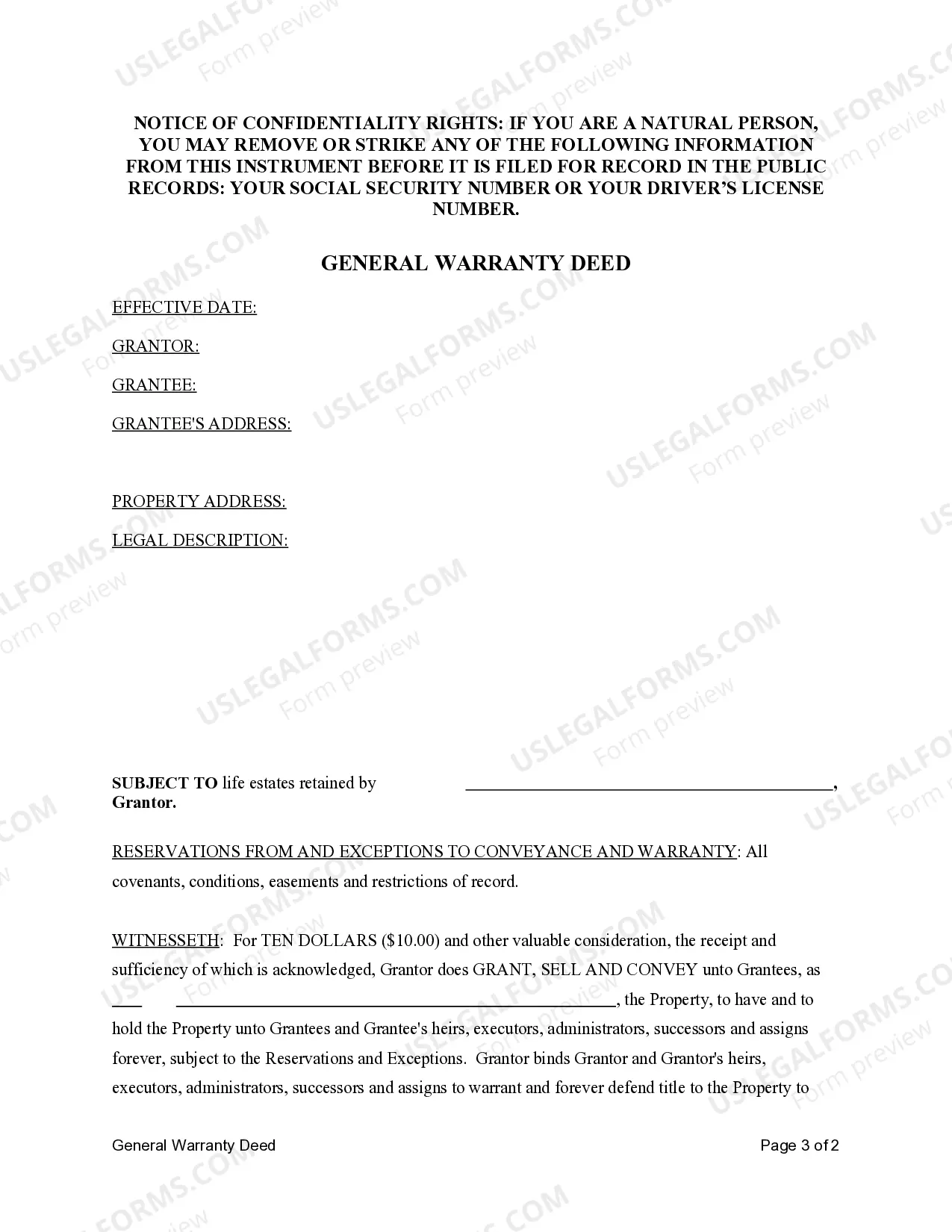
How to fill out Texas Assumption Warranty Deed - Husband And Wife To Limited Liability Company?
- Log in to your account if you're a returning user. Review your subscription status to ensure it is valid and ready for you to access documents.
- Explore the Preview mode and form descriptions if you're new. Confirm that you select the correct form that aligns with your legal requirements and local jurisdiction.
- Use the Search feature if necessary to locate any alternative templates that may better suit your needs.
- Select the document you need and proceed to purchase by clicking the Buy Now button. Choose a subscription plan that fits your requirements.
- Complete the payment process either via credit card or PayPal to finalize your subscription.
- Download the form to your device for completion. You can also access it later from the My Forms section in your profile.
By following these steps, you can easily navigate the extensive library offered by US Legal Forms. This platform not only saves time but ensures you have access to reliable legal documentation.
Don’t wait to protect your interests—visit US Legal Forms today and explore the robust collection of legal forms designed just for you.
Form popularity
FAQ
While an LLC offers many benefits, there are some downsides to consider. For instance, you may face higher formation fees and ongoing compliance requirements compared to sole proprietorships. Additionally, the limited liability protection isn't absolute; personal guarantees can still leave your assets exposed. It's crucial to weigh these factors before deciding if an LLC is right for you.
You can technically form an LLC without currently operating a business. However, to fully benefit from limited liability, you should actively engage in business activities. Having a defined business purpose allows you to meet legal obligations and maintain your LLC's status. It's advisable to have a clear plan before setting up the LLC to ensure its purpose is legitimate and active.
Yes, forming an LLC for your side hustle can be advantageous. Limited liability protection helps shield your personal assets from any business liabilities. It also provides a formal structure, making it easier to separate your side hustle’s finances from your personal finances. This can simplify tax preparation and enhance your business's legitimacy.
Creating an LLC before launching your business is often a smart move. This step provides you with limited liability protection, safeguarding your personal assets from business debts. Starting with an LLC sets a professional tone and establishes credibility with customers and partners from day one. Overall, it's easier to start with this structure than to switch later.
When you establish an LLC but take no further action, you face potential consequences. The state may require annual fees or filings to maintain your limited liability status. Without active management or compliance, your LLC could be dissolved, and you might lose the protections limited liability offers. It's important to keep your LLC compliant to truly benefit from its advantages.
A practical example of limited liability is a business owner forming an LLC. In this case, if the company faces legal action or bankruptcy, the owner's personal assets remain safe. This structure allows individuals to pursue their business ambitions without the constant worry of personal financial loss.
A limited liability company (LLC) combines the benefits of both partnerships and corporations. It provides limited liability protection while allowing for flexible tax treatment. An LLC protects your personal assets and serves as a great option for new entrepreneurs aiming to start a business with reduced risk.
Limited liability means that the financial responsibility of business owners is restricted to their investment in the company. Thus, if the business encounters financial difficulties, personal belongings, such as your house or savings, remain protected. This feature is fundamental for many small businesses and entrepreneurs seeking to minimize risk.
Unlimited liability implies that the business owner is fully responsible for all debts incurred by the business. For instance, if a sole proprietor faces financial trouble, creditors can claim the owner's home or savings. This risk often discourages individuals from starting businesses with this structure.
Limited liability protects your personal assets from business liabilities, while unlimited liability leaves you vulnerable to losing personal property if the business fails. Most commonly associated with corporations, limited liability encourages investment and innovation. Understanding these concepts can guide your business decisions and structure.