Texas Property
Description
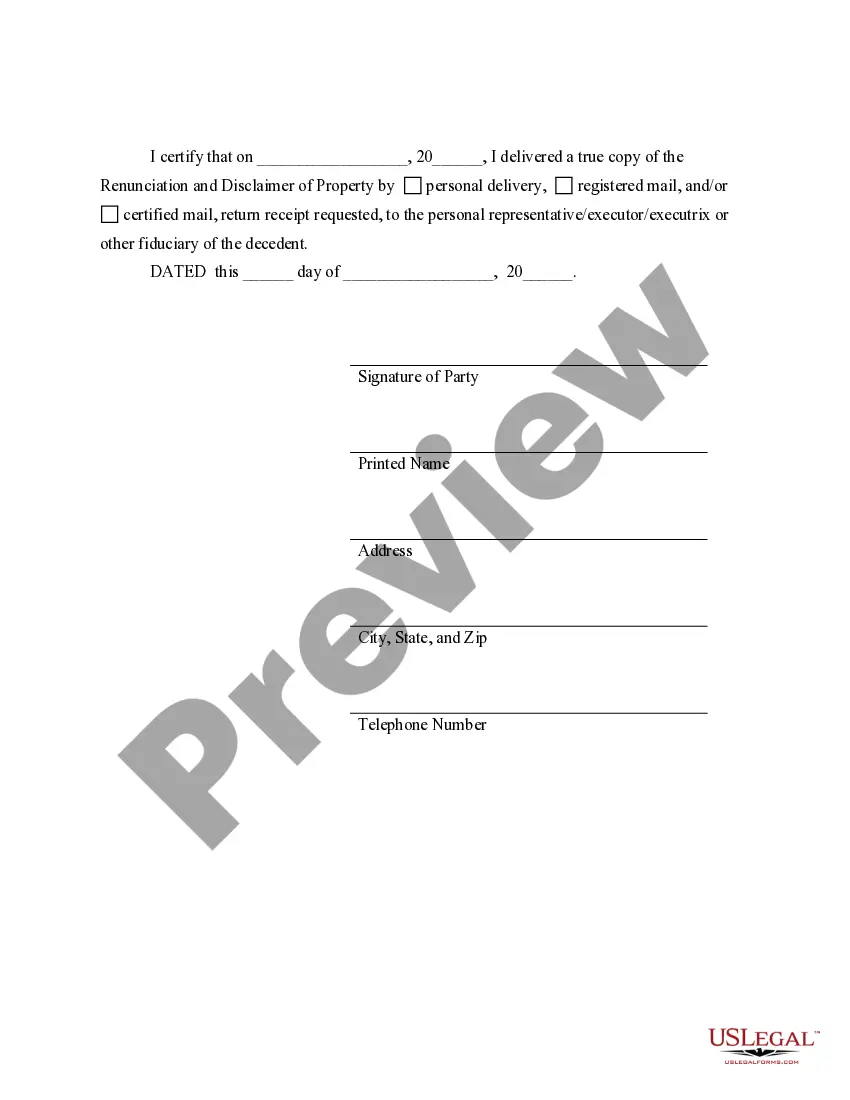
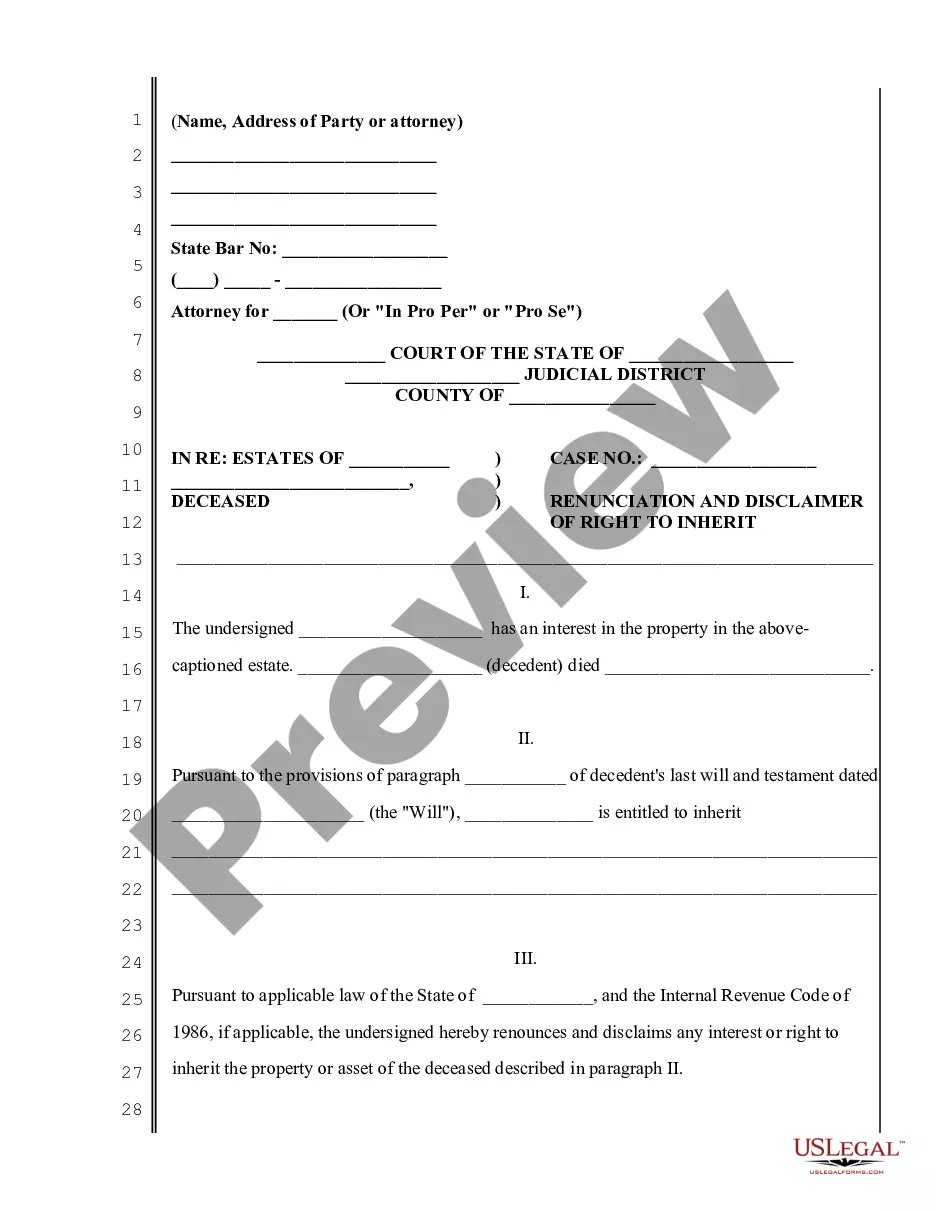
Get your form ready online
Our built-in tools help you complete, sign, share, and store your documents in one place.
Make edits, fill in missing information, and update formatting in US Legal Forms—just like you would in MS Word.
Download a copy, print it, send it by email, or mail it via USPS—whatever works best for your next step.
Sign and collect signatures with our SignNow integration. Send to multiple recipients, set reminders, and more. Go Premium to unlock E-Sign.
If this form requires notarization, complete it online through a secure video call—no need to meet a notary in person or wait for an appointment.
We protect your documents and personal data by following strict security and privacy standards.

Make edits, fill in missing information, and update formatting in US Legal Forms—just like you would in MS Word.

Download a copy, print it, send it by email, or mail it via USPS—whatever works best for your next step.

Sign and collect signatures with our SignNow integration. Send to multiple recipients, set reminders, and more. Go Premium to unlock E-Sign.

If this form requires notarization, complete it online through a secure video call—no need to meet a notary in person or wait for an appointment.

We protect your documents and personal data by following strict security and privacy standards.
Looking for another form?







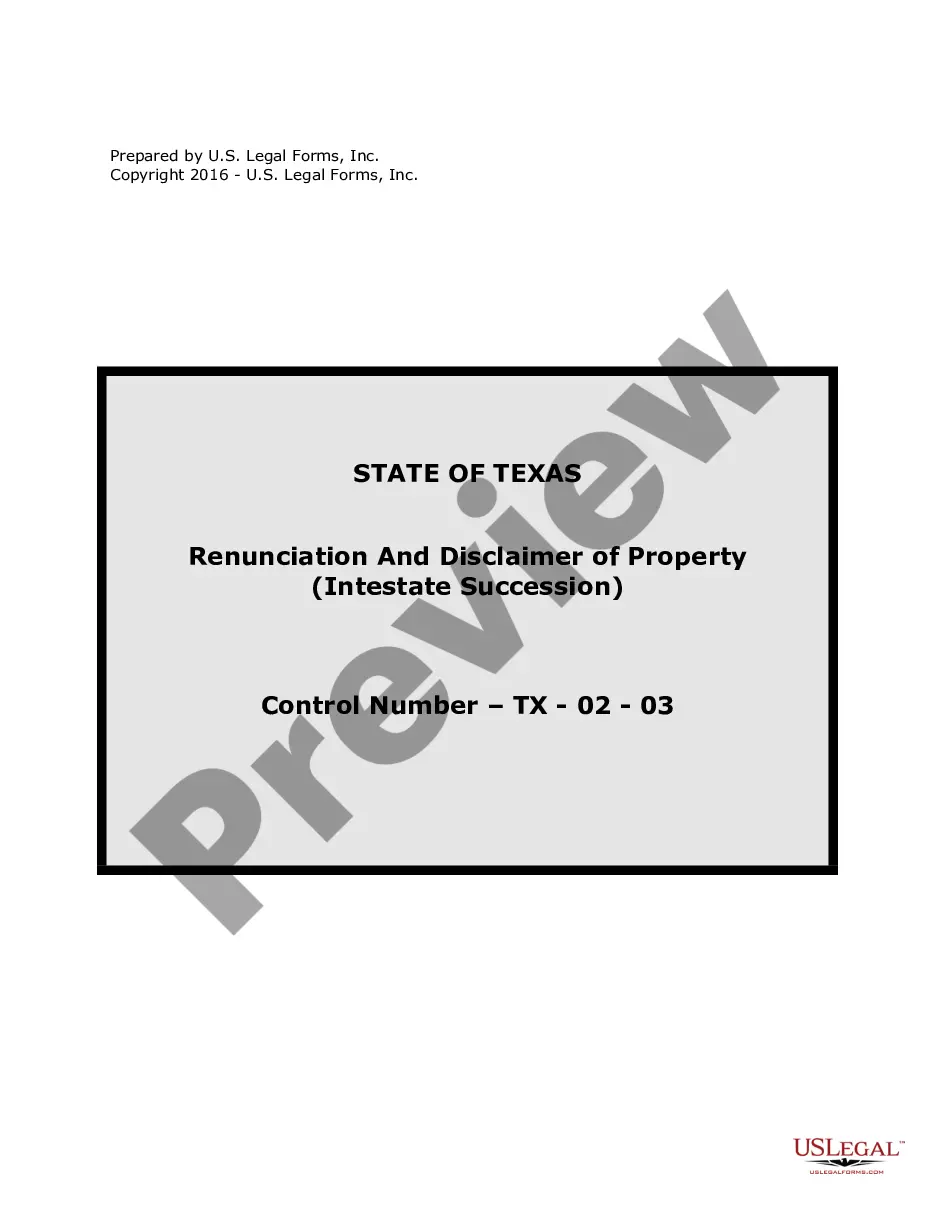
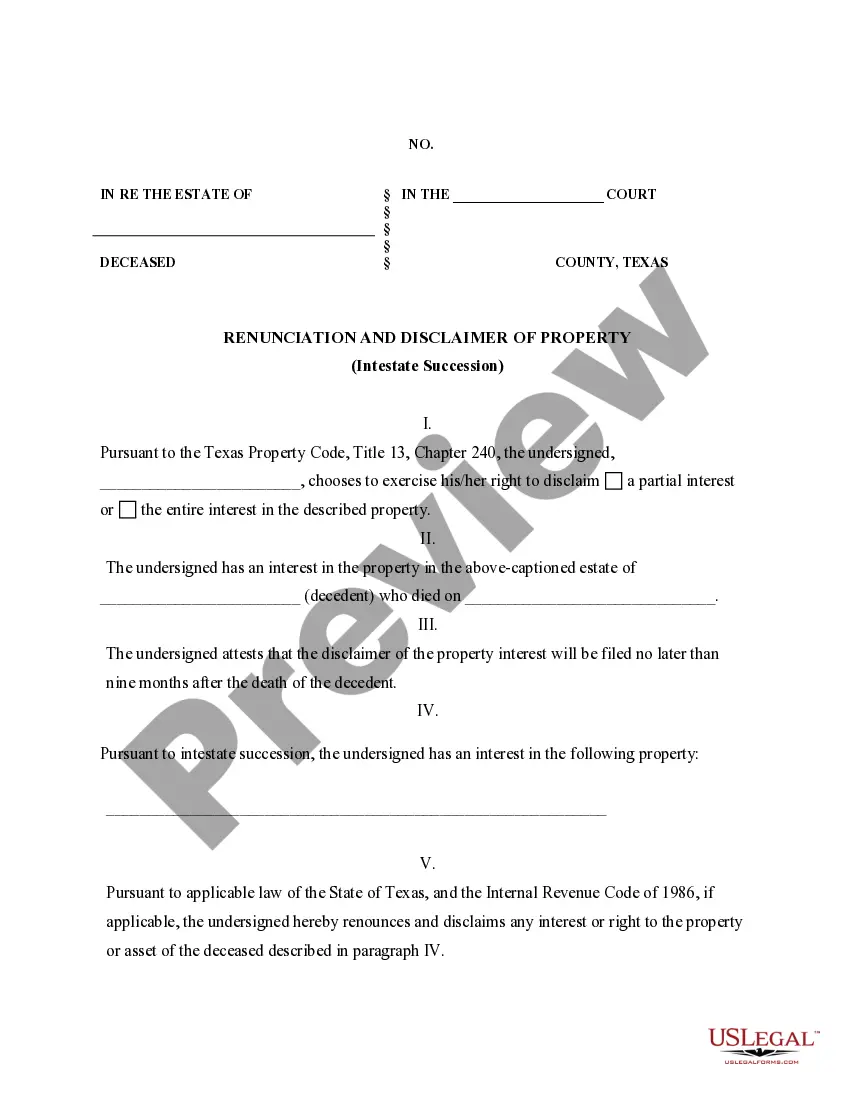
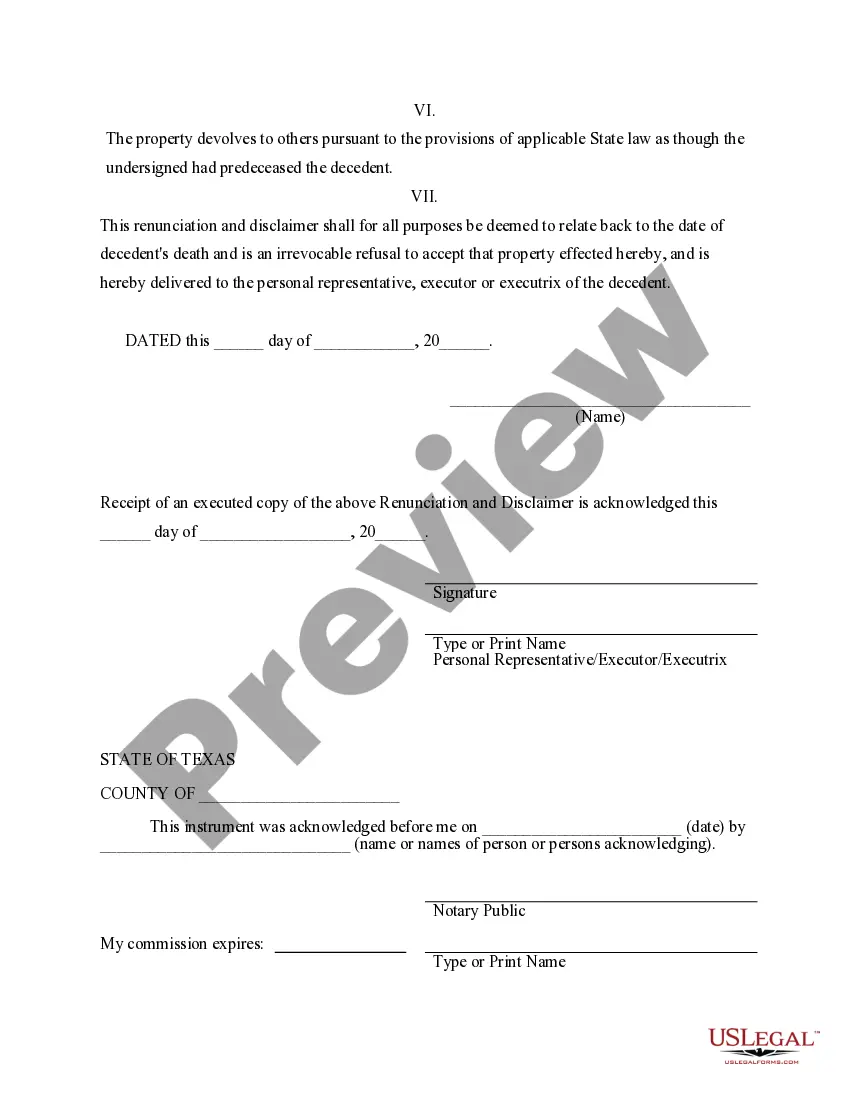
How to fill out Texas Renunciation And Disclaimer Of Property Received By Intestate Succession?
- Log in to your US Legal Forms account. If this is your first time, create an account to access the form library.
- Browse through the available Texas property forms. Utilize the Preview mode to review the document descriptions thoroughly.
- If the form doesn’t match your needs, use the Search feature to find a more suitable template.
- Select your desired document and click on the Buy Now button. Choose an appropriate subscription plan that fits your requirements.
- Complete your purchase by providing payment information through credit card or PayPal.
- Download the completed form directly to your device and find it in the My Forms section for future reference.
In conclusion, US Legal Forms empowers you to obtain essential Texas property documents with ease. Access a robust collection of forms, receive expert assistance, and ensure your legal papers are precise and compliant.
Start your journey today by visiting US Legal Forms to explore their extensive library!
Form popularity
FAQ
The formula for property tax is simple: Property Tax = (Assessed Value x Tax Rate) / 100. In this equation, the assessed value represents your property's appraised worth, while the tax rate represents the levy expressed per $100 of valuation. Understanding this formula allows for better budgeting for your Texas property taxes and can help avoid financial surprises.
To calculate the property tax rate in Texas, local governments first identify the total amount of revenue needed for budgetary purposes. They then divide this figure by the total assessed value of all taxable properties within the jurisdiction. The resulting number is adjusted to fit the standard $100 assessment, giving you the property tax rate. This calculation is essential when evaluating your Texas property expenses.
To calculate Texas property tax, first find out the assessed value of your property through your local appraisal district. Next, apply the tax rate, expressed in dollars per $100 of assessed value, to the assessment. Multiply the assessed value by the tax rate and then divide by 100 to get your total property tax bill. Using tools available in the US Legal Forms platform can simplify this process for you.
Texas property taxes are based on the value of real estate, determined by local appraisal districts. Each year, the local government assesses properties to figure out their market value. Once assessed, tax rates set by local authorities apply to that value, resulting in the total property tax owed. Understanding these basics can help you plan for your financial obligations related to Texas property.
Looking up property in Texas is straightforward with the right tools. You can visit county appraisal district websites or use online real estate platforms. Consider utilizing USLegalForms for access to essential documents that can assist you in your property search, ensuring you have everything you need for a successful transaction.
The cheapest property in Texas can often be found in rural areas or towns with lower population density. Places like West Texas and certain small towns may offer budget-friendly housing options. Researching these regions can yield valuable insights into affordable investments in Texas property, making it easier to find what suits your needs.
Home prices in Texas have shown some fluctuations, but overall, they remain fairly stable. In certain areas, prices may decrease due to market saturation or economic shifts. However, the general trend still supports increasing home values in many Texas regions. Keeping track of these developments can provide insights into your Texas property investments.
Texas does not currently face a traditional housing crisis, but it does experience challenges related to affordability and inventory shortages. While demand remains high, many potential buyers find themselves priced out of the market. Understanding the landscape of Texas property can help you make informed decisions in this complex environment.
Investing in Texas property generally presents a robust opportunity. The state's economy continues to grow, attracting new residents and businesses. This influx can drive property values upward, making it a favorable long-term investment. Utilize USLegalForms to ensure all your transactions are legally sound and efficient.
Currently, Texas property trends indicate a strong sellers market. Limited inventory coupled with high demand leads to competitive offers on available homes. Buyers might face challenges in securing their desired property due to this environment. To navigate these conditions effectively, consider using resources like USLegalForms for necessary documents.