Texas Motion Response Deadline
Description

Get your form ready online
Our built-in tools help you complete, sign, share, and store your documents in one place.
Make edits, fill in missing information, and update formatting in US Legal Forms—just like you would in MS Word.
Download a copy, print it, send it by email, or mail it via USPS—whatever works best for your next step.
Sign and collect signatures with our SignNow integration. Send to multiple recipients, set reminders, and more. Go Premium to unlock E-Sign.
If this form requires notarization, complete it online through a secure video call—no need to meet a notary in person or wait for an appointment.
We protect your documents and personal data by following strict security and privacy standards.

Make edits, fill in missing information, and update formatting in US Legal Forms—just like you would in MS Word.

Download a copy, print it, send it by email, or mail it via USPS—whatever works best for your next step.

Sign and collect signatures with our SignNow integration. Send to multiple recipients, set reminders, and more. Go Premium to unlock E-Sign.

If this form requires notarization, complete it online through a secure video call—no need to meet a notary in person or wait for an appointment.

We protect your documents and personal data by following strict security and privacy standards.
Looking for another form?





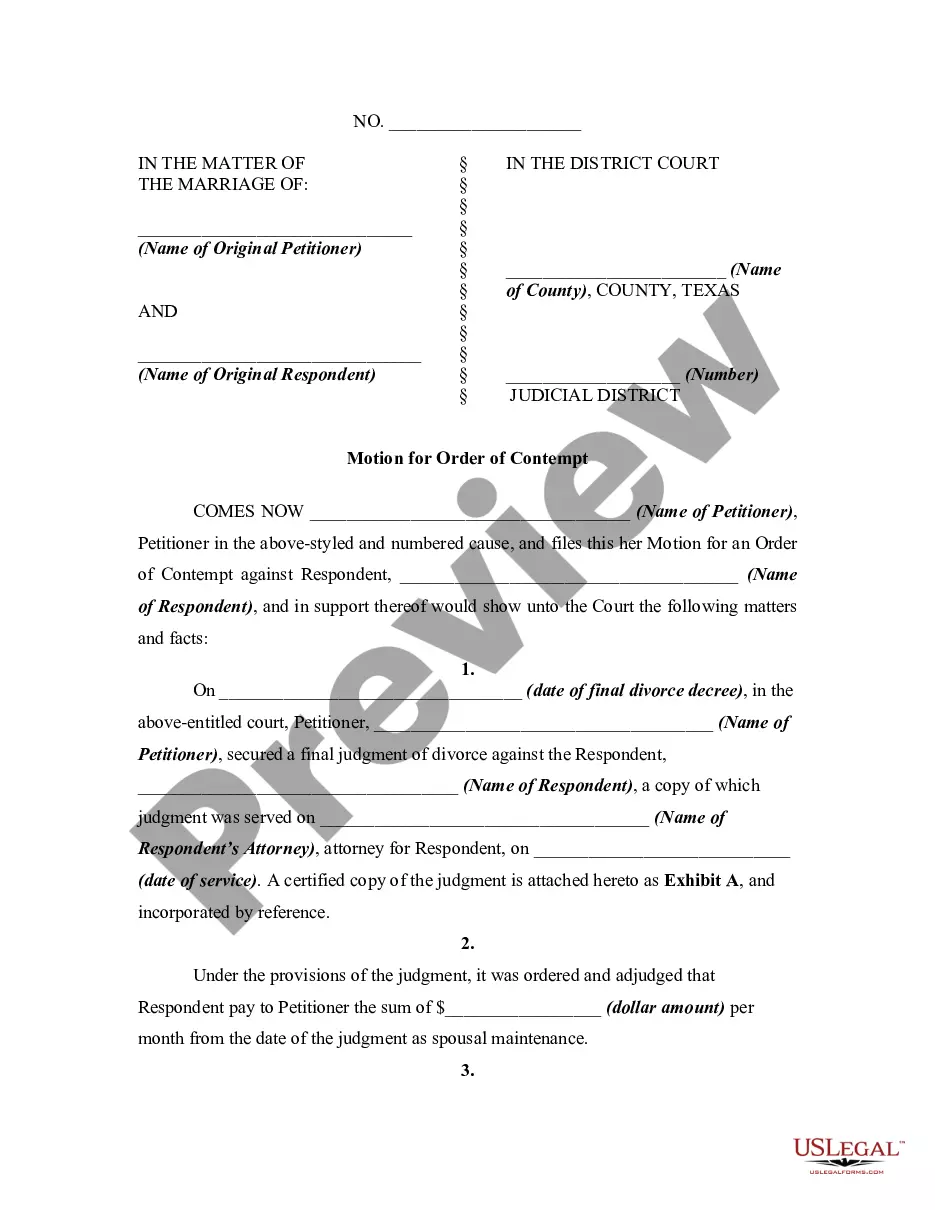
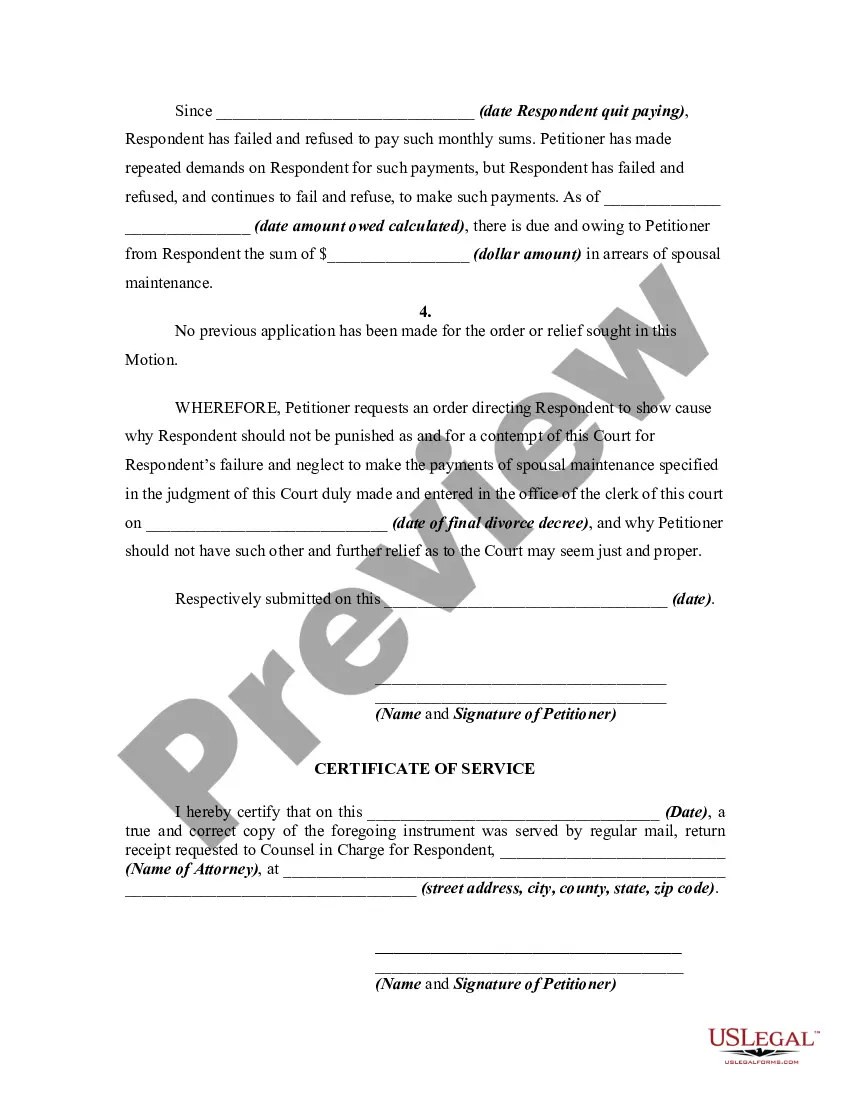
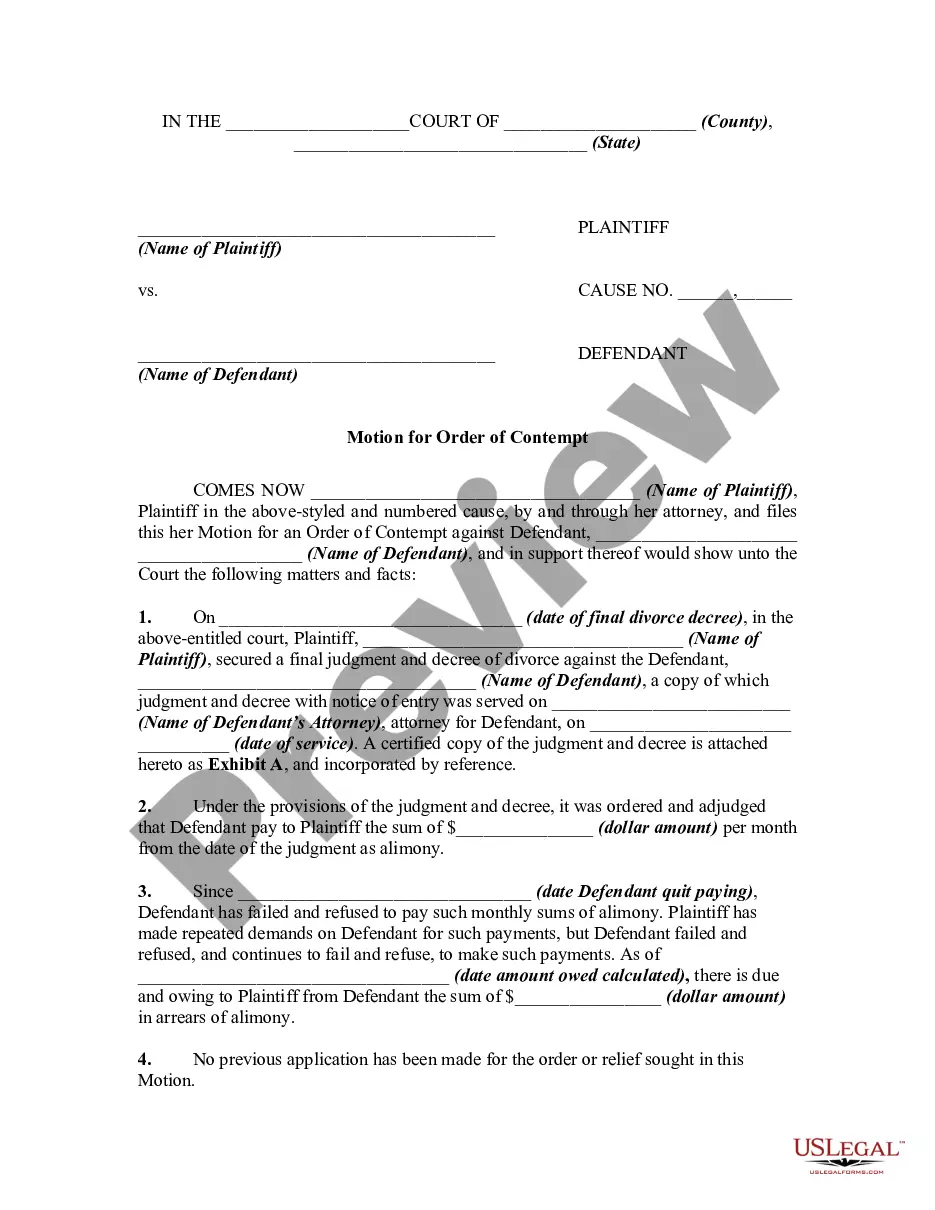
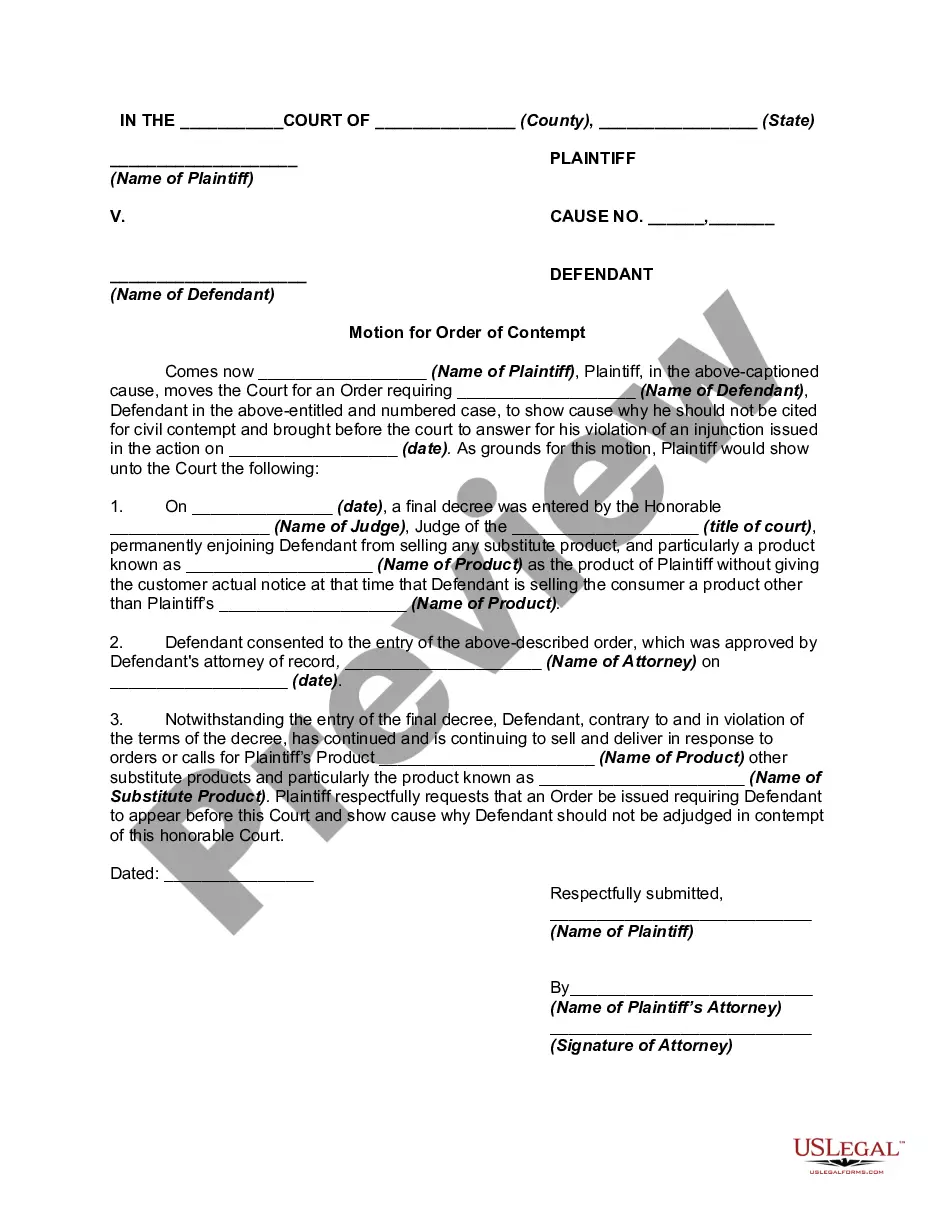
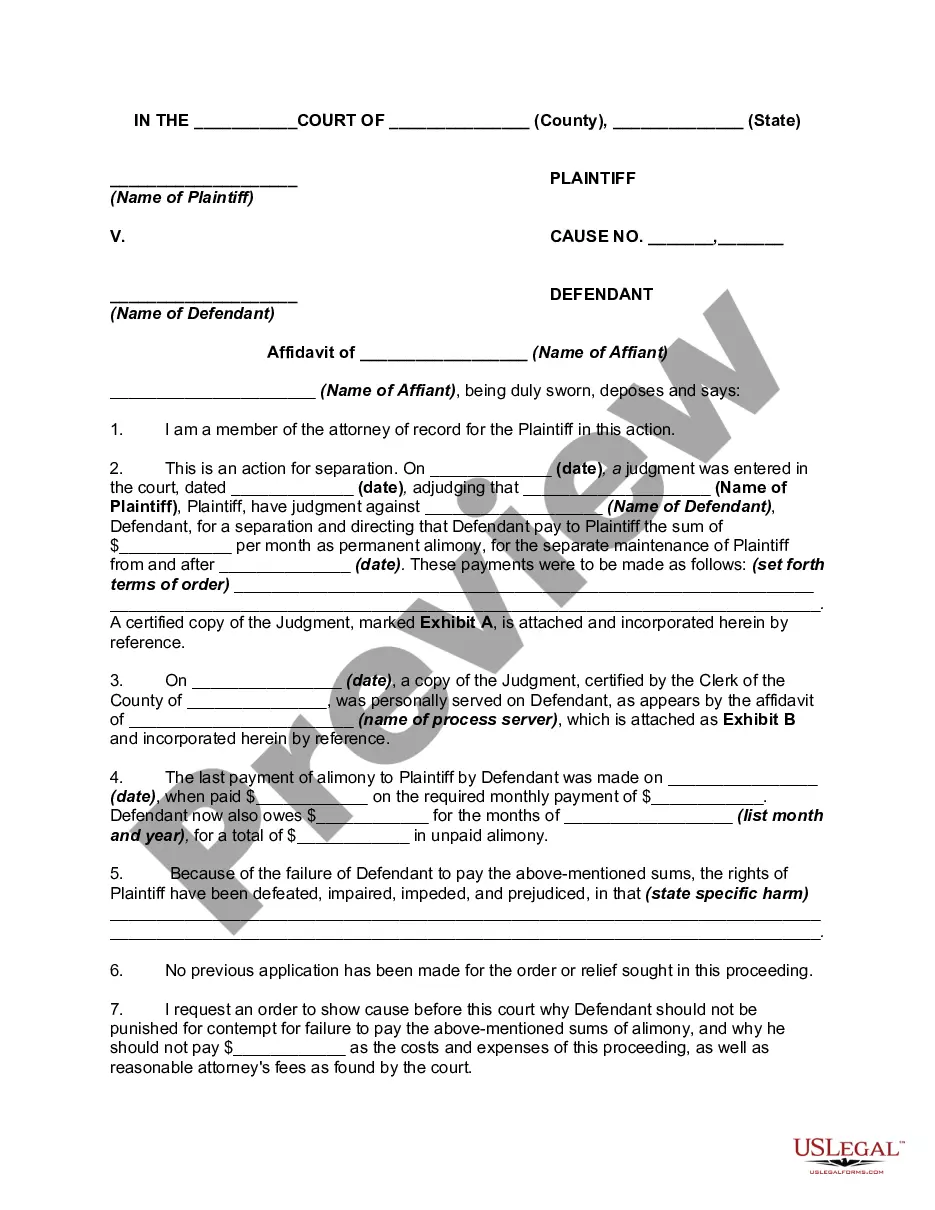
How to fill out Texas Motion For Order Of Contempt For Failure To Pay Spousal Maintenance?
Finding a reliable source for the latest and most pertinent legal templates is a significant part of managing red tape.
Identifying the correct legal documents demands precision and meticulousness, which is why it is vital to obtain Texas Motion Response Deadline samples exclusively from trustworthy sources, such as US Legal Forms. An incorrect template can squander your time and prolong your predicament.
Eliminate the hassle associated with your legal documentation. Browse the extensive US Legal Forms collection to locate legal samples, evaluate their suitability for your situation, and download them instantly.
- Utilize the catalog navigation or search bar to find your document.
- Access the form’s details to determine if it meets the specifications of your state and area.
- View the form preview, if available, to confirm that the form aligns with your needs.
- Return to the search if the Texas Motion Response Deadline does not correspond to your criteria.
- Once you are confident in the form’s relevance, download it.
- If you possess an authorized account, click Log in to verify and access your chosen forms in My documents.
- If you haven’t created an account yet, click Buy now to acquire the document.
- Choose a pricing plan that suits your needs.
- Proceed with the registration to complete your acquisition.
- Conclude your purchase by selecting a payment option (credit card or PayPal).
- Select the file format for downloading the Texas Motion Response Deadline.
- After obtaining the form on your device, you can edit it using the editor or print it and fill it out by hand.
Form popularity
FAQ
Rule 167 in Texas governs offers of settlement and provides parties the opportunity to resolve disputes before trial. It also outlines specific procedures for making such offers and their implications on the Texas motion response deadline. Understanding these stipulations can help you strategically manage your case, and uslegalforms can assist in constructing appropriate settlement offers.
Summary judgment motions do have a timeline for filing and response. First, a summary judgment motion must be on file at least 21 days before it can be heard. (TRCP 166a) Second, any opposing affidavits or written response should be on file no later than 7 days before the hearing.
A response and brief to an opposed motion must be filed within 21 days from the date the motion is filed. Time for Reply Briefs. Unless otherwise directed by the presiding judge, a party who has filed an opposed motion may file a reply brief within 14 days from the date the response is filed.
In Texas, a motion for new trial is generally due thirty days after the trial court judge signed the final judgment. See Texas Rule of Civil Procedure 329b(a).
A response and brief to an opposed motion must be filed within 21 days from the date the motion is filed. Time for Reply Briefs. Unless otherwise directed by the presiding judge, a party who has filed an opposed motion may file a reply brief within 14 days from the date the response is filed. No Oral Argument.
A party opposing a motion has fourteen days (twenty-one days for summary judgment motions) from the date the motion was served in which to file a response and any supporting documents, after which the court will consider the submitted motion for decision.