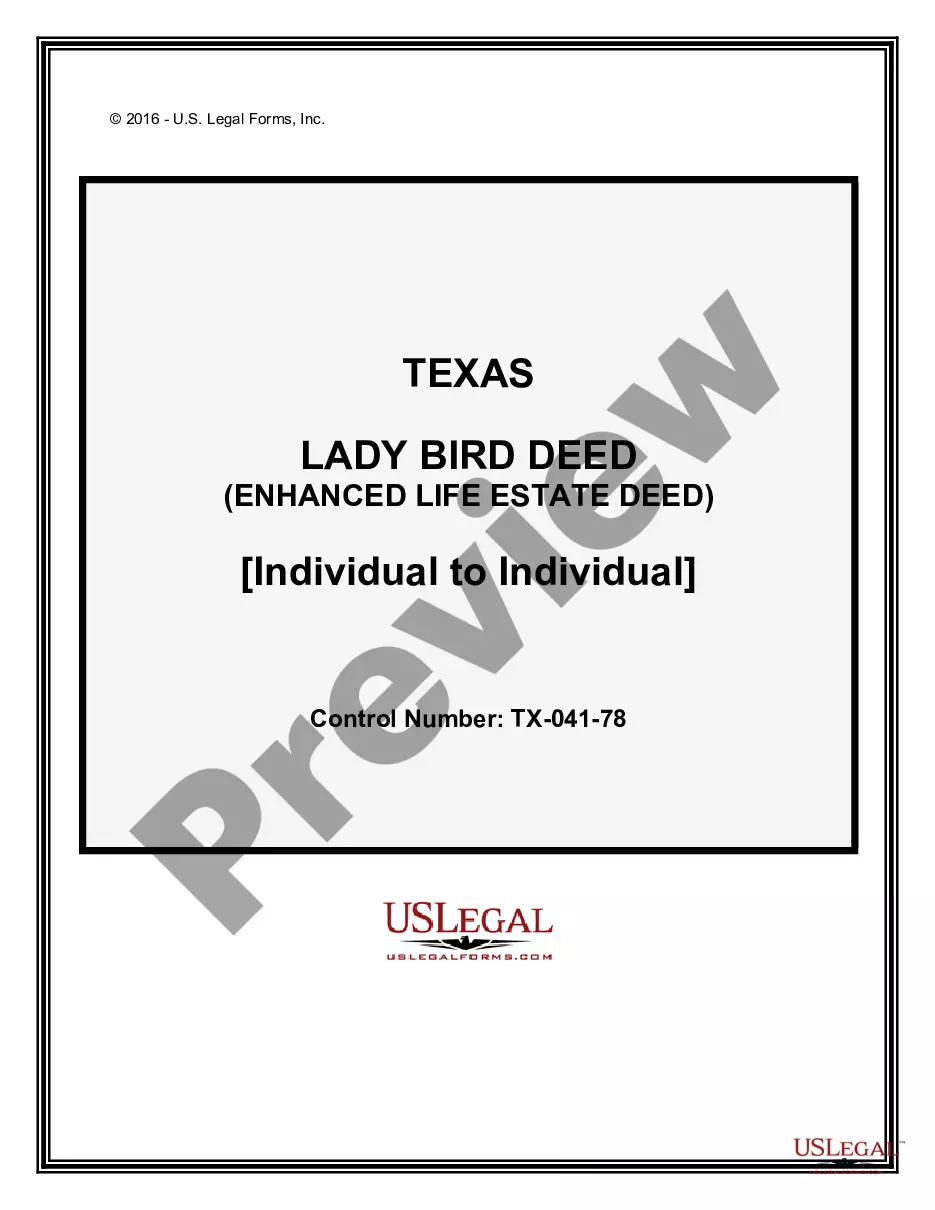
Life Estate Warranty Deed Texas For Mortgage
Description

Get your form ready online
Our built-in tools help you complete, sign, share, and store your documents in one place.
Make edits, fill in missing information, and update formatting in US Legal Forms—just like you would in MS Word.
Download a copy, print it, send it by email, or mail it via USPS—whatever works best for your next step.
Sign and collect signatures with our SignNow integration. Send to multiple recipients, set reminders, and more. Go Premium to unlock E-Sign.
If this form requires notarization, complete it online through a secure video call—no need to meet a notary in person or wait for an appointment.
We protect your documents and personal data by following strict security and privacy standards.

Make edits, fill in missing information, and update formatting in US Legal Forms—just like you would in MS Word.

Download a copy, print it, send it by email, or mail it via USPS—whatever works best for your next step.

Sign and collect signatures with our SignNow integration. Send to multiple recipients, set reminders, and more. Go Premium to unlock E-Sign.

If this form requires notarization, complete it online through a secure video call—no need to meet a notary in person or wait for an appointment.

We protect your documents and personal data by following strict security and privacy standards.
Looking for another form?
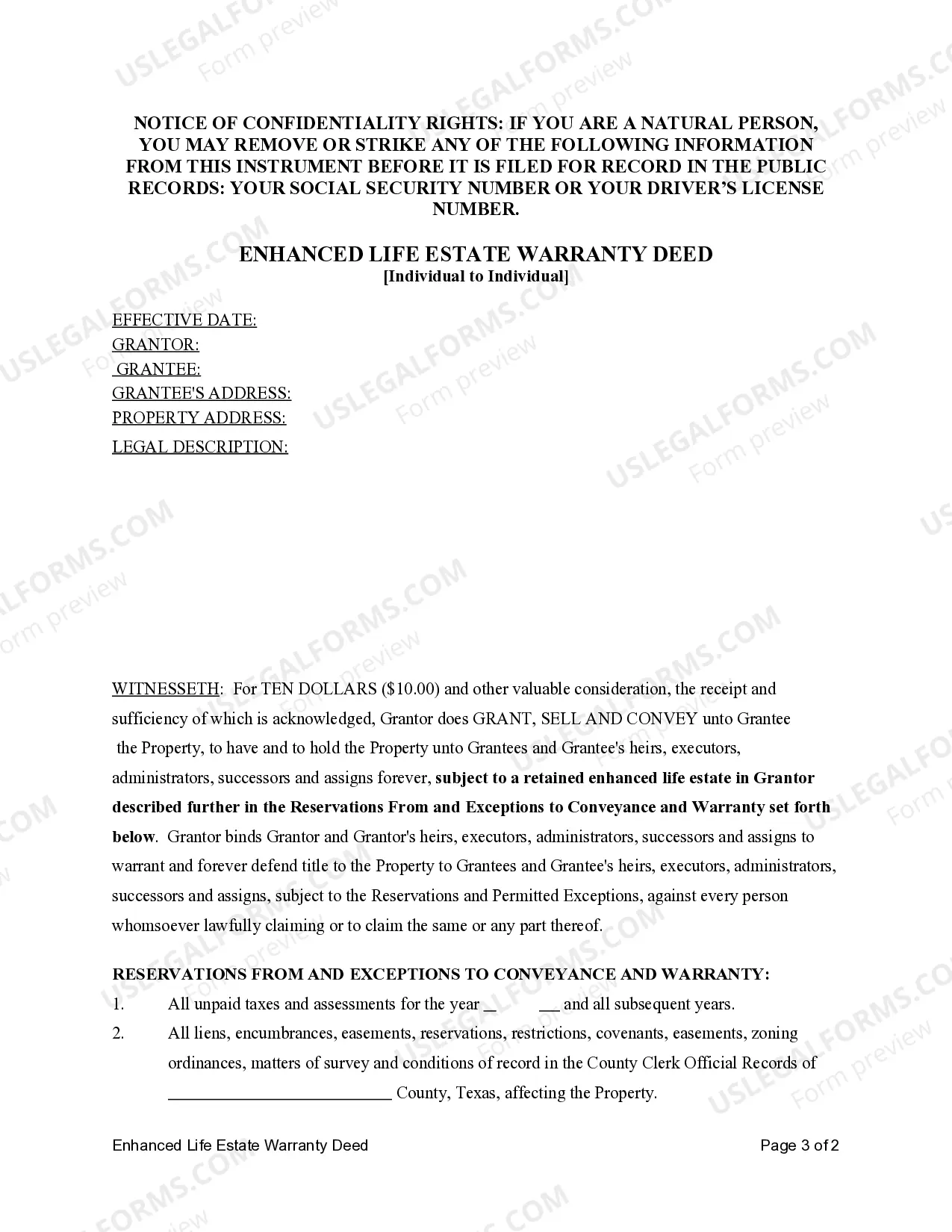
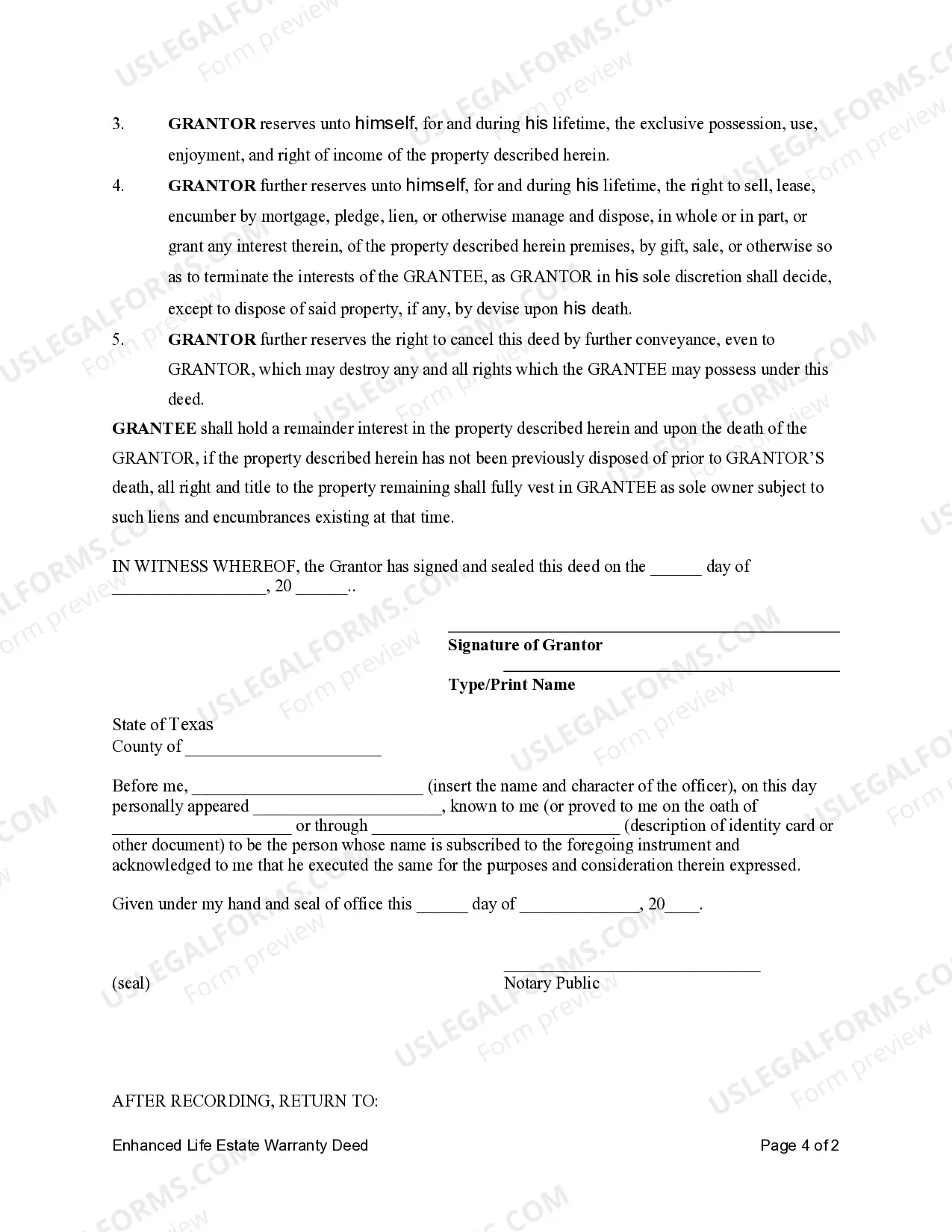
How to fill out Texas Lady Bird Or Enhanced Life Estate Warranty Deed - Individual To Individual?
- Log in to your US Legal Forms account if you're a returning user and ensure your subscription is active. If needed, renew your plan.
- For first-time users, start by previewing the available forms. Check their descriptions to find the life estate warranty deed that suits your requirements.
- If necessary, search for alternative templates using the Search tab to verify that the document meets your jurisdictional needs.
- Select the 'Buy Now' option next to your chosen form and pick a subscription plan. You'll need to create an account to access the legal library.
- Complete your purchase using your credit card or PayPal to gain full access.
- Download your completed form from your account to maintain a copy for future use, accessible through the My Forms section.
Obtaining a life estate warranty deed in Texas doesn't have to be complicated. With US Legal Forms, you have access to an extensive library of over 85,000 legal forms, ensuring you find the exact document needed.
Empower yourself with US Legal Forms today to streamline your legal needs. Visit us now to get started!
Form popularity
FAQ
To record a warranty deed in Texas, you need to submit the completed deed to the county clerk's office where the property is located. This process formalizes the transfer of ownership and provides public notice. Be sure to include any required fees when submitting the deed. Using platforms like US Legal Forms can streamline the preparation of your warranty deed and simplify the recording process.
Yes, you can prepare your own warranty deed in Texas. However, it is crucial to understand the requirements to ensure it meets legal standards. If you choose to do it yourself, consider using a life estate warranty deed Texas template to guide you through the process. This can help avoid potential mistakes and provide peace of mind.
Filling out a Texas warranty deed requires you to include specific details such as the names of the current owner and the new owner, a complete legal description, and the type of ownership being transferred. It is crucial to cite the life estate if that applies to your deed, as it addresses the property’s future ownership. Tools like US Legal Forms can assist you to ensure accuracy and compliance with Texas laws.
Writing a warranty deed involves outlining essential information such as grantor, grantee, and a legal description of the property. Be sure to include assurances that the title is clear from any claims. Using a life estate warranty deed template specific to Texas can simplify this process and ensure all legal requirements are met. Consider platforms like US Legal Forms for reliable templates and guidance.
A life estate on a mortgaged property grants an individual rights to use the property during their lifetime. This means that while you live, you can enjoy the property, but after your passing, ownership transfers to another party. In Texas, understanding a life estate warranty deed is essential for mortgage situations. It helps clarify who has control over the property and how it can be utilized financially.
To record a warranty deed in Texas, you first need to ensure that the deed is properly executed and signed by the grantor. Then, you will file the deed with the county clerk's office in the county where the property is located. It’s important to remember that if you're considering using a life estate warranty deed Texas for mortgage, recording the deed accurately can protect your rights and clarify ownership for all parties involved.
To transfer a deed in Texas after death, the estate must be probated if there is no clear designation in a life estate arrangement. The executor of the estate will file the necessary documents with the court to validate the will and authorize the transfer of property. If you utilized a life estate warranty deed Texas for mortgage, this process can often be streamlined, as the ownership may already be designated to the remainderman.
In a life estate arrangement, the life tenant has the right to occupy and use the property during their lifetime, but they do not own it outright. Instead, ownership is shared with the remainderman, who will receive full ownership once the life tenant passes away. Understanding this division of ownership is crucial, especially when dealing with a life estate warranty deed Texas for mortgage, as it affects decision-making and planning.
Despite its benefits, a life estate deed has some disadvantages that potential users should consider. The life tenant cannot freely sell or modify the property without involving the remainderman, which can lead to conflicts. Additionally, debts or liabilities tied to the property may affect the life estate, impacting both the current and future owners, particularly when it comes to a life estate warranty deed Texas for mortgage.
A life estate deed in Texas allows one person, known as the life tenant, to use the property during their lifetime while providing for the transfer of ownership to another party upon their death. This arrangement can benefit those considering a life estate warranty deed Texas for mortgage, as it clarifies property rights and can simplify the probate process. However, the life tenant cannot sell or mortgage the property without the consent of the remainderman, the person who will inherit the property.