Life Estate Deed With Mortgage
Description

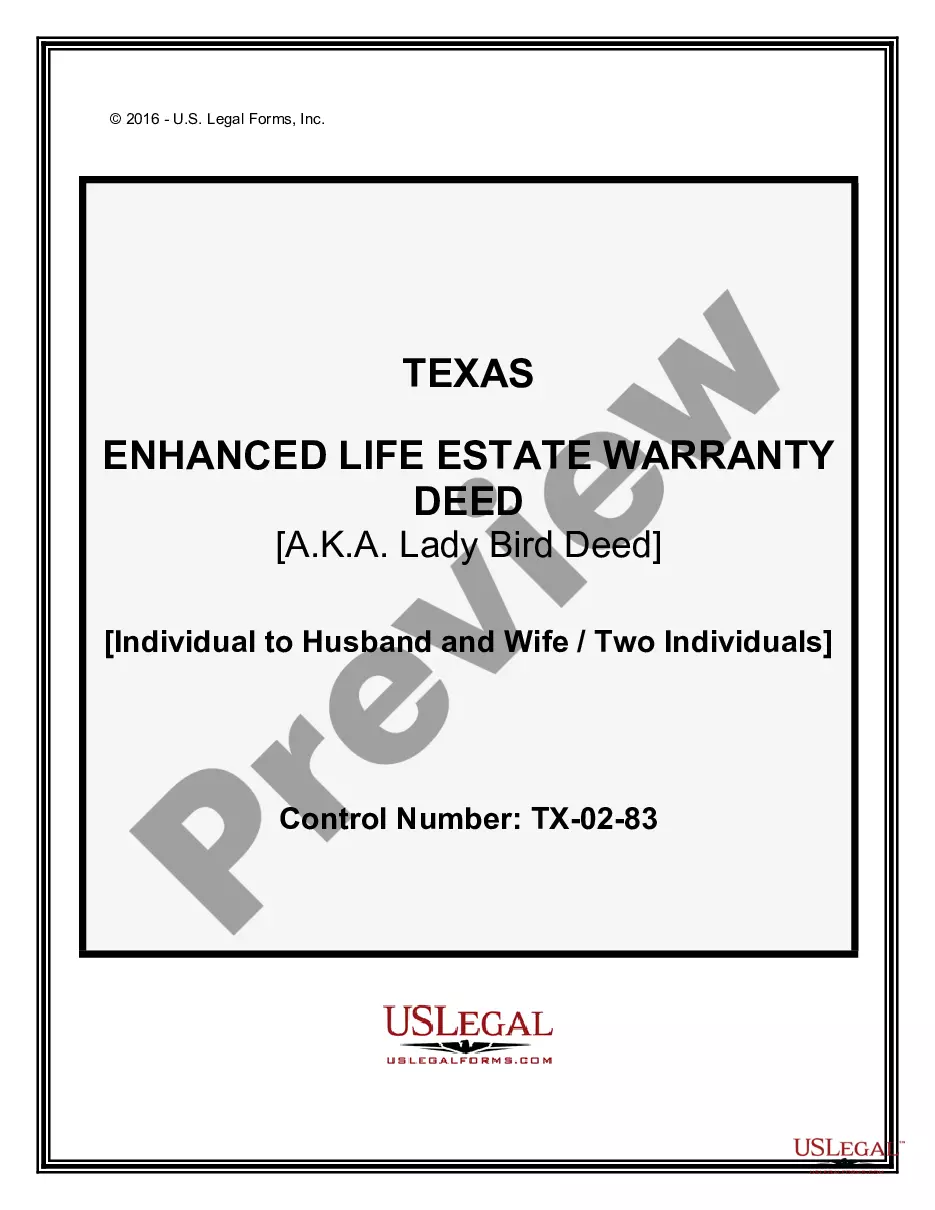
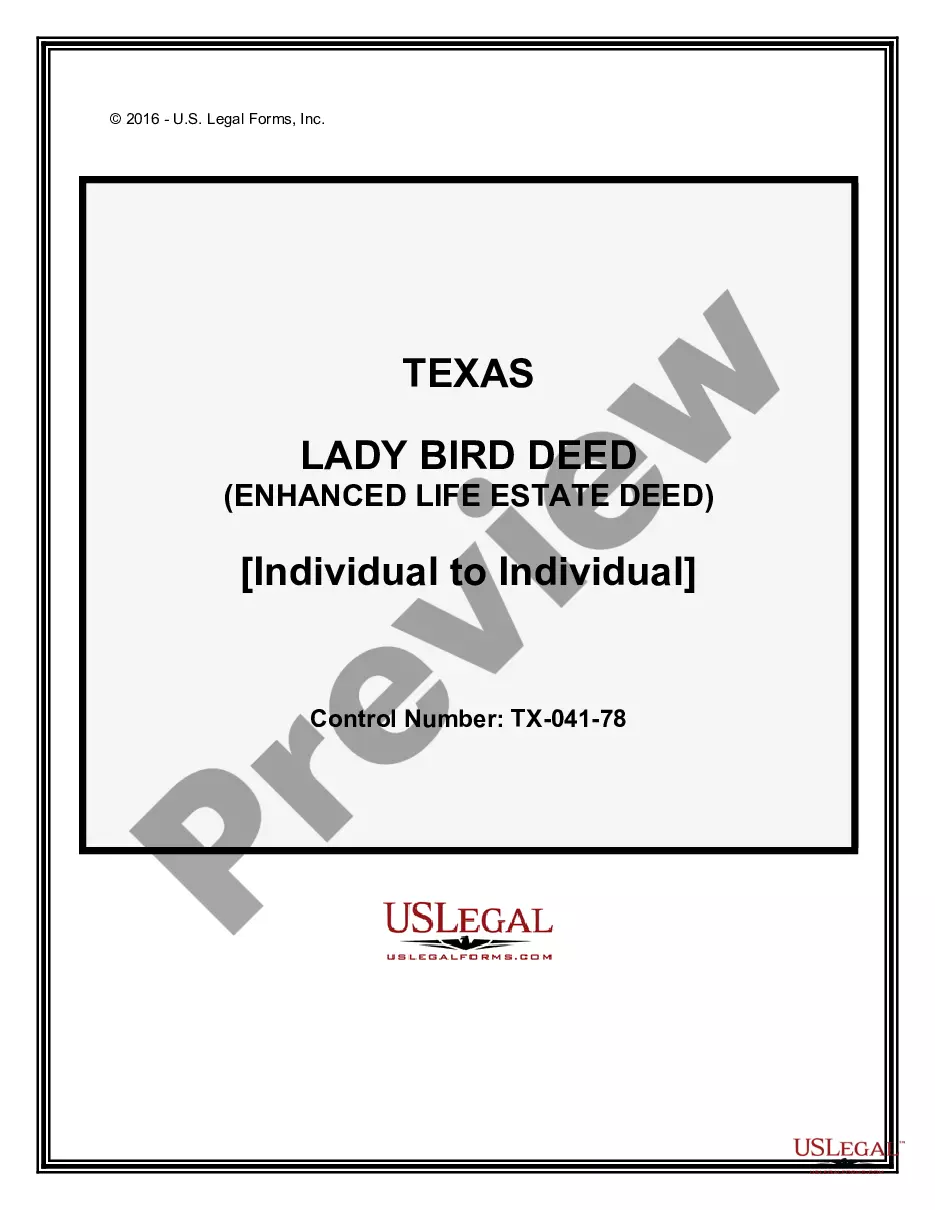
Get your form ready online
Our built-in tools help you complete, sign, share, and store your documents in one place.
Make edits, fill in missing information, and update formatting in US Legal Forms—just like you would in MS Word.
Download a copy, print it, send it by email, or mail it via USPS—whatever works best for your next step.
Sign and collect signatures with our SignNow integration. Send to multiple recipients, set reminders, and more. Go Premium to unlock E-Sign.
If this form requires notarization, complete it online through a secure video call—no need to meet a notary in person or wait for an appointment.
We protect your documents and personal data by following strict security and privacy standards.

Make edits, fill in missing information, and update formatting in US Legal Forms—just like you would in MS Word.

Download a copy, print it, send it by email, or mail it via USPS—whatever works best for your next step.

Sign and collect signatures with our SignNow integration. Send to multiple recipients, set reminders, and more. Go Premium to unlock E-Sign.

If this form requires notarization, complete it online through a secure video call—no need to meet a notary in person or wait for an appointment.

We protect your documents and personal data by following strict security and privacy standards.
Looking for another form?







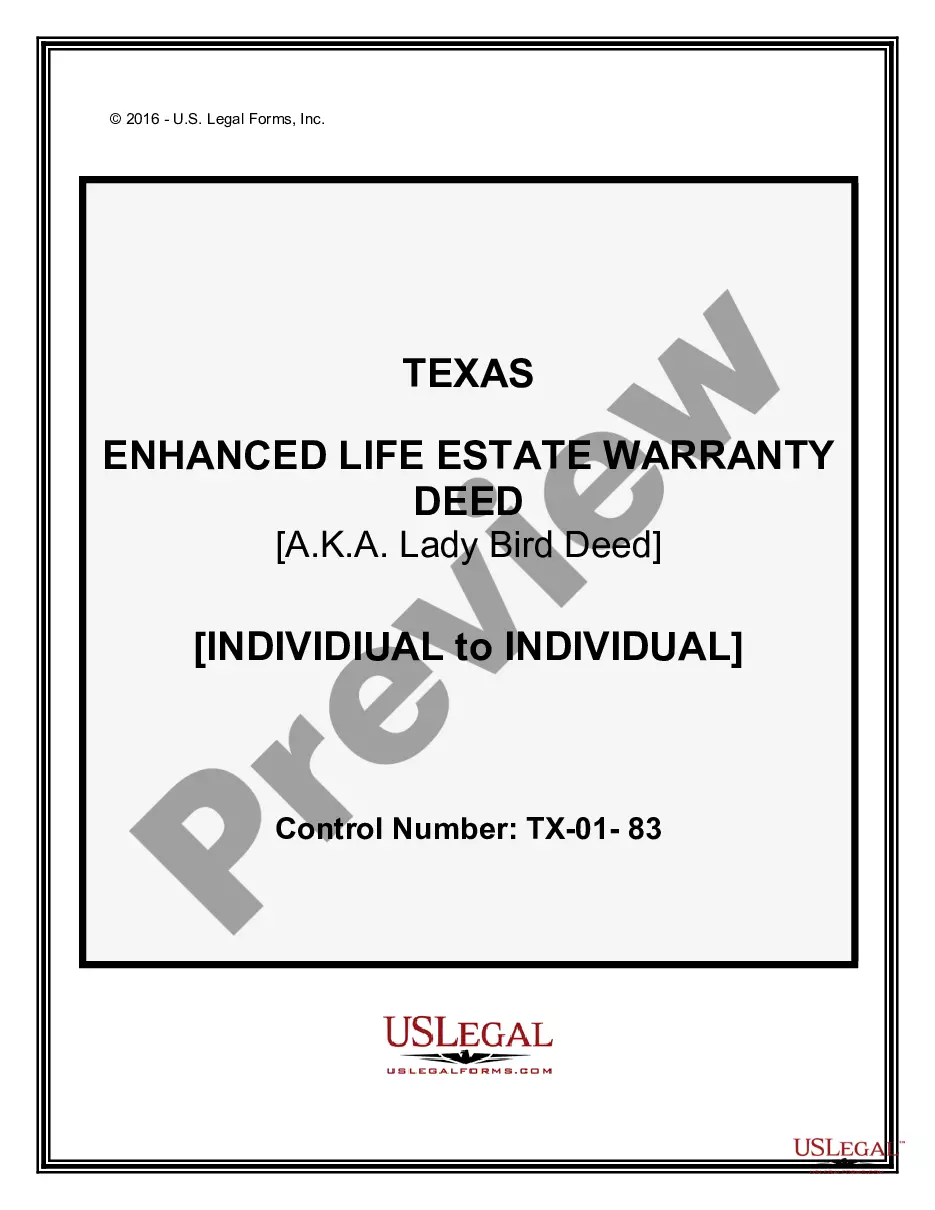
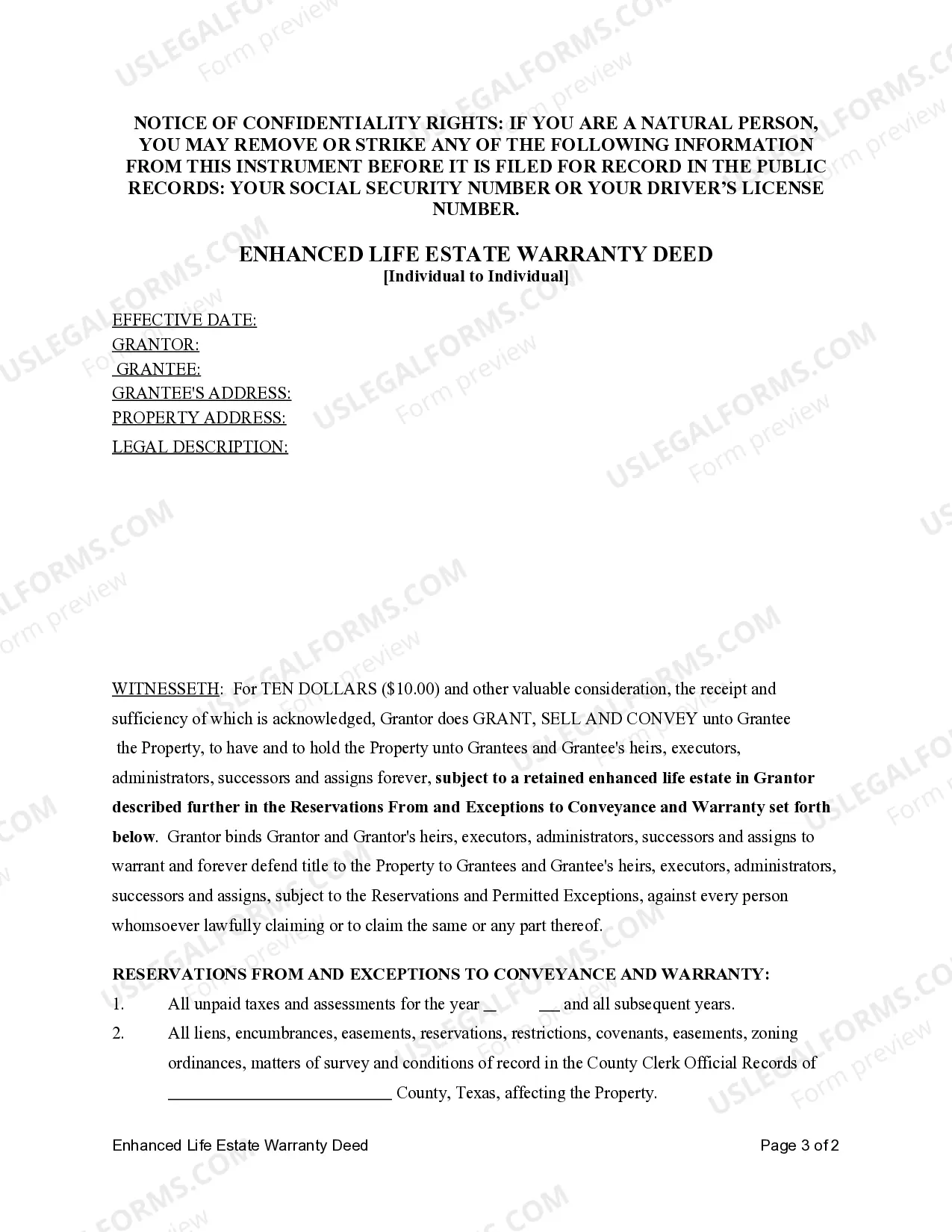
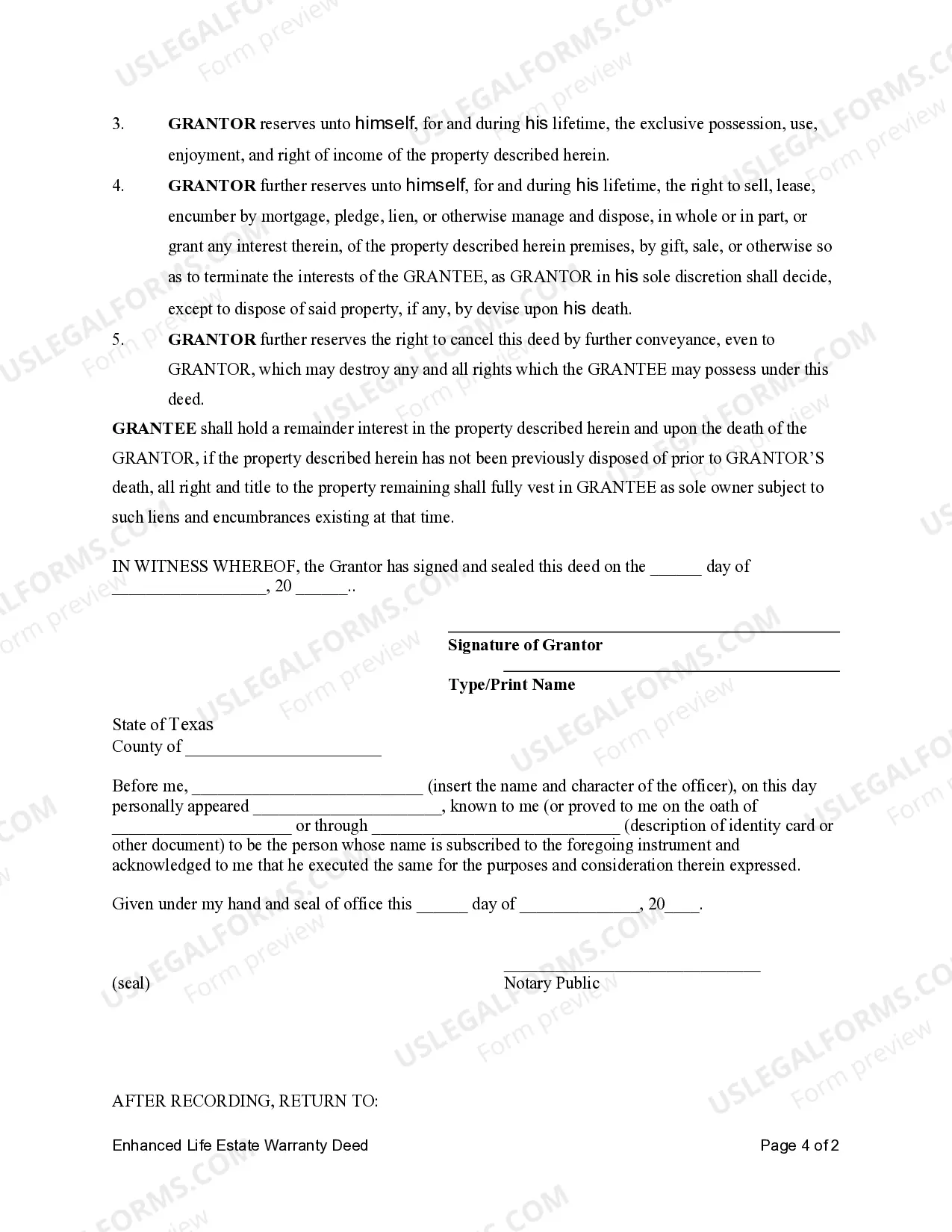
How to fill out Texas Lady Bird Or Enhanced Life Estate Warranty Deed - Individual To Individual?
- Visit the US Legal Forms website and create an account if you are a new user. Existing users can simply log in to their accounts.
- Browse through the extensive library or use the Search function to locate the life estate deed template that fits your specific needs. Review descriptions and previews to ensure legal compliance with your jurisdiction.
- Select the appropriate template and proceed by clicking the Buy Now button. Choose your preferred subscription plan during this step.
- Complete your purchase by providing your payment details via credit card or PayPal for secure transaction processing.
- Download your completed form directly to your device and find it in the My Forms section of your profile for future reference.
By utilizing US Legal Forms, you benefit from a vast selection of over 85,000 legal documents. Along with expert guidance, you can ensure your documents are precise and legally sound.
Take the first step towards effective estate planning today! Explore our library and secure your legal forms with US Legal Forms.
Form popularity
FAQ
No, a mortgage on a life estate does not automatically become void after death. In fact, when the life tenant passes away, the mortgage may still remain in effect. It is important to understand that the lender can pursue the property for mortgage debt if necessary. To clarify your situation regarding life estate deed with mortgage, consulting a professional or using resources from US Legal Forms can provide you with tailored information.
Generally, a will cannot override a life estate deed with mortgage. The life estate deed establishes a legal right that supersedes any instructions in a will. This means that when you create a life estate, the property will automatically transfer to the remainderman upon your passing, regardless of other estate plans. To ensure that your wishes are carried out effectively, it's beneficial to consult with an estate planning professional.
A life estate deed with mortgage can limit your control over property during your lifetime. Once you establish a life estate, you cannot sell or mortgage the property without the consent of the remainderman. This arrangement may lead to difficulties if your financial situation changes. Moreover, upon your passing, the property's value may not be easily realized by your heirs.
Your deed is usually filed with the county recorder's office where the property is located. If you have a mortgage, the lender holds a copy of the mortgage document. Any life estate deed with mortgage you create will also be filed there. Regularly check with your county office to ensure documents are properly recorded.
Yes, you can create a life estate even if you have a mortgage. However, doing so may complicate your mortgage agreement. Lenders often prefer to approve mortgages where the borrower retains full ownership. It's beneficial to discuss your plans with your lender before proceeding.
A life estate deed can limit your control over the property. Once you transfer ownership through a life estate, you cannot sell or mortgage the property without the consent of the remainderman. Additionally, if you have debts or liabilities, creditors may still target the property. It's essential to consider these factors in your estate planning.
Transferring ownership of a house with a mortgage after death involves several steps. First, you must determine if the deceased had a life estate deed with mortgage and understand its terms. Then, settle the estate and address the outstanding mortgage balance. Using a platform like USLegalForms may simplify the process by providing forms and resources to manage the transition smoothly.
Selling a house that is under a life estate deed with mortgage is possible but comes with specific conditions. The life tenant has the right to live in the house until their death, and any sale requires their agreement. Additionally, the mortgage must be addressed, as it can complicate the sale process. Consulting with a knowledgeable real estate attorney can help navigate this situation.
When one person in a mortgage dies, the remaining party usually takes over the mortgage payments. If the deceased had a life estate deed with mortgage, it could affect the property's transfer. The estate may also need to address any remaining balance on the mortgage as part of the estate settlement. This process often requires legal guidance to ensure proper handling.
When a person with a mortgage passes away, the mortgage does not automatically transfer to another individual. Instead, the responsibility of the mortgage typically falls on the estate of the deceased. If a life estate deed with mortgage is involved, it may allow the beneficiaries to assume the mortgage depending on the terms. To avoid complications, it's wise to consult with a real estate attorney.