Claim Against Roundup Formula In Excel
Description

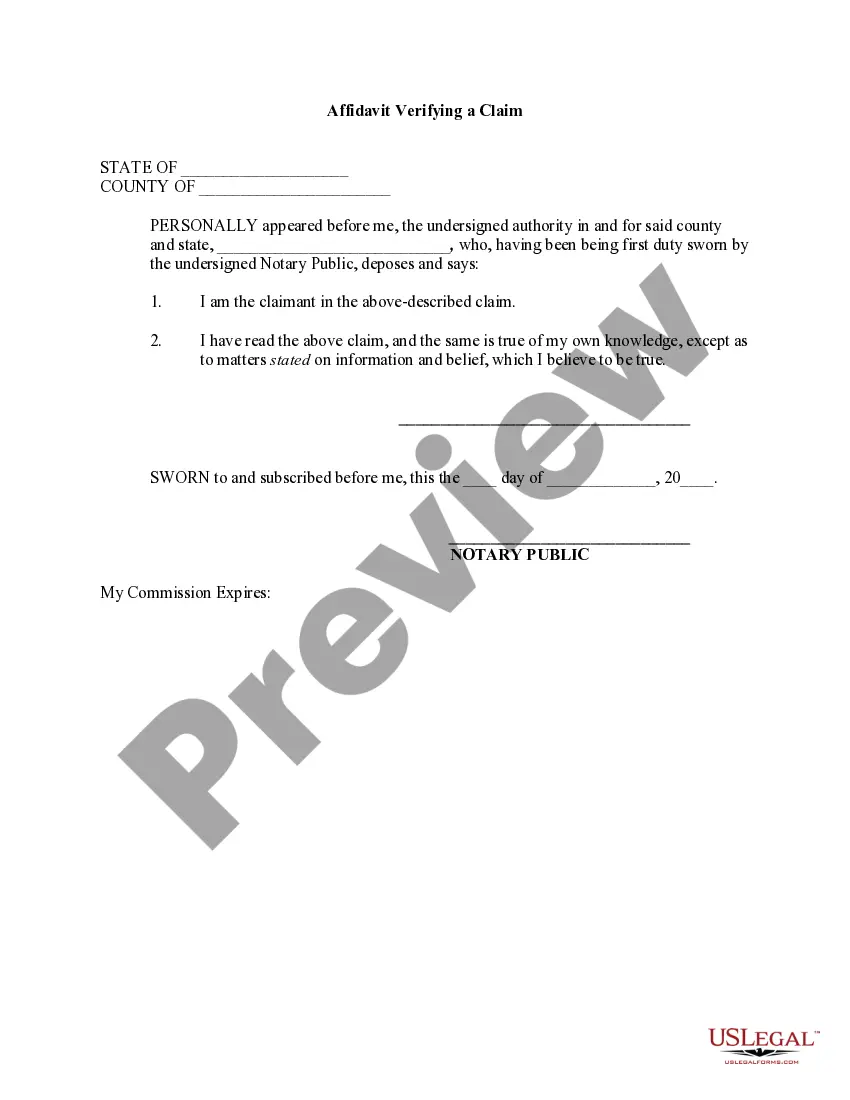
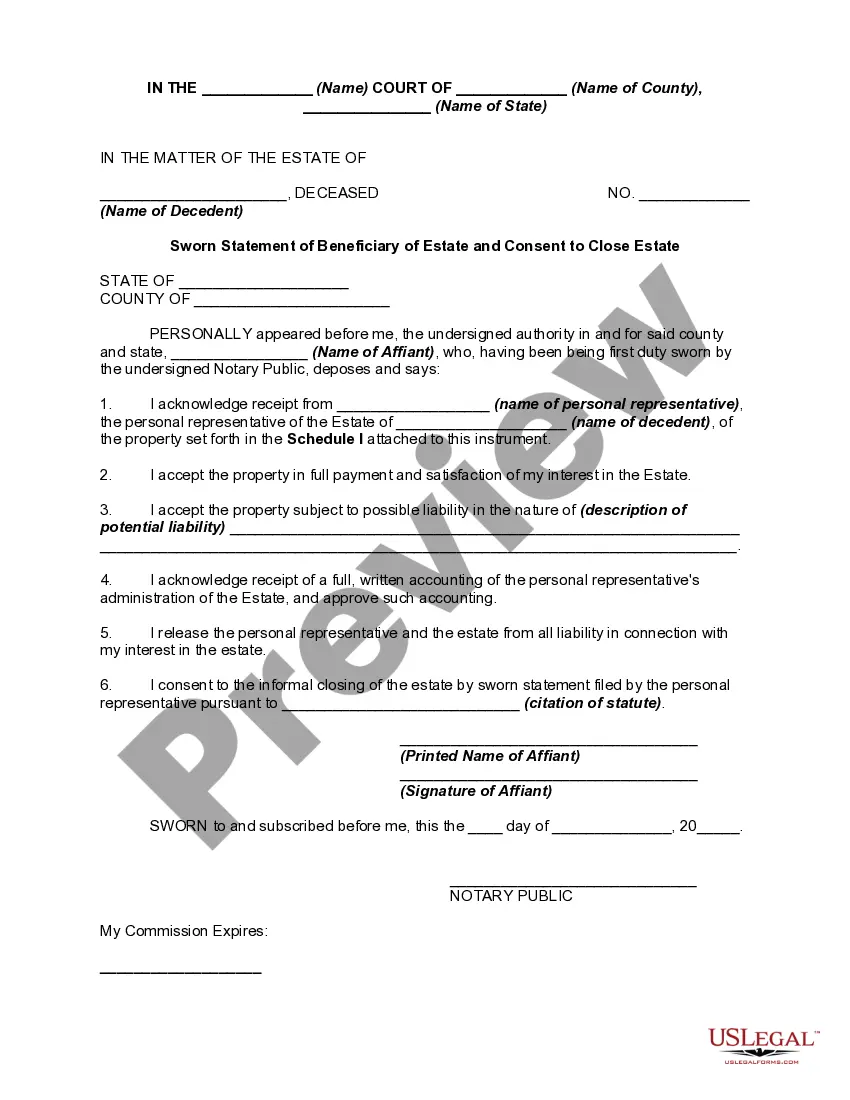
Get your form ready online
Our built-in tools help you complete, sign, share, and store your documents in one place.
Make edits, fill in missing information, and update formatting in US Legal Forms—just like you would in MS Word.
Download a copy, print it, send it by email, or mail it via USPS—whatever works best for your next step.
Sign and collect signatures with our SignNow integration. Send to multiple recipients, set reminders, and more. Go Premium to unlock E-Sign.
If this form requires notarization, complete it online through a secure video call—no need to meet a notary in person or wait for an appointment.
We protect your documents and personal data by following strict security and privacy standards.

Make edits, fill in missing information, and update formatting in US Legal Forms—just like you would in MS Word.

Download a copy, print it, send it by email, or mail it via USPS—whatever works best for your next step.

Sign and collect signatures with our SignNow integration. Send to multiple recipients, set reminders, and more. Go Premium to unlock E-Sign.

If this form requires notarization, complete it online through a secure video call—no need to meet a notary in person or wait for an appointment.

We protect your documents and personal data by following strict security and privacy standards.
Looking for another form?


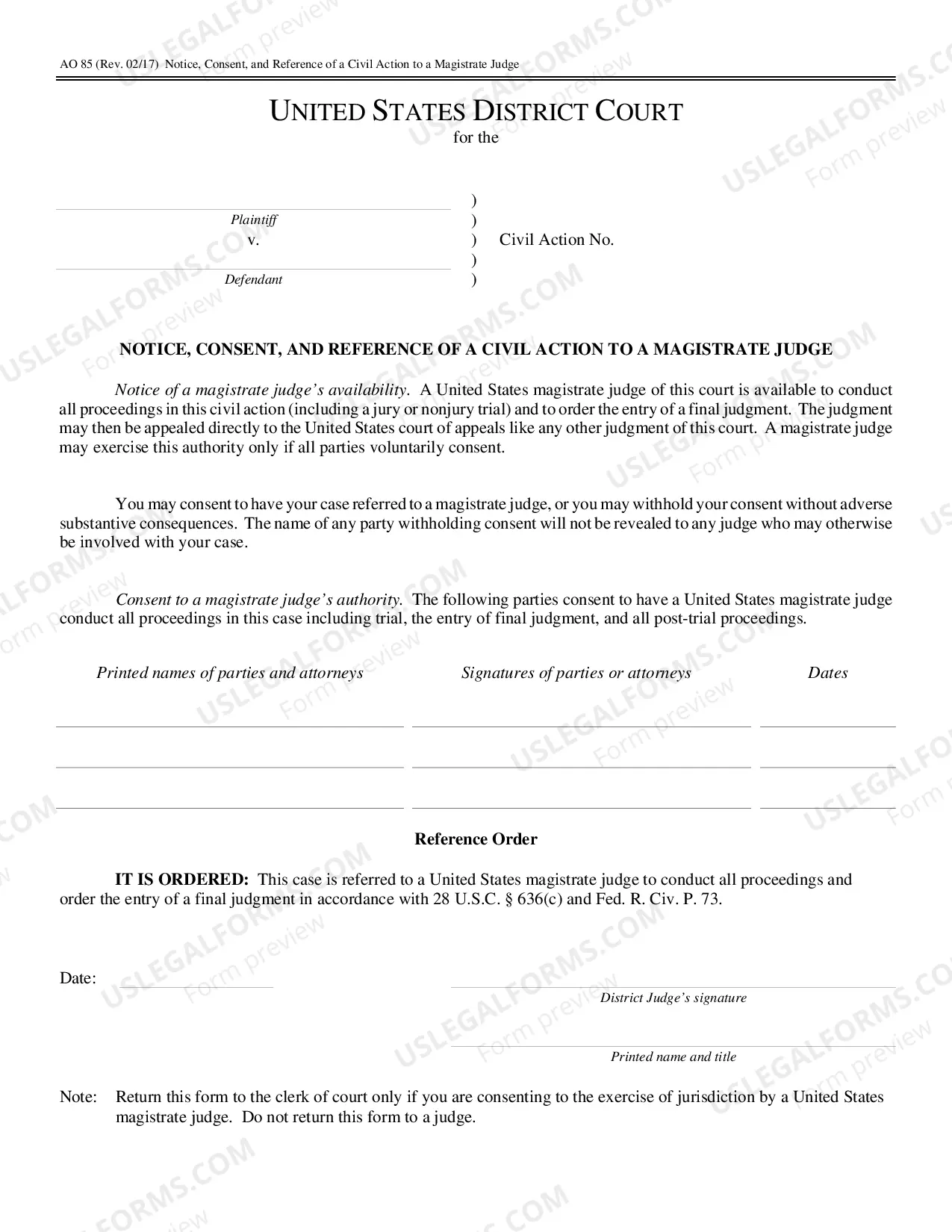

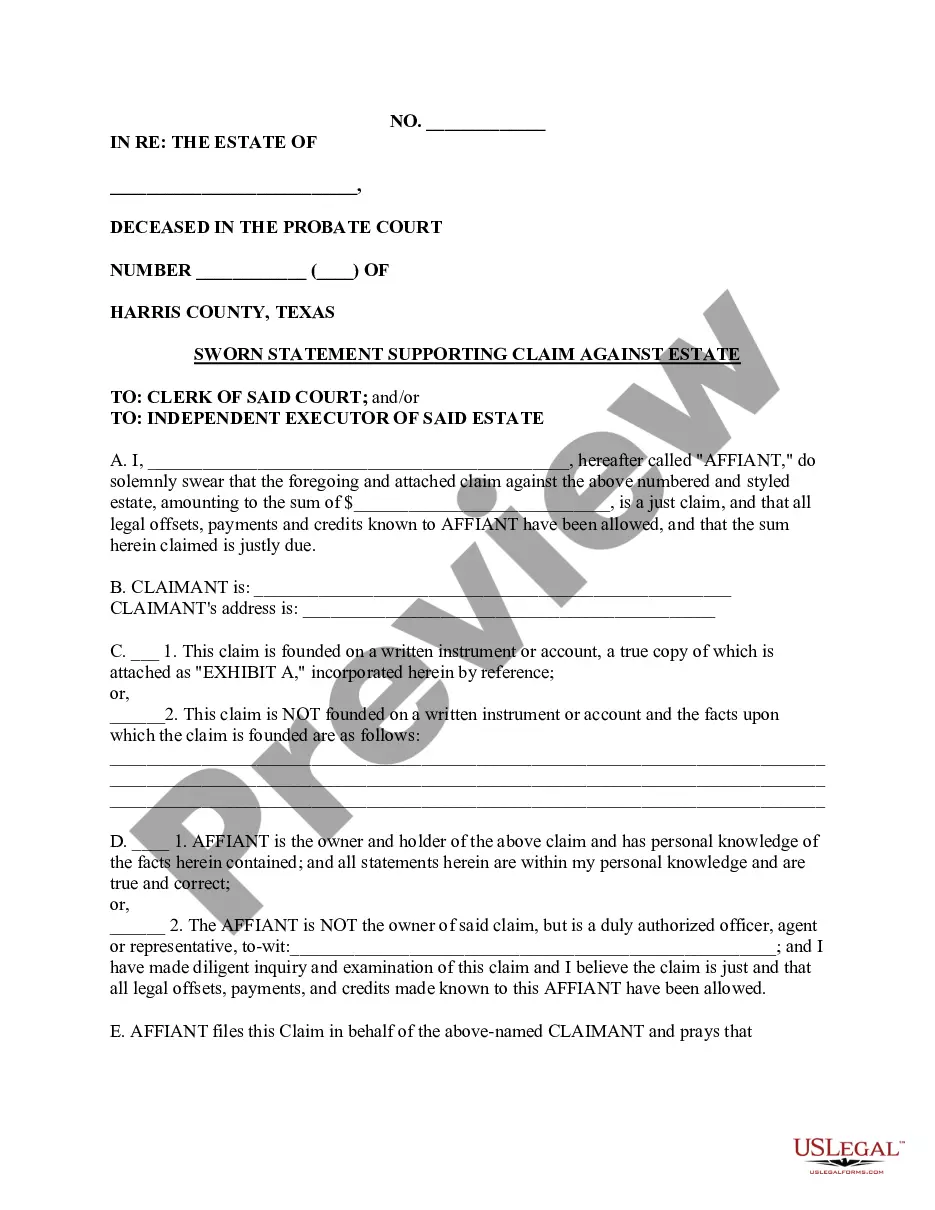
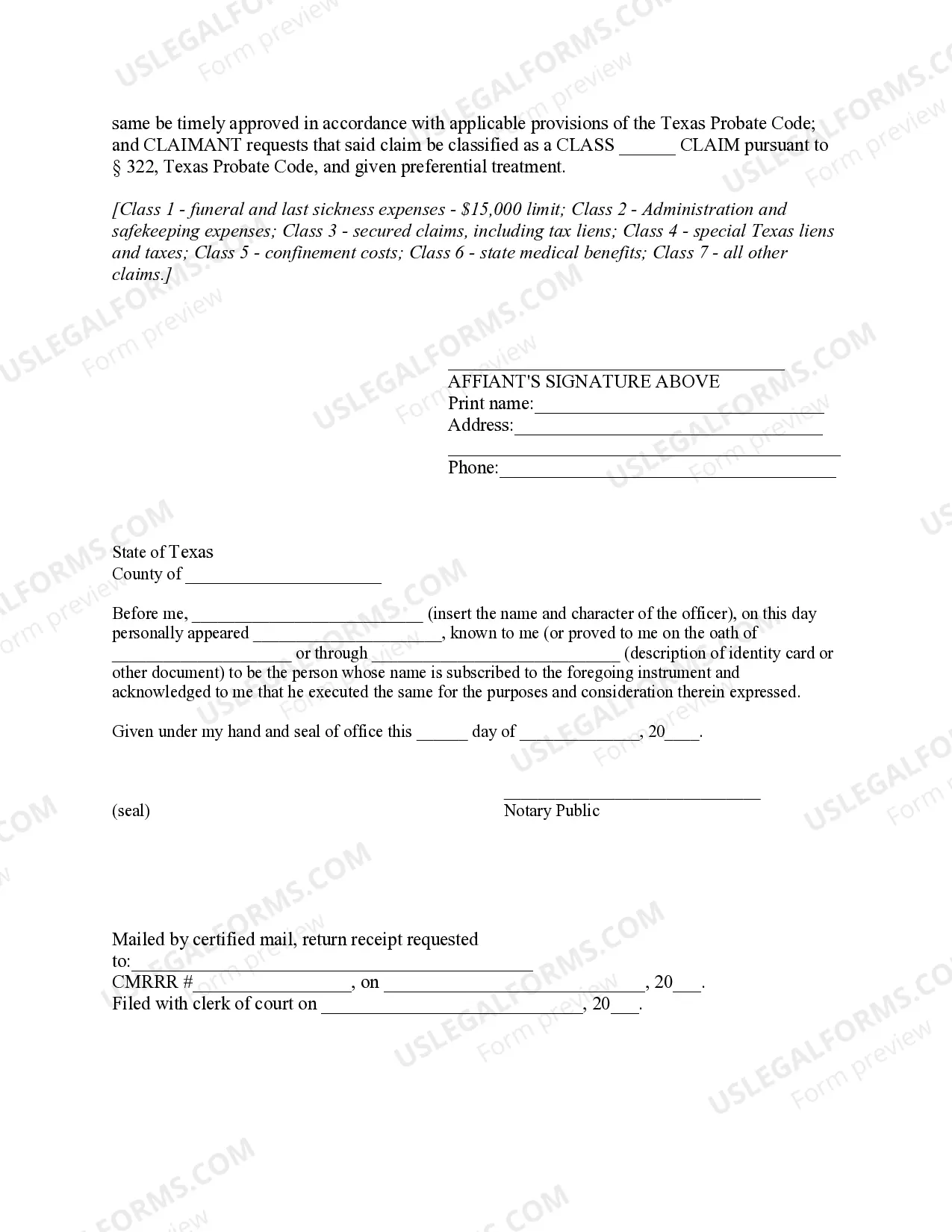
How to fill out Texas Sworn Statement Supporting Claim Against Estate?
Managing legal documents can be daunting, even for seasoned professionals.
If you are looking for a Claim Against Roundup Formula In Excel and lack the time to search for the appropriate and updated version, the process can be taxing.
Employ advanced tools to complete and manage your Claim Against Roundup Formula In Excel.
Tap into a valuable resource collection of articles, guides, and materials relevant to your situation and requirements.
Ensure that the template is accepted in your state or county. When ready, select Buy Now, choose a subscription plan, pick the desired file format, and Download, complete, sign, print, and send out your documents. Experience the US Legal Forms online library, backed by 25 years of expertise and reliability. Transform your daily document management into a seamless and user-friendly process today.
- Conserve time and effort in locating the documents you need by using US Legal Forms’ sophisticated search and Review tool to find the Claim Against Roundup Formula In Excel and acquire it.
- If you possess a membership, Log In to your US Legal Forms account, search for the document, and obtain it.
- Check your My documents tab to view the documents you have previously downloaded and manage your files as you see fit.
- If it's your first time using US Legal Forms, create an account to gain unlimited access to all the platform's features.
- After acquiring the document you seek, follow these steps: Preview it and read through its description to confirm it is the correct document.
- Utilize a robust online form library that can transform the way you handle these matters effectively.
- US Legal Forms stands out as a leader in online legal forms, boasting over 85,000 state-specific legal documents accessible at any time.
- Access state- or county-specific legal and business documents, fulfilling any needs you might have, from personal to business paperwork, all in one location.
Form popularity
FAQ
Key in the formula =ROUND(SUM(B2:B5),-2). The SUM function is used to add numbers in Excel. The num_digit used is -2 to round to the nearest 100. Press Enter.
=ROUNDUP(A2, 2) - rounds the number in A2 upward, to two decimal places. =ROUNDDOWN(A2, 2) - rounds the number in A2 downward, to two decimal places.
=MROUND(A1,50) In this formula, A1 is the cell that contains the number you want to round. The formula rounds the number to the nearest multiple of 50.
=ROUND(A1/50,0)*50 In this formula, A1 is the cell that contains the number you want to round. The formula divides the number by 50, rounds the result to the nearest whole number, and then multiplies the result by 50 to get the rounded number.
ROUNDUP behaves like ROUND, except that it always rounds a number up. If num_digits is greater than 0 (zero), then number is rounded up to the specified number of decimal places. If num_digits is 0, then number is rounded up to the nearest integer.