Legal Tender (tradução)
Description
Get your form ready online
Our built-in tools help you complete, sign, share, and store your documents in one place.
Make edits, fill in missing information, and update formatting in US Legal Forms—just like you would in MS Word.
Download a copy, print it, send it by email, or mail it via USPS—whatever works best for your next step.
Sign and collect signatures with our SignNow integration. Send to multiple recipients, set reminders, and more. Go Premium to unlock E-Sign.
If this form requires notarization, complete it online through a secure video call—no need to meet a notary in person or wait for an appointment.
We protect your documents and personal data by following strict security and privacy standards.

Make edits, fill in missing information, and update formatting in US Legal Forms—just like you would in MS Word.

Download a copy, print it, send it by email, or mail it via USPS—whatever works best for your next step.

Sign and collect signatures with our SignNow integration. Send to multiple recipients, set reminders, and more. Go Premium to unlock E-Sign.

If this form requires notarization, complete it online through a secure video call—no need to meet a notary in person or wait for an appointment.

We protect your documents and personal data by following strict security and privacy standards.
Looking for another form?

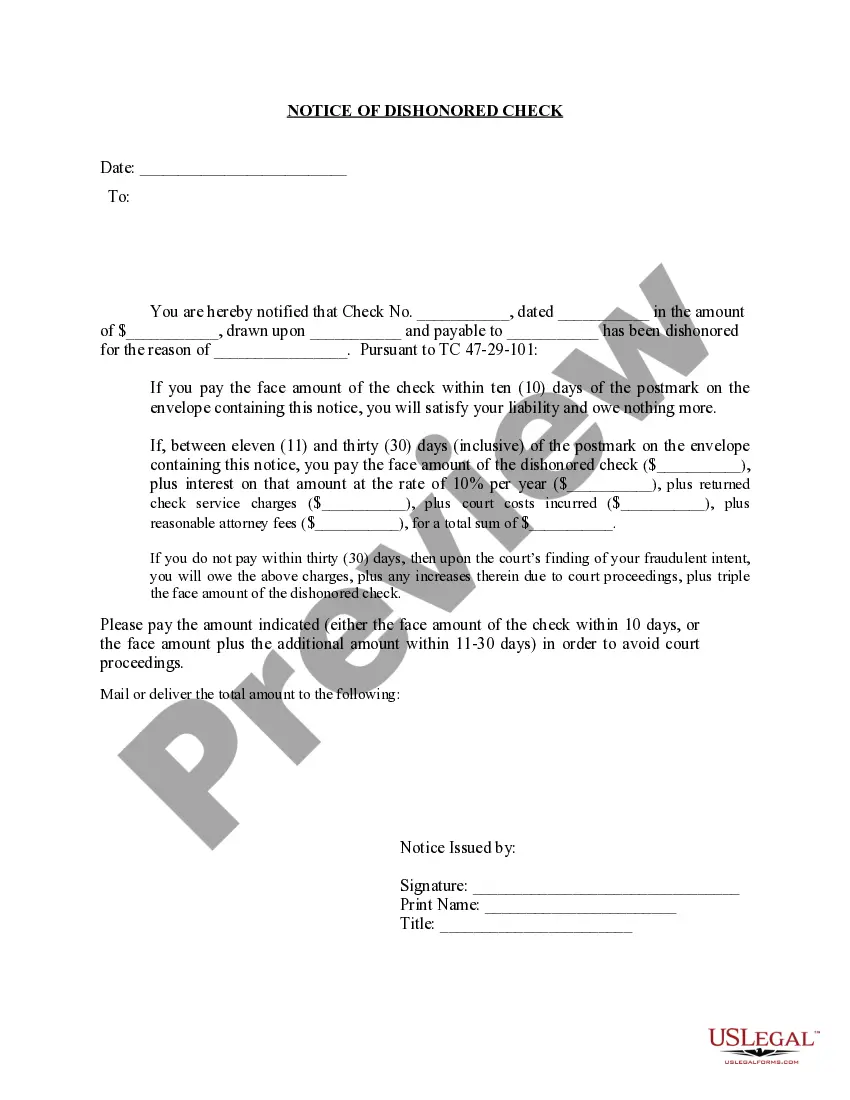
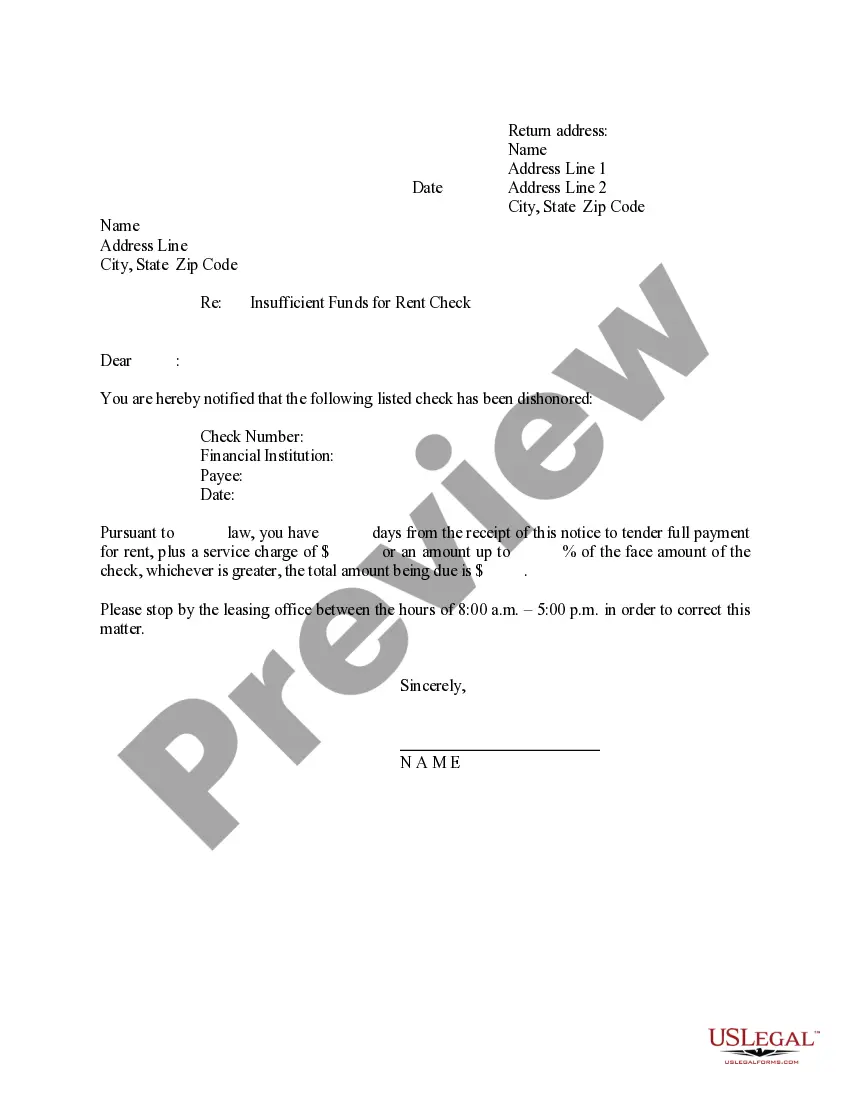
How to fill out Tennessee Notice Of Dishonored Check - Civil - Keywords: Bad Check, Bounced Check?
- If you are a returning user, log in to your account and download your required form by clicking the Download button, ensuring your subscription is active.
- For first-time users, begin by checking the Preview mode and reviewing the form description to select the template that meets your local requirements.
- If adjustments are necessary, use the Search tab to find a more suitable template and ensure it aligns with your specifications.
- Proceed to purchase the document by clicking the Buy Now button and selecting a subscription plan based on your needs.
- Complete your purchase by entering your credit card information or utilizing your PayPal account for payment.
- Download the form once your payment is confirmed, and access it from the My Forms section of your profile whenever needed.
US Legal Forms offers a robust collection of forms—more than any competitor for a comparable cost—along with an extensive online library of over 85,000 editable legal documents.
With access to premium expert assistance, you can ensure your forms are filled out accurately and legally sound. Start simplifying your legal processes today!
Form popularity
FAQ
A tender case typically revolves around disputes regarding the appropriate form of payment agreed upon in a contract. These cases may examine whether the offered payment complies with legal tender laws. Understanding a tender case can help individuals and organizations navigate their financial obligations effectively. If you encounter such issues, consulting uslegalforms can guide you in drafting robust payment clauses.
Legal tender cases often involve disputes about what constitutes acceptable currency for settlement of debts. Courts may review whether a payment made with alternatives, like cryptocurrency or non-monetary items, fulfills legal obligations. Following precedents in legal tender cases protects consumers and businesses from payment misinterpretations. For clarity, using uslegalforms can help you draft agreements that specify payment methods clearly.
Examples of legal tender include the one-dollar bill, five-dollar bill, and coins such as quarters and dimes. These forms of currency have been legally established for transaction purposes. Additionally, checks and electronic payments may also represent legal tender under certain conditions. Familiarizing yourself with legal tender (tradução) aids in recognizing valid payment methods.
'US legal tender' refers to the specific forms of currency that the federal government recognizes for settling debts. This includes paper currency and coins established by law as acceptable payment forms. For anyone looking to manage their finances or run a business, knowing what 'US legal tender' consists of is vital for compliance and effective payment processing.
Legal tender for all debts means that a debtor can settle their obligations using any legally recognized currency. This concept ensures that businesses and individuals cannot refuse certain forms of payment. Consequently, it is essential for both parties in a transaction to understand what constitutes legal tender, such as the currency issued by the government.
In the USA, legal tender includes Federal Reserve notes and coins minted by the US Treasury. The primary forms of currency recognized are the one-dollar bill up to the hundred-dollar bill and coins such as pennies, nickels, dimes, quarters, half-dollars, and dollar coins. This list is crucial for effective financial transactions, ensuring that individuals know what forms of currency they can use.
The legal tender code encompasses the specific laws that govern what constitutes legal payment. In the United States, Title 31, Section 5103 of the US Code details the definitions and regulations surrounding legal tender. Understanding this code is essential for both consumers and businesses to navigate payment transactions correctly.
A legal tender claim occurs when a party insists upon the acceptance of a recognized legal tender (tradução) to settle a debt. This claim can arise in disputes where one party refuses to accept the legal tender offered by another party. Understanding your rights regarding legal tender strengthens your ability to handle financial matters confidently.
An example of legal tender (tradução) in the United States would be the U.S. dollar, whether in coin or paper form. This currency is accepted nationwide for all debts, public and private. Knowing that legal tender is universally recognized helps in financial transactions and offers peace of mind when making payments.