Nonpayment Rent With Credit
Description

Get your form ready online
Our built-in tools help you complete, sign, share, and store your documents in one place.
Make edits, fill in missing information, and update formatting in US Legal Forms—just like you would in MS Word.
Download a copy, print it, send it by email, or mail it via USPS—whatever works best for your next step.
Sign and collect signatures with our SignNow integration. Send to multiple recipients, set reminders, and more. Go Premium to unlock E-Sign.
If this form requires notarization, complete it online through a secure video call—no need to meet a notary in person or wait for an appointment.
We protect your documents and personal data by following strict security and privacy standards.

Make edits, fill in missing information, and update formatting in US Legal Forms—just like you would in MS Word.

Download a copy, print it, send it by email, or mail it via USPS—whatever works best for your next step.

Sign and collect signatures with our SignNow integration. Send to multiple recipients, set reminders, and more. Go Premium to unlock E-Sign.

If this form requires notarization, complete it online through a secure video call—no need to meet a notary in person or wait for an appointment.

We protect your documents and personal data by following strict security and privacy standards.
Looking for another form?





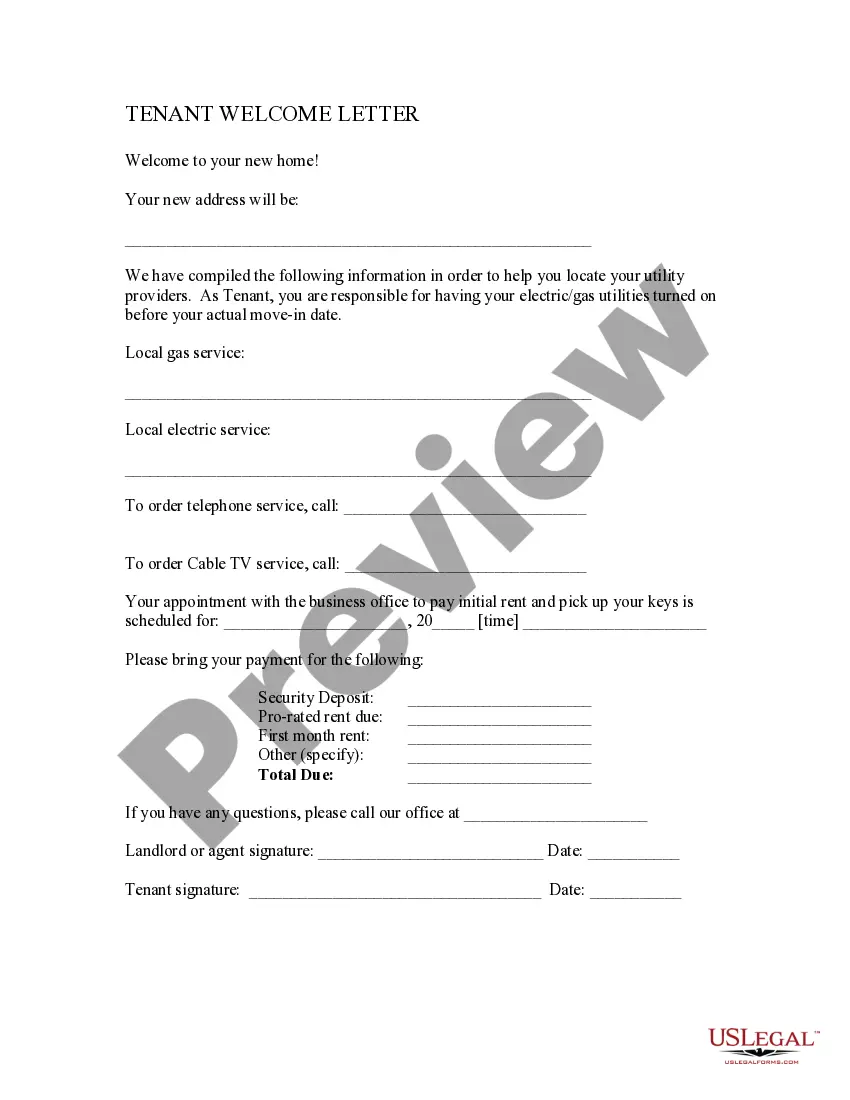
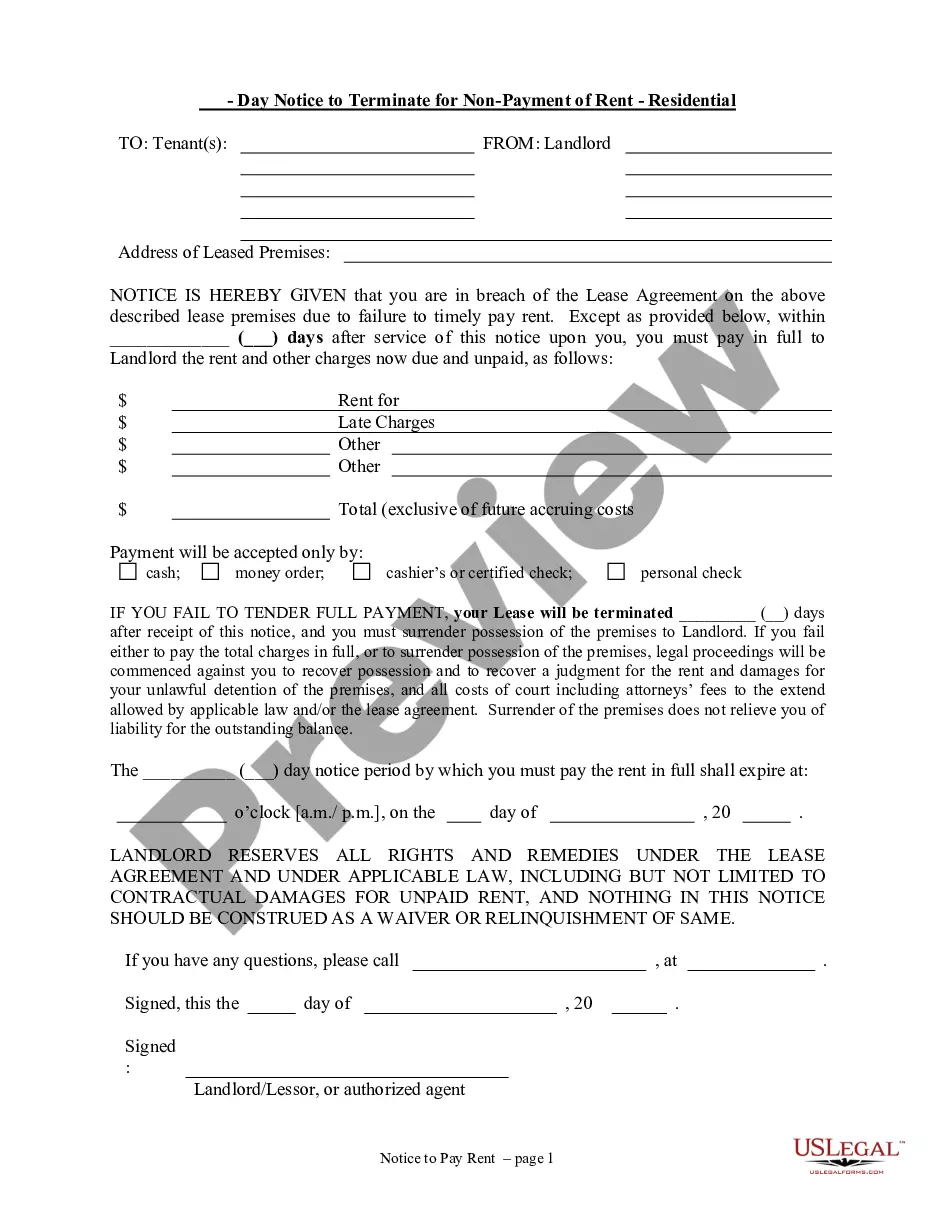
How to fill out Tennessee 14 Day Notice To Terminate For Nonpayment Of Rent - Residential?
- If you are a returning user, log in to your account to download the required form template. Check that your subscription is active; if needed, renew it based on your payment plan.
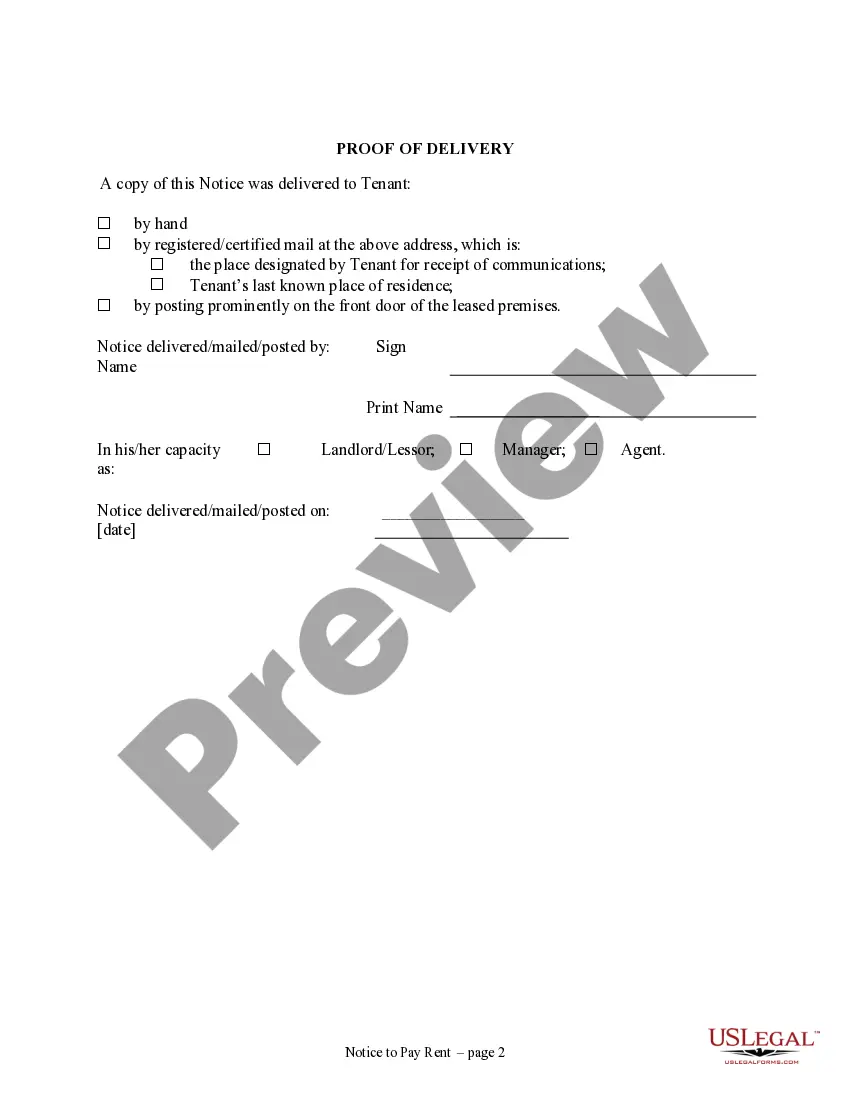
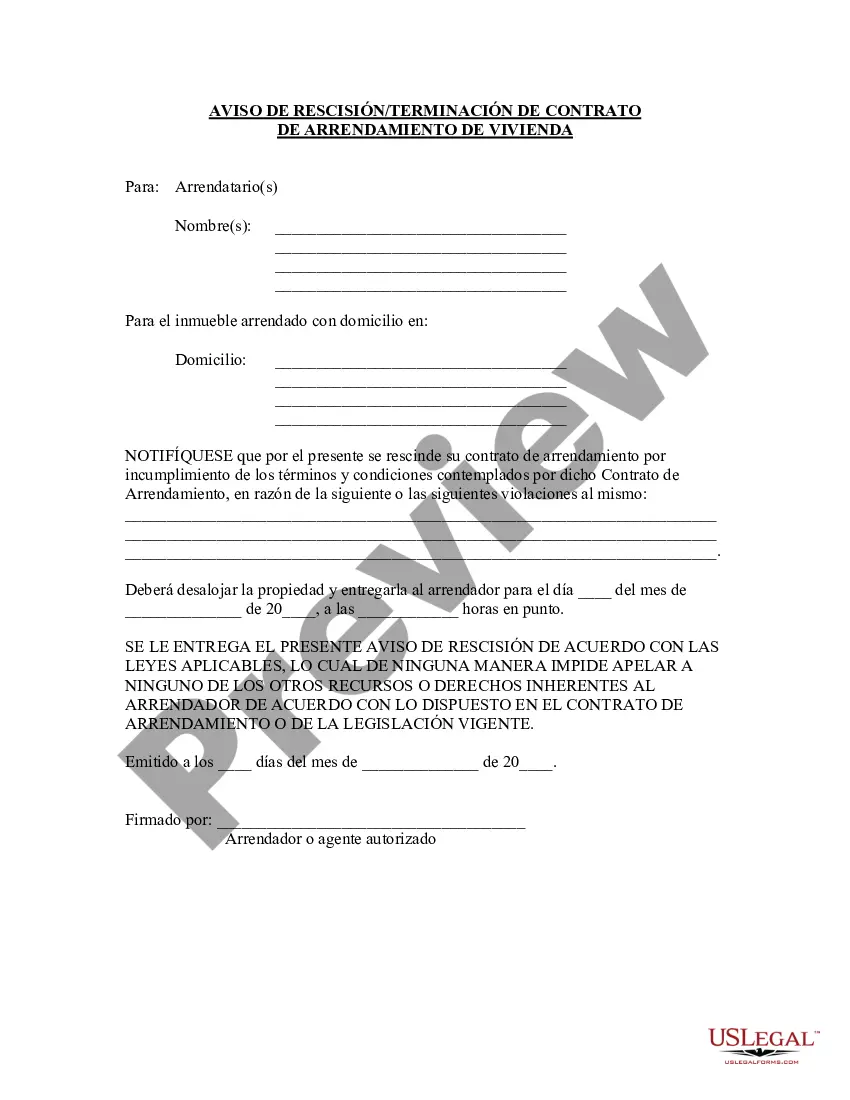
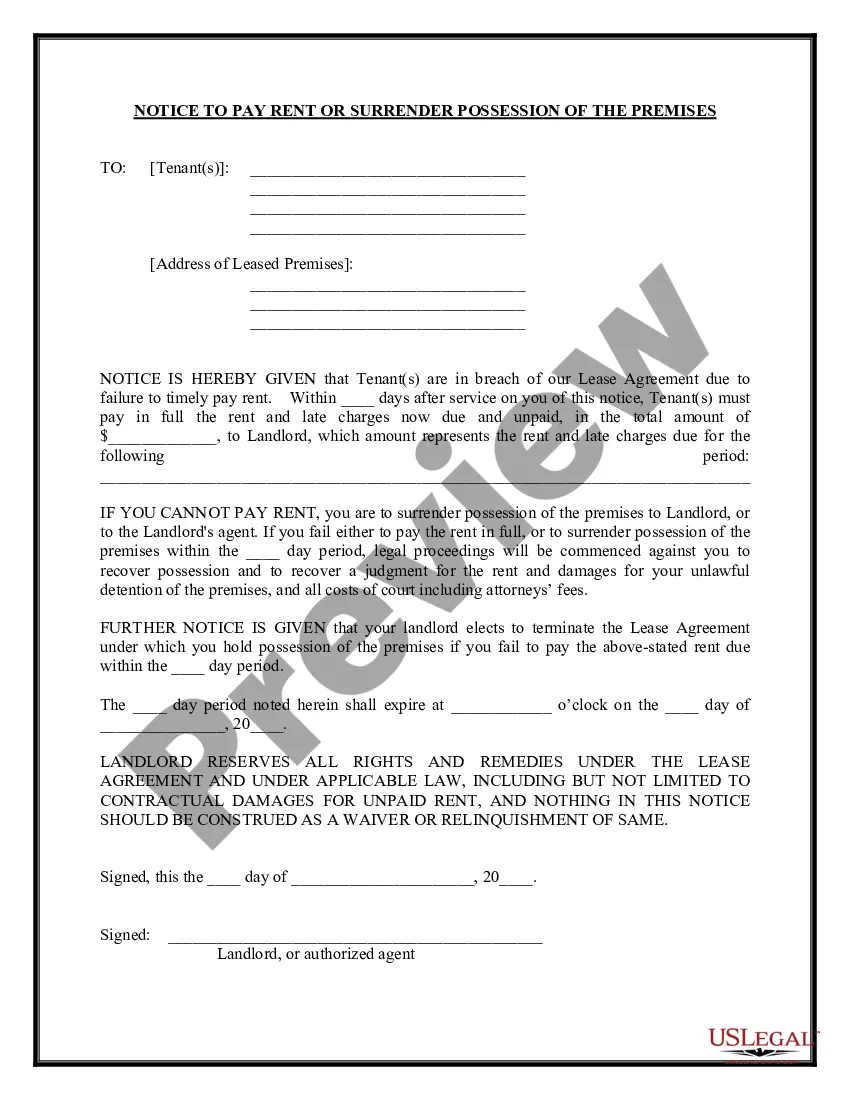
- For first-time users, start by reviewing the available templates. Utilize the Preview mode to confirm that the document perfectly matches your needs and adheres to local jurisdiction requirements.
- If necessary, search for alternative templates using the Search tab to ensure you find the right document.
- Once you’ve identified the template you need, click on the Buy Now button and select your preferred subscription plan. This will require you to register for an account to access our extensive library.
- Complete your purchase by providing your credit card information or PayPal account for payment.
- Finally, download your form to your device. You can easily access it later from the My Forms section of your profile.
US Legal Forms stands out with its extensive online library, offering over 85,000 legally sound, editable forms. Our users can easily find what they need and rest assured with access to premium experts who can assist in document completion.
Don't let nonpayment rent issues overwhelm you. Visit US Legal Forms today and take advantage of our resources to streamline your legal document process!
Form popularity
FAQ
Yes, unpaid rent can negatively affect your credit. When landlords report nonpayment rent with credit agencies, it may lower your credit score. A low credit score can make it harder for you to secure loans, credit cards, or even future rental agreements. It's essential to address unpaid rent promptly to avoid these long-term consequences.
Unpaid rent usually affects your rental history for a period of seven years. This time frame can significantly influence your ability to secure future rentals. Therefore, addressing nonpayment rent with credit promptly can help maintain a positive rental history.
Typically, unpaid rent may be sent to collections after approximately 30 to 90 days of nonpayment. However, this timeframe can vary based on your landlord's policies. Once in collections, this nonpayment rent with credit adversely impacts your credit score, making timely payment crucial.
Yes, unpaid rent can indeed appear on your credit report. Specifically, if your landlord reports the debt or if it goes to collections, this nonpayment rent with credit will impact your credit history. Staying informed about your rental obligations helps you avoid negative marks on your report.
Unpaid rent can remain on your credit report for up to seven years. This duration applies to accounts marked as delinquent due to nonpayment rent with credit. It's crucial to address these issues promptly, as they can affect your credit score and future borrowing opportunities.
Yes, rent payments can affect your credit score, especially if they are reported to credit bureaus. Timely rent payments can help improve your score, while nonpayment rent with credit may negatively impact it. Keeping your rent payments on track makes a significant difference in your overall creditworthiness. So, ensure you stay informed about how your payments get reported.
To add your rent payment to your credit report, consider utilizing services offered by platforms like US Legal Forms. These services make it simple to report your payments to major credit bureaus. You'll typically need to provide your landlord's contact information and payment details. Once added, your on-time rent payments can positively influence your credit score.
Yes, reporting your rent payments to credit can be beneficial for your financial profile. It helps establish your credit history, especially if you have little to no credit. By actively reporting your rent, you can improve your chances of getting loans or credit in the future. Remember, consistent positive rent payment reports strengthen your credit standing.
When rent is late, first acknowledge the delay and express your regret. Follow this by explaining the reason for the delay, whether it be financial struggles or an unforeseen expense. Lastly, assure your landlord that you are working on a solution, and consider proposing a timeline for when they can expect payment, which reflects your commitment to resolving the nonpayment rent with credit.
When discussing late rent, it's crucial to be clear and honest about your situation. Explain any unexpected financial challenges that contributed to the delay, such as a medical expense or job changes. Addressing these issues openly will help foster understanding and can often ease tensions surrounding nonpayment rent with credit.