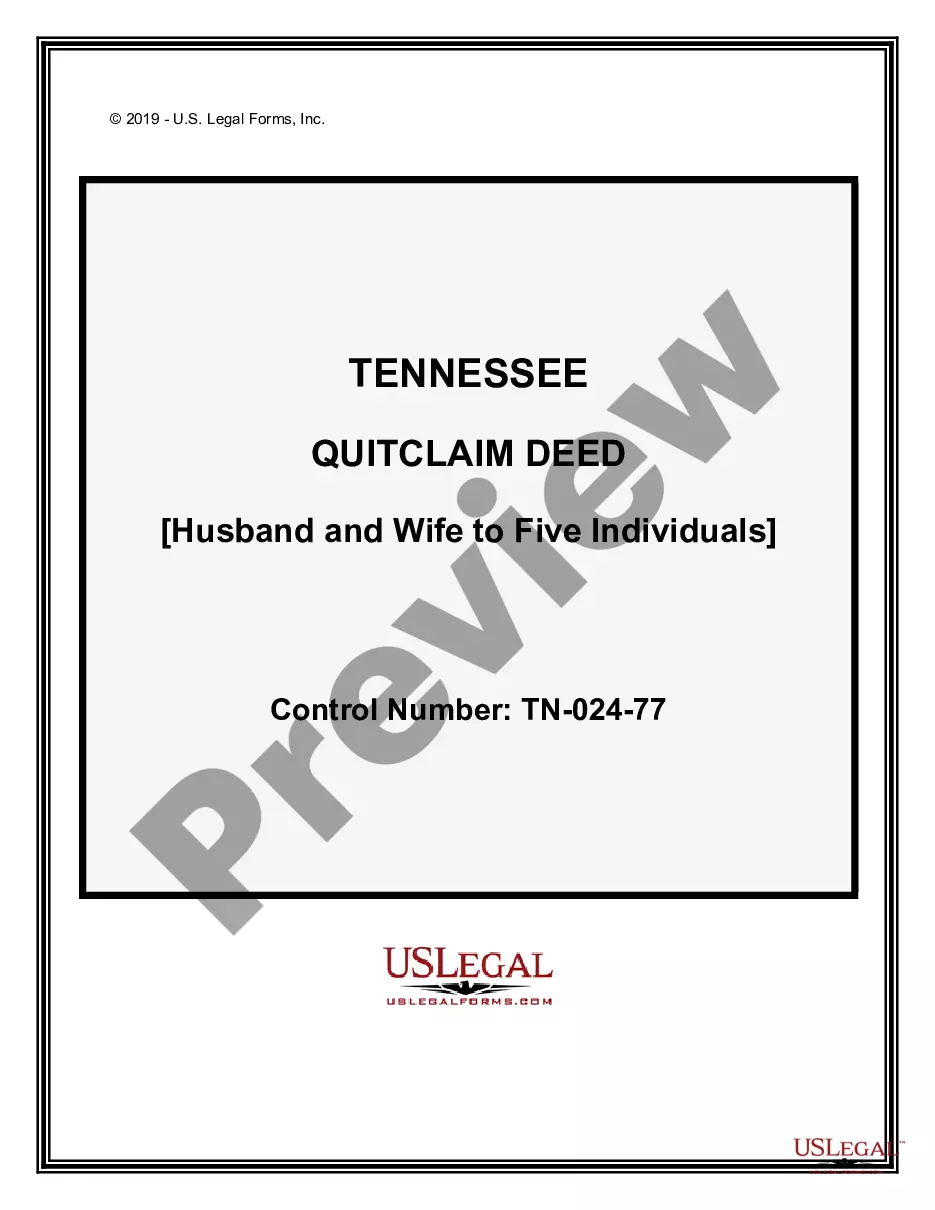
Tennessee Quitclaim Deed With A Will
Description

Get your form ready online
Our built-in tools help you complete, sign, share, and store your documents in one place.
Make edits, fill in missing information, and update formatting in US Legal Forms—just like you would in MS Word.
Download a copy, print it, send it by email, or mail it via USPS—whatever works best for your next step.
Sign and collect signatures with our SignNow integration. Send to multiple recipients, set reminders, and more. Go Premium to unlock E-Sign.
If this form requires notarization, complete it online through a secure video call—no need to meet a notary in person or wait for an appointment.
We protect your documents and personal data by following strict security and privacy standards.

Make edits, fill in missing information, and update formatting in US Legal Forms—just like you would in MS Word.

Download a copy, print it, send it by email, or mail it via USPS—whatever works best for your next step.

Sign and collect signatures with our SignNow integration. Send to multiple recipients, set reminders, and more. Go Premium to unlock E-Sign.

If this form requires notarization, complete it online through a secure video call—no need to meet a notary in person or wait for an appointment.

We protect your documents and personal data by following strict security and privacy standards.
Looking for another form?



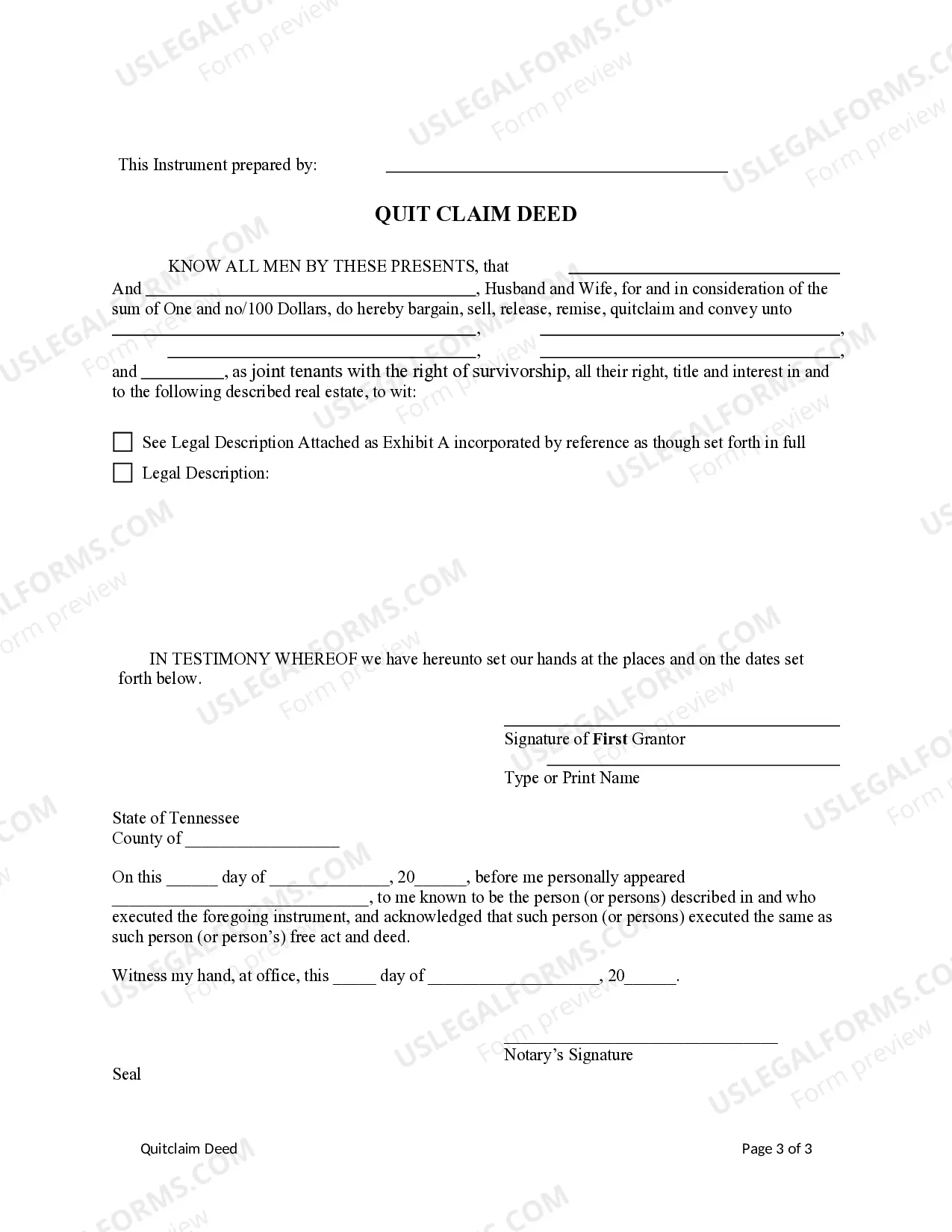
How to fill out Tennessee Quitclaim Deed - Husband And Wife To Five Individuals?
- Log in to your US Legal Forms account if you are a returning user, or register for a new account if this is your first visit.
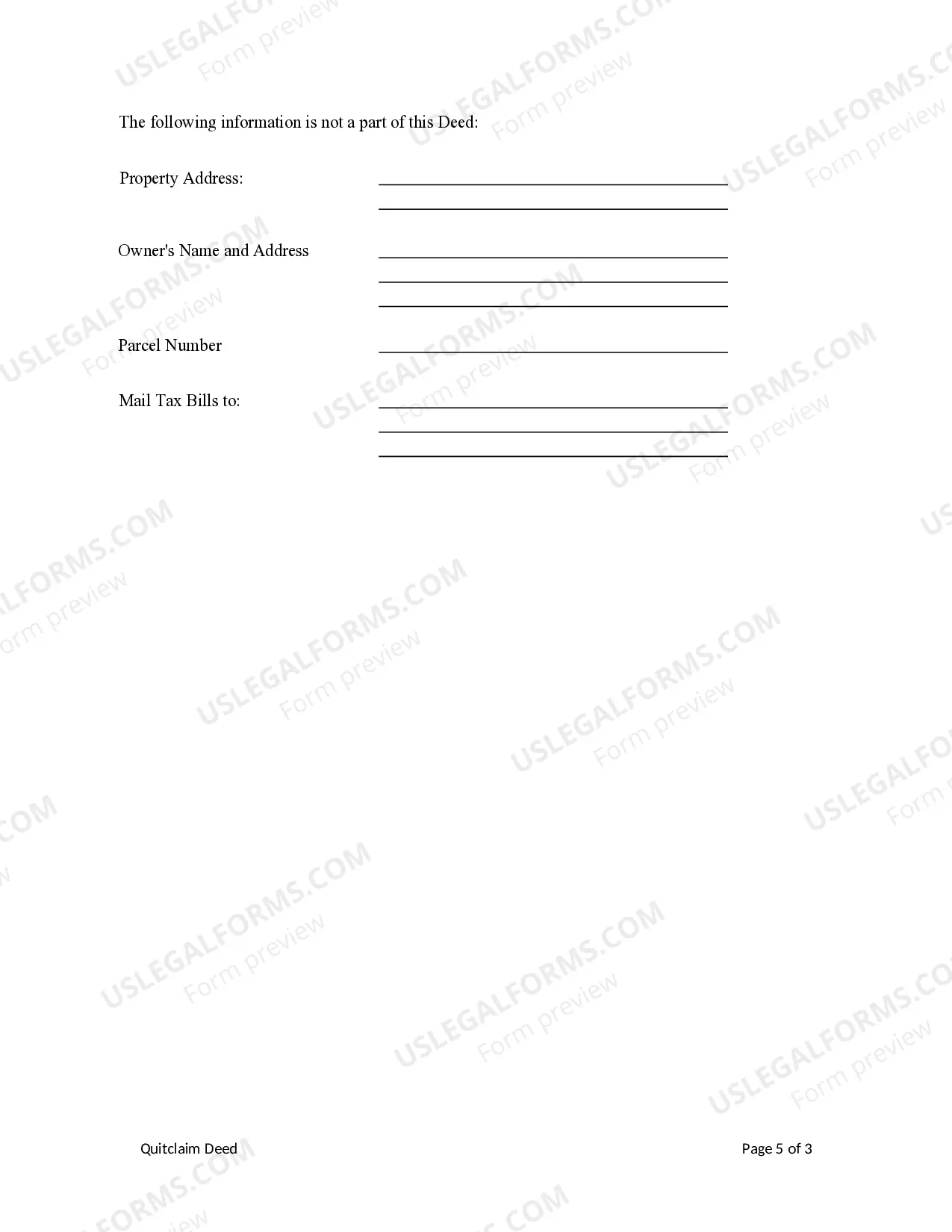
- Search for the Tennessee quitclaim deed with a will by using the Search tab to ensure you select the correct form that meets your local jurisdiction requirements.
- Preview the form and its description to confirm it meets your needs.
- If necessary, explore additional templates until you find the appropriate one.
- Once satisfied, click the Buy Now button, select your desired subscription plan, and proceed with registration.
- Enter your payment details and complete the purchase, ensuring your account is active.
- Download your completed document and access it anytime from the My Forms menu in your profile.
Following these steps will ensure you can efficiently navigate the process of obtaining a Tennessee quitclaim deed with a will. US Legal Forms not only provides a robust collection of templates but also connects you with legal experts for any needed assistance.
Take the first step towards securing your legal documentation today with US Legal Forms!
Form popularity
FAQ
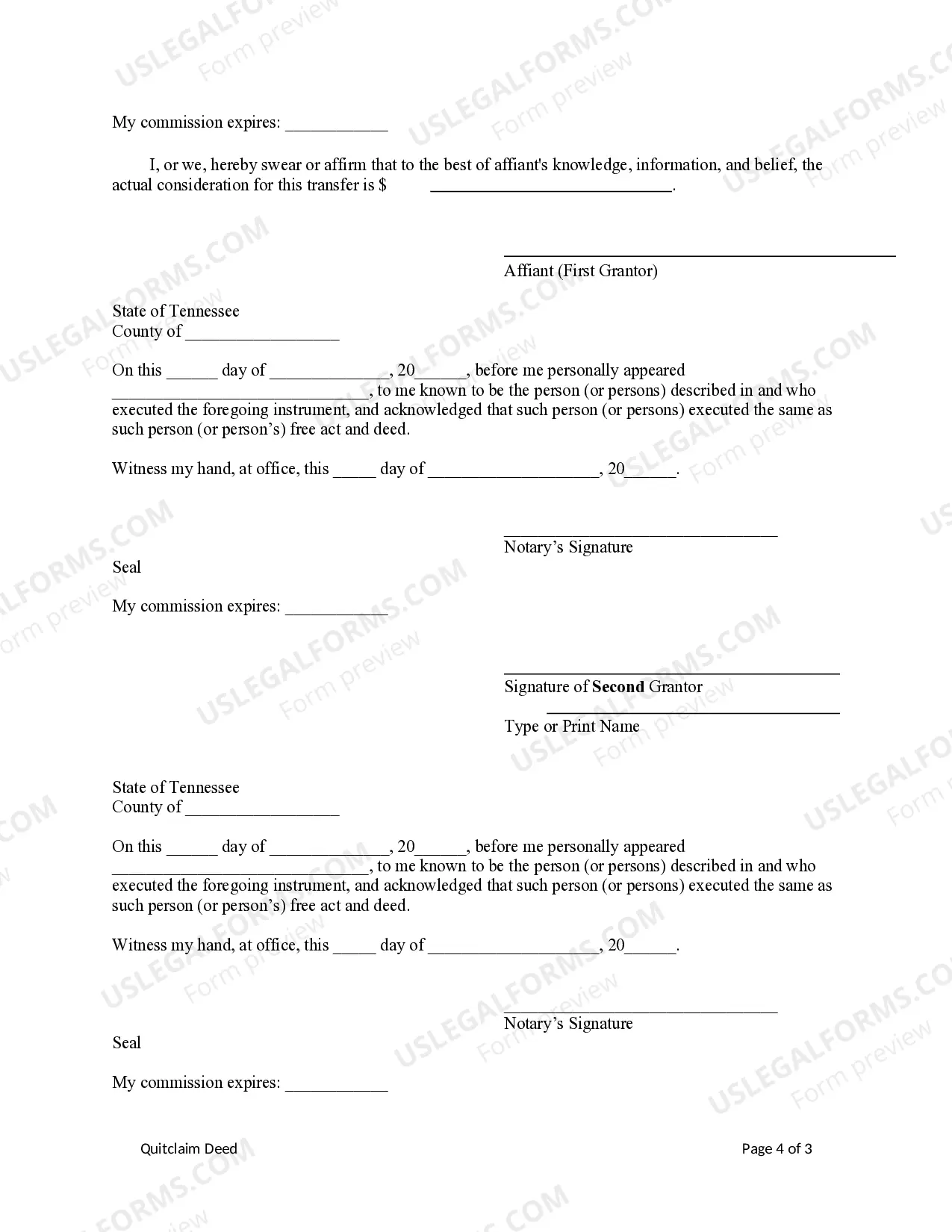
Properly filling out a quitclaim deed involves several steps. Start with a blank template, ensuring that you include the full names of the grantors and grantees, the legal property description, and the notarization. Utilizing a user-friendly service like USLegalForms allows you to access accurate forms and guidance, ensuring your Tennessee quitclaim deed with a will meets all legal requirements and is properly executed.
To fill out a quitclaim deed in Tennessee, begin by gathering necessary information such as the names of all parties involved and the legal description of the property. Make sure to include the details on the consideration amount and ensure that the grantor signs the document in front of a notary. After you complete the deed correctly, you can record the Tennessee quitclaim deed with a will at the local county recorder's office for legal recognition.
Yes, you can fill out a Tennessee quitclaim deed with a will yourself. However, it's essential to ensure that you include all required information and follow state guidelines accurately. Using resources from platforms like USLegalForms can simplify the process, providing templates and instructions to help you complete your deed correctly without missing critical details.
To file a quitclaim deed in Tennessee, first, you need to complete the deed itself by including essential details like the names of the grantor and grantee, a description of the property, and the consideration amount. After completing the Tennessee quitclaim deed with a will, you must sign and have it notarized. Finally, file the executed deed with the county register of deeds in the county where the property is located to ensure public record.
Yes, a Tennessee quitclaim deed with a will can be filed after someone has passed away, but it must be done correctly. Typically, the executor of the estate will handle this process, ensuring that the property transfer aligns with the deceased's wishes as outlined in the will. It's essential to follow legal guidelines to ensure the deed is valid and properly recorded.
In Tennessee, a quitclaim deed works by allowing one party to transfer whatever ownership interest they have in a property to another party. This type of deed does not guarantee that the grantor has clear title; instead, it simply facilitates the transfer of rights. When handling a Tennessee quitclaim deed with a will, individuals can clarify ownership directly through the estate plan, simplifying the transition of property.
People often use a Tennessee quitclaim deed with a will to transfer property ownership quickly and easily. This method is common among family members and friends who want to ensure that a property passes smoothly without complex legal hurdles. It is particularly useful during estate planning or after the death of a loved one when clear ownership transfers are needed.
Filing a quitclaim deed after death is not typically possible, as the grantor must be alive to execute the deed. However, if you've established a Tennessee quitclaim deed with a will before passing, the property will automatically transfer to your beneficiaries upon your death. It is crucial to have these documents in place to avoid complications related to property transfer. If you need assistance with these legal documents, consider using the US Legal Forms platform for reliable resources and guidance.
The best way to leave property upon death often involves using a Tennessee quitclaim deed with a will. By incorporating this deed into your estate plan, you can ensure that your property transfers smoothly to your chosen heirs without delays. A will provides clear instructions regarding the distribution of your assets, which can help prevent disputes. Thus, combining a quitclaim deed with a will creates an effective strategy for managing property succession.
No, a quitclaim deed does not trump a will in Tennessee. A will dictates how a deceased person's property should be distributed, while a quitclaim deed is a method of transferring property rights. Each document serves its purpose, but when conflicts arise, the will's provisions typically take precedence.