Living Trust For Veterans
Description
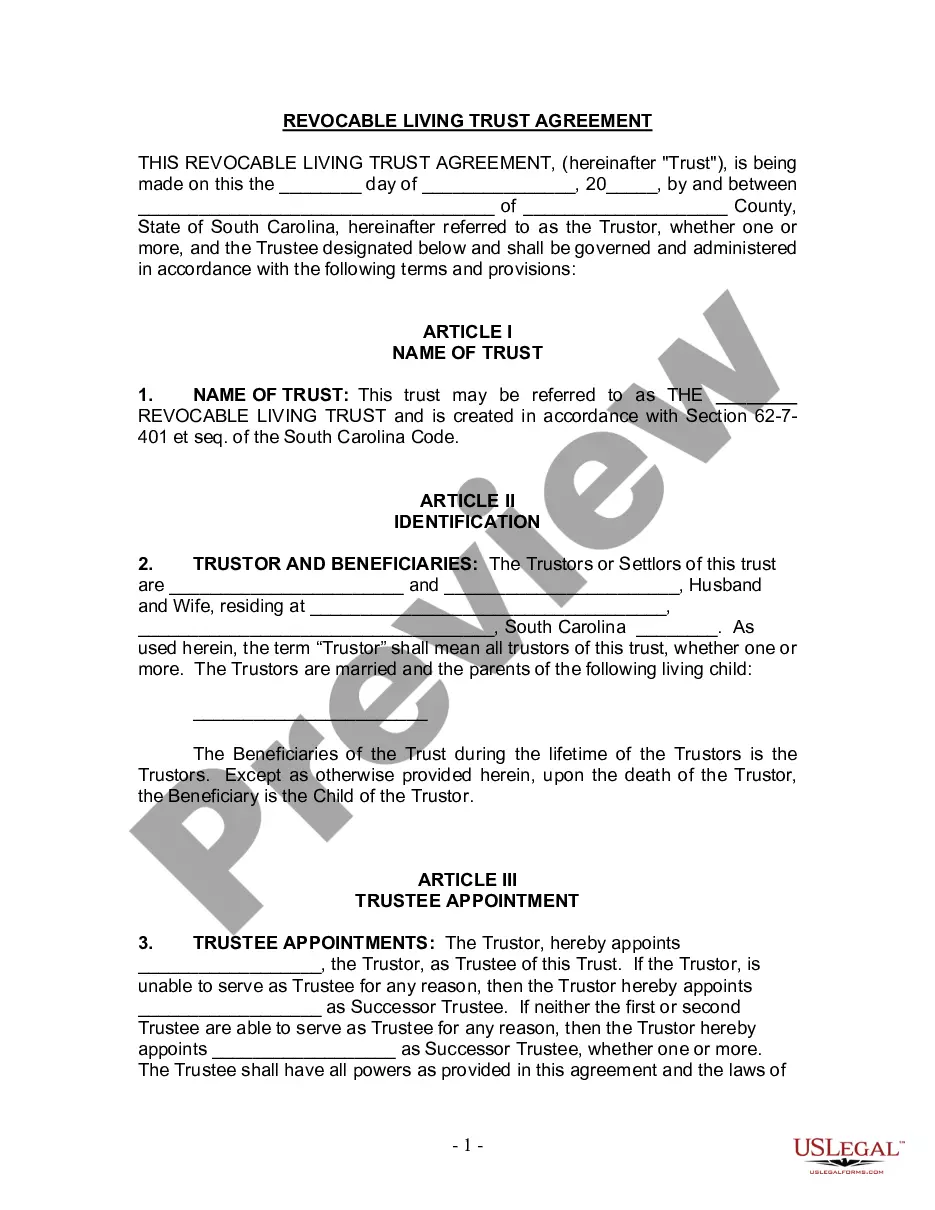
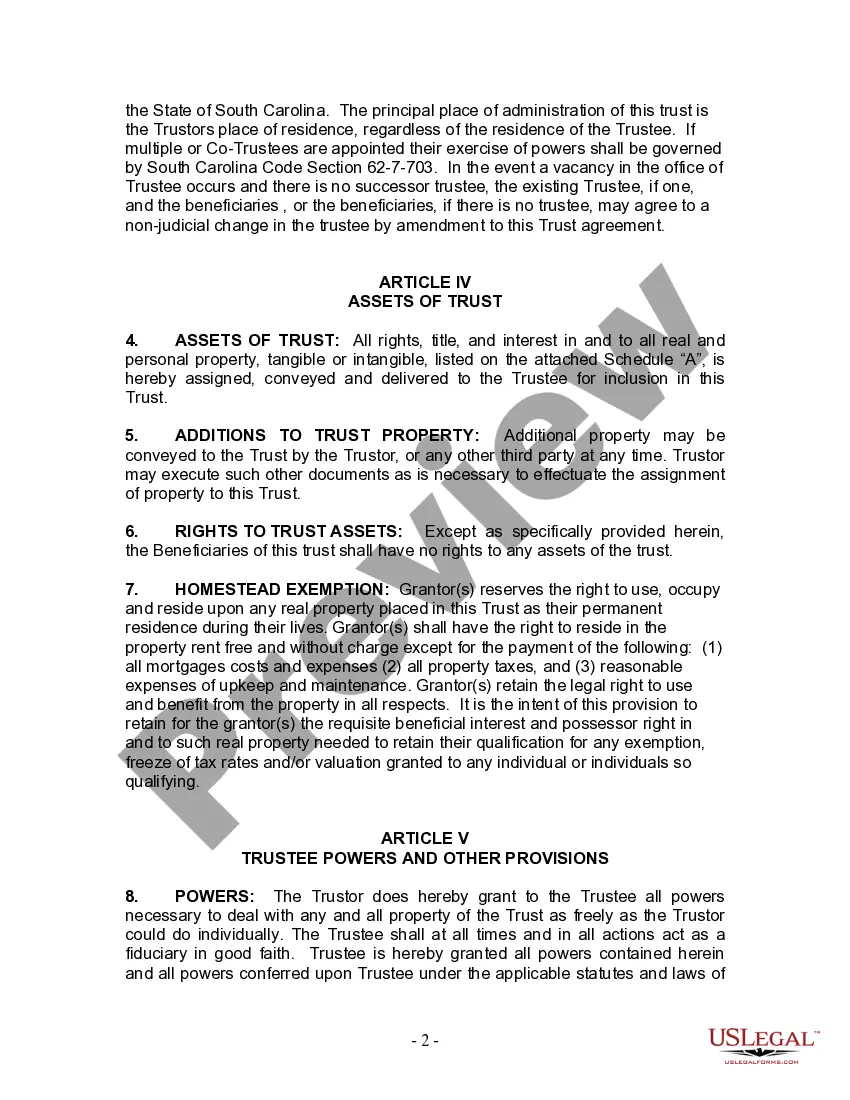
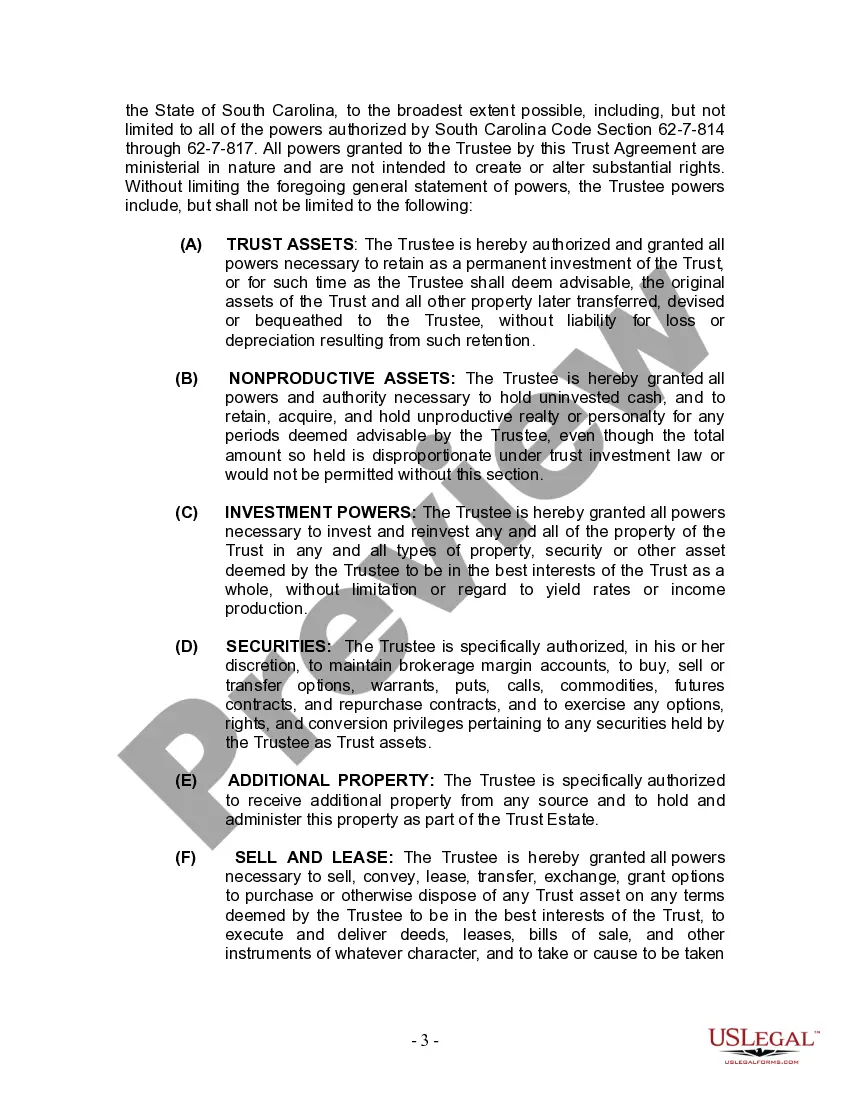
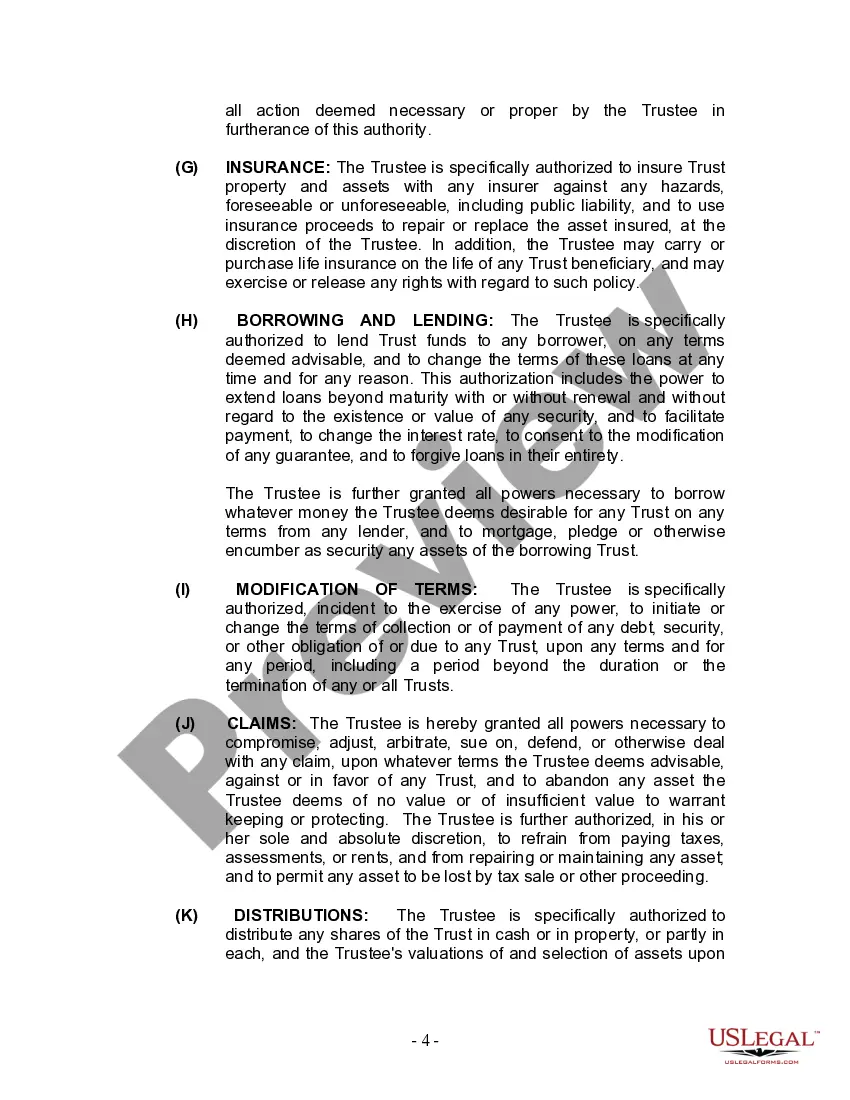



Get your form ready online
Our built-in tools help you complete, sign, share, and store your documents in one place.
Make edits, fill in missing information, and update formatting in US Legal Forms—just like you would in MS Word.
Download a copy, print it, send it by email, or mail it via USPS—whatever works best for your next step.
Sign and collect signatures with our SignNow integration. Send to multiple recipients, set reminders, and more. Go Premium to unlock E-Sign.
If this form requires notarization, complete it online through a secure video call—no need to meet a notary in person or wait for an appointment.
We protect your documents and personal data by following strict security and privacy standards.

Make edits, fill in missing information, and update formatting in US Legal Forms—just like you would in MS Word.

Download a copy, print it, send it by email, or mail it via USPS—whatever works best for your next step.

Sign and collect signatures with our SignNow integration. Send to multiple recipients, set reminders, and more. Go Premium to unlock E-Sign.

If this form requires notarization, complete it online through a secure video call—no need to meet a notary in person or wait for an appointment.

We protect your documents and personal data by following strict security and privacy standards.
Looking for another form?
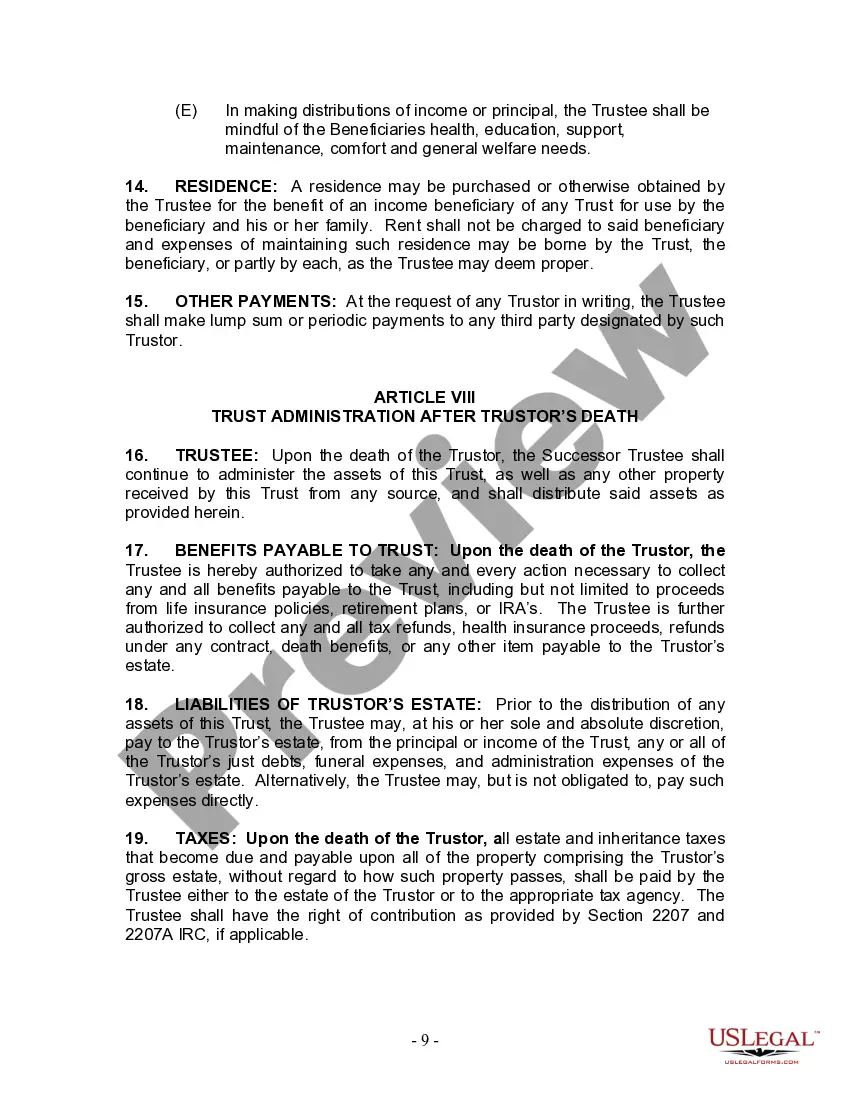
How to fill out South Carolina Living Trust For Husband And Wife With One Child?
Finding a reliable source for obtaining the most up-to-date and pertinent legal templates is a significant part of navigating red tape.
Searching for the appropriate legal documents requires precision and meticulousness, which is why it's crucial to source Living Trust For Veterans exclusively from trustworthy providers, such as US Legal Forms.
Eliminate the complications associated with your legal paperwork. Explore the vast library of US Legal Forms where you can find legal templates, verify their applicability to your needs, and download them right away.
- Utilize the catalog navigation or the search bar to find your template.
- Review the form's details to ensure it meets your local and state requirements.
- Check the form preview, if available, to confirm it’s the correct document you need.
- If the Living Trust For Veterans isn’t appropriate for your situation, continue searching for the right template.
- Once you are confident about the document's suitability, download it.
- If you are a registered user, click Log in to verify your identity and access your selected forms in My documents.
- If you haven’t registered yet, click Buy now to purchase the template.
- Choose the pricing plan that best fits your preferences.
- Complete the registration process to finalize your transaction.
- Finish your purchase by selecting a payment option (credit card or PayPal).
- Select the file format for downloading Living Trust For Veterans.
- After saving the form on your device, you can edit it using the editor or print it out to complete it by hand.
Form popularity
FAQ
When a veteran dies, the VA follows specific protocols, including notifying beneficiaries and addressing any benefits that may be due to the family. This process can be smoother with a living trust for veterans, as it aids in the distribution of assets according to the veteran's wishes. Establishing a trust can streamline the handling of affairs, reducing stress during a difficult time and ensuring that loved ones receive the benefits they deserve.
The VA does not directly offer living trusts for veterans, but it provides guidance on how veterans can establish and manage these trusts effectively. By setting up a living trust for veterans, individuals can control asset distribution while potentially limiting taxation implications. Veterans should consult with professionals knowledgeable in both trust law and VA regulations to ensure they make informed decisions.
A VA trust fund is a financial tool designed to assist veterans in managing their assets while preserving eligibility for necessary benefits. When discussing living trusts for veterans, a VA trust fund often serves as a strategic option. It enables veterans to allocate resources appropriately, ensuring they maintain access to valuable support during their time of need.
The 5 year rule for trusts typically refers to the period during which assets placed in a trust may be subject to certain eligibility restrictions, especially for veterans seeking benefits. For veterans interested in establishing a living trust for veterans, it's essential to consider this rule, as it can impact your financial planning. By understanding this rule, you can better navigate the complexities of trusts and maintain eligibility for VA benefits.
The VA does not directly offer living trusts; however, they do provide resources and information about estate planning. Veterans can establish a living trust to manage their assets, ensuring they are distributed according to their wishes. Additionally, uslegalforms offers templates and guidance specifically designed for veterans, helping them navigate the process of creating a living trust effectively. This can simplify planning for the future and protect their legacy.
While a living trust can be a great tool for estate planning, one downside is that it does not cover all types of assets. For instance, certain assets may require a will to address their distribution. Additionally, setting up a living trust for veterans may involve initial costs and administrative work to ensure everything is transferred accordingly. Despite these challenges, a living trust can provide significant benefits, such as avoiding probate, which many veterans find valuable.
The new act for veterans includes reforms to enhance healthcare access and financial support. It aims to address the unique needs of veterans, particularly in mental health and disability services. Utilizing a living trust for veterans can be a proactive approach to managing the benefits provided under this new act.
The average payout for the PACT Act varies based on individual circumstances and eligibility. Generally, veterans can receive substantial financial assistance for health issues related to their service. A living trust for veterans can help manage these funds, ensuring they are used according to your wishes and needs.
Yes, the Judge Advocate General's (JAG) Corps can assist veterans in setting up trusts. They provide valuable legal guidance to ensure the trust aligns with veterans' needs and benefits. A living trust for veterans may be an effective way to manage assets and protect eligibility for various veteran programs.
Yes, there are several new benefits for veterans that have rolled out recently. These include enhancements in education benefits and access to specialized care. Establishing a living trust for veterans can be an important step in ensuring that these benefits are preserved and utilized appropriately.