Pennsylvania Estate Form For Tax
Description
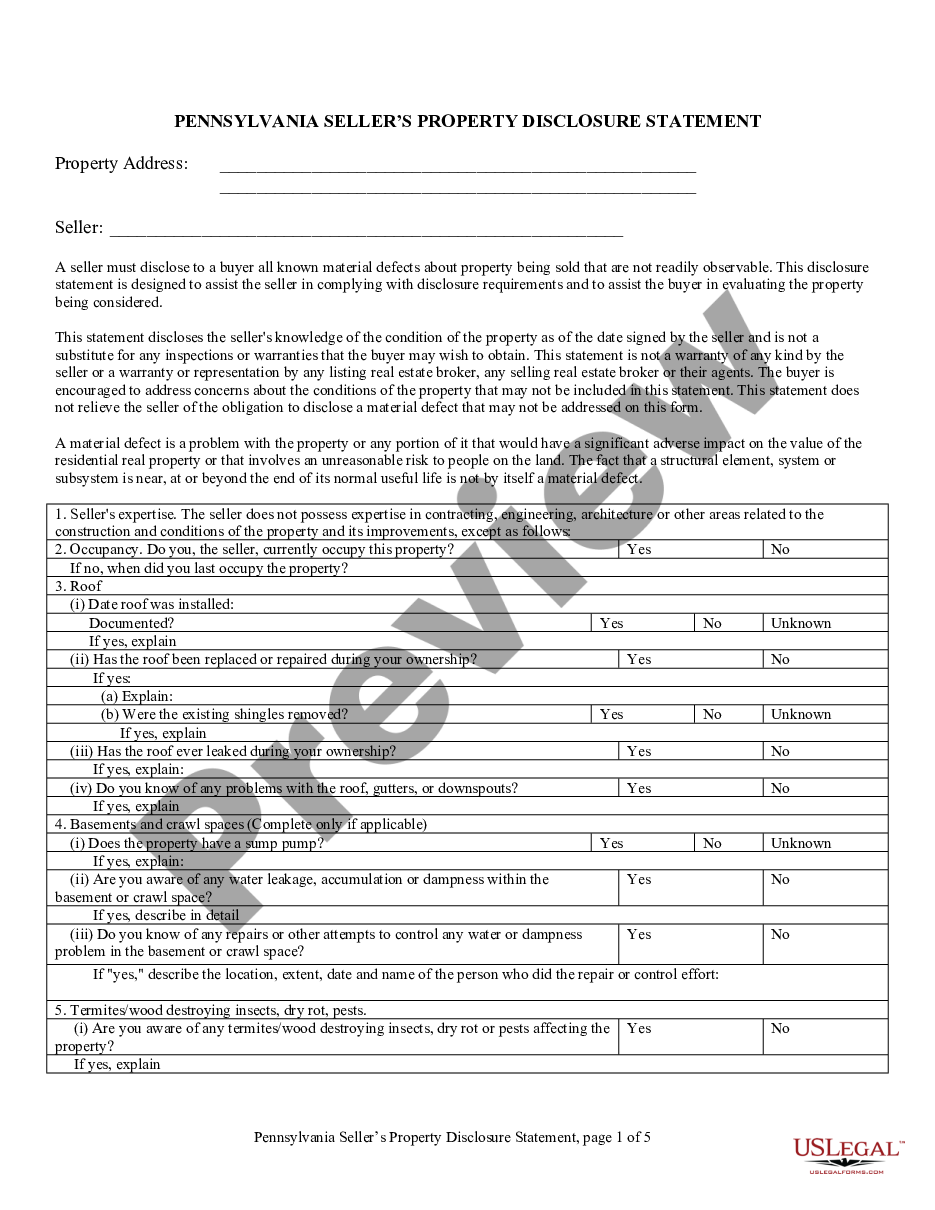
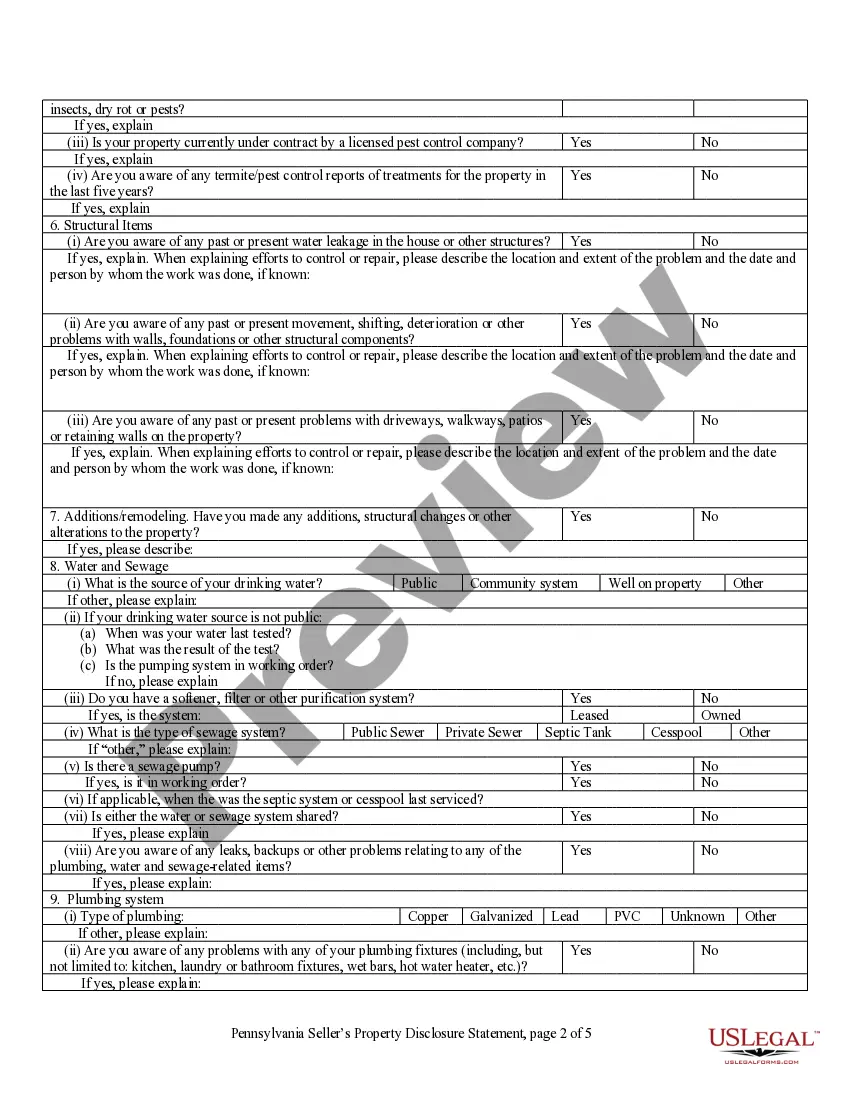
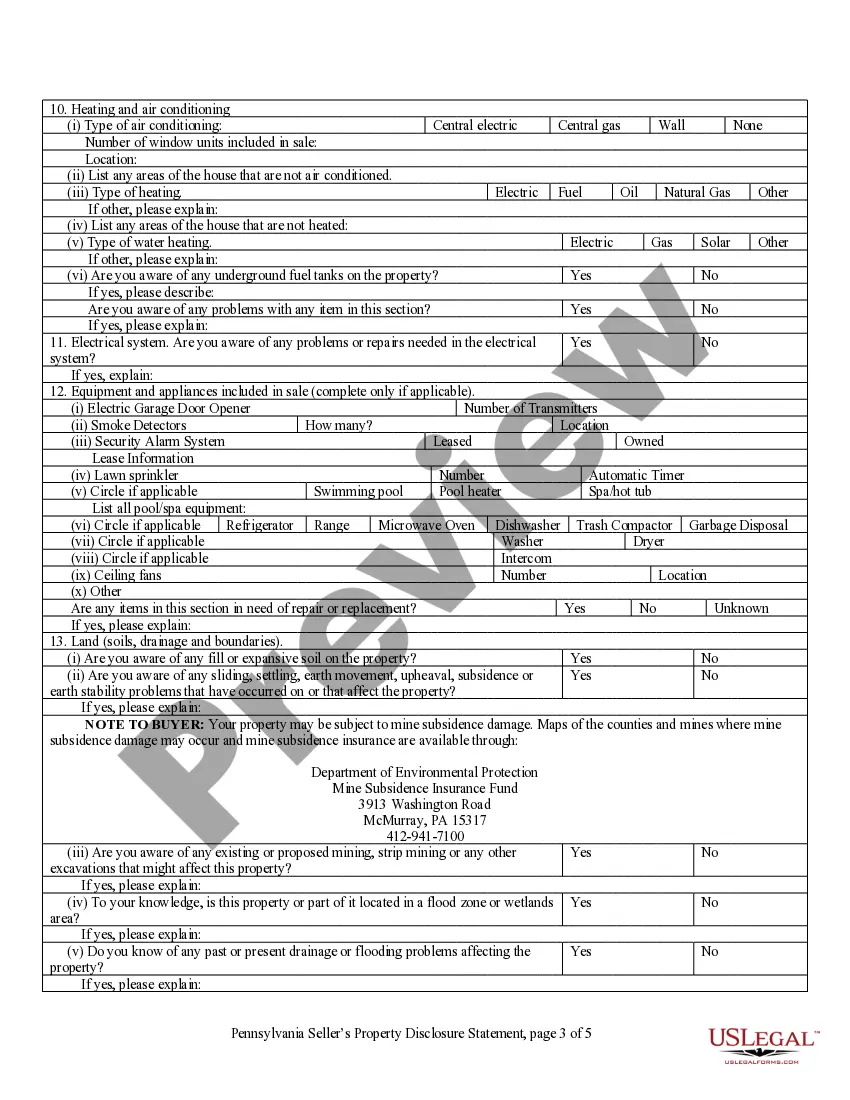
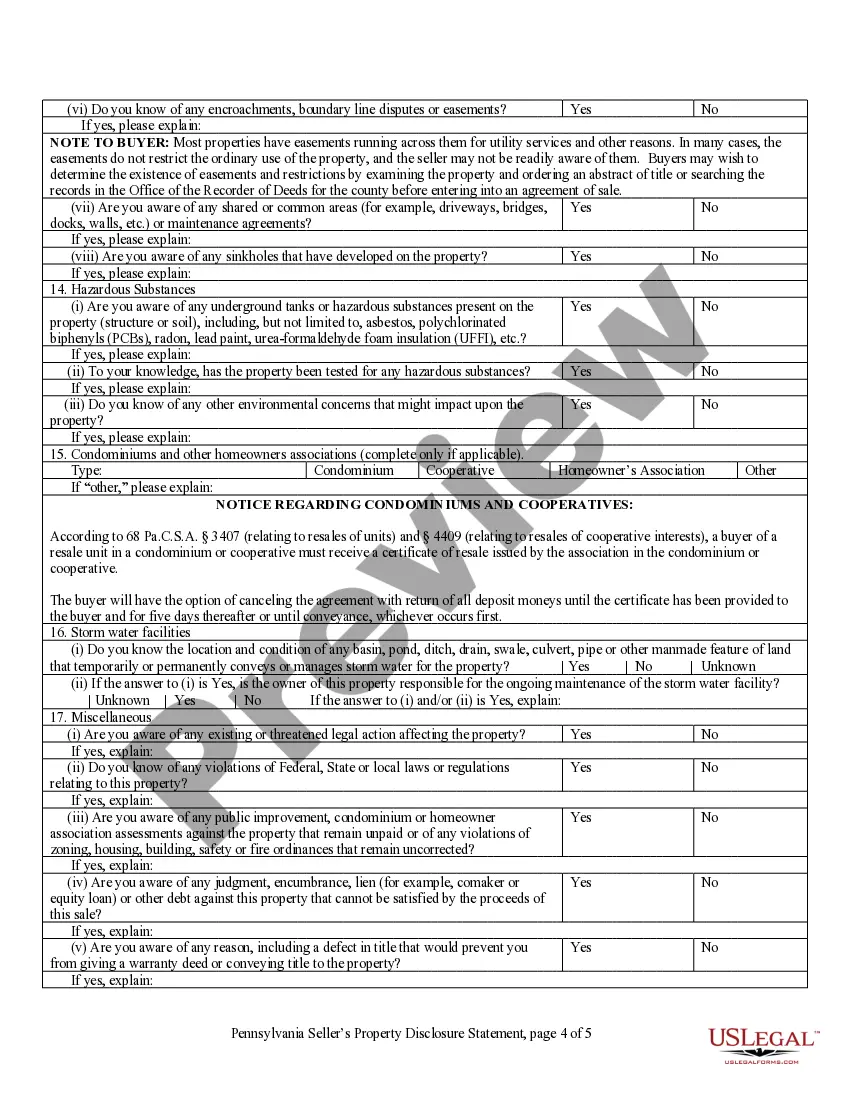
Get your form ready online
Our built-in tools help you complete, sign, share, and store your documents in one place.
Make edits, fill in missing information, and update formatting in US Legal Forms—just like you would in MS Word.
Download a copy, print it, send it by email, or mail it via USPS—whatever works best for your next step.
Sign and collect signatures with our SignNow integration. Send to multiple recipients, set reminders, and more. Go Premium to unlock E-Sign.
If this form requires notarization, complete it online through a secure video call—no need to meet a notary in person or wait for an appointment.
We protect your documents and personal data by following strict security and privacy standards.

Make edits, fill in missing information, and update formatting in US Legal Forms—just like you would in MS Word.

Download a copy, print it, send it by email, or mail it via USPS—whatever works best for your next step.

Sign and collect signatures with our SignNow integration. Send to multiple recipients, set reminders, and more. Go Premium to unlock E-Sign.

If this form requires notarization, complete it online through a secure video call—no need to meet a notary in person or wait for an appointment.

We protect your documents and personal data by following strict security and privacy standards.
Looking for another form?





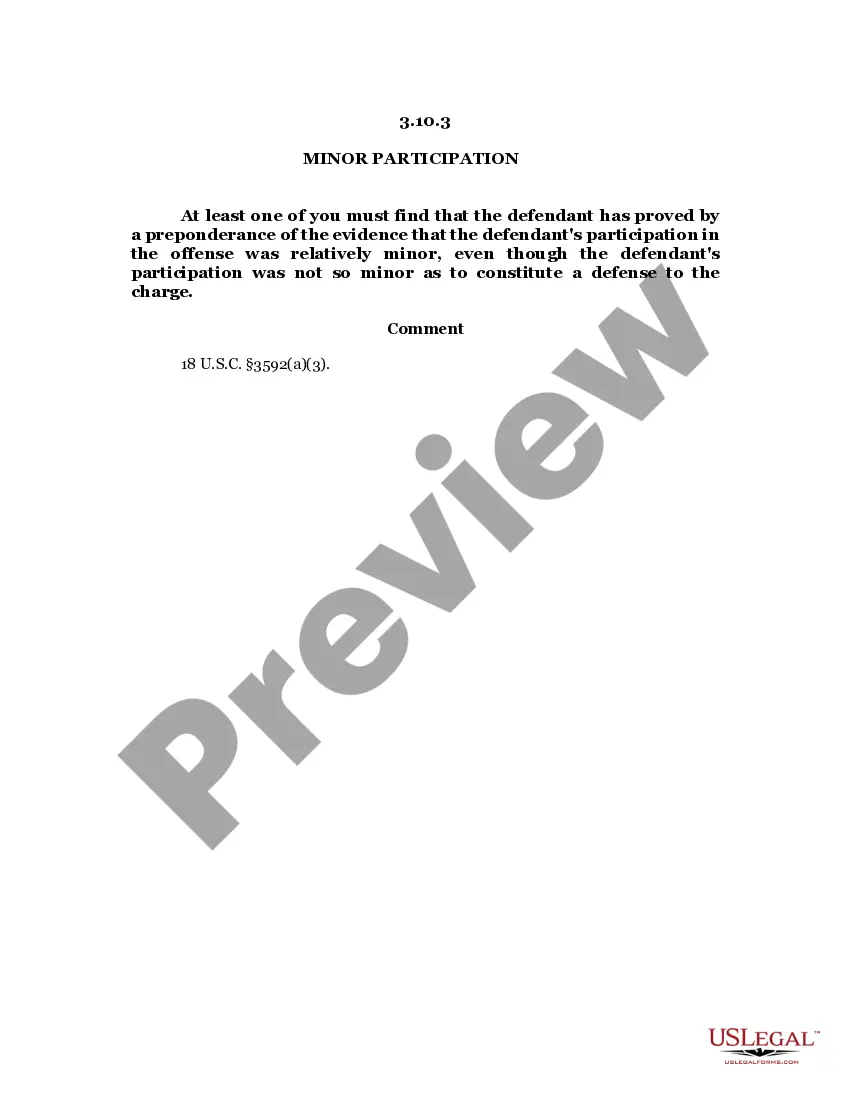


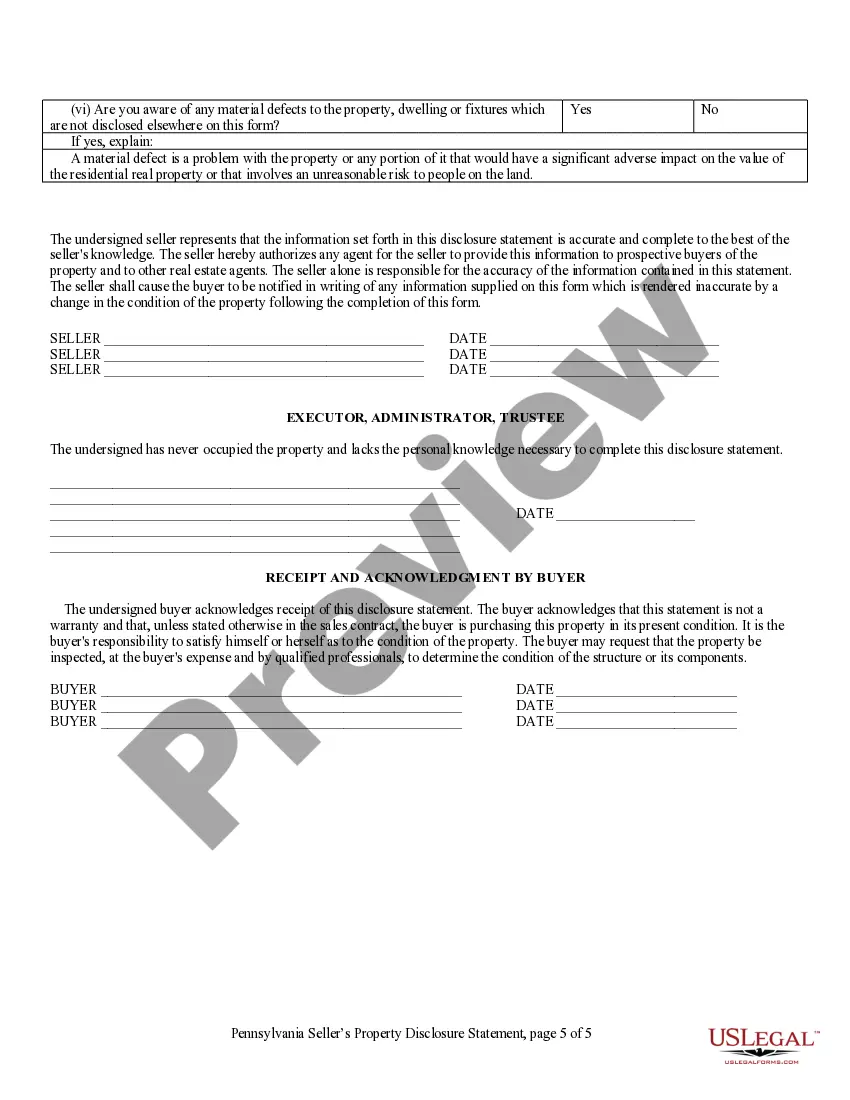
How to fill out Pennsylvania Residential Real Estate Sales Disclosure Statement?
Securing a reliable source for the latest and pertinent legal templates is a significant part of managing bureaucracy.
Identifying the appropriate legal documents requires accuracy and meticulousness, which is why it's essential to obtain samples of Pennsylvania Estate Form For Tax solely from trustworthy providers, such as US Legal Forms.
Eliminate the inconvenience associated with your legal documentation. Explore the vast US Legal Forms library where you can discover legal templates, verify their relevance to your situation, and download them immediately.
- A flawed template will squander your time and hinder your progress.
- With US Legal Forms, you have minimal concerns.
- You can access and review all the specifics regarding the document’s application and significance for your situation and in your locality.
- Follow these steps to complete your Pennsylvania Estate Form For Tax.
- Utilize the catalog navigation or search bar to find your template.
- Examine the form’s details to determine if it meets the standards of your state and area.
- View the form preview, if accessible, to confirm the template is the one you need.
- Return to the search and find the appropriate template if the Pennsylvania Estate Form For Tax does not meet your criteria.
- Once you are certain about the form’s applicability, download it.
- If you are an existing customer, click Log in to verify your identity and access your chosen forms in My documents.
- If you don’t have an account yet, click Buy now to acquire the form.
- Select the pricing option that fits your requirements.
- Proceed to the registration to complete your transaction.
- Finalize your purchase by selecting a payment method (credit card or PayPal).
- Choose the file format for downloading Pennsylvania Estate Form For Tax.
- Once the form is on your device, you can edit it with the editor or print it to complete it manually.
Form popularity
FAQ
Submitting an estate tax return in Pennsylvania requires careful preparation of the necessary documents. You can submit the Pennsylvania estate form for tax either online through the Department of Revenue's website or by mailing a physical copy. Make sure to keep copies of all submitted documents for your records. Timely submission is key to fulfilling your responsibilities.
To file an estate tax return in Pennsylvania, gather all necessary financial documents related to the estate. Complete the Pennsylvania estate form for tax, ensuring accuracy in reporting all assets. Submit the form to the Department of Revenue, along with any required payment. Meeting filing deadlines is crucial to avoid interest and penalties.
In Pennsylvania, most estates must go through probate unless they fall under certain exceptions. Probate is the legal process that validates a will and oversees the distribution of assets. Using the right Pennsylvania estate form for tax during probate can simplify matters. It's advisable to consult an attorney to understand your specific situation.
Filing taxes for a deceased person's estate involves completing the appropriate Pennsylvania estate form for tax. You need to report all income earned by the estate during the year. This includes income from assets or investments. Consulting with a tax professional can help navigate this process smoothly.
To file a PA inheritance tax return, you must submit the required forms to the Pennsylvania Department of Revenue. You can do this by mail or electronically through their online portal. It is important to use the correct Pennsylvania estate form for tax to ensure accurate processing. Make sure to check for deadlines to avoid penalties.
In Pennsylvania, estate taxes apply to the total value of a deceased person's estate before distribution. The state imposes a tax on the transfer of property through inheritance. The Pennsylvania estate form for tax must be completed and filed with the Department of Revenue, detailing all assets and liabilities. Understanding these taxes is essential for proper estate planning and compliance.
The PA Rev 1500 must be filed by the executor or administrator of an estate that owes Pennsylvania inheritance tax. This form is essential for reporting the taxable estate and ensuring proper payments are made. Completing the Pennsylvania estate form for tax accurately is crucial for maintaining compliance. You can find useful templates and advice through platforms like US Legal Forms.
Yes, you must file a PA inheritance tax return if the estate's value exceeds $3,000. This requirement applies regardless of whether a will exists or not. Filing the Pennsylvania estate form for tax ensures compliance with state laws and avoids potential penalties. If you're unsure about the process, US Legal Forms offers helpful resources to guide you.
To file estate taxes in Pennsylvania, you will need several key documents, including the death certificate, the will (if applicable), and a detailed inventory of the estate's assets. Additionally, you may need to gather financial statements and other records related to the deceased's income and properties. Properly organizing these documents is essential for completing the Pennsylvania estate form for tax accurately. US Legal Forms can assist in providing the necessary templates.
The PA-40 form is the Pennsylvania personal income tax return form. While it is not specifically for inheritance tax, the information from the PA-40 can relate to the estate's income. If the estate generates income after the decedent's death, it is important to file this form alongside the Pennsylvania estate form for tax. You can find resources to help you complete the PA-40 on platforms like US Legal Forms.