Notice Required (# Of Days)*
Description
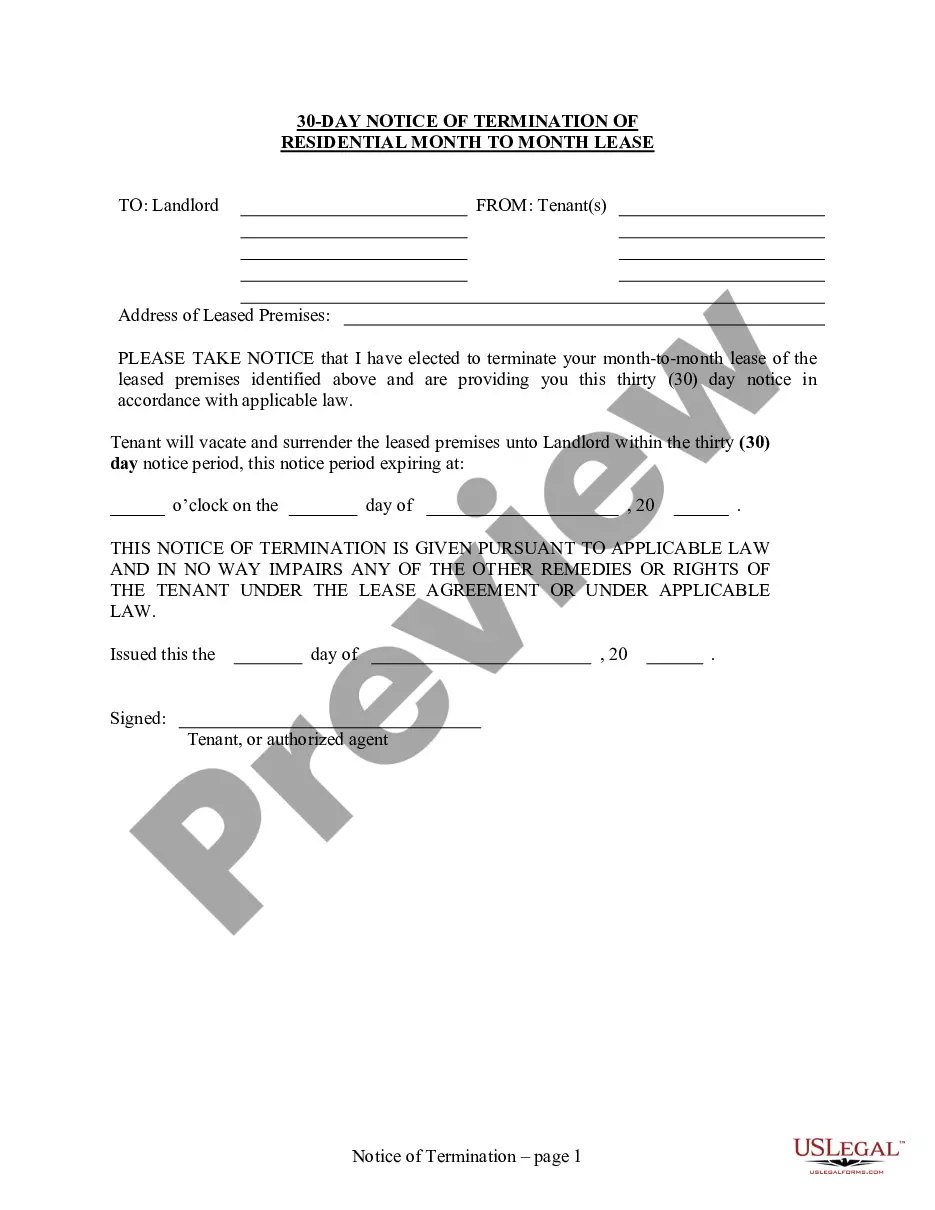
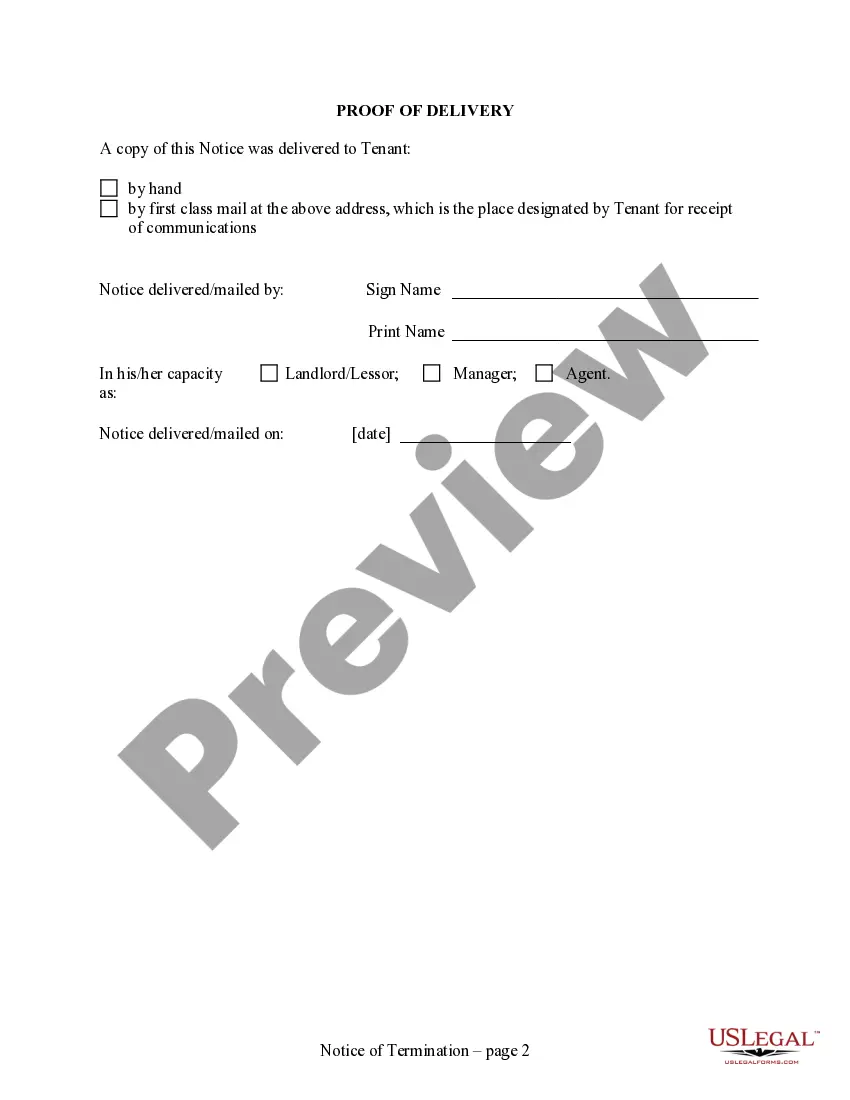
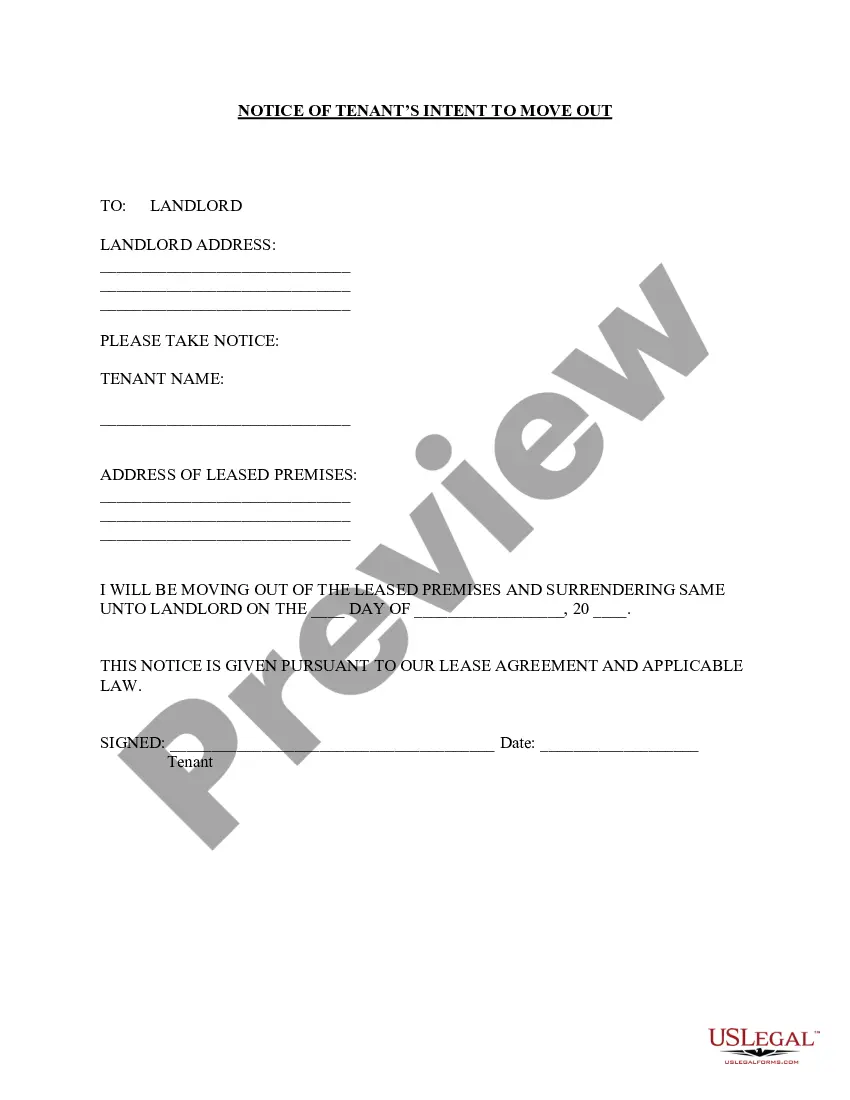

Get your form ready online
Our built-in tools help you complete, sign, share, and store your documents in one place.
Make edits, fill in missing information, and update formatting in US Legal Forms—just like you would in MS Word.
Download a copy, print it, send it by email, or mail it via USPS—whatever works best for your next step.
Sign and collect signatures with our SignNow integration. Send to multiple recipients, set reminders, and more. Go Premium to unlock E-Sign.
If this form requires notarization, complete it online through a secure video call—no need to meet a notary in person or wait for an appointment.
We protect your documents and personal data by following strict security and privacy standards.

Make edits, fill in missing information, and update formatting in US Legal Forms—just like you would in MS Word.

Download a copy, print it, send it by email, or mail it via USPS—whatever works best for your next step.

Sign and collect signatures with our SignNow integration. Send to multiple recipients, set reminders, and more. Go Premium to unlock E-Sign.

If this form requires notarization, complete it online through a secure video call—no need to meet a notary in person or wait for an appointment.

We protect your documents and personal data by following strict security and privacy standards.
Looking for another form?




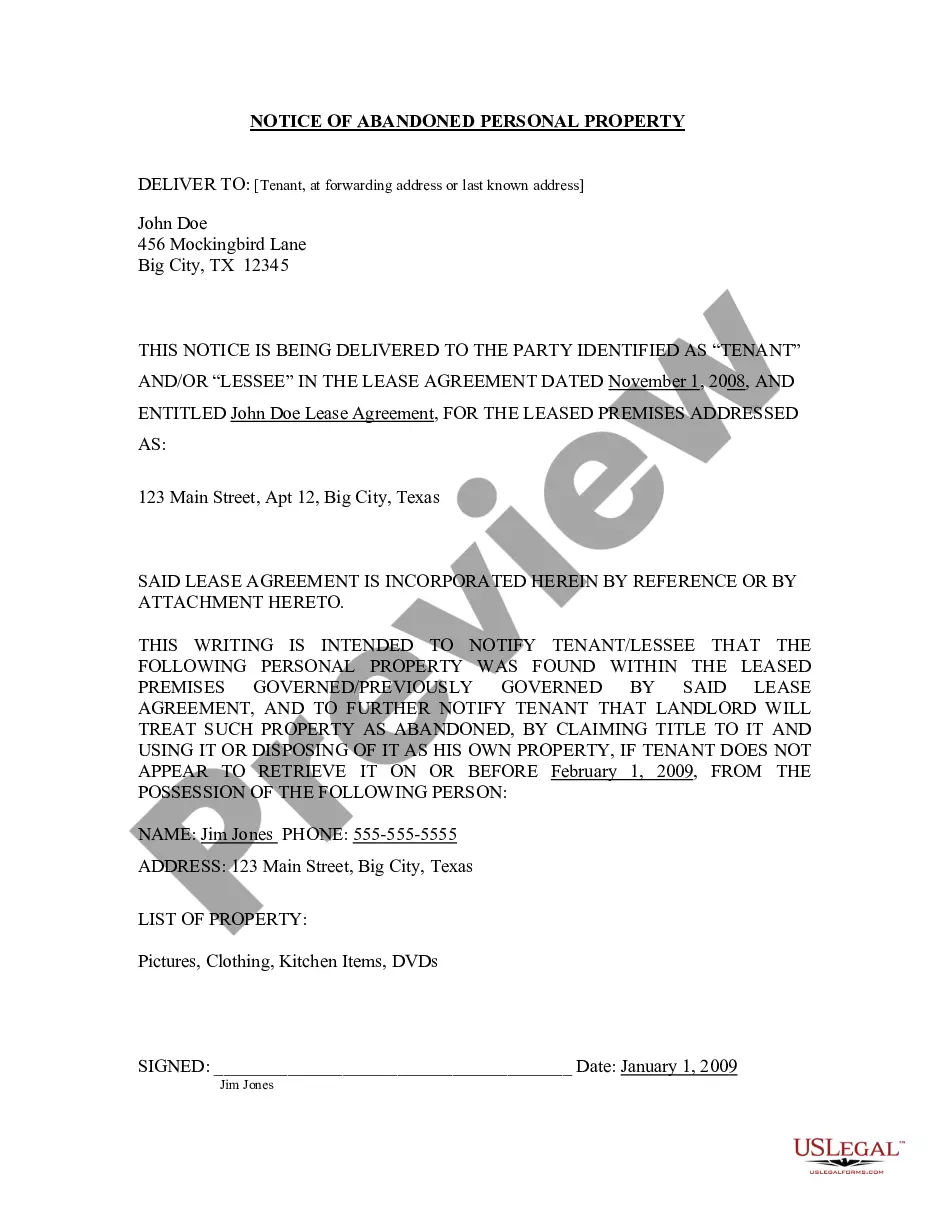



How to fill out Oregon 30 Day Or 60 Day Notice To Terminate Month To Month Lease For Residential From Tenant To Landlord?
- If you are a returning user, log into your account and access your desired form template by clicking the Download button. Please ensure your subscription is active; if not, renew it as per your plan.
- For first-time users, begin by browsing the extensive library of over 85,000 legal forms. Review the preview and descriptions to confirm that your choice aligns with your specific needs and local jurisdiction.
- If you need a different template, utilize the Search tab on the website to locate the correct form that suits your requirements before proceeding.
- Once you’ve identified the appropriate document, click the Buy Now button and select a subscription plan that fits your needs; registering an account is necessary for library access.
- Complete your purchase by entering your credit card details or selecting your PayPal account for payment.
- After payment, download your form and save it on your device. You can always access it later in the My Forms section of your profile.
By leveraging US Legal Forms, you can efficiently and accurately complete your legal documentation, supported by a vast resource library and access to form completion experts. This ensures that your legal forms are both precise and compliant with relevant regulations.
Don’t hesitate—empower yourself with US Legal Forms today and simplify your legal documentation process!
Form popularity
FAQ
A 2 week notice is generally considered to be 14 days. This time frame includes the entire duration from when you submit your notice to your last day of work. When calculating the notice required (# of days), always ensure you are factoring in any weekends or holidays that may fall within that period. For detailed templates and guidance, US Legal Forms can assist you in understanding what your notice period should look like.
Yes, the day you hand in your notice typically counts as the first day of your notice period. This means that if your employer requires a notice period of a specific number of days, it's essential to include that initial day. Be sure to review your contract or company policy regarding the notice required (# of days), as some organizations may have specific rules. If you are uncertain, US Legal Forms provides resources to clarify company policies.
To submit your notice period, start by writing a formal resignation letter. Clearly state your intended last day of work, which should be consistent with the notice required (# of days) by your employer's policy. Next, hand in your letter to your supervisor or the human resources department. Using US Legal Forms, you can find templates that simplify the process of writing and submitting your notice.
The number of days notice you should give often depends on the type of agreement or situation. Standard practice usually requires at least 30 days for many leases, while some may specify shorter periods like 7 days. Check your lease or contract for specific guidelines to avoid issues. Familiarizing yourself with the notice required (# of days) helps avoid misunderstandings.
To accurately count a 7 days notice, begin on the date you send or deliver the notice. Then include each day after that, making sure to count all days consecutively. At the end of the 7 days, your notice period is complete. The clarity on the notice required (# of days) will help you stay within legal boundaries.
A 7-day quit notice informs a tenant that they have a week to vacate the property. It's part of the eviction process and highlights the urgency of the situation. The notice must state the reason for eviction and emphasize that the tenant has 7 days to respond. Understanding the notice required (# of days) can prevent legal complications.
Yes, when counting days for notice, you typically include the day you give the notice. This means that if you issue a notice today, it counts as day one. Keep in mind, though, that different agreements may have specific wording regarding notice periods. Being clear on the notice required (# of days) ensures you fulfill your obligations.
When asked about your notice period, clearly state the number of days you will provide before leaving or making a change. Typically, this period is specified in your rental agreement or employment contract. Providing accurate information shows professionalism and respect for the other party. Knowing the notice required (# of days) helps you communicate effectively.
To count 7 days notice effectively, start with the day you issue the notice. Then, include each subsequent day, counting all calendar days, including weekends and holidays. Make sure to end your count on the 7th day to determine when your notice period concludes. Understanding the notice required (# of days) is crucial for compliance.
To calculate your notice period, start by examining your agreement for the specified duration. Next, mark your start date and count forward the required number of days, ensuring you include all relevant days. If your agreement specifies notice required (# of days), follow those instructions closely. For personalized help with agreements, USLegalForms offers valuable resources.