Oregon Transfer On Death Deed Form With Signature
Description

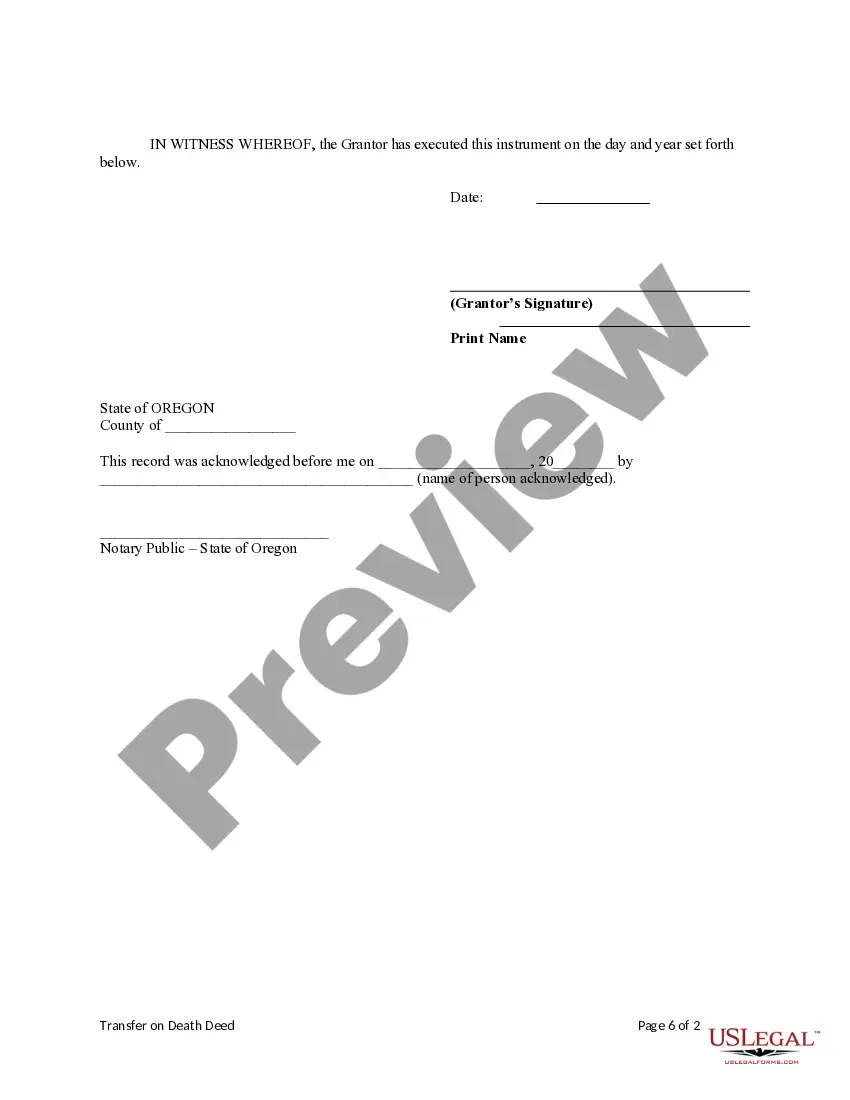
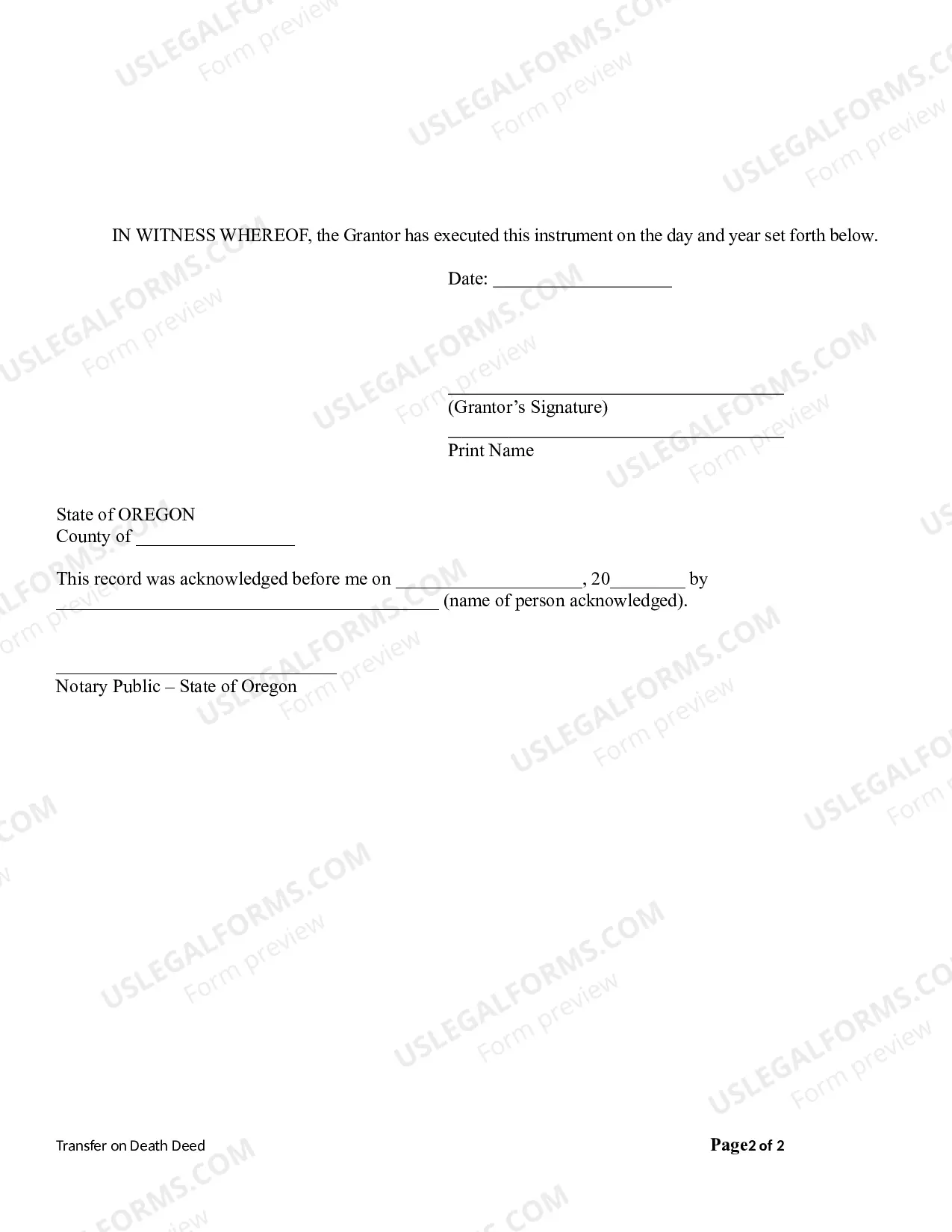



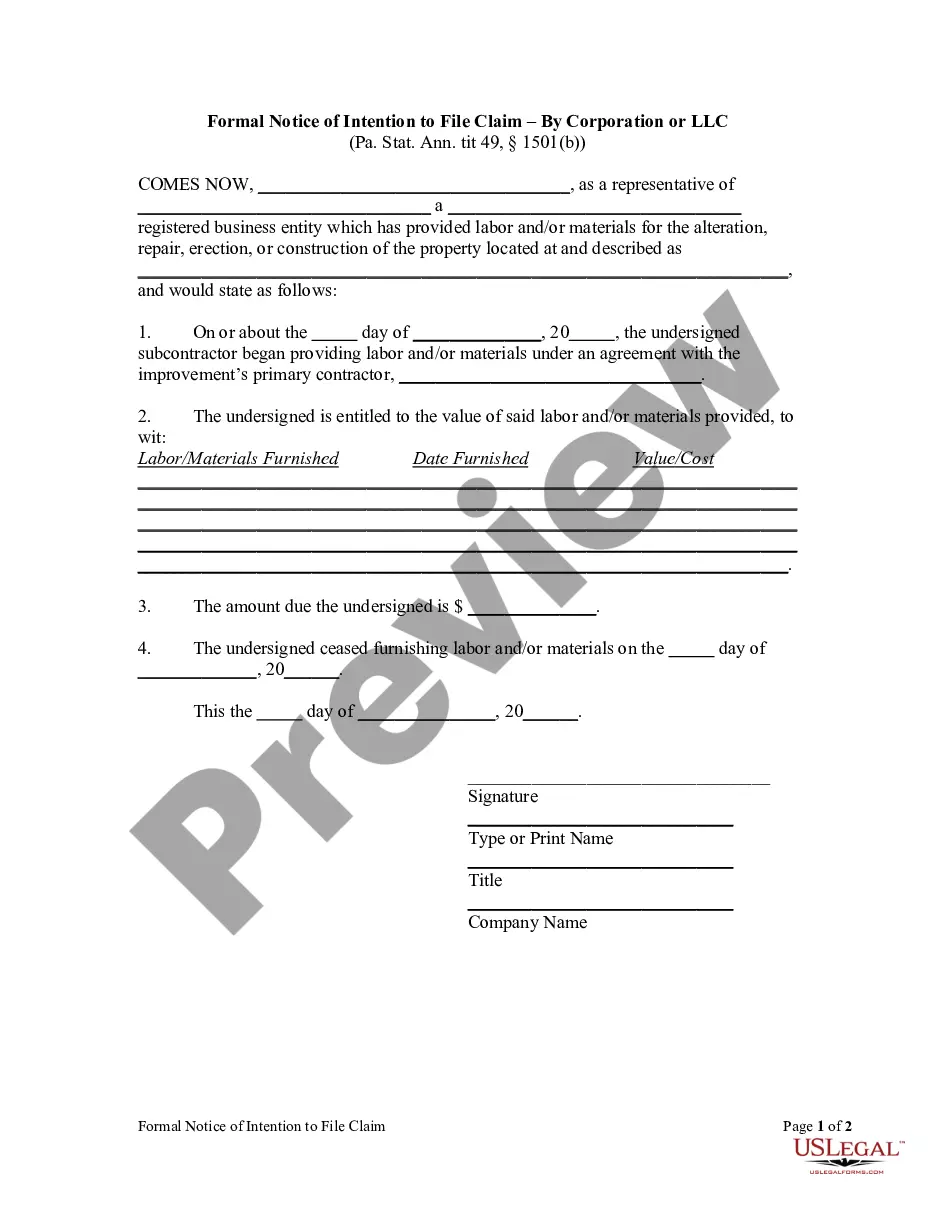
How to fill out Oregon Transfer On Death Deed From An Individual Owner/Grantor To An Individual Beneficiary.?
Handling legal documents and procedures can be a lengthy addition to your entire day.
Oregon Transfer On Death Deed Form With Signature and forms like it generally require you to seek them out and navigate the best approach to fill them out efficiently.
Therefore, if you are managing financial, legal, or personal matters, utilizing a comprehensive and user-friendly online resource of forms at your fingertips will be greatly beneficial.
US Legal Forms is the premier online platform for legal templates, featuring over 85,000 state-specific documents and various tools to help you complete your paperwork effortlessly.
Is this your first experience using US Legal Forms? Sign up and create an account in just a few minutes, and you’ll gain access to the form library and Oregon Transfer On Death Deed Form With Signature. Then, follow the steps below to fill out your form: Ensure you have the correct form by utilizing the Review feature and examining the form details. Select Buy Now when ready, and choose the monthly subscription plan that fits your needs. Click Download then fill out, sign, and print the form. US Legal Forms has 25 years of experience assisting clients manage their legal documents. Locate the form you need today and streamline any procedure without breaking a sweat.
- Explore the collection of pertinent documents available to you with just one click.
- US Legal Forms provides you with state- and county-specific forms available at any time for downloading.
- Protect your document management processes with a high-quality service that allows you to prepare any form in minutes without incurring extra or hidden fees.
- Simply Log In to your account, find Oregon Transfer On Death Deed Form With Signature, and obtain it immediately from the My documents section.
- You can also retrieve previously downloaded documents.
Form popularity
FAQ
Because a TOD deed, also known as a beneficiary deed, bypasses probate, it can simplify the inheritance process and reduce costs for your loved ones. Consider working with a financial advisor as you plan how your estate will be distributed upon your death.
A beneficiary who receives real estate through a transfer on death deed becomes personally liable for the debts of the dead property owner without proper counsel from an estate planning professional or a title company. The beneficiary becomes liable to potential financial obligations as a result.
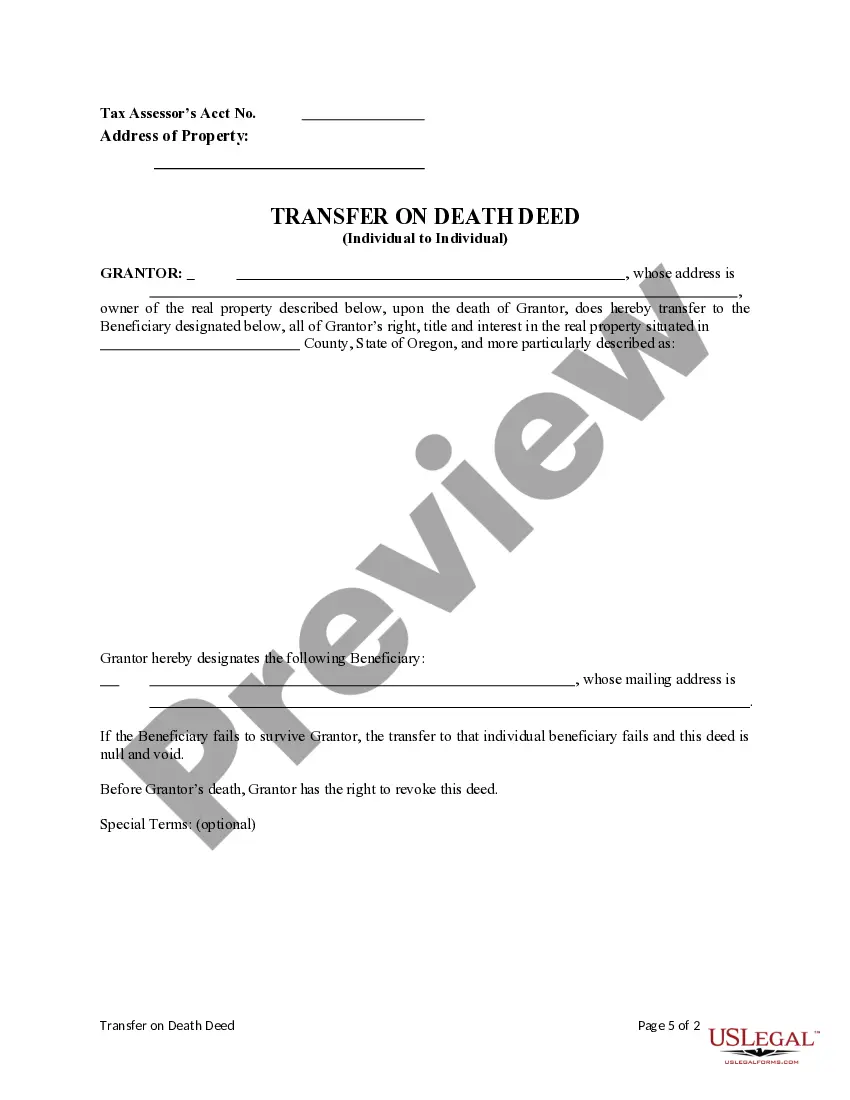
To create a transfer-on-death deed in Oregon, the property owner must execute and record a TOD deed that names one or more beneficiaries who will inherit the property upon the owner's death. The TOD deed must also describe the property and specify the ownership interest that is being transferred.
At your death, the real estate goes automatically to the person you named to inherit it (your "beneficiary"), without the need for probate court proceedings.
Transfer on Death Deeds are used in Estate Planning to avoid probate and simplify the passing of real estate to your loved ones or Beneficiaries. It's also known as a ?Beneficiary Deed? because in essence, you're naming a Beneficiary who will receive the deed to your property after you pass away.