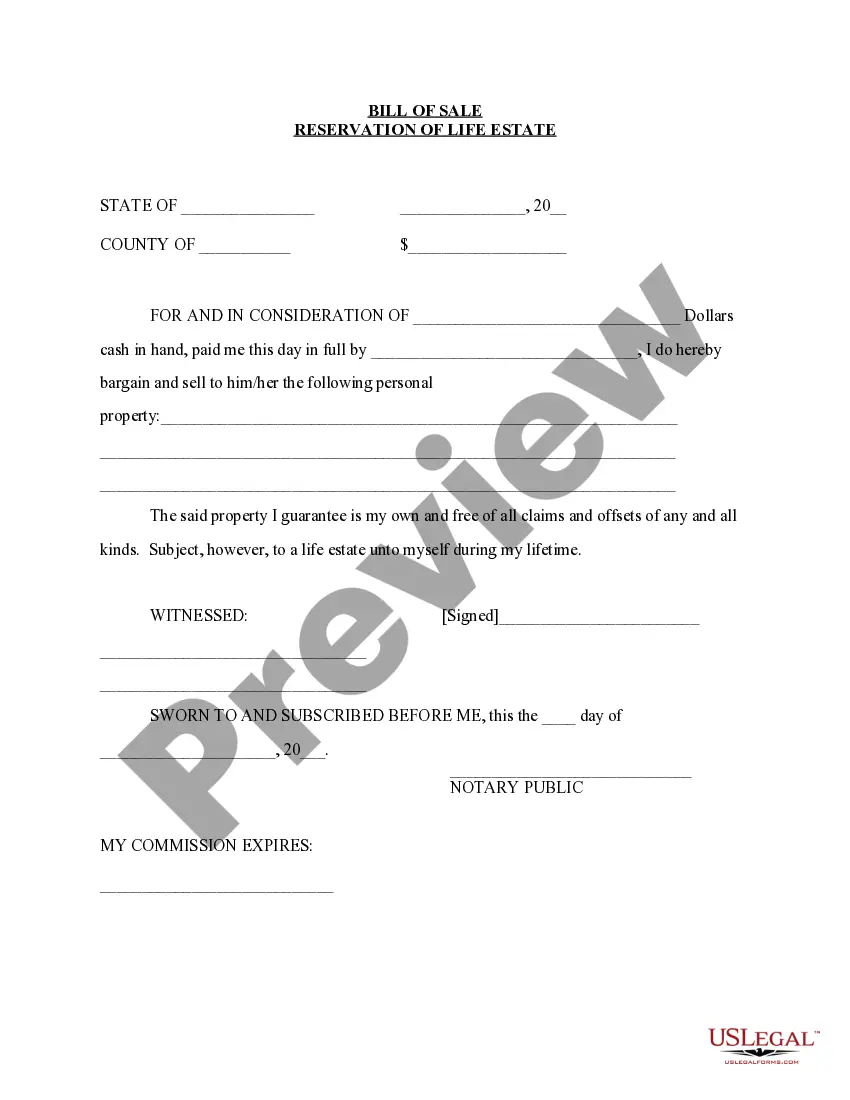
Deed Reserving Life Estate With Retained
Description

Get your form ready online
Our built-in tools help you complete, sign, share, and store your documents in one place.
Make edits, fill in missing information, and update formatting in US Legal Forms—just like you would in MS Word.
Download a copy, print it, send it by email, or mail it via USPS—whatever works best for your next step.
Sign and collect signatures with our SignNow integration. Send to multiple recipients, set reminders, and more. Go Premium to unlock E-Sign.
If this form requires notarization, complete it online through a secure video call—no need to meet a notary in person or wait for an appointment.
We protect your documents and personal data by following strict security and privacy standards.

Make edits, fill in missing information, and update formatting in US Legal Forms—just like you would in MS Word.

Download a copy, print it, send it by email, or mail it via USPS—whatever works best for your next step.

Sign and collect signatures with our SignNow integration. Send to multiple recipients, set reminders, and more. Go Premium to unlock E-Sign.

If this form requires notarization, complete it online through a secure video call—no need to meet a notary in person or wait for an appointment.

We protect your documents and personal data by following strict security and privacy standards.
Looking for another form?

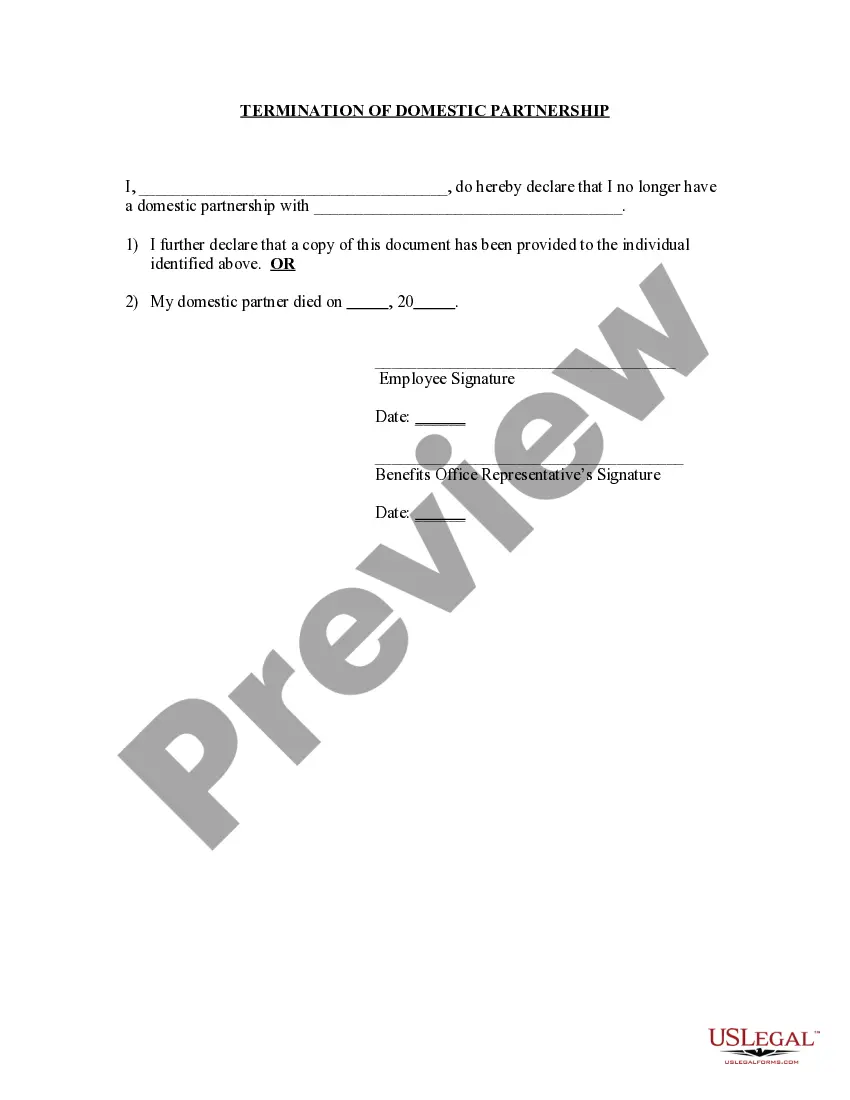






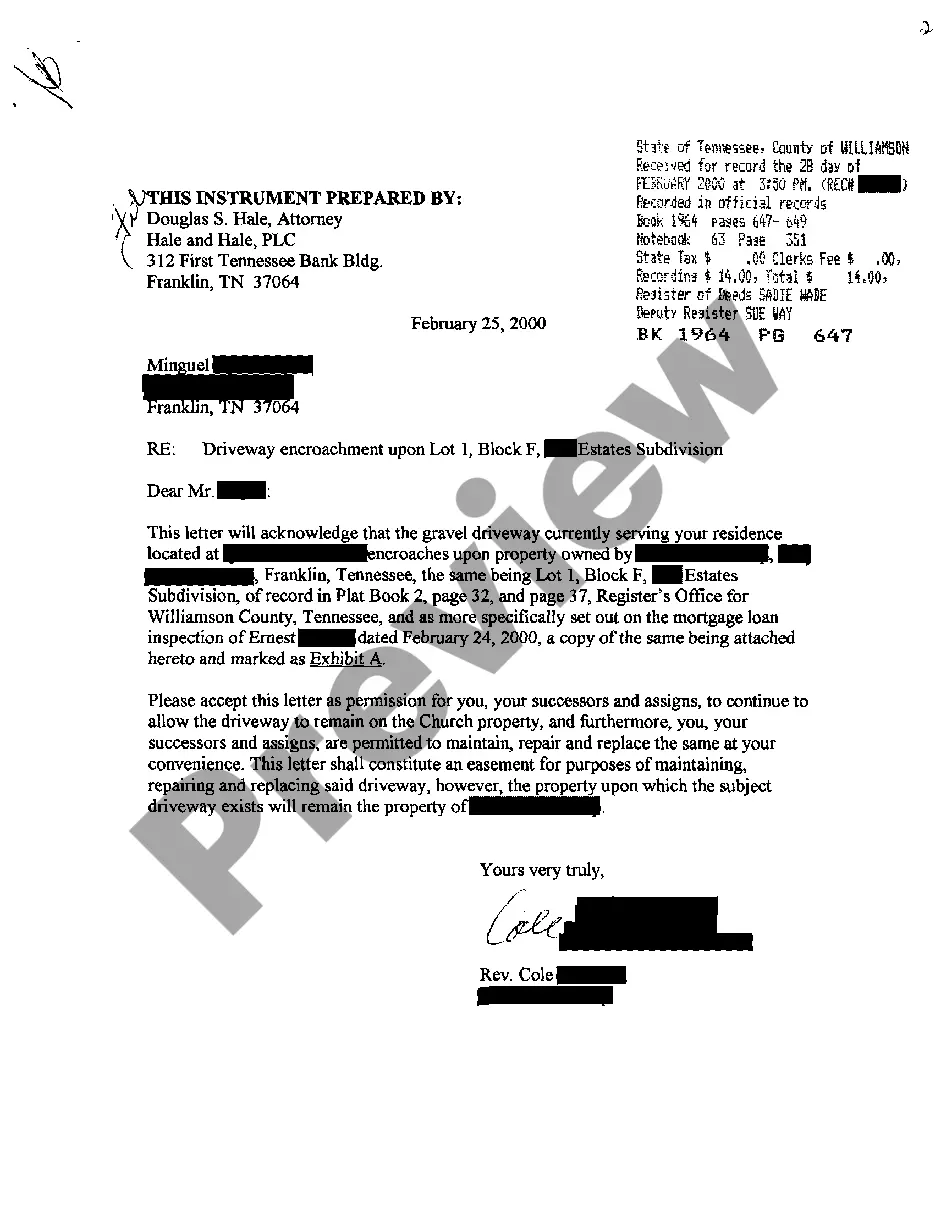
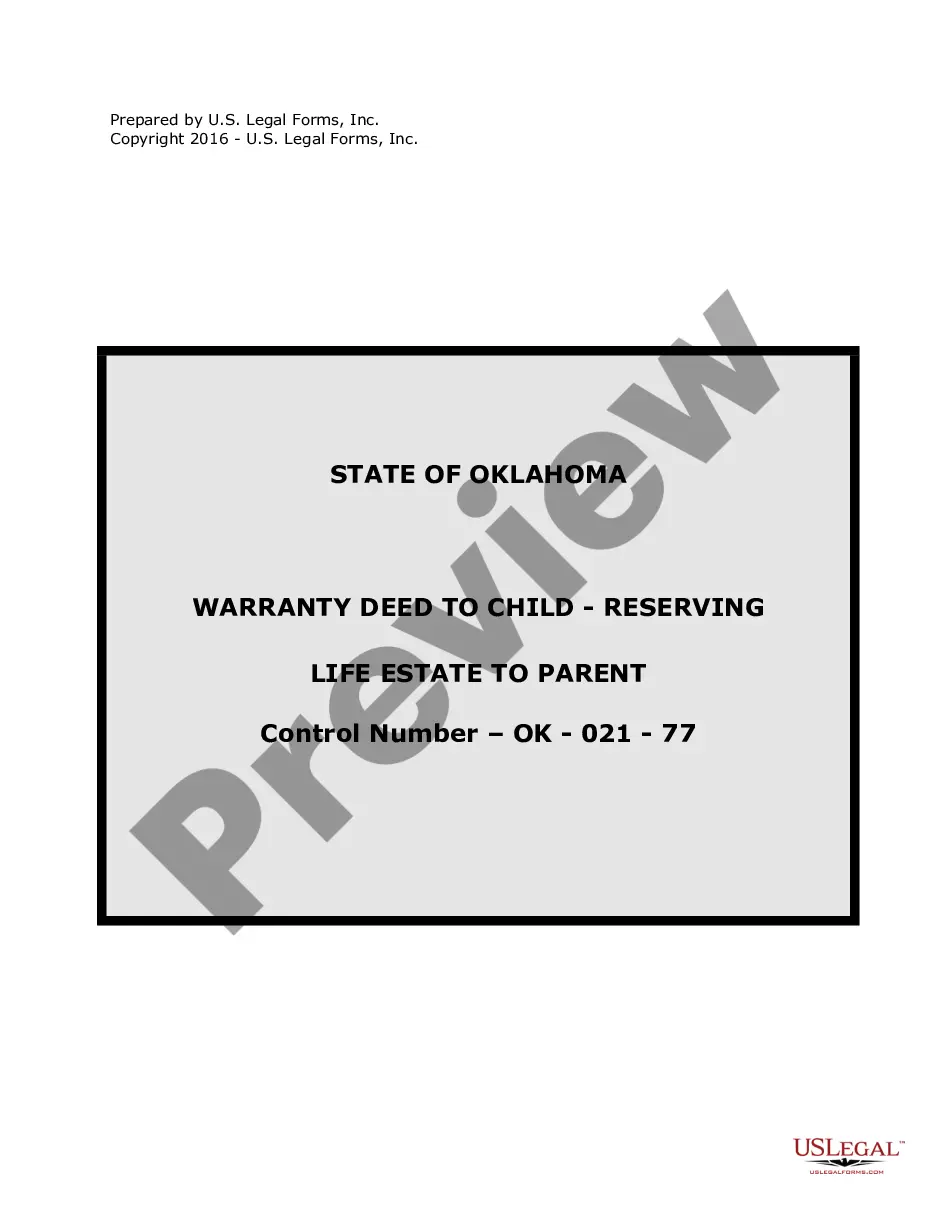
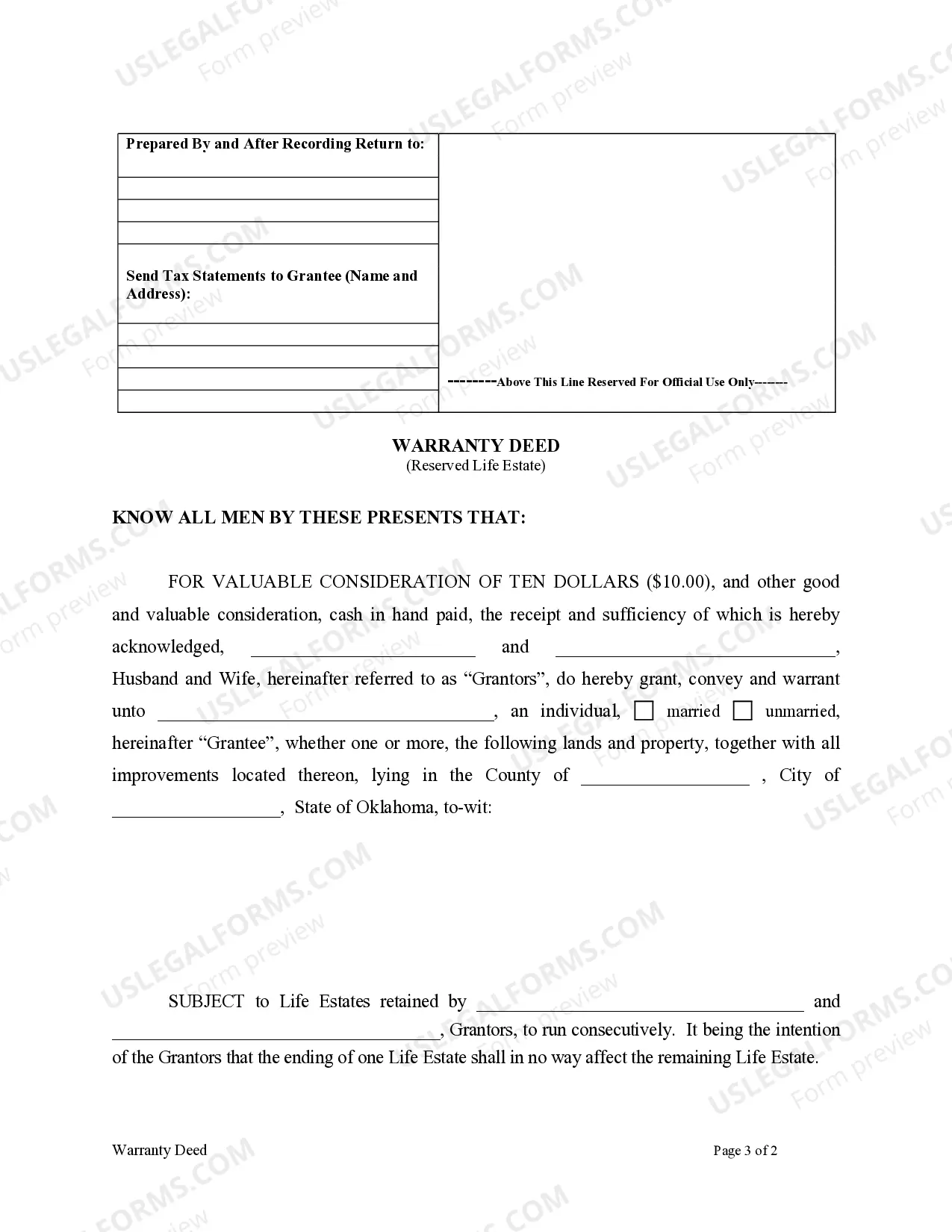
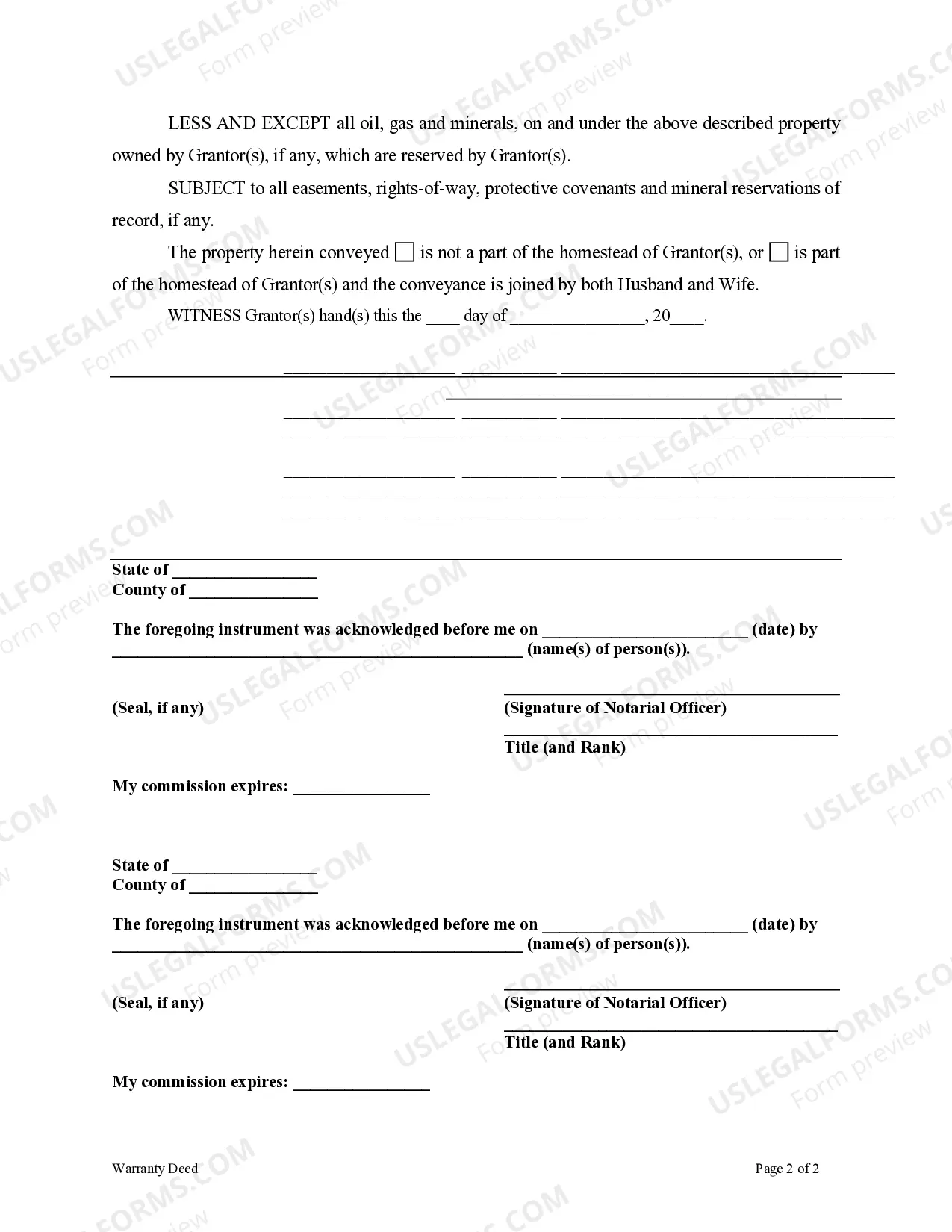
How to fill out Oklahoma Warranty Deed To Child Reserving A Life Estate In The Parents?
Regardless of whether it's for professional objectives or personal issues, everyone must handle legal circumstances at some point in their lives.
Filling out legal documents demands meticulous care, starting with selecting the appropriate form template.
With an extensive US Legal Forms library available, you don't need to waste time searching for the correct template online. Utilize the library's straightforward navigation to find the right form for any circumstance.
- Locate the template you need using the search bar or browsing the catalog.
- Examine the details of the form to ensure it aligns with your situation, state, and location.
- Select the form's preview to review it.
- If it's the incorrect form, revert to the search feature to find the Deed Reserving Life Estate With Retained template you require.
- Download the document if it satisfies your requirements.
- If you possess an existing US Legal Forms account, simply click Log in to access previously saved documents in My documents.
- If you do not have an account yet, you can obtain the form by selecting Buy now.
- Choose the suited pricing option.
- Fill out the account registration form.
- Select your payment mode: a credit card or PayPal account can be utilized.
- Choose the file format you prefer and download the Deed Reserving Life Estate With Retained.
- After downloading, you can fill out the form using editing software or print it to complete it by hand.
Form popularity
FAQ
Upon the life tenant's death, the remaindermen receive what is known as a "stepped-up" basis in the property. This means the property's tax basis is its fair market value at the time of the life tenant's death, not the value at which the life tenant originally purchased the property.
An additional potential problem with a Life Estate is that it does not offer creditor protection to the beneficiary, so if the heir has a debt or is sued, the creditor or court can come after the house. As you can see, a traditional Life Estate has the potential to create major conflict within a family.
There is no simple way to reverse a life estate because a life estate deed is a legal transfer of the title of a property. This is legally binding and the transaction is complete when the life estate is executed. Essentially, in order to reverse a life estate both parties would need to agree to make it happen.
A life estate is a form of ownership that allows one person to live in or on a piece of real property until they pass away. At their death, the real property passes to the intended beneficiary of the original owner.
When the life tenant dies, the remainderman typically receives a step-up tax basis in the property. This means the remainderman takes ownership of the home at its fair market value at the time of the life tenant's death. This can save the remainderman capital gains tax when the property is sold.