Lease Purchase Agreement For Equipment
Description
Get your form ready online
Our built-in tools help you complete, sign, share, and store your documents in one place.
Make edits, fill in missing information, and update formatting in US Legal Forms—just like you would in MS Word.
Download a copy, print it, send it by email, or mail it via USPS—whatever works best for your next step.
Sign and collect signatures with our SignNow integration. Send to multiple recipients, set reminders, and more. Go Premium to unlock E-Sign.
If this form requires notarization, complete it online through a secure video call—no need to meet a notary in person or wait for an appointment.
We protect your documents and personal data by following strict security and privacy standards.

Make edits, fill in missing information, and update formatting in US Legal Forms—just like you would in MS Word.

Download a copy, print it, send it by email, or mail it via USPS—whatever works best for your next step.

Sign and collect signatures with our SignNow integration. Send to multiple recipients, set reminders, and more. Go Premium to unlock E-Sign.

If this form requires notarization, complete it online through a secure video call—no need to meet a notary in person or wait for an appointment.

We protect your documents and personal data by following strict security and privacy standards.
Looking for another form?







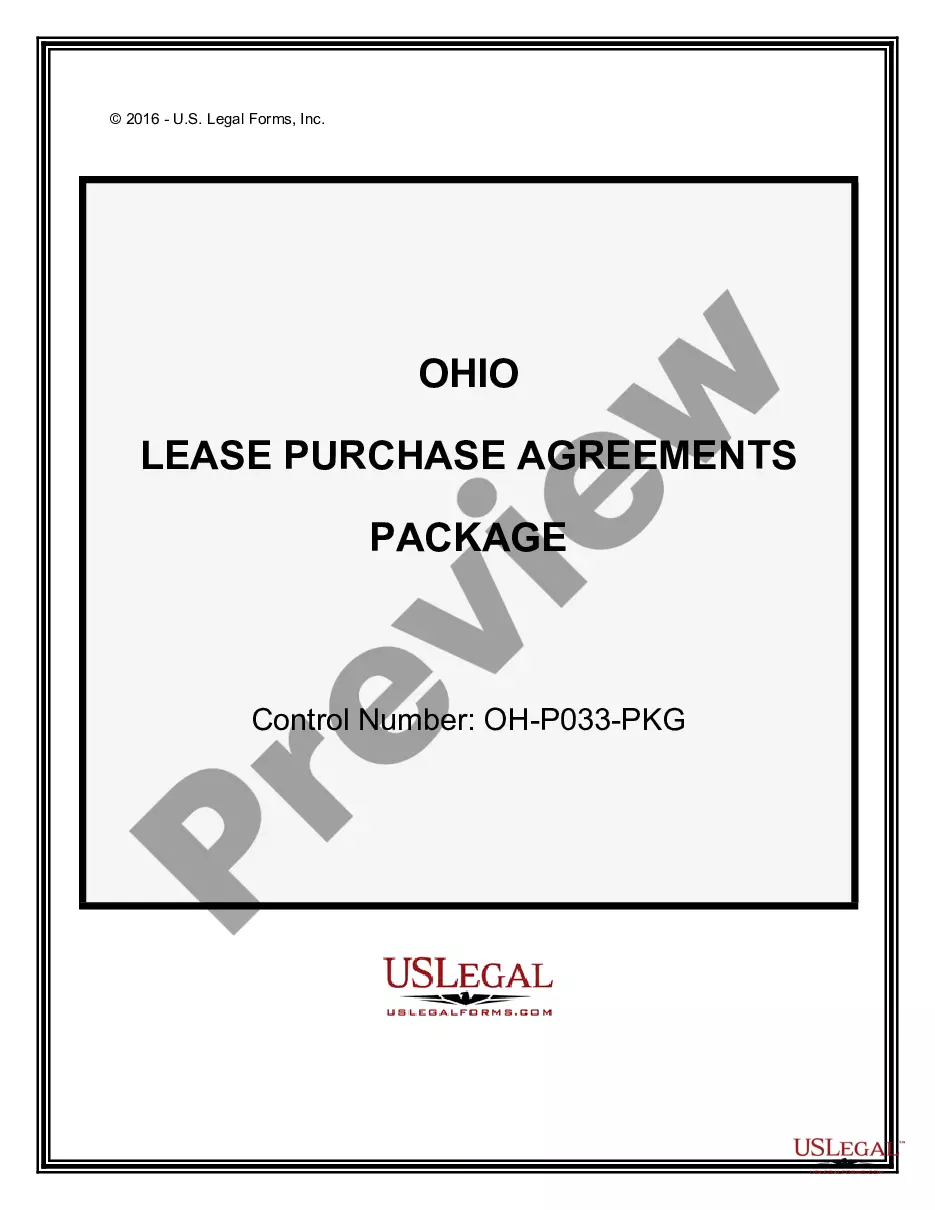
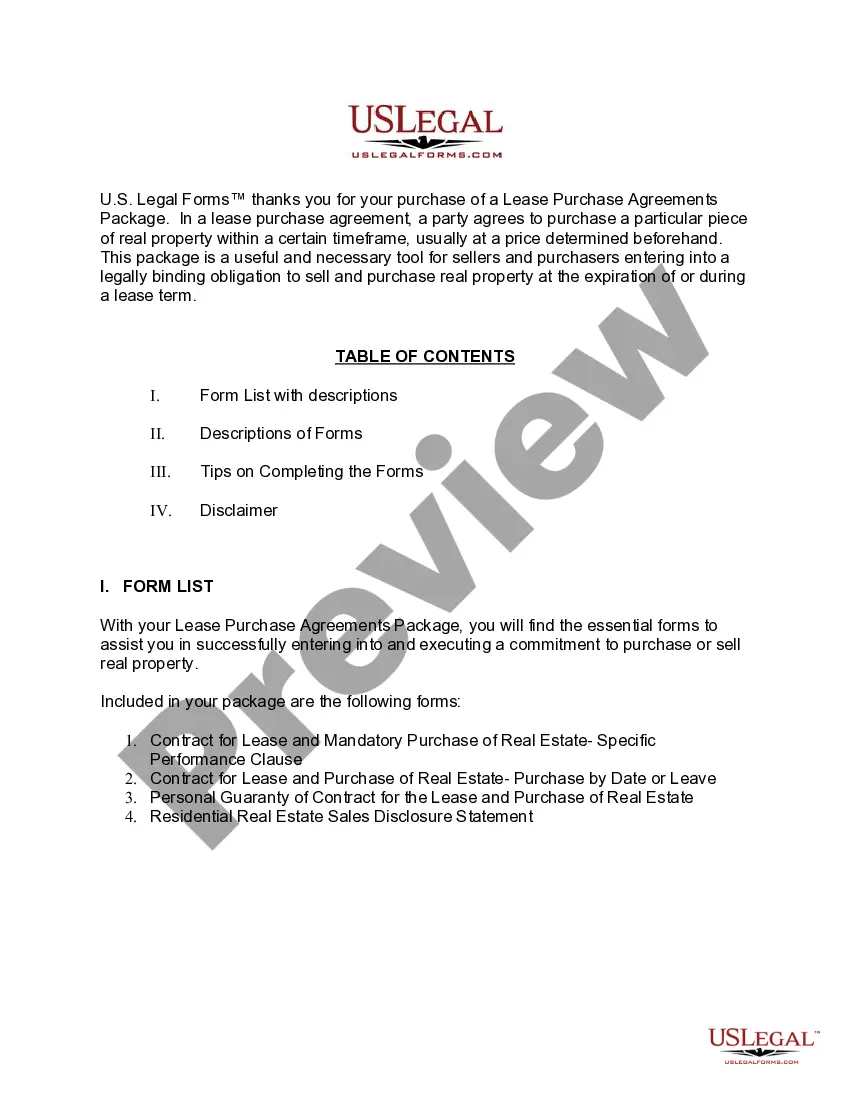
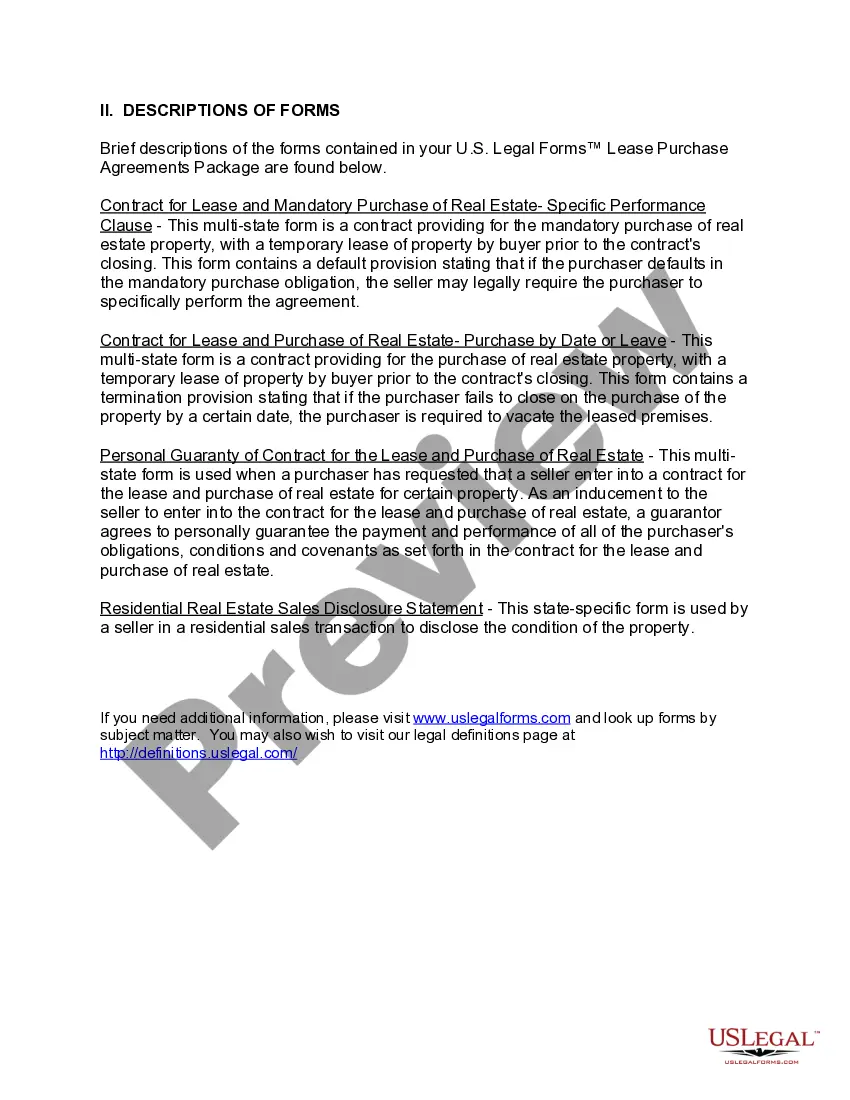
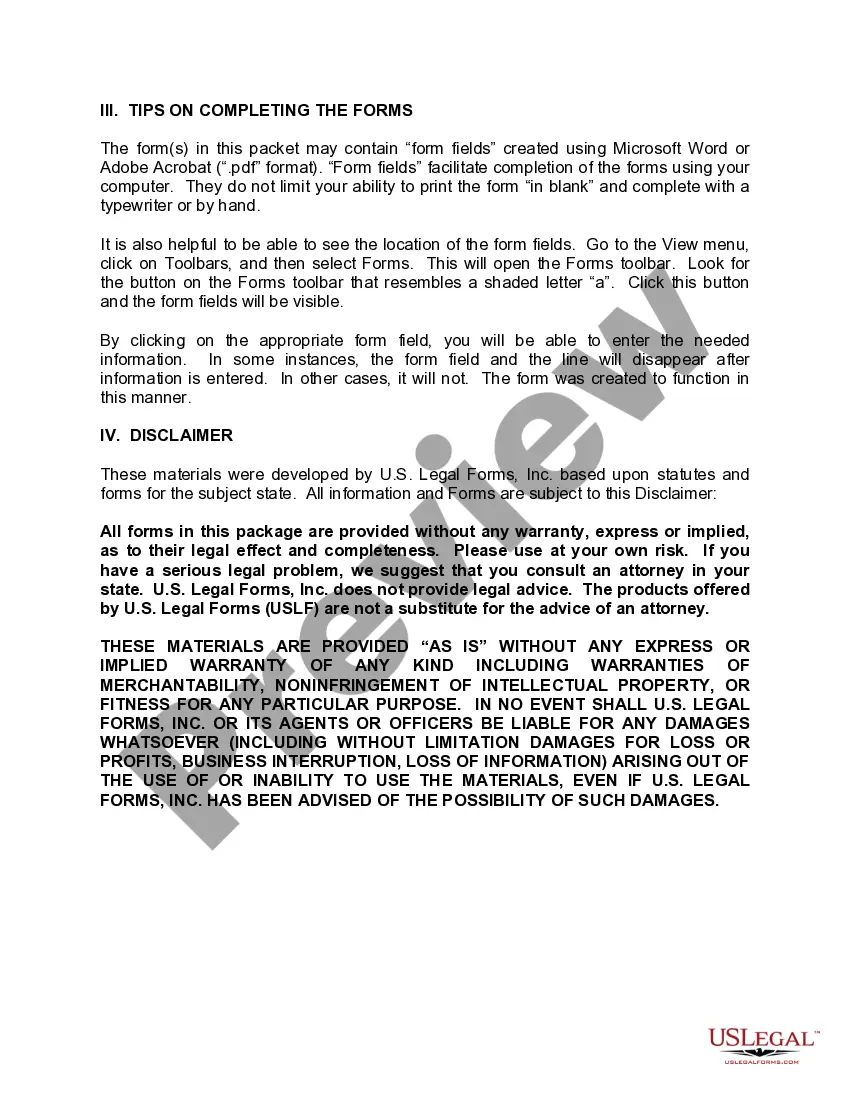
How to fill out Ohio Lease Purchase Agreements Package?
The Lease Purchase Contract For Equipment you see on this page is a versatile legal template crafted by expert attorneys in accordance with federal and local laws.
For over 25 years, US Legal Forms has supplied individuals, organizations, and legal practitioners with more than 85,000 validated, state-specific forms for any business and personal need. It’s the quickest, most straightforward, and most reliable method to acquire the documents you require, as the service promises bank-level data protection and anti-malware safeguards.
Register with US Legal Forms to have verified legal templates for all of life's situations readily available.
- Look for the document you need and review it.
- Select the pricing plan that fits you and register for an account.
- Choose the format you want for your Lease Purchase Contract For Equipment (PDF, DOCX, RTF) and download the sample onto your device.
- Print out the template to fill it out manually. Alternatively, use an online multifunctional PDF editor to swiftly and accurately complete and sign your form electronically.
- Access the same document again whenever necessary. Open the My documents tab in your profile to redownload any previously saved forms.
Form popularity
FAQ
Equipment leases can be classified as operating leases, but this depends on the specific terms of the lease agreement. In a lease purchase agreement for equipment, the lessee typically has the option to buy the equipment at the end of the lease term, distinguishing it from a traditional operating lease. This type of agreement offers flexibility and funding options for businesses looking to utilize equipment without heavy upfront costs. If you are considering a lease purchase agreement for equipment, remember to review all terms to ensure they meet your operational needs.
Exiting an equipment lease can seem challenging, but you have options. First, review your lease purchase agreement for equipment to understand the terms and conditions regarding termination. You may want to negotiate with the leasing company for an early termination or transfer the lease to another party. Finally, consider exploring legal resources or platforms like US Legal Forms for guidance on navigating the complexities of equipment leases.
A finance lease for equipment is a type of lease that allows a business to effectively finance the use of equipment over a set period. The lessee pays for the equipment's use while the lessor retains ownership. This arrangement, detailed in a lease purchase agreement for equipment, often includes an option to buy the equipment at the end of the lease, making it a flexible choice for many businesses.
An agreement to lease equipment, often referred to as a lease purchase agreement for equipment, is a contract between a lessor and a lessee. It outlines the terms under which the lessee can use the equipment in exchange for periodic payments. This agreement typically includes details on payment amounts, lease duration, maintenance responsibilities, and options for purchasing the equipment at the end of the lease term.
Leasing equipment involves several key steps. First, identify your equipment needs and budget. Next, research potential leasing companies and compare their offerings, especially their lease purchase agreements for equipment. After selecting a lessor, review the agreement details thoroughly, ensuring clear understanding of terms, before signing and obtaining your equipment.
The main difference between equipment rental and a lease lies in the duration and intent. Equipment rentals usually involve short-term usage, while leases are often longer-term agreements. With a lease purchase agreement for equipment, you may have the option to purchase the equipment at the end of the lease term, unlike in a rental. Understanding these distinctions can help you choose the right option for your business needs.
Getting out of an equipment lease agreement typically involves reviewing the contract terms to understand your options. Some agreements may have an early termination clause, which allows you to exit the lease under certain conditions. Alternatively, negotiating a transfer or an assignment of the lease to another party may also be an option. It is wise to consult legal advice or use platforms like US Legal Forms to navigate the process effectively.
A lease agreement for equipment is a legally binding contract that allows a lessee to use equipment owned by the lessor for a specified time in exchange for regular payments. These agreements outline payment terms, duration, and responsibilities for maintenance and repairs. It's important to know that a lease purchase agreement for equipment can sometimes allow you to buy the equipment at the end of the lease. This option enables businesses to enjoy the benefits of the equipment without a large upfront investment.