Ohio Revised Code For Theft
Description
Get your form ready online
Our built-in tools help you complete, sign, share, and store your documents in one place.
Make edits, fill in missing information, and update formatting in US Legal Forms—just like you would in MS Word.
Download a copy, print it, send it by email, or mail it via USPS—whatever works best for your next step.
Sign and collect signatures with our SignNow integration. Send to multiple recipients, set reminders, and more. Go Premium to unlock E-Sign.
If this form requires notarization, complete it online through a secure video call—no need to meet a notary in person or wait for an appointment.
We protect your documents and personal data by following strict security and privacy standards.

Make edits, fill in missing information, and update formatting in US Legal Forms—just like you would in MS Word.

Download a copy, print it, send it by email, or mail it via USPS—whatever works best for your next step.

Sign and collect signatures with our SignNow integration. Send to multiple recipients, set reminders, and more. Go Premium to unlock E-Sign.

If this form requires notarization, complete it online through a secure video call—no need to meet a notary in person or wait for an appointment.

We protect your documents and personal data by following strict security and privacy standards.
Looking for another form?




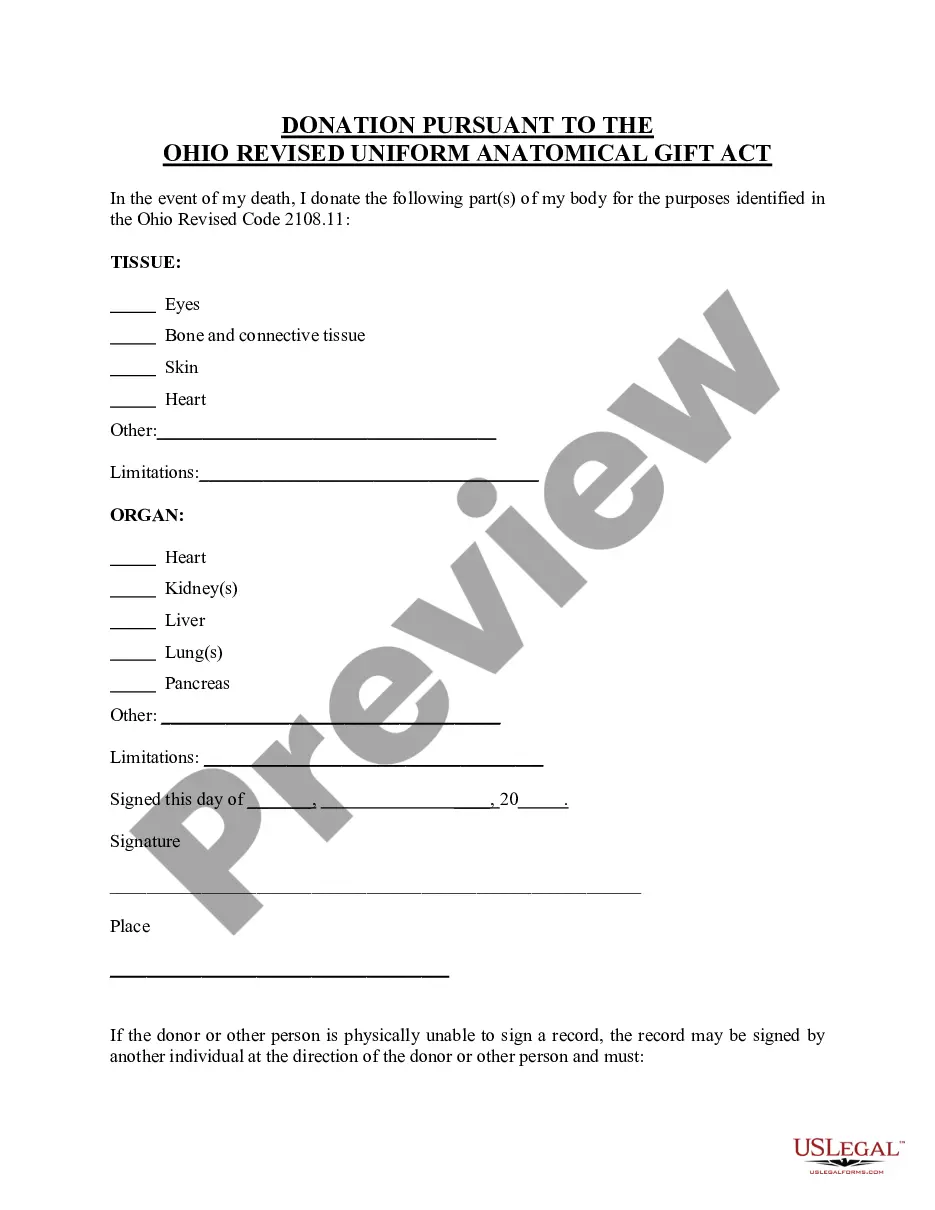
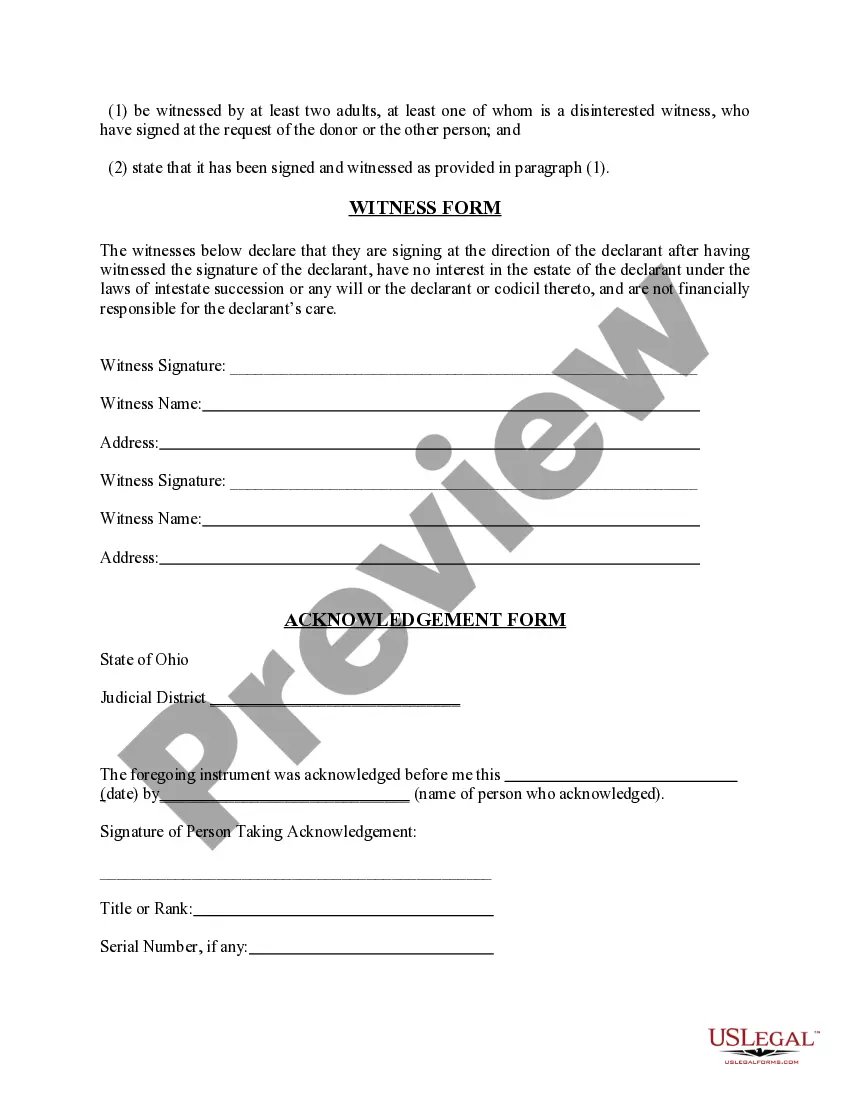
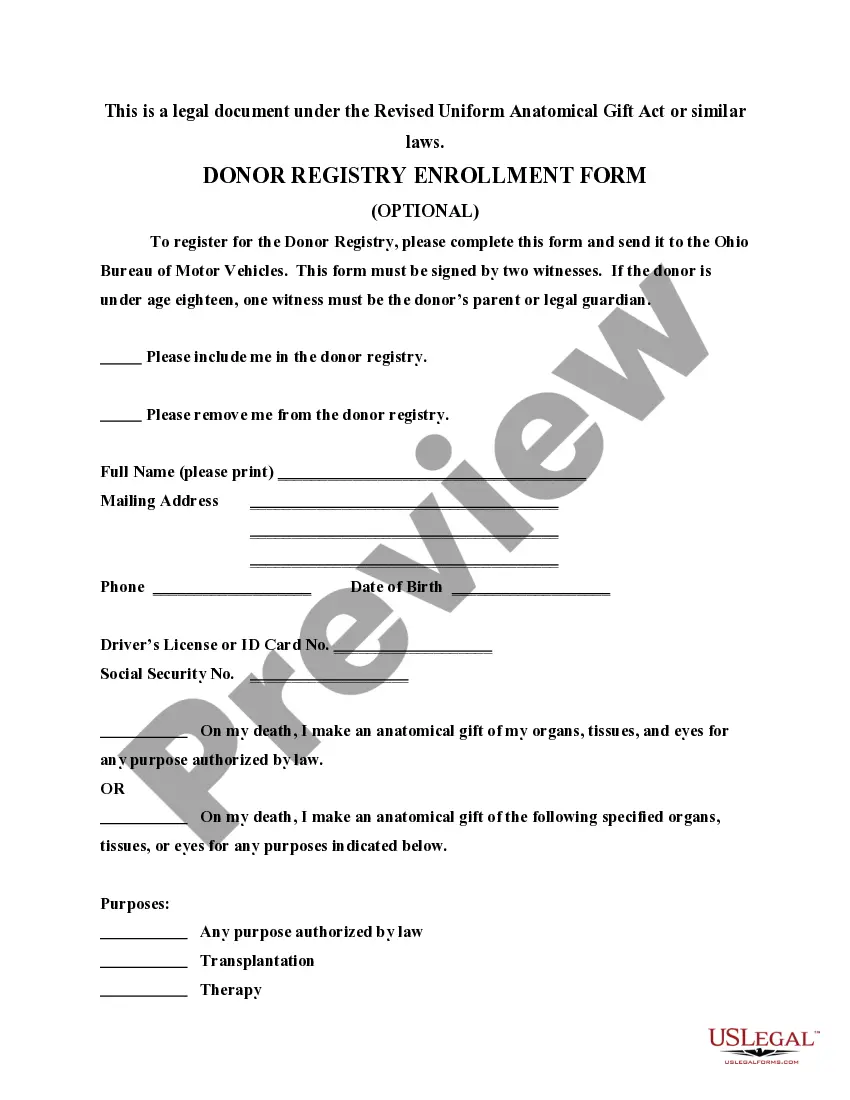
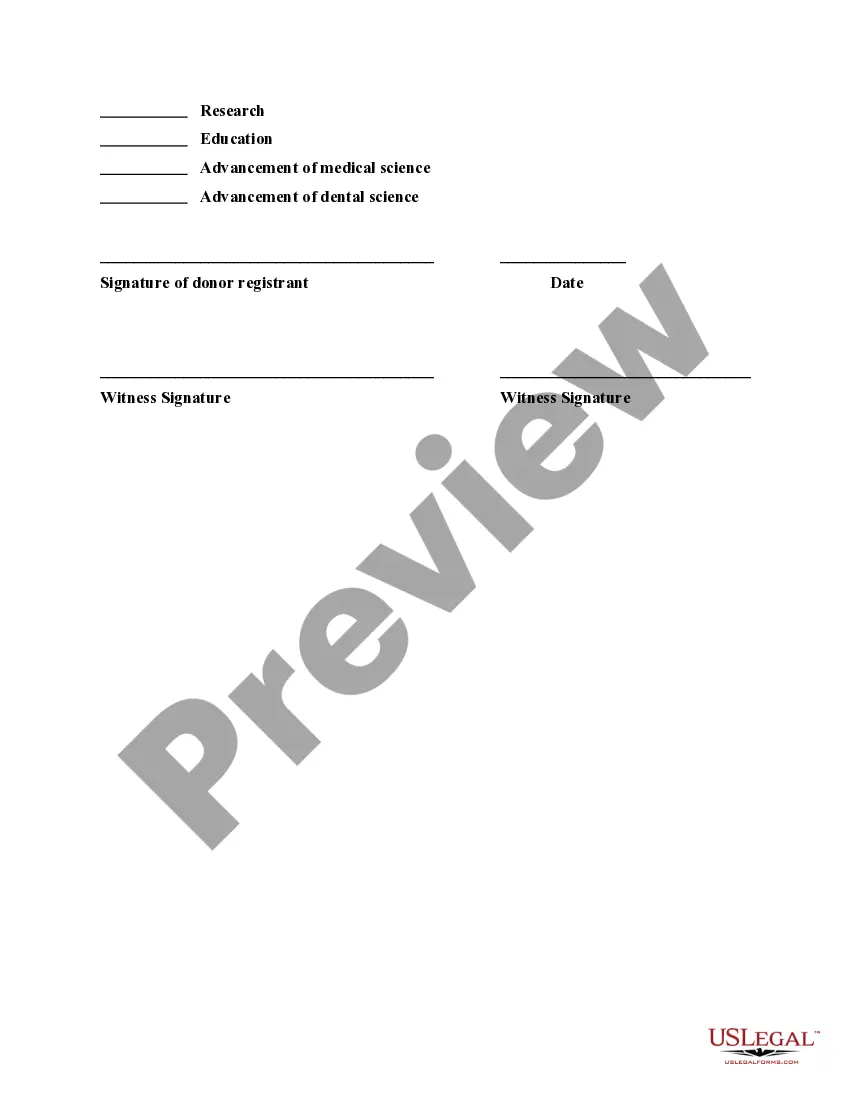
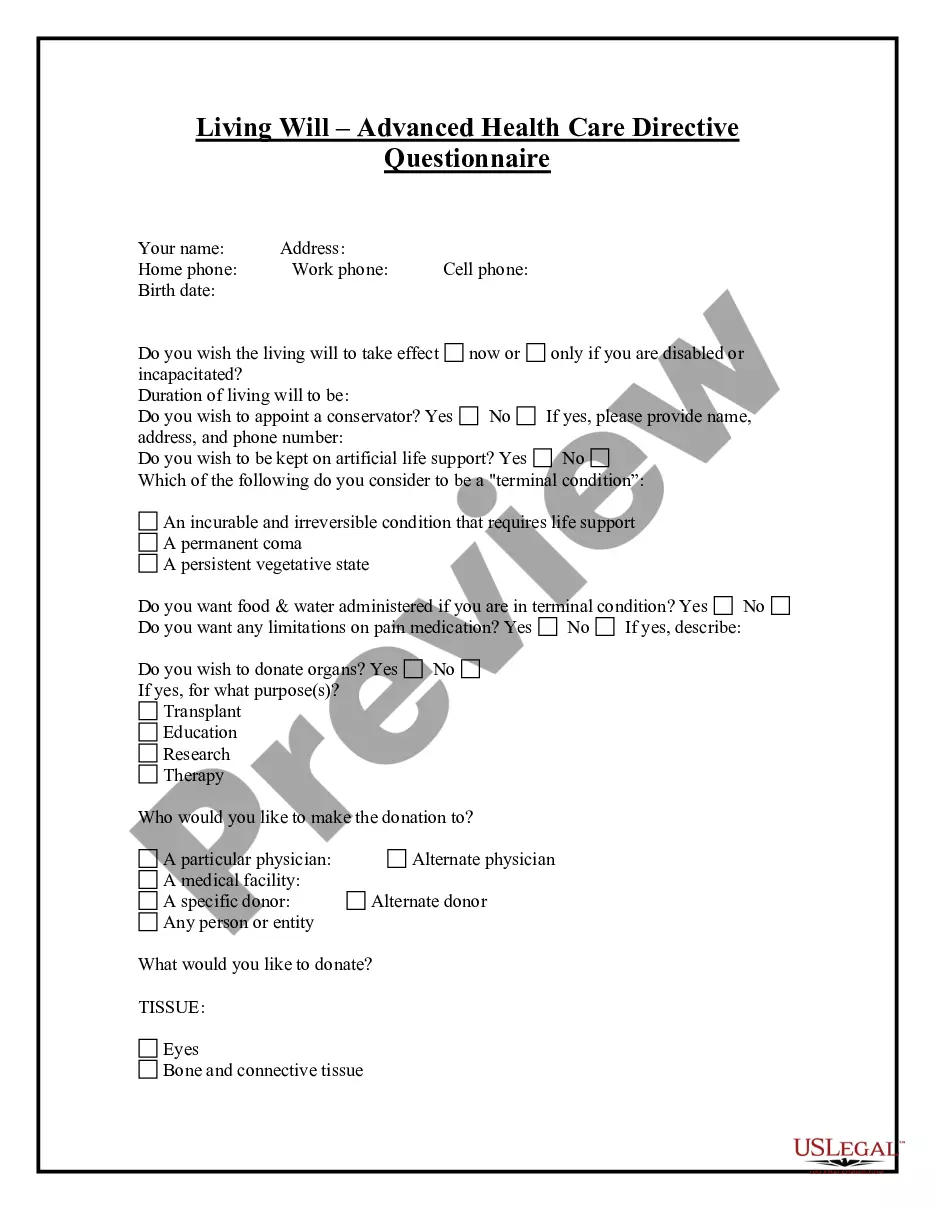
How to fill out Ohio Revised Uniform Anatomical Gift Act Donation With Donor Registry Enrollment Form?
Identifying a reliable source for obtaining the latest and suitable legal templates is part of the challenge of dealing with bureaucracy.
Finding the correct legal documents requires accuracy and meticulousness, which is why it's crucial to obtain samples of Ohio Revised Code For Theft exclusively from credible sources, like US Legal Forms. An incorrect template will squander your time and delay the situation you are facing. With US Legal Forms, you have minimal concerns.
After you have the form on your device, you can modify it using the editor or print it and complete it manually. Eliminate the frustration associated with your legal documentation. Explore the vast US Legal Forms collection where you can find legal templates, verify their relevance to your situation, and download them instantly.
- Utilize the library navigation or search bar to find your sample.
- Examine the form’s description to determine if it aligns with the requirements of your state and locality.
- Preview the form, if accessible, to confirm that the template is what you need.
- Continue searching for the appropriate document if the Ohio Revised Code For Theft does not fulfill your needs.
- If you are confident about the form’s applicability, download it.
- If you are a registered user, click Log in to verify and access your selected forms in My documents.
- If you do not yet have an account, click Buy now to acquire the template.
- Select the pricing plan that meets your preferences.
- Proceed with the registration to finalize your purchase.
- Complete your purchase by selecting a payment method (credit card or PayPal).
- Choose the file format for downloading Ohio Revised Code For Theft.
Form popularity
FAQ
To establish a case of theft in Ohio, certain requirements must be met according to the Ohio Revised Code for theft. These include the act of taking property without permission, the intent to keep or dispose of that property unlawfully, and the awareness that the property belongs to someone else. Understanding these requirements can help in preparing a defense if needed.
The crime of theft in Ohio requires specific elements to be present, including the unlawful taking of property, the intention to permanently deprive the owner of that property, and the knowledge that the property is taken without consent. Each of these elements must be established in court as per the Ohio Revised Code for theft. If you face theft charges, it is crucial to consult with a legal expert.
In Ohio, theft is constituted by the unlawful taking of property without the owner's consent, as explained in the Ohio Revised Code for theft. This includes not only physical items but also services. The key factor is the intent to deprive the owner of their property, which can lead to various legal repercussions.
The Ohio Revised Code for petty theft defines this offense as the unlawful taking of property valued at less than $1,000. Petty theft is typically classified as a misdemeanor, which can result in fines and potential jail time. Understanding these distinctions can help individuals navigate the legal system effectively.
To be charged with theft in Ohio, the prosecution must establish several key elements as per the Ohio Revised Code for theft. These elements include the unlawful taking of property, the intent to deprive the owner of that property, and the knowledge that the property is not theirs. If these elements are proven, the individual can face serious legal consequences.
The offence of theft, as outlined in the Ohio Revised Code for theft, includes the unlawful taking of someone else's property with the intent to permanently deprive the owner of it. The act must be voluntary and conscious, meaning it cannot occur by accident. Additionally, the property taken must belong to another person, and the individual must possess the intent to steal.
Ohio Revised Code 2913.03 A specifically addresses theft offenses, highlighting the illegal acquisition of property or services without the consent of the owner. This section clarifies various scenarios that constitute theft, making it essential for individuals to understand their implications. Familiarizing yourself with the Ohio Revised Code for theft can help you recognize potential legal pitfalls. If you need further assistance, platforms like USLegalForms can provide valuable resources and guidance.
Section 109.24 of the Ohio Revised Code pertains to the legal framework for prosecuting theft and other related offenses in Ohio. This section outlines the responsibilities of law enforcement and the legal processes involved in theft cases. By reviewing the Ohio Revised Code for theft, you can comprehend how laws are enforced and the potential consequences of theft-related charges. This knowledge can empower you to make informed decisions.
The theft code in Ohio is primarily defined under Section 2913 of the Ohio Revised Code. This section details what constitutes theft, including the unlawful taking of property or services. It is essential to be familiar with the Ohio Revised Code for theft to understand the distinctions between petty theft and grand theft. Knowing these details can be crucial if you find yourself facing legal issues.
The Ohio Revised Code serves as the collection of laws that govern the state of Ohio. It outlines legal standards, procedures, and regulations, including those related to theft. Understanding the Ohio Revised Code for theft can help individuals navigate legal challenges and ensure compliance with state laws. By referring to this code, you can gain clarity on your rights and responsibilities.