Ohio Rental Application Laws
Description

Get your form ready online
Our built-in tools help you complete, sign, share, and store your documents in one place.
Make edits, fill in missing information, and update formatting in US Legal Forms—just like you would in MS Word.
Download a copy, print it, send it by email, or mail it via USPS—whatever works best for your next step.
Sign and collect signatures with our SignNow integration. Send to multiple recipients, set reminders, and more. Go Premium to unlock E-Sign.
If this form requires notarization, complete it online through a secure video call—no need to meet a notary in person or wait for an appointment.
We protect your documents and personal data by following strict security and privacy standards.

Make edits, fill in missing information, and update formatting in US Legal Forms—just like you would in MS Word.

Download a copy, print it, send it by email, or mail it via USPS—whatever works best for your next step.

Sign and collect signatures with our SignNow integration. Send to multiple recipients, set reminders, and more. Go Premium to unlock E-Sign.

If this form requires notarization, complete it online through a secure video call—no need to meet a notary in person or wait for an appointment.

We protect your documents and personal data by following strict security and privacy standards.
Looking for another form?







How to fill out Ohio Residential Rental Lease Application?
Creating legal documents from the beginning can occasionally be daunting.
Some situations may require extensive research and significant financial investment.
If you’re looking for a simpler and more economical method of preparing Ohio Rental Application Laws or any other paperwork without unnecessary complications, US Legal Forms is always available to assist you.
Our digital library of over 85,000 current legal forms encompasses nearly every area of your financial, legal, and personal matters.
Review the document preview and descriptions to ensure you have located the document you seek. Verify that the form you select meets your state and county's requirements. Choose the most appropriate subscription option to obtain the Ohio Rental Application Laws. Download the file, then complete, sign, and print it. US Legal Forms boasts an impeccable reputation and over 25 years of experience. Join us now and simplify your form completion process!
- With just a few clicks, you can quickly access state- and county-specific forms meticulously compiled for you by our legal professionals.
- Utilize our website whenever you require trustworthy and dependable services to easily find and download the Ohio Rental Application Laws.
- If you’re familiar with our services and have previously registered with us, simply Log In to your account, find the template, and download it or re-download it at any time in the My documents section.
- Don’t have an account? No problem. It requires minimal time to sign up and browse the catalog.
- However, before directly downloading the Ohio Rental Application Laws, adhere to these suggestions.
Form popularity
FAQ
As a tenant, you have the right to a safe and secure home, the right to fair treatment, and the right to privacy. You also have the right to challenge eviction actions and to receive proper notice before any legal proceedings. Knowing your tenant rights empowers you to advocate for yourself, ensuring adherence to Ohio rental application laws.
Renters in Ohio have several important rights, including the right to a habitable living environment and protection against unfair eviction. Renters can also expect privacy and must be notified before a landlord enters their rental unit. Familiarizing yourself with these rights can help you navigate your rental experience, ensuring compliance with Ohio rental application laws.
In Ohio, the amount of notice a landlord must give depends on the lease agreement and the reason for eviction. Generally, if a tenant is month-to-month, the landlord must provide a 30-day notice to vacate. For lease violations, the notice period can be as short as three days. Understanding these timelines is crucial for both landlords and tenants, as outlined in Ohio rental application laws.
Ohio rental laws encompass various regulations that protect both landlords and tenants. These laws address issues such as security deposits, eviction procedures, and tenant rights. Understanding these laws is crucial for both parties to ensure a smooth rental experience. For comprehensive information and resources on Ohio rental application laws, consider using the US Legal Forms platform, which offers tailored documents and guidance.
Yes, a landlord can deny a rental application under specific circumstances. According to Ohio rental application laws, landlords may refuse a tenant if they do not meet certain criteria, such as poor credit history or insufficient income. However, landlords must also comply with fair housing regulations and cannot discriminate based on race, gender, or other protected characteristics. It's essential for landlords to document their reasons for denial to ensure compliance.
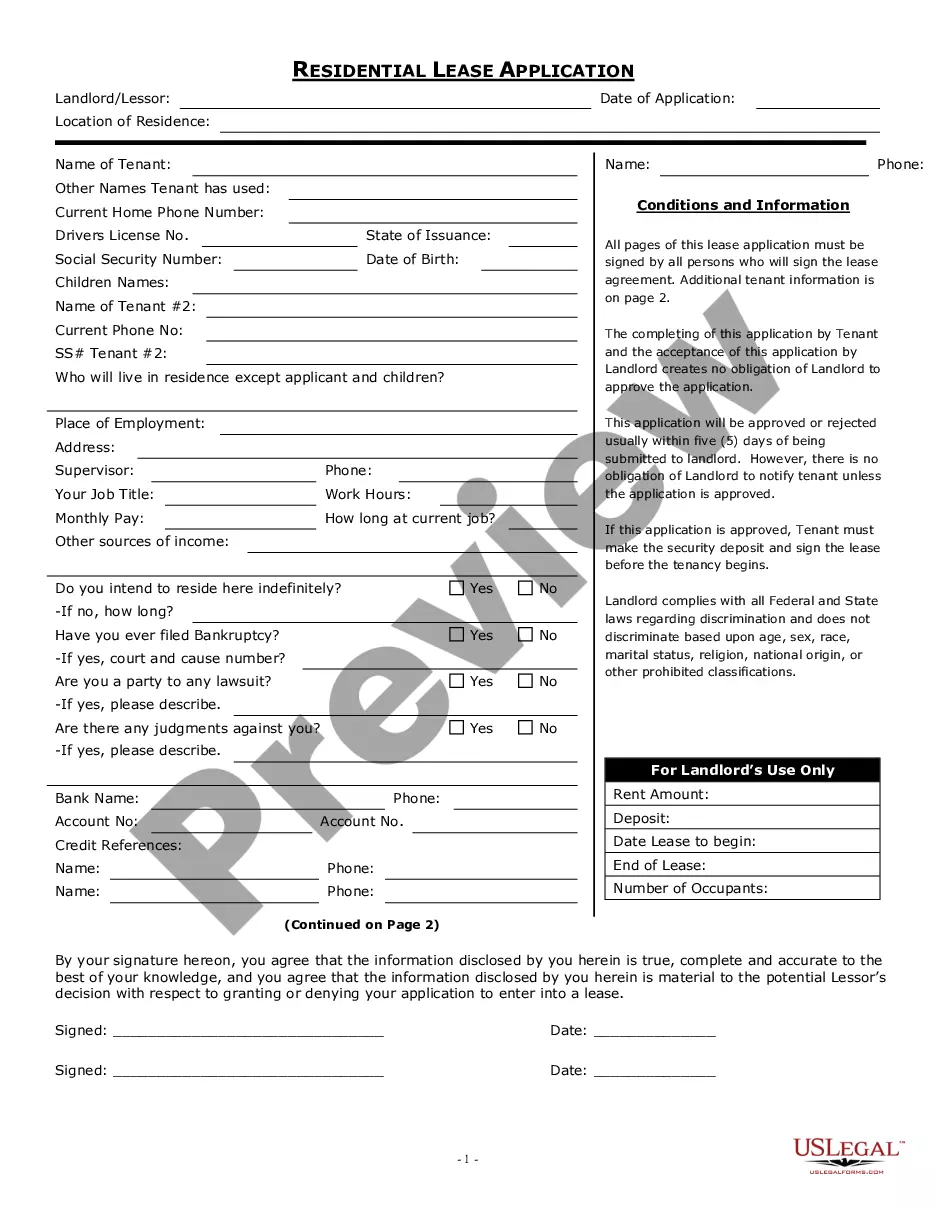
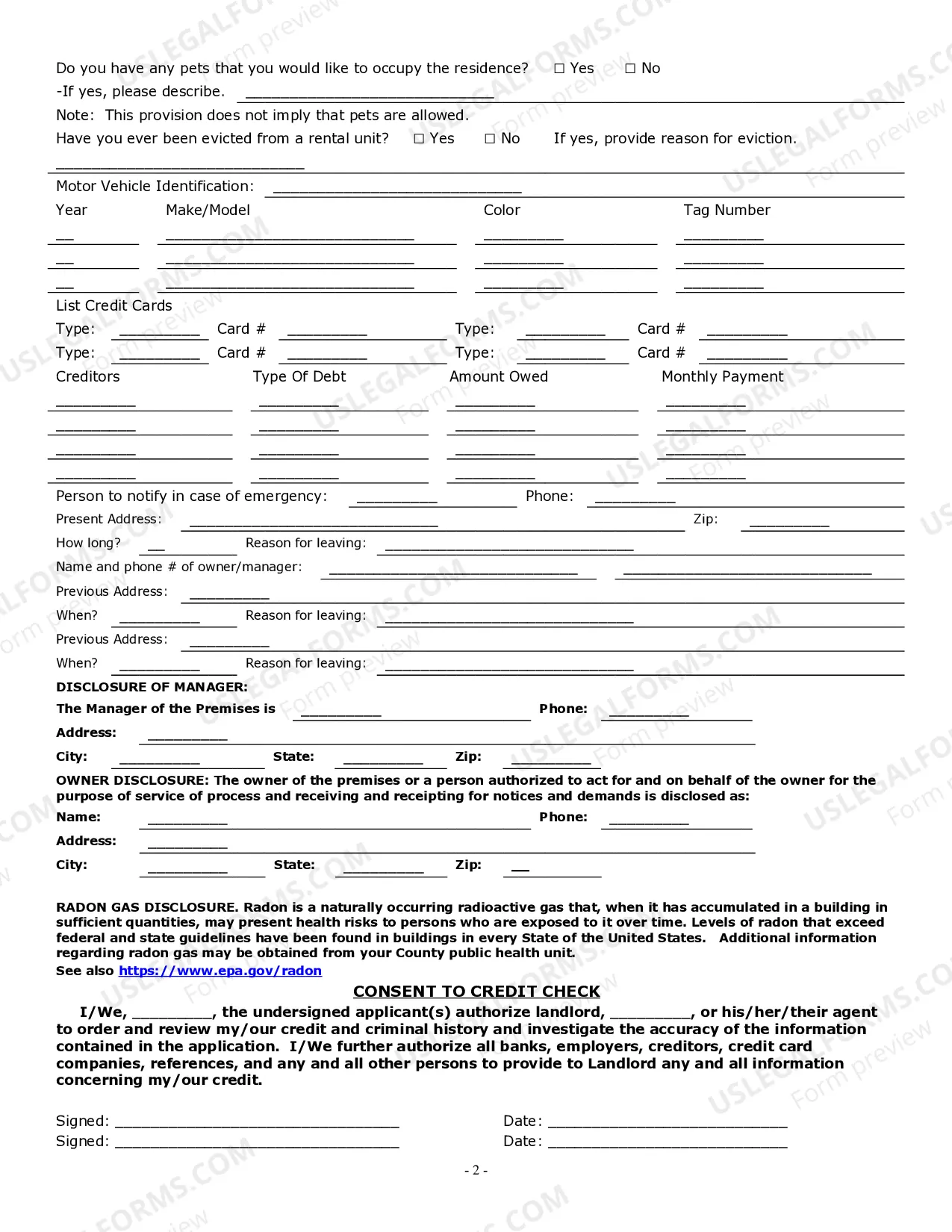
To fill out a rent application form, start by gathering necessary documents such as identification and proof of income. Fill in all required fields honestly, as inaccuracies can lead to application denial. Understanding Ohio rental application laws is crucial, as it ensures you meet all legal requirements. Using US Legal Forms can provide you with templates that simplify this process.
Filling out an application to rent involves providing accurate personal information, including your employment history and references. Be sure to include details about your rental history and financial situation. Familiarizing yourself with Ohio rental application laws can guide you in completing this process correctly. Utilizing platforms like US Legal Forms can streamline your application experience.
Red flags on a rental application can include inconsistent information, a history of evictions, or poor credit scores. Additionally, frequent job changes or a lack of rental history may raise concerns. Understanding Ohio rental application laws can help you identify these issues effectively. Always verify information provided to ensure a smooth rental process.