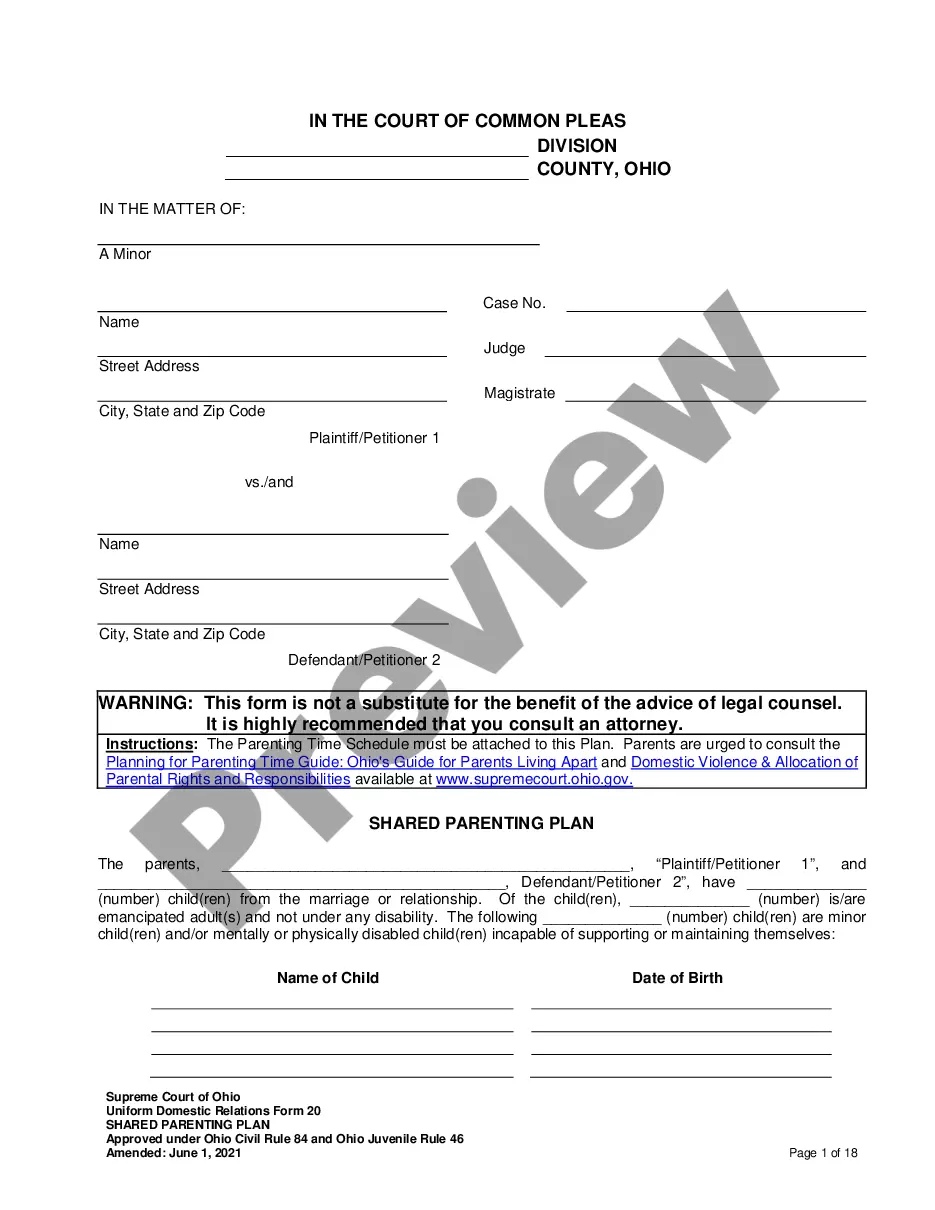
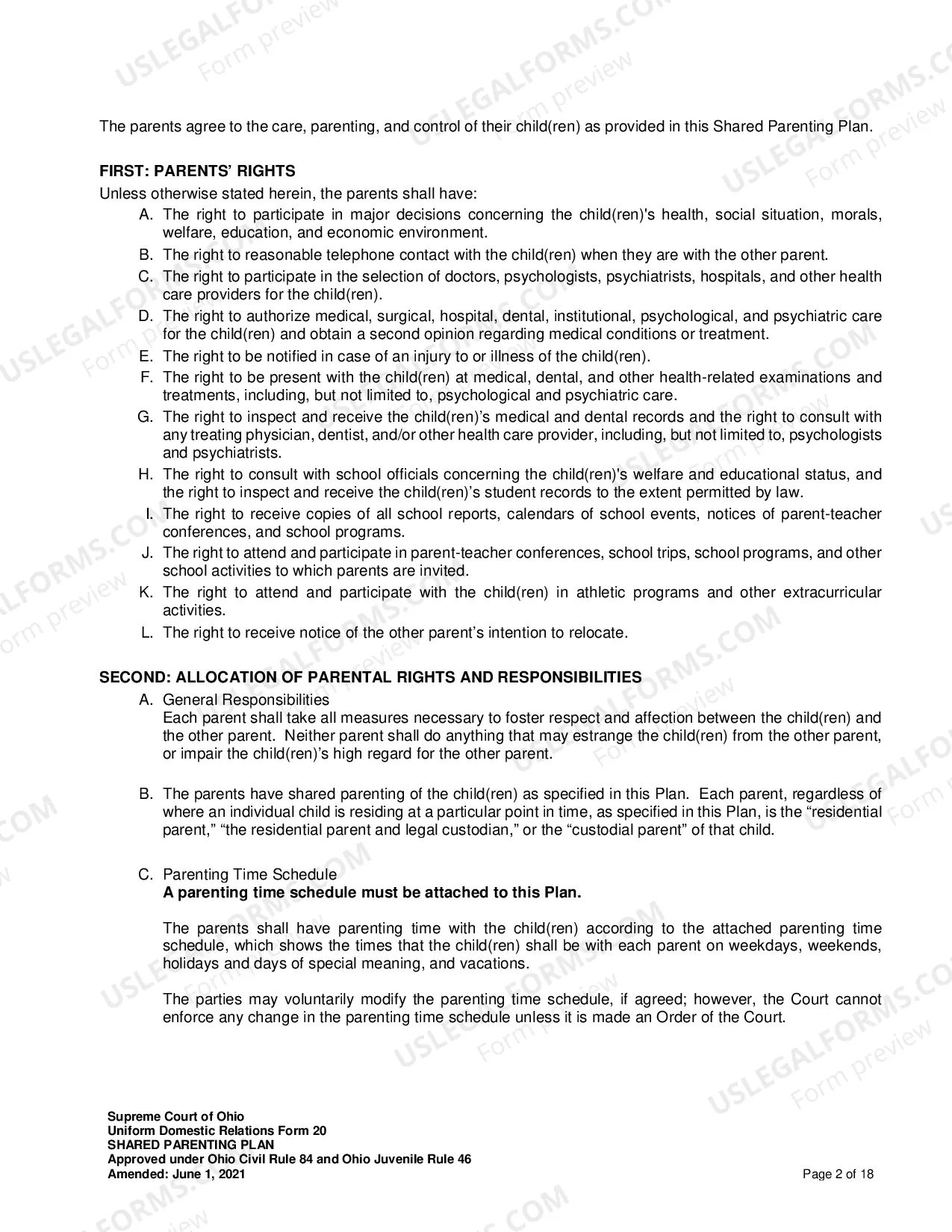
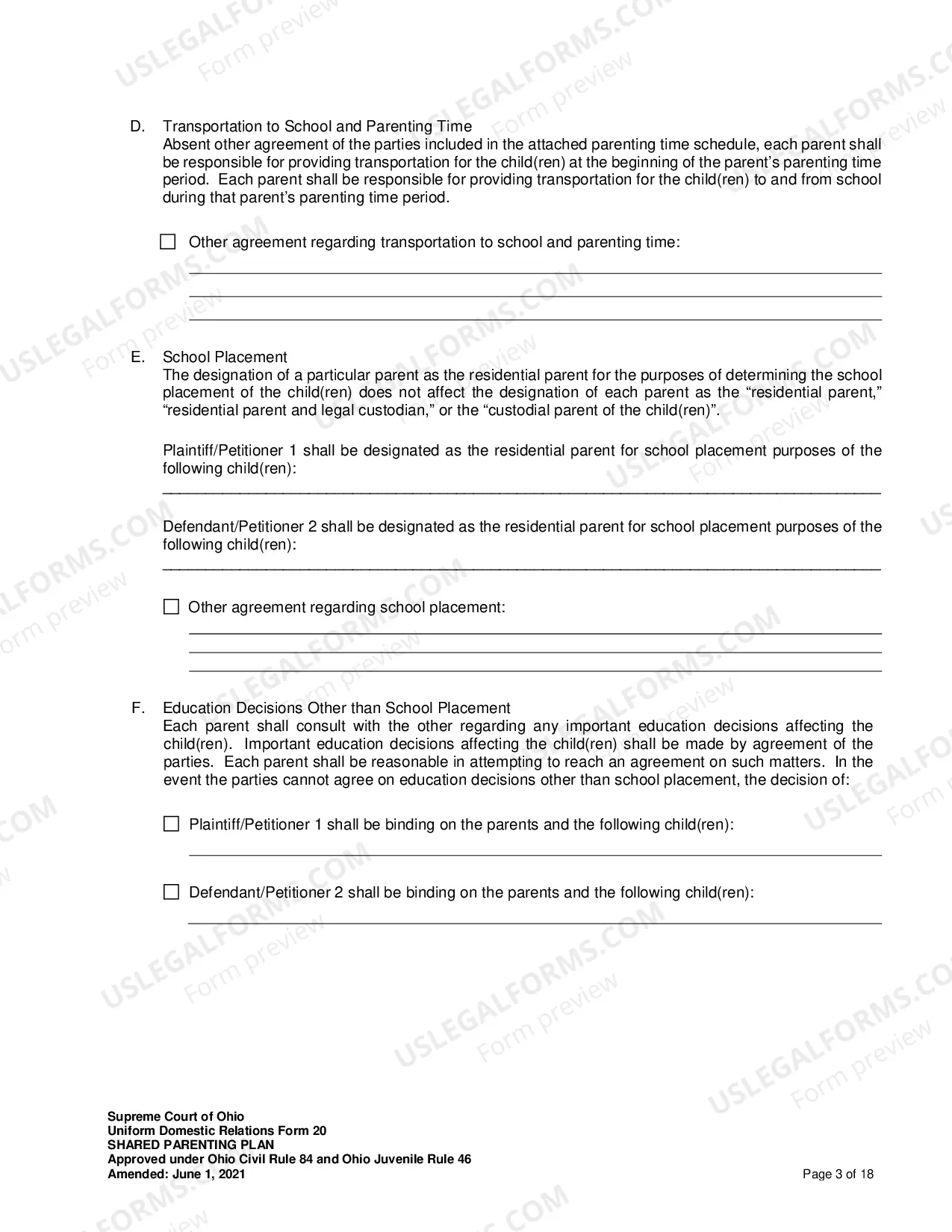
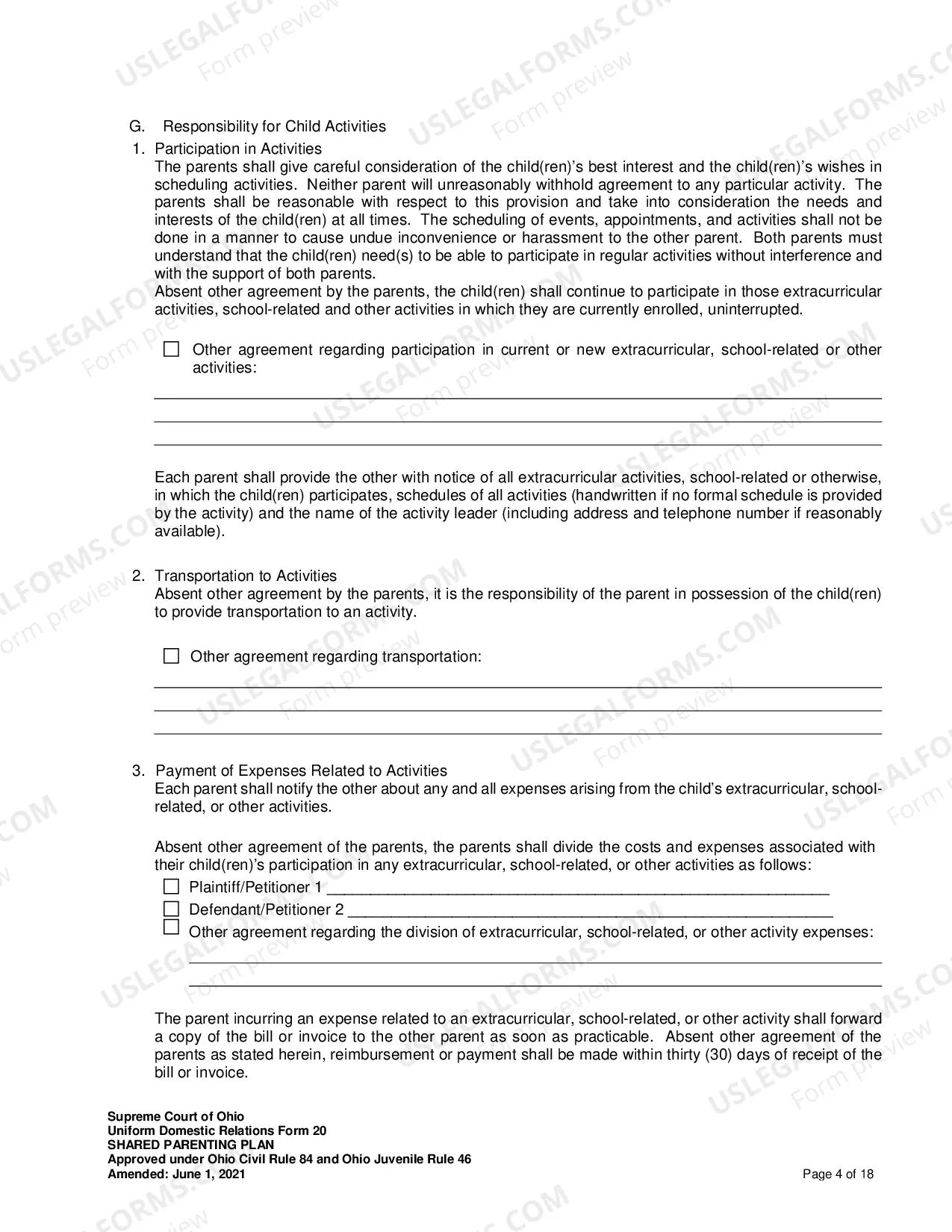
Parenting Plan Template Ohio With Child
Description
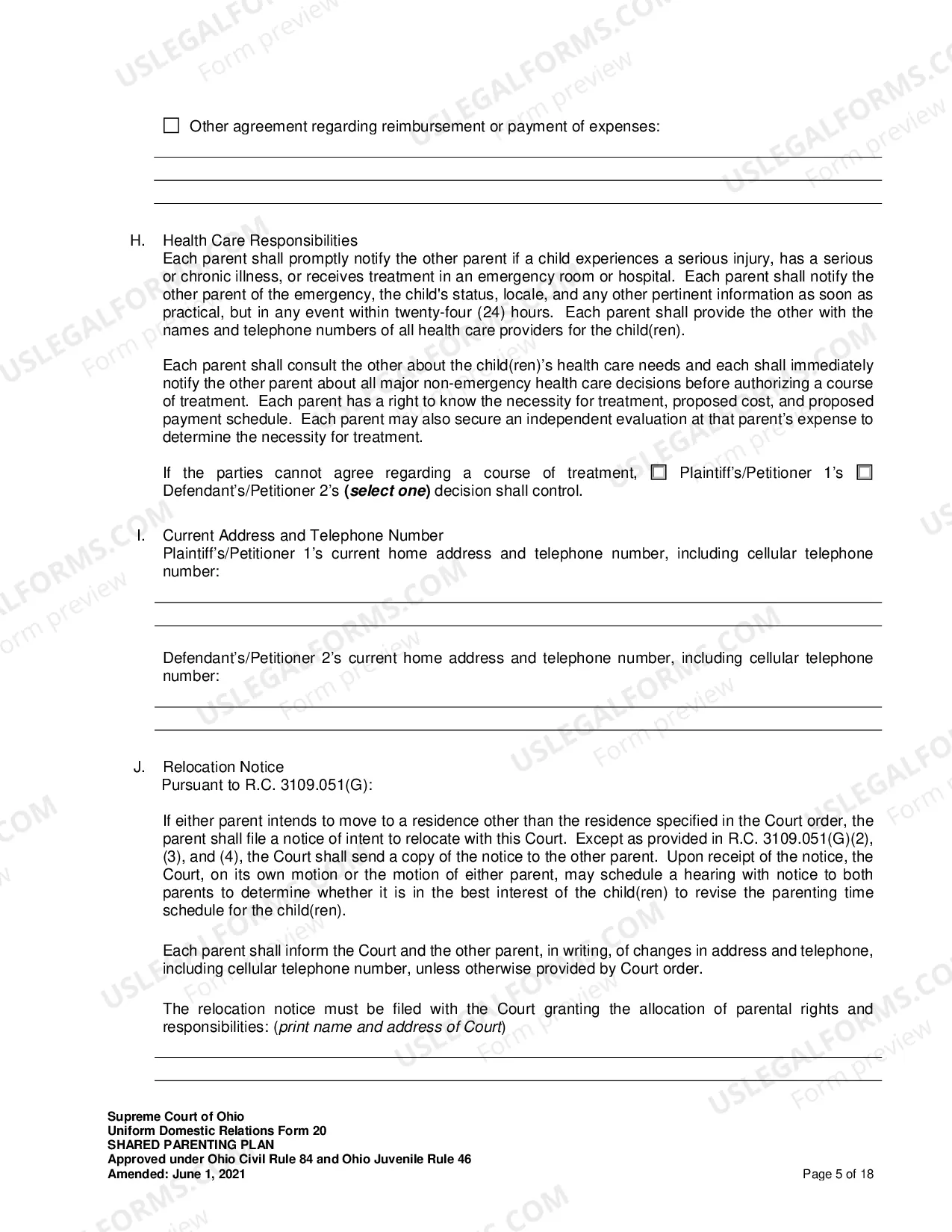
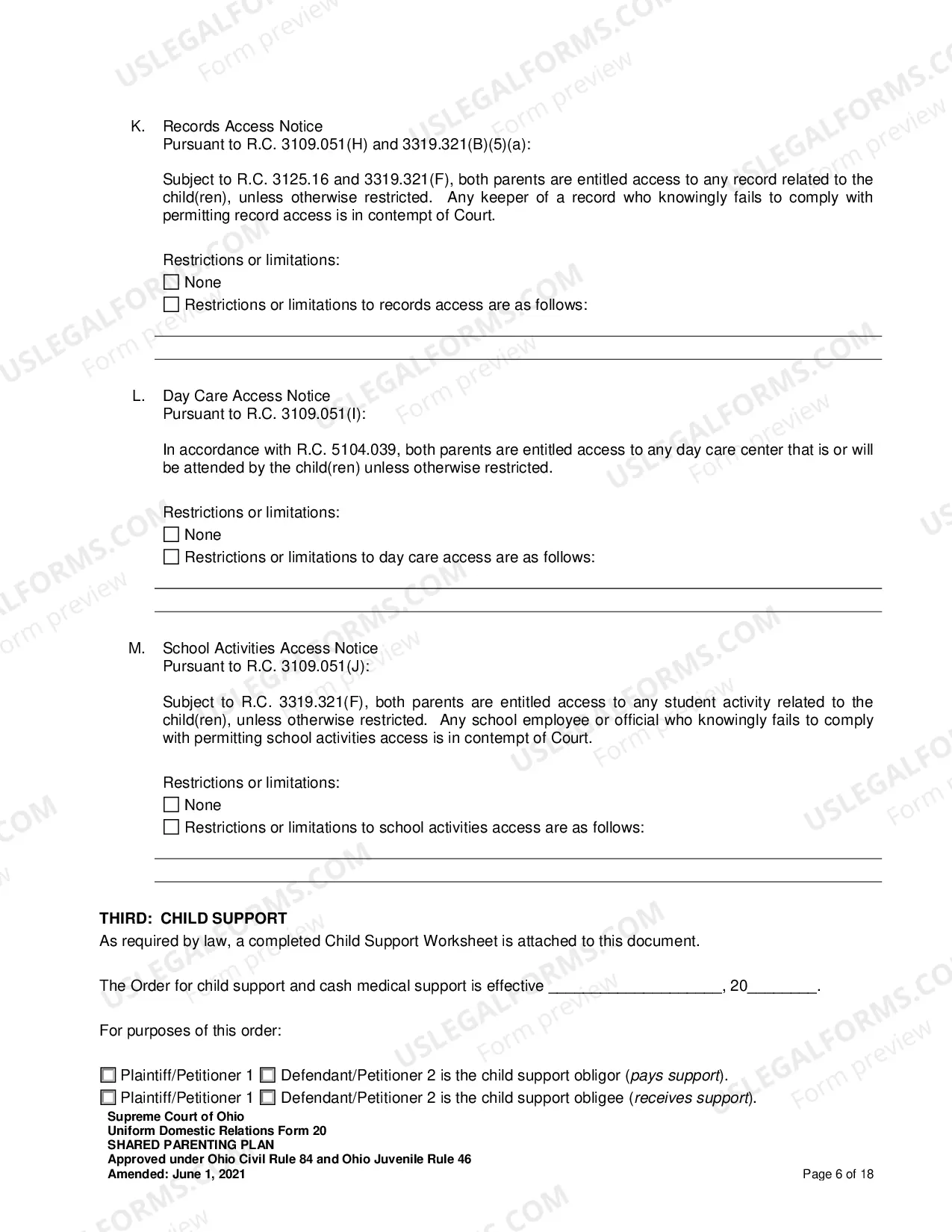
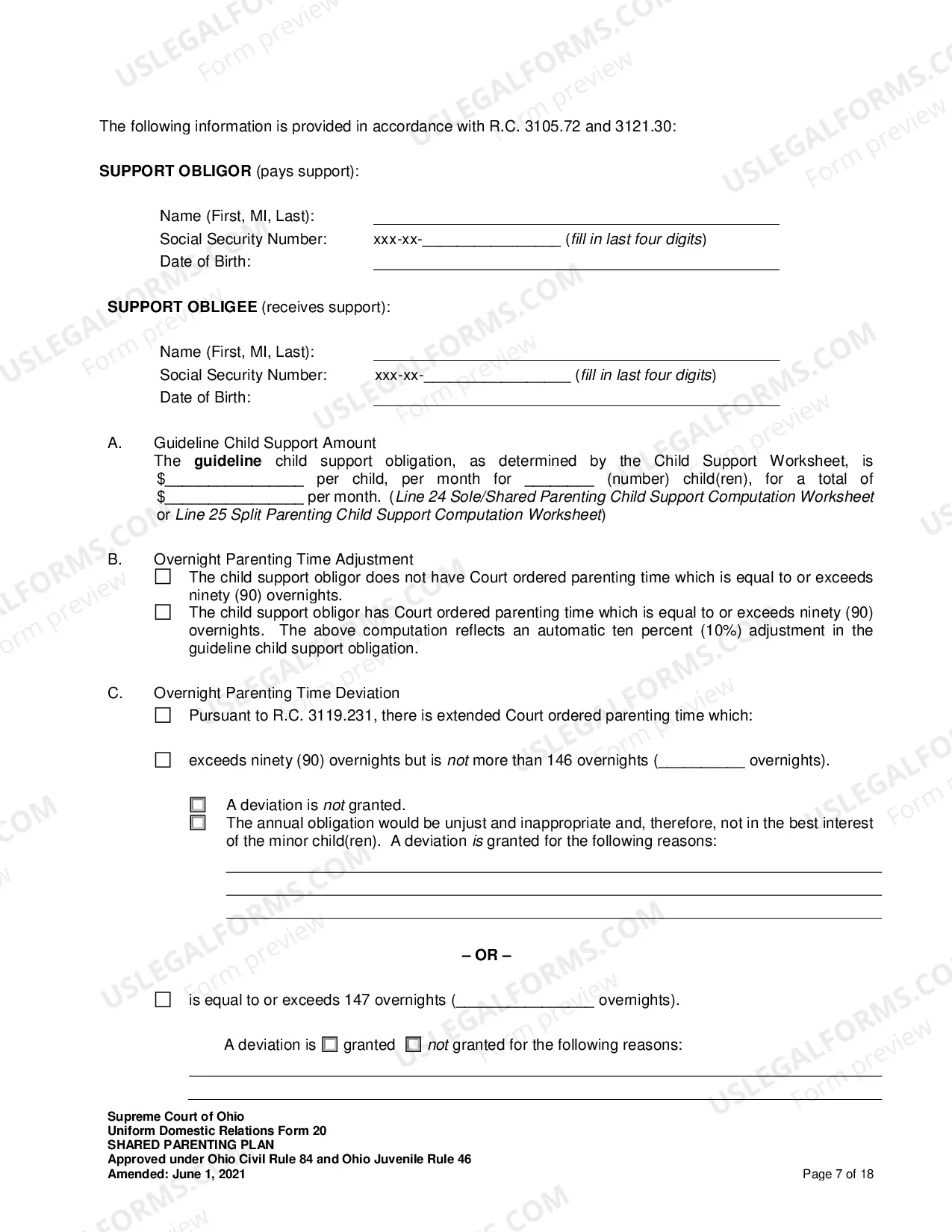
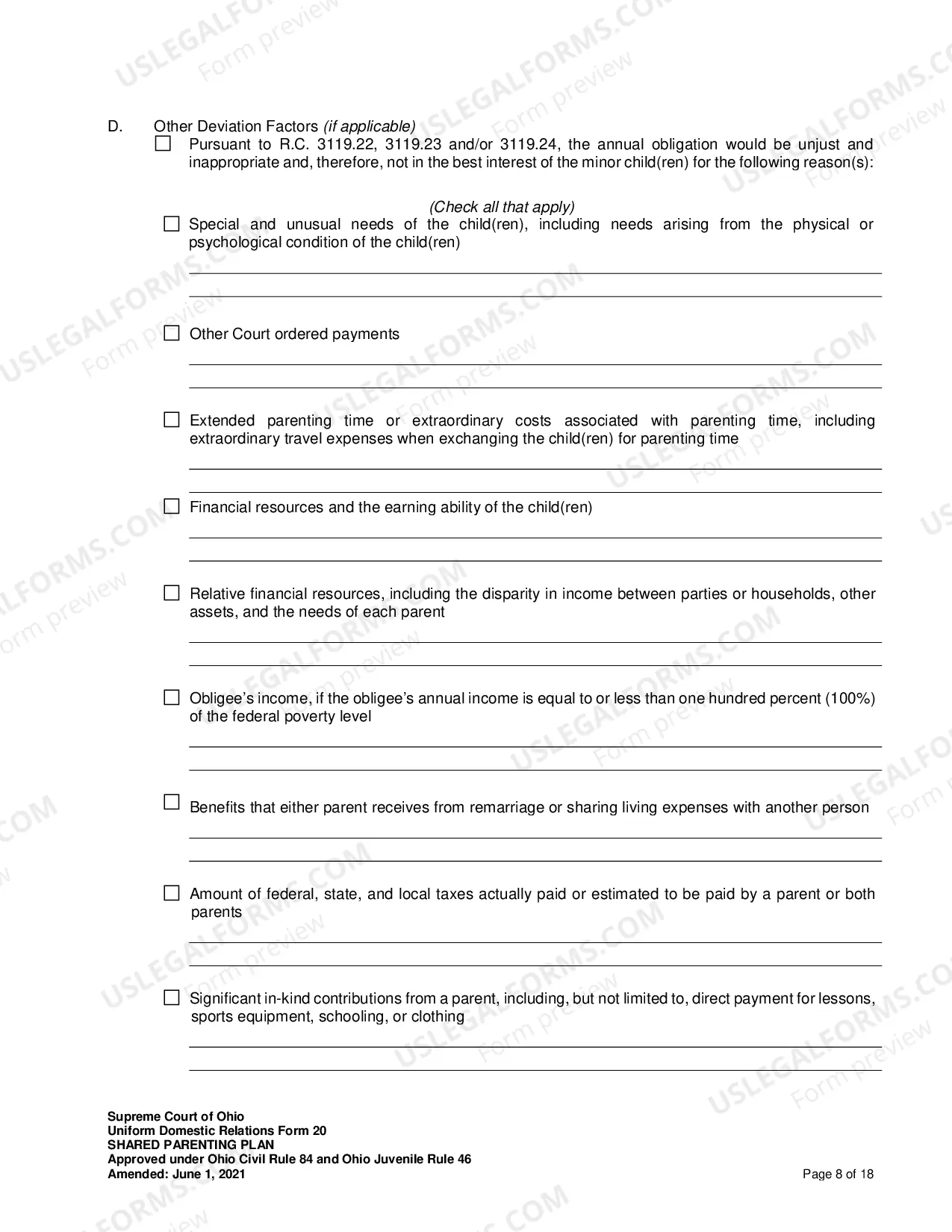

Get your form ready online
Our built-in tools help you complete, sign, share, and store your documents in one place.
Make edits, fill in missing information, and update formatting in US Legal Forms—just like you would in MS Word.
Download a copy, print it, send it by email, or mail it via USPS—whatever works best for your next step.
Sign and collect signatures with our SignNow integration. Send to multiple recipients, set reminders, and more. Go Premium to unlock E-Sign.
If this form requires notarization, complete it online through a secure video call—no need to meet a notary in person or wait for an appointment.
We protect your documents and personal data by following strict security and privacy standards.

Make edits, fill in missing information, and update formatting in US Legal Forms—just like you would in MS Word.

Download a copy, print it, send it by email, or mail it via USPS—whatever works best for your next step.

Sign and collect signatures with our SignNow integration. Send to multiple recipients, set reminders, and more. Go Premium to unlock E-Sign.

If this form requires notarization, complete it online through a secure video call—no need to meet a notary in person or wait for an appointment.

We protect your documents and personal data by following strict security and privacy standards.
Looking for another form?







How to fill out Ohio Shared Parenting Plan?
Locating a reliable source for the most up-to-date and pertinent legal templates is a significant part of navigating bureaucracy.
Selecting the appropriate legal documents demands precision and carefulness, which is why it's crucial to obtain samples of Parenting Plan Template Ohio With Child solely from reputable providers like US Legal Forms. An incorrect template can waste your time and delay your situation.
Once you have the form on your device, you can modify it with the editor or print it for manual completion. Eliminate the complications associated with your legal documentation by exploring the vast US Legal Forms collection, where you can discover legal samples, assess their relevance to your situation, and download them instantly.
- Utilize the library navigation or search bar to locate your template.
- Examine the form’s description to determine if it meets the requirements of your state and region.
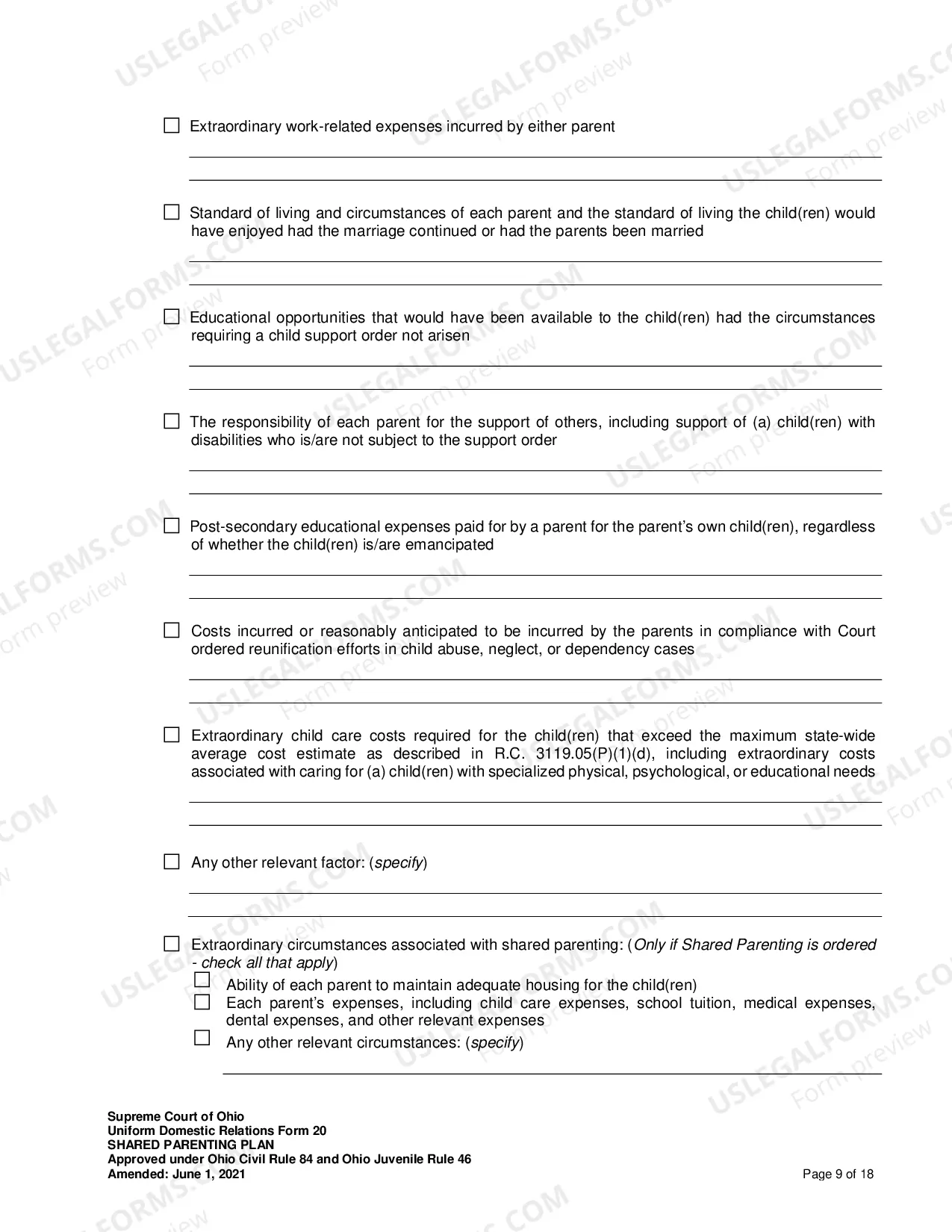
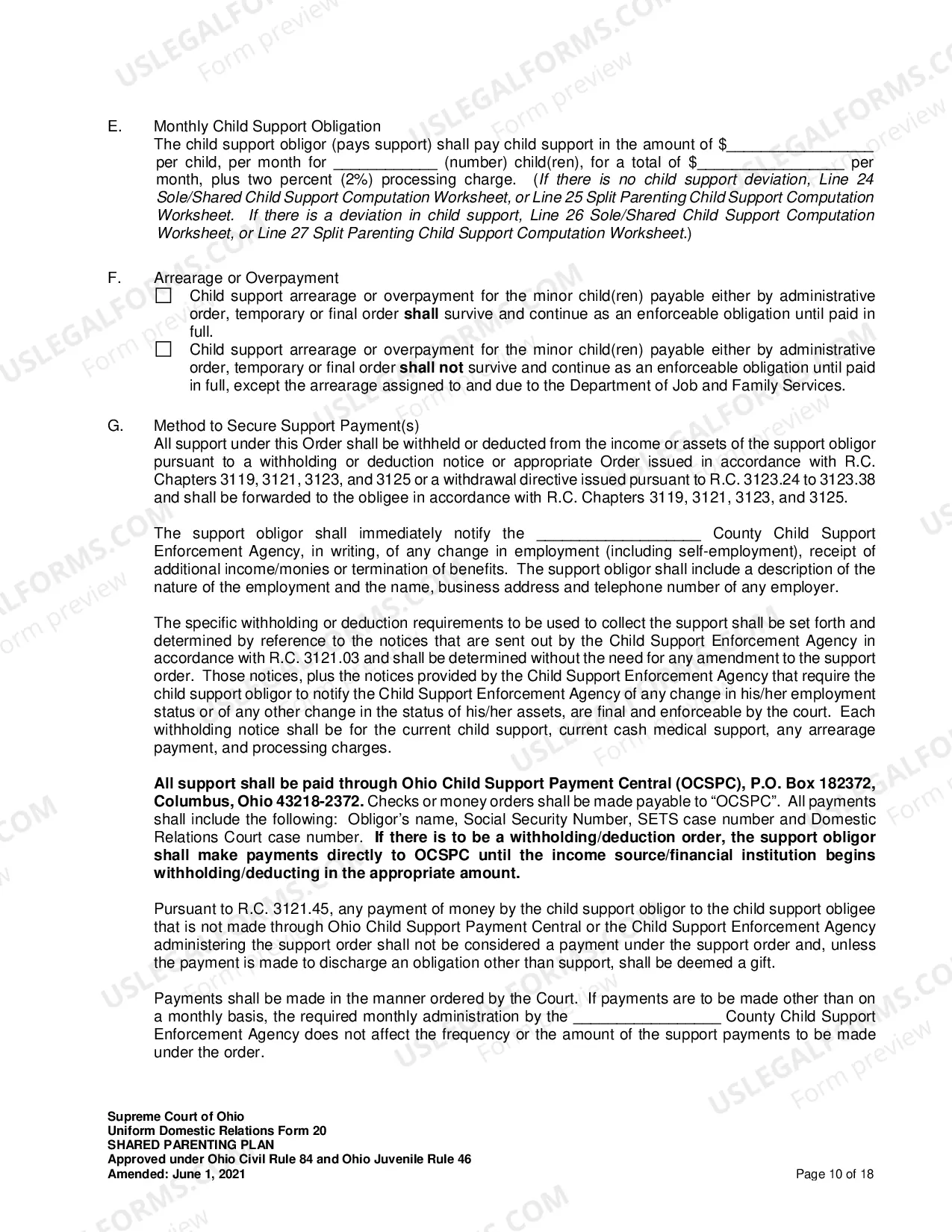
- Review the form preview, if available, to confirm the template is indeed the one you are looking for.
- Return to the search and seek out the appropriate template if the Parenting Plan Template Ohio With Child does not satisfy your needs.
- Once you are confident about the form’s relevance, download it.
- If you are a registered user, click Log in to verify and access your chosen forms in My documents.
- If you do not have an account yet, click Buy now to acquire the template.
- Select the pricing option that suits your requirements.
- Proceed to the registration process to complete your purchase.
- Finalize your purchase by choosing a payment method (credit card or PayPal).
- Select the document format for downloading Parenting Plan Template Ohio With Child.
Form popularity
FAQ
Filing a shared parenting plan in Ohio involves preparing your plan according to state guidelines and submitting it to the court. First, ensure your plan meets all legal requirements, which you can verify using a parenting plan template Ohio with child. After preparing the document, file it with the appropriate court and attend any required hearings. This process ensures that your plan is recognized and enforceable by law.
To write your own parenting plan, start by outlining the key elements that will guide your co-parenting arrangement. Focus on aspects like custody, visitation schedules, and decision-making responsibilities. You can use a parenting plan template Ohio with child to ensure you include all necessary details. Additionally, consider specific needs related to your child's education, healthcare, and extracurricular activities.
In an 80/20 custody arrangement, the child spends approximately 292 overnights with one parent and about 73 with the other parent each year. This arrangement allows for a clear structure that can benefit the child's emotional and psychological development. Utilizing a parenting plan template Ohio with child can help you outline this schedule effectively, ensuring both parents are on the same page. Creating a plan that works for your family's dynamics will support your child's best interests.
The 80/20 rule for custody refers to a parenting arrangement where one parent has the child for 80% of the time, while the other parent has 20%. This setup can provide stability for the child, ensuring they have a primary residence while still maintaining a relationship with the other parent. A well-crafted parenting plan template Ohio with child can help facilitate this arrangement, ensuring both parents have clear responsibilities and schedules. It's essential to focus on what works best for your child's well-being.
The biggest mistake in a custody battle often involves focusing on winning rather than the child's best interest. Parents may become so entrenched in their positions that they overlook the importance of cooperation and communication. Utilizing a parenting plan template Ohio with child can help you prioritize your child's needs and promote a healthier co-parenting dynamic. Remember, the goal is to create a stable environment where your child can thrive.
The healthiest custody schedule for a child typically balances the time spent with each parent, fostering a strong relationship with both. Many families find success with a well-structured parenting plan template Ohio with child, which outlines a consistent routine. This routine helps children feel secure and supported, adapting to their needs as they grow. Consider using resources like US Legal Forms to create a tailored schedule that works for your family's unique situation.
Ohio law does not provide a predetermined age, though many counties do in their local rules. Often they are addressed in the county's standard order of parenting time. The majority of counties appear to choose the age of 16 as the age in which the minor child may make the choice on their own behalf.
Use this table to get an idea of the basic amount of child support in Ohio for your income level. Annual IncomeOne ChildSix Children10,200$1,050$1,23010,800$1,080$1,32011,400$1,110$1,41012,000$1,140$1,50062 more rows
Sole custody schedules If one parent has sole residential custody, the nonresidential parent commonly has the children every other weekend and once during the week for an overnight visit. Children also spend half a day on holidays and half of school breaks with the nonresidential parent.
If it costs $1,000 a month to cover child-rearing expenses, then the non-custodial parent who brings in more income can expect to pay a larger percentage, about 66.6%, or $666 per month. The custodial parent would be responsible for the remaining 33.4%, or roughly $334.