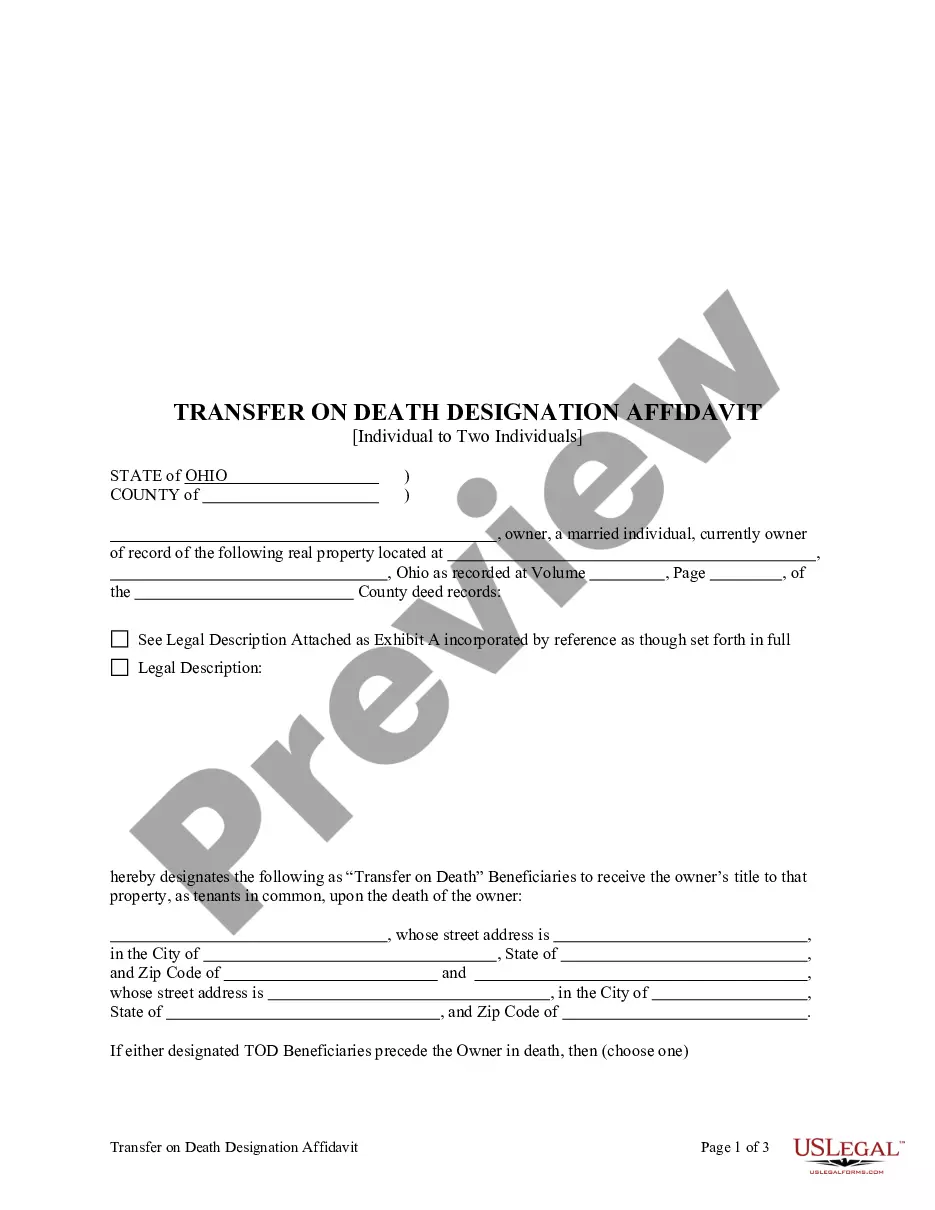
Tod Form For Real Estate Ohio
Description


Get your form ready online
Our built-in tools help you complete, sign, share, and store your documents in one place.
Make edits, fill in missing information, and update formatting in US Legal Forms—just like you would in MS Word.
Download a copy, print it, send it by email, or mail it via USPS—whatever works best for your next step.
Sign and collect signatures with our SignNow integration. Send to multiple recipients, set reminders, and more. Go Premium to unlock E-Sign.
If this form requires notarization, complete it online through a secure video call—no need to meet a notary in person or wait for an appointment.
We protect your documents and personal data by following strict security and privacy standards.

Make edits, fill in missing information, and update formatting in US Legal Forms—just like you would in MS Word.

Download a copy, print it, send it by email, or mail it via USPS—whatever works best for your next step.

Sign and collect signatures with our SignNow integration. Send to multiple recipients, set reminders, and more. Go Premium to unlock E-Sign.

If this form requires notarization, complete it online through a secure video call—no need to meet a notary in person or wait for an appointment.

We protect your documents and personal data by following strict security and privacy standards.
Looking for another form?



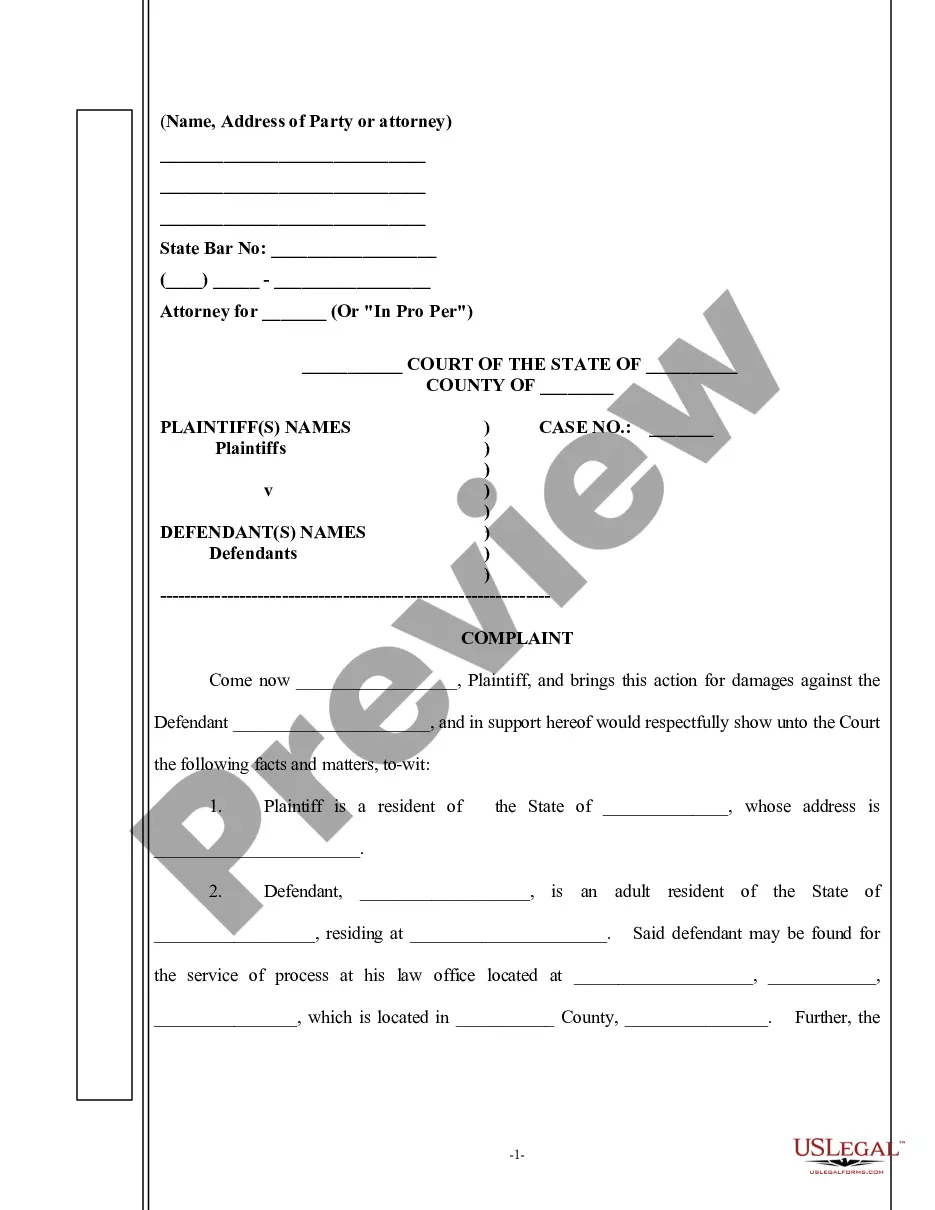
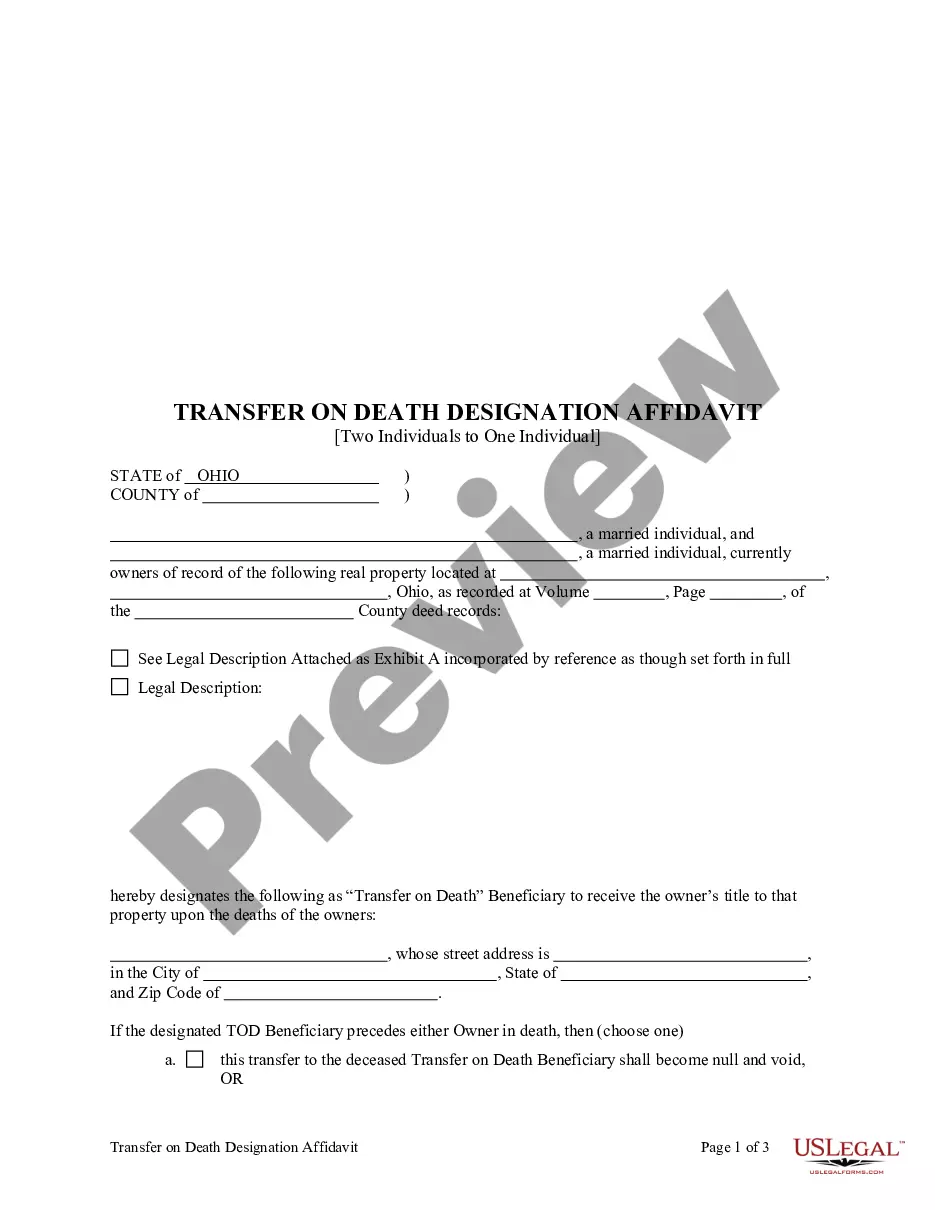
How to fill out Ohio Transfer On Death Designation Affidavit - TOD From Two Individuals To One Individual?
- If you are a returning user, log into your account and click the Download button to get your desired form template. Ensure your subscription remains valid or renew it if necessary.
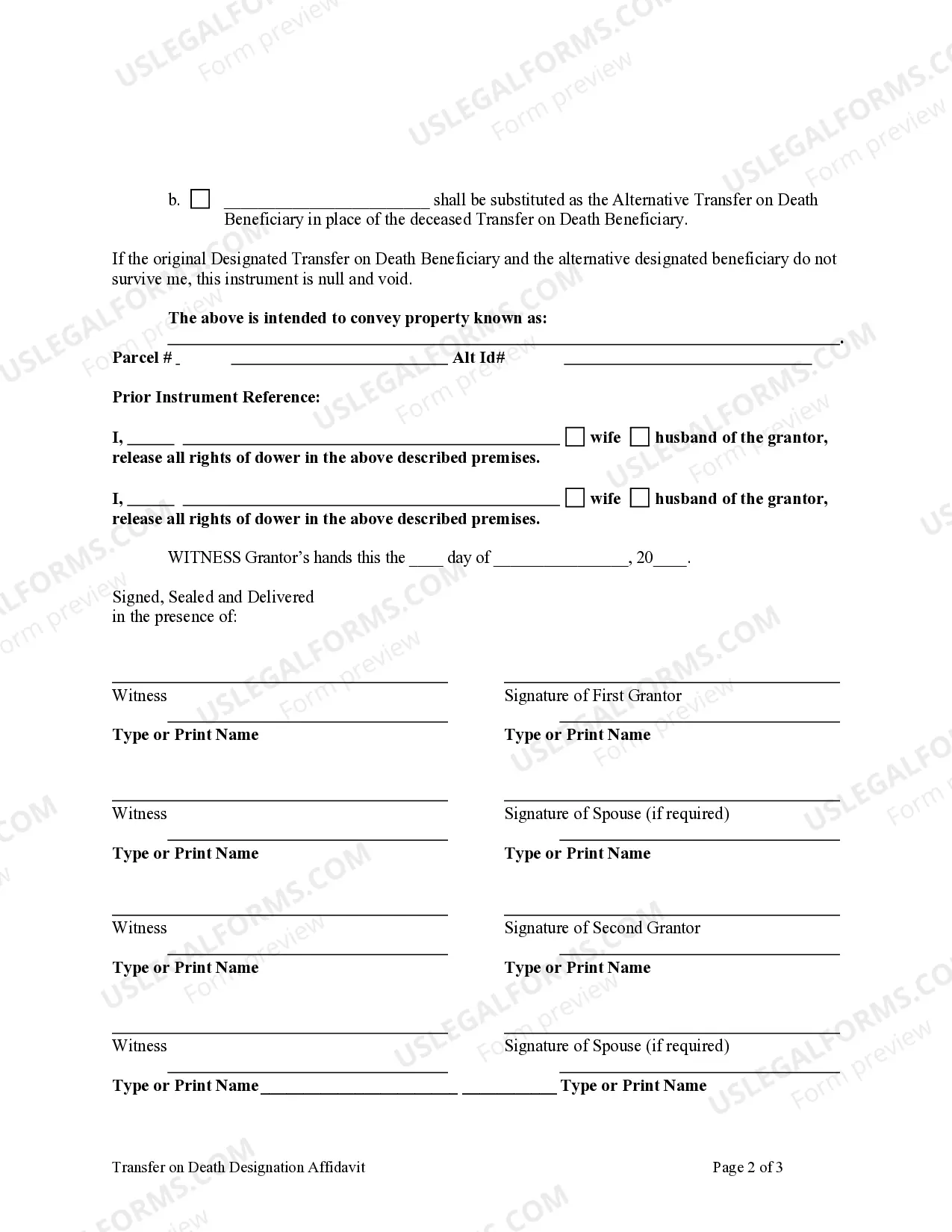
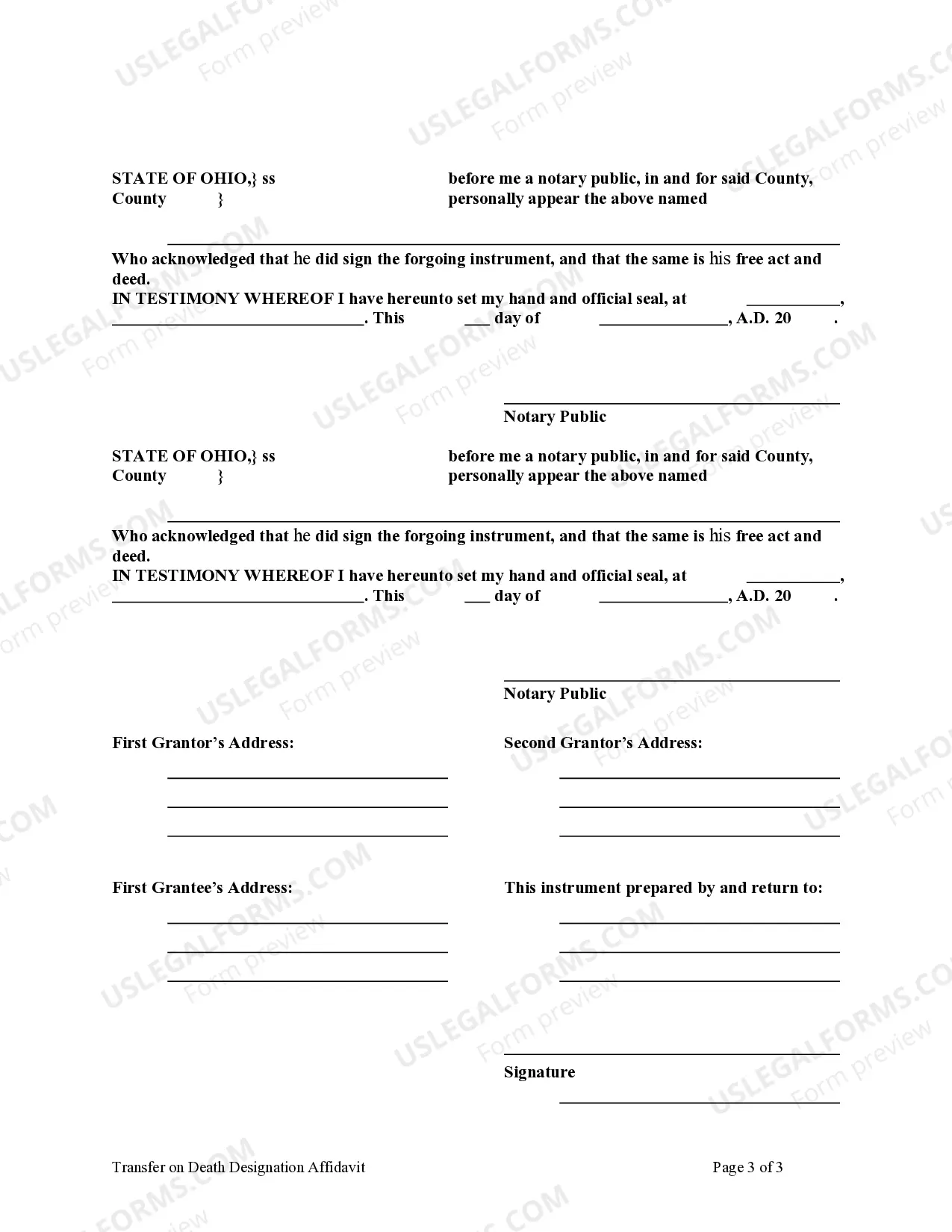
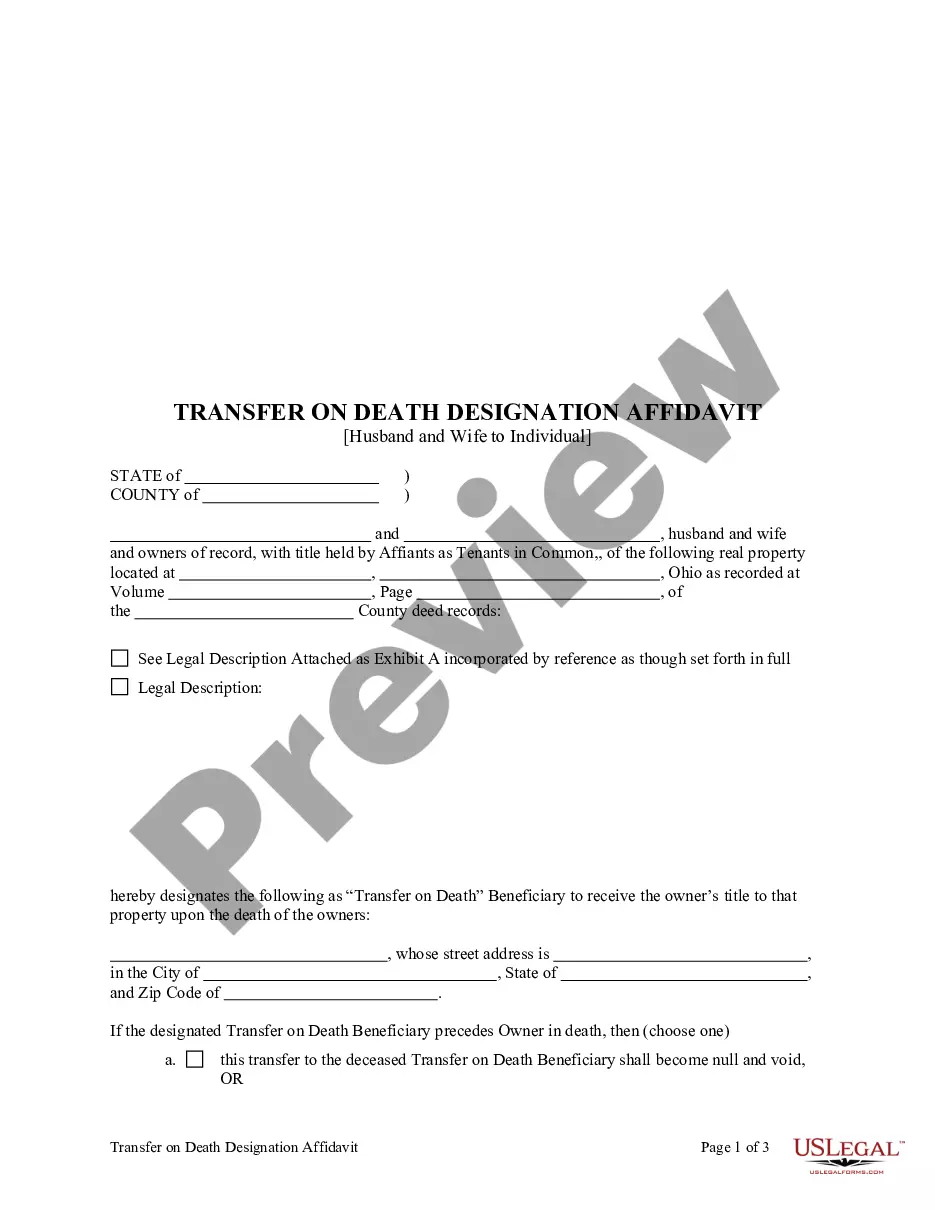
- For first-time users, start by exploring the Preview mode and detailed description of the required Tod form to confirm it aligns with your needs and local Ohio jurisdiction.
- If the chosen form does not meet your expectations, utilize the Search tab above to locate a more suitable template.
- Once you find the correct form, click on the Buy Now button and select a subscription plan that fits your requirements. Registration is necessary to access the library’s vast resources.
- Procure your subscription by entering your credit card information or opting for PayPal to finalize the payment.
- After purchase, download the Tod form and save it on your device for easy access. You can always revisit and manage your documents in the My documents section of your profile.
In conclusion, US Legal Forms empowers both individuals and attorneys to efficiently handle legal documents with ease. With an extensive library of over 85,000 legal forms, you can ensure accuracy and compliance.
Don’t hesitate to explore today and take advantage of our premium support for added assistance!
Form popularity
FAQ
Transfer on death strategies, while convenient, come with drawbacks. One significant concern is that they do not account for changes in relationships; if a beneficiary predeceases the owner, the designation could create complications. Additionally, the Tod form for real estate in Ohio does not provide the same benefits as a living trust, such as asset protection during the owner’s lifetime.
In Ohio, a Tod form for real estate allows property owners to designate a beneficiary who will receive the property after the owner's death. Upon the owner's passing, the property transfers automatically to the beneficiary without needing to go through probate. This simplifies the process and provides a clear transfer of ownership.
Using a Tod form for real estate in Ohio does not inherently avoid capital gains tax. When the property is sold after the owner's death, the beneficiaries may still be subject to capital gains taxes on valuing it at the fair market rate. Proper tax planning is necessary to minimize these potential taxes.
A tod deed allows for an easy transfer of property, but it also has some disadvantages. For instance, it does not provide protection from creditors, which means that your property could still be pursued for any outstanding debts after your death. Additionally, the Tod form for real estate Ohio may not be recognized in all cases, leading to potential legal challenges.
Tod accounts, or transfer on death accounts, can create complications in estate planning. If the beneficiary is not properly named, or if there are multiple beneficiaries, disputes may arise after the account holder’s death. Understanding the nuances of the Tod form for real estate in Ohio is crucial to preventing these issues. Ensure you consult a professional to navigate the potential pitfalls.
The key difference between a beneficiary deed and a Tod deed lies in their purposes and functions. A beneficiary deed allows you to transfer property to a beneficiary upon your death, while a Tod form for real estate Ohio facilitates this transfer without the need for probate. Both documents serve to streamline the passage of property, but the Tod deed is specifically designed to avoid the complexities of probate court. For those looking to manage their property efficiently, understanding these distinctions ensures you choose the right path for your estate planning.
In Ohio, you can get a transfer on death form from the Ohio Secretary of State’s website or your local county recorder's office. These forms can be simple to find, but you may also want to consider using services like USLegalForms for a more straightforward solution. They provide downloadable and customizable transfer on death forms for real estate Ohio, making the process much easier and ensuring your form meets state regulations.
Yes, Ohio does allow transfer on death (TOD) deeds for real estate. This legal provision permits property owners to designate a beneficiary who will automatically inherit the property upon the owner’s death. By using a TOD form for real estate Ohio, you can transfer your property efficiently, avoiding the lengthy probate process while ensuring your wishes are fulfilled.
You can obtain a TOD form for real estate Ohio from various sources, including the Ohio Secretary of State’s website. Alternatively, local county offices may provide these forms directly. A convenient option is to use online legal services like USLegalForms, which can offer customizable TOD forms to suit your specific needs and simplify the process.
While a transfer on death (TOD) deed offers benefits, it also has some disadvantages. One potential drawback is that a TOD does not provide protection against creditors, meaning your beneficiaries may face claims against the property after your passing. Additionally, a TOD may not be the best option if your situation involves complex family dynamics or if you require control over the property during your lifetime. Always consider these factors when using a TOD form for real estate Ohio.