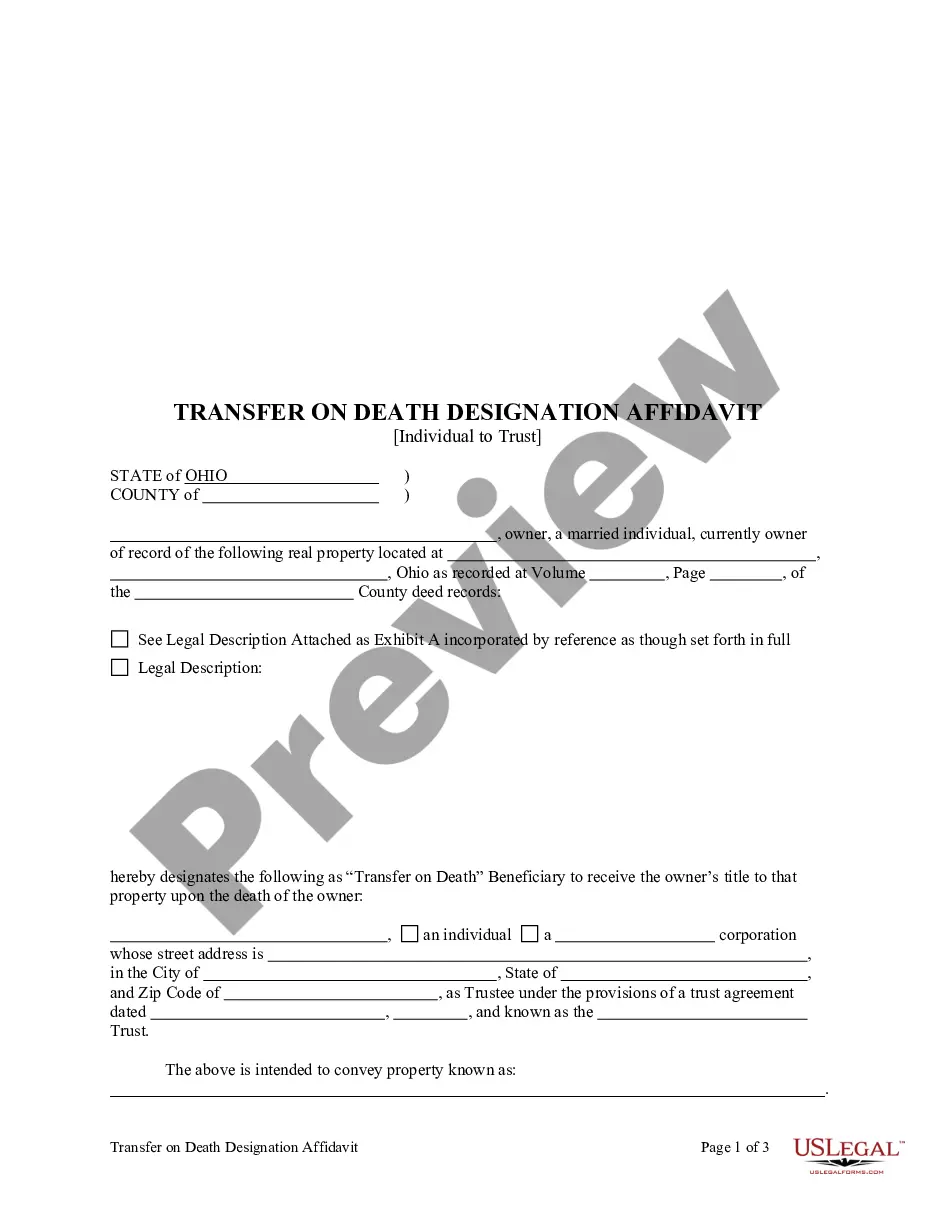
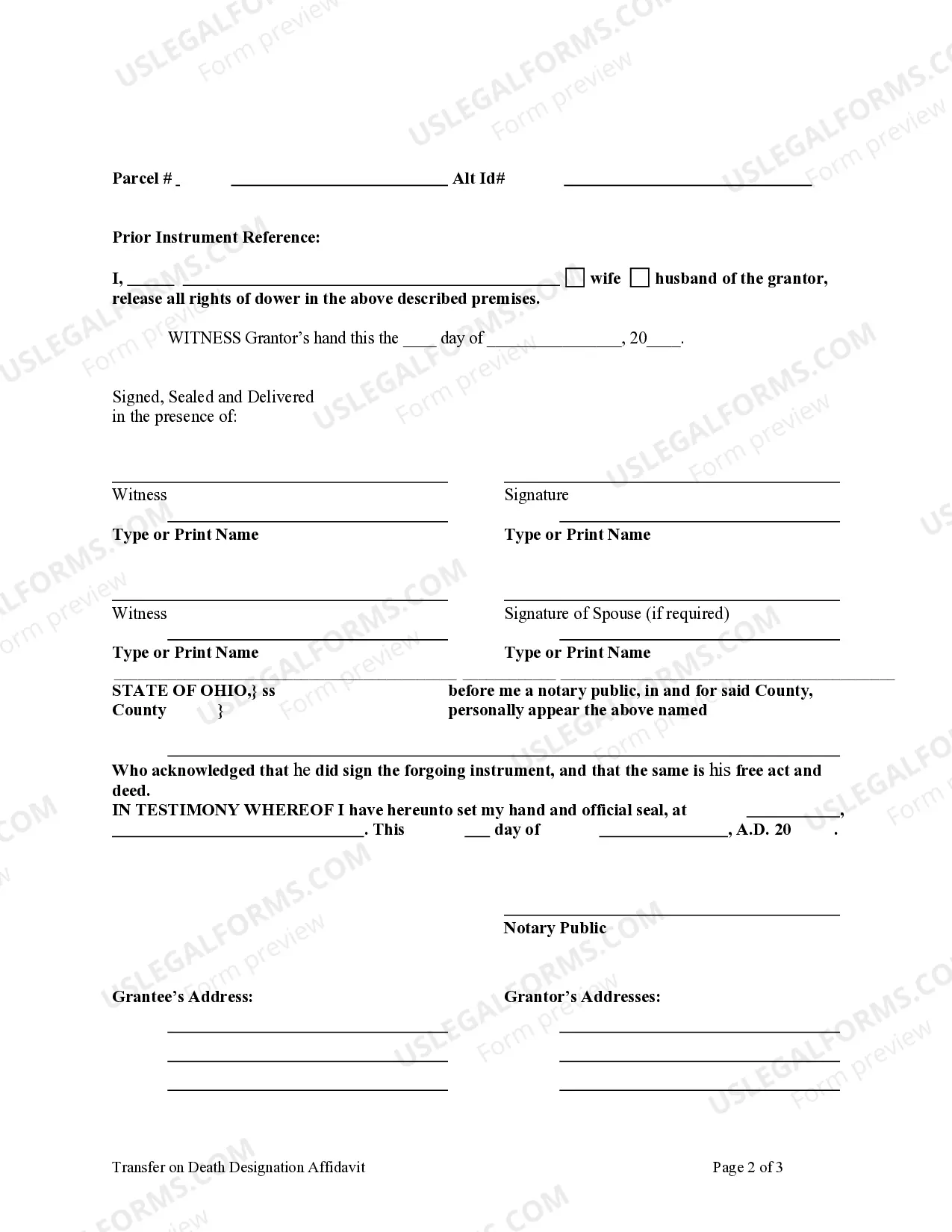
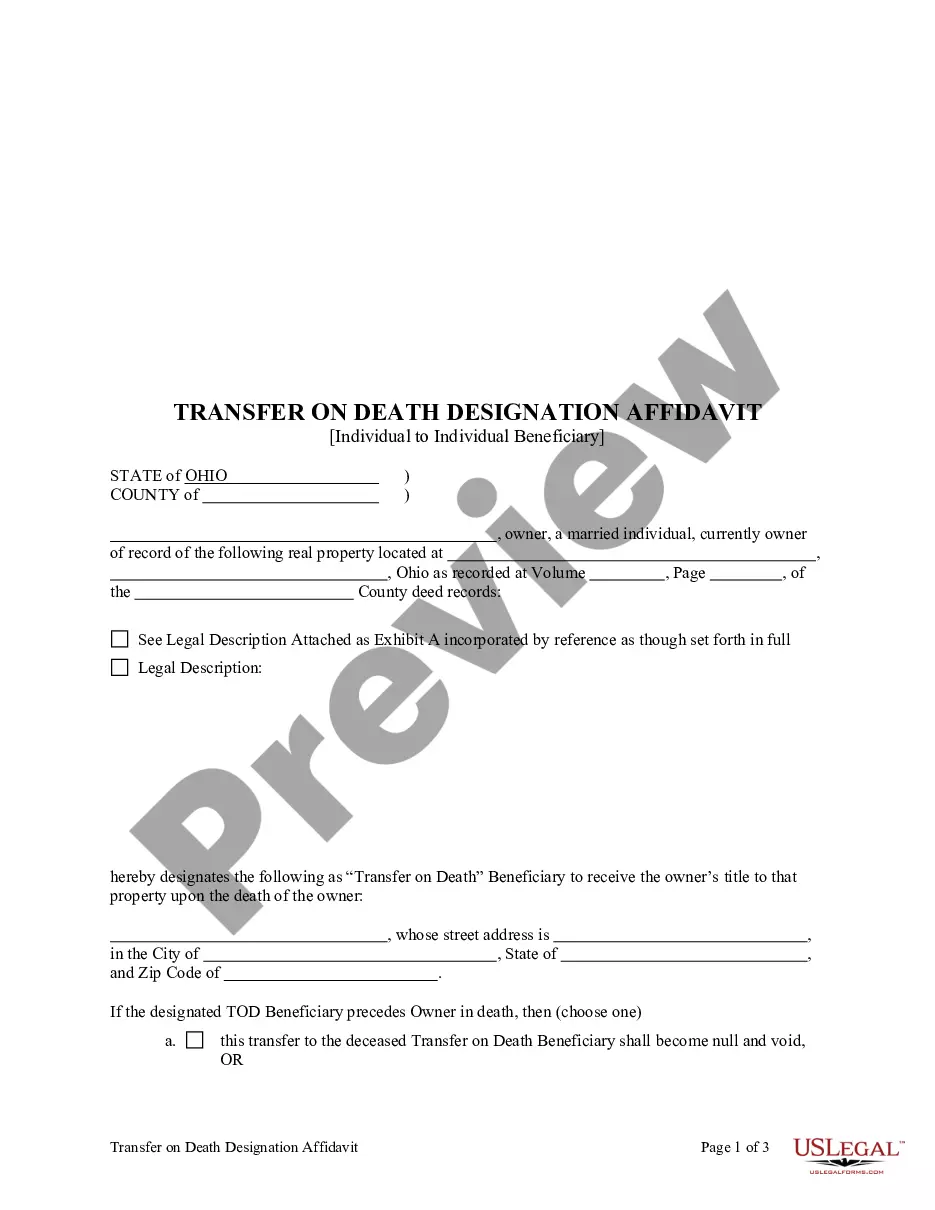
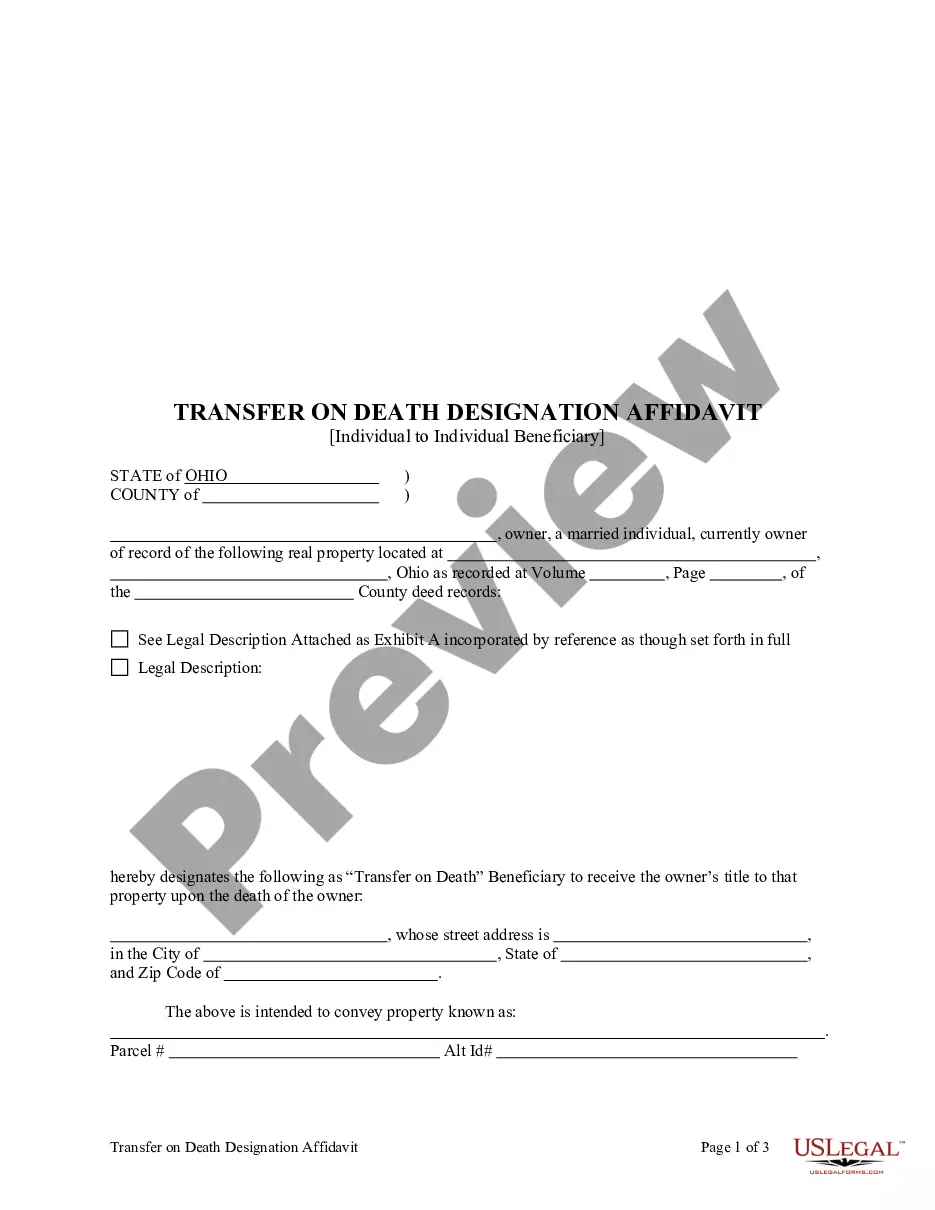
Transfer On Death Beneficiary Designation Form Ohio
Description


Get your form ready online
Our built-in tools help you complete, sign, share, and store your documents in one place.
Make edits, fill in missing information, and update formatting in US Legal Forms—just like you would in MS Word.
Download a copy, print it, send it by email, or mail it via USPS—whatever works best for your next step.
Sign and collect signatures with our SignNow integration. Send to multiple recipients, set reminders, and more. Go Premium to unlock E-Sign.
If this form requires notarization, complete it online through a secure video call—no need to meet a notary in person or wait for an appointment.
We protect your documents and personal data by following strict security and privacy standards.

Make edits, fill in missing information, and update formatting in US Legal Forms—just like you would in MS Word.

Download a copy, print it, send it by email, or mail it via USPS—whatever works best for your next step.

Sign and collect signatures with our SignNow integration. Send to multiple recipients, set reminders, and more. Go Premium to unlock E-Sign.

If this form requires notarization, complete it online through a secure video call—no need to meet a notary in person or wait for an appointment.

We protect your documents and personal data by following strict security and privacy standards.
Looking for another form?


How to fill out Ohio Transfer On Death Designation Affidavit - TOD From Individual To A Trust?
The Transfer On Death Beneficiary Designation Form Ohio displayed on this site is a reusable legal template crafted by experienced attorneys adhering to federal and state laws and regulations.
For over 25 years, US Legal Forms has offered individuals, businesses, and lawyers more than 85,000 validated, state-specific forms for any business and personal situations. It’s the quickest, simplest, and most reliable method to acquire the documents you require, as the service ensures bank-level data security and malware protection.
Select the format you want for your Transfer On Death Beneficiary Designation Form Ohio (PDF, DOCX, RTF) and save the example on your device.
- Search for the document you need and review it.
- Browse the sample you searched and preview it or examine the form description to confirm it meets your requirements. If not, use the search bar to find the correct one. Click Buy Now once you find the template you need.
- Register and Log In.
- Select the pricing plan that fits you and create an account. Use PayPal or a credit card for a swift payment. If you already have an account, Log In and check your subscription to proceed.
- Obtain the fillable template.
Form popularity
FAQ
While it is not mandatory to hire a solicitor for property transfers after death, doing so can provide valuable legal support. A solicitor can help navigate the complexities of the transfer on death beneficiary designation form Ohio and ensure compliance with all legal requirements. It may also help to avoid potential disputes among beneficiaries. Ultimately, the decision will depend on your comfort level with the legal process.
In Ohio, some title transfers can be initiated online, but you may still need to submit physical documents. For a transfer on death beneficiary designation form Ohio, check with your local county recorder's office for their specific procedures. Online platforms can simplify the initial steps, but ensure all requirements are met for a successful transfer. Uslegalforms can provide the necessary forms and guidance.
Yes, Washington state allows for transfer on death deeds, similar to Ohio. The process involves filling out the appropriate deed form, which designates a beneficiary to receive the property upon death. It is essential to follow Washington's regulations to ensure the deed is valid. For those seeking guidance, uslegalforms offers resources to help navigate the process.
Completing a transfer on death deed involves filling out the form accurately with property details and beneficiary information. Ensure you sign the document in accordance with Ohio's requirements, which may include witnesses or notarization. Once completed, file the deed with your county recorder's office to make it legally binding. Using a transfer on death beneficiary designation form Ohio can streamline this process.
To obtain a transfer on death certificate, you typically need to contact the vital records office in your state. Ensure you have the necessary documentation, such as proof of identity and ownership, ready for submission. If you are using a transfer on death beneficiary designation form Ohio, following the state's guidelines will simplify the process. You may also want to consult uslegalforms for additional assistance.
One disadvantage of a TOD deed is that it does not provide protection against creditors. If the property owner has outstanding debts, creditors may still claim the property after death. Additionally, a TOD deed may not address issues involving multiple beneficiaries, leading to potential disputes. It is wise to consider these factors when completing the transfer on death beneficiary designation form Ohio.
You do not necessarily need a lawyer for a transfer on death (TOD) deed in Ohio. However, consulting a legal professional can help ensure that you complete the transfer on death beneficiary designation form Ohio correctly. A lawyer can provide guidance on any specific requirements that may apply to your situation. Ultimately, the choice is yours.
Filling out a transfer on death affidavit in Ohio involves providing essential details about the property, the owner, and the beneficiary. You can use a transfer on death beneficiary designation form Ohio as a template to ensure that you include all necessary information. After completing the form, have it notarized and file it with the appropriate county office to finalize the transfer.
To fill out a transfer on death (TOD) form, start by clearly writing the names of the property owner and the designated beneficiary. Make sure to include specific property details and any necessary dates. You can find a user-friendly transfer on death beneficiary designation form Ohio on US Legal Forms, which can guide you through the process with ease.
Yes, a transfer on death deed in Ohio effectively avoids probate. This means that when the property owner passes away, the property transfers directly to the designated beneficiary without going through the lengthy probate process. Utilizing a transfer on death beneficiary designation form Ohio can simplify the transfer and provide peace of mind for property owners.