New York Wills Without Power
Description




Get your form ready online
Our built-in tools help you complete, sign, share, and store your documents in one place.
Make edits, fill in missing information, and update formatting in US Legal Forms—just like you would in MS Word.
Download a copy, print it, send it by email, or mail it via USPS—whatever works best for your next step.
Sign and collect signatures with our SignNow integration. Send to multiple recipients, set reminders, and more. Go Premium to unlock E-Sign.
If this form requires notarization, complete it online through a secure video call—no need to meet a notary in person or wait for an appointment.
We protect your documents and personal data by following strict security and privacy standards.

Make edits, fill in missing information, and update formatting in US Legal Forms—just like you would in MS Word.

Download a copy, print it, send it by email, or mail it via USPS—whatever works best for your next step.

Sign and collect signatures with our SignNow integration. Send to multiple recipients, set reminders, and more. Go Premium to unlock E-Sign.

If this form requires notarization, complete it online through a secure video call—no need to meet a notary in person or wait for an appointment.

We protect your documents and personal data by following strict security and privacy standards.
Looking for another form?

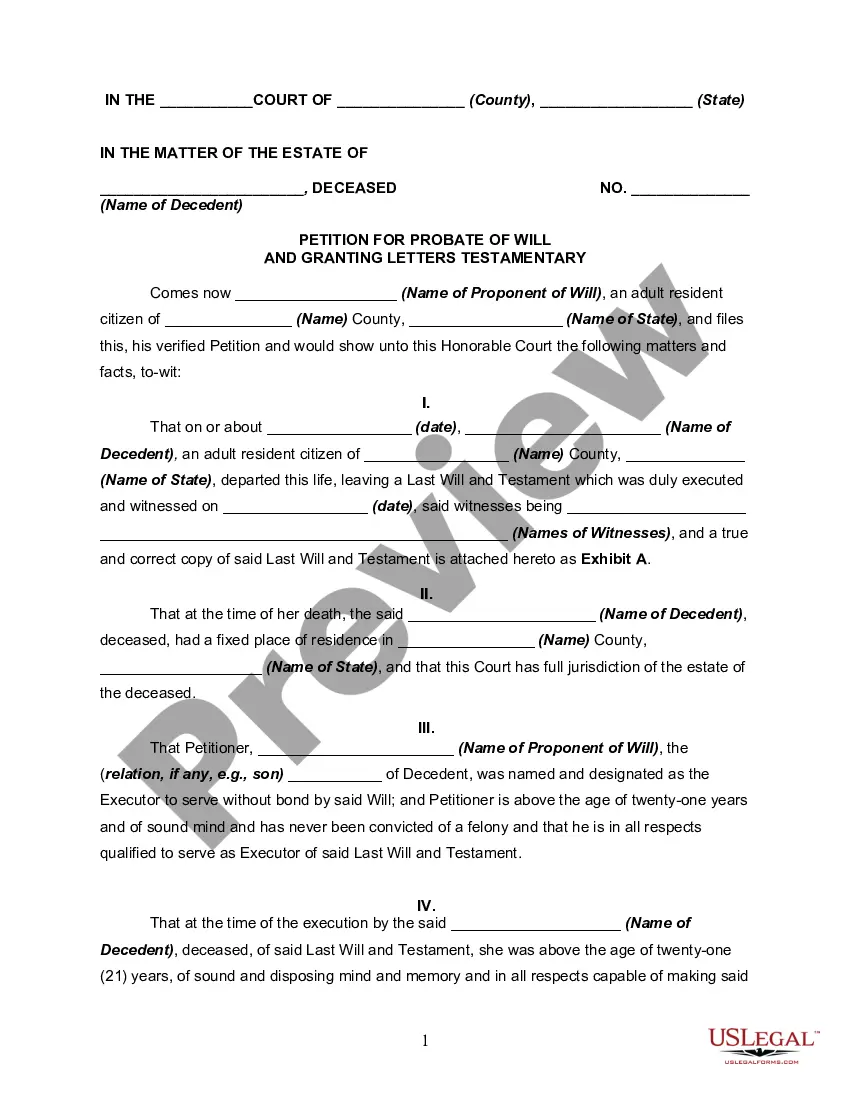







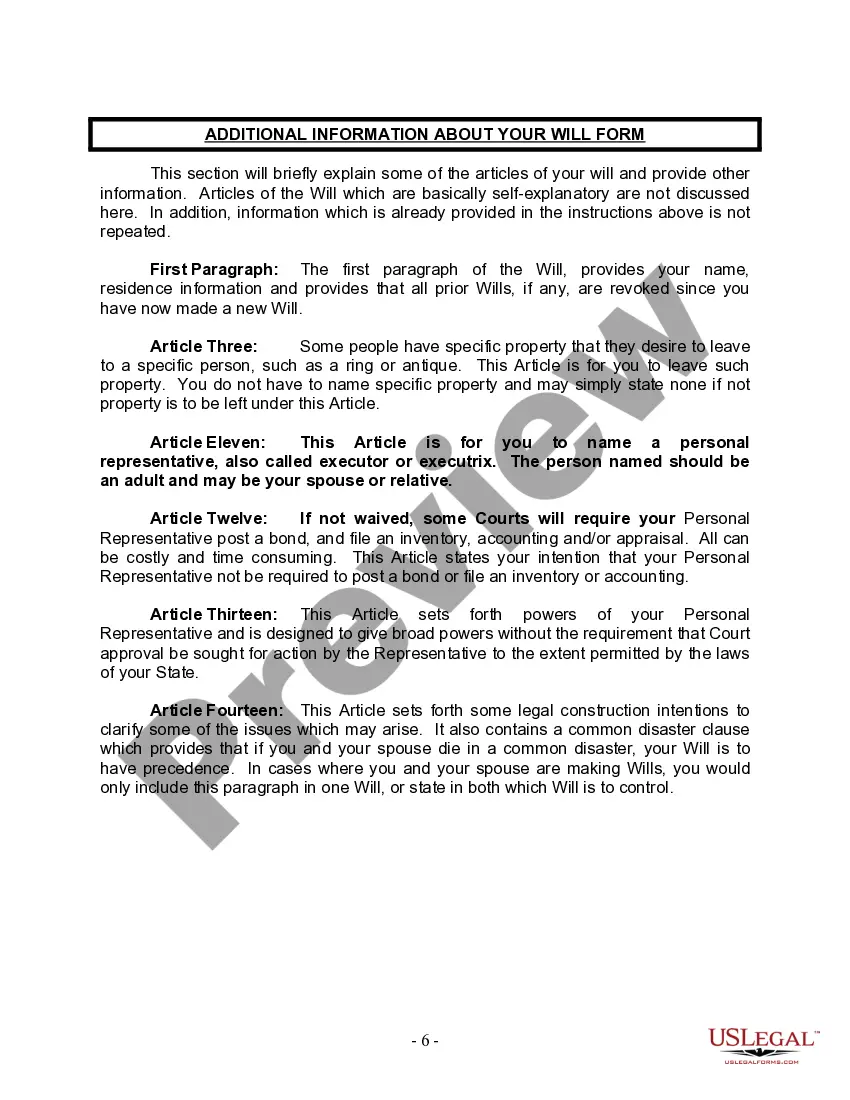
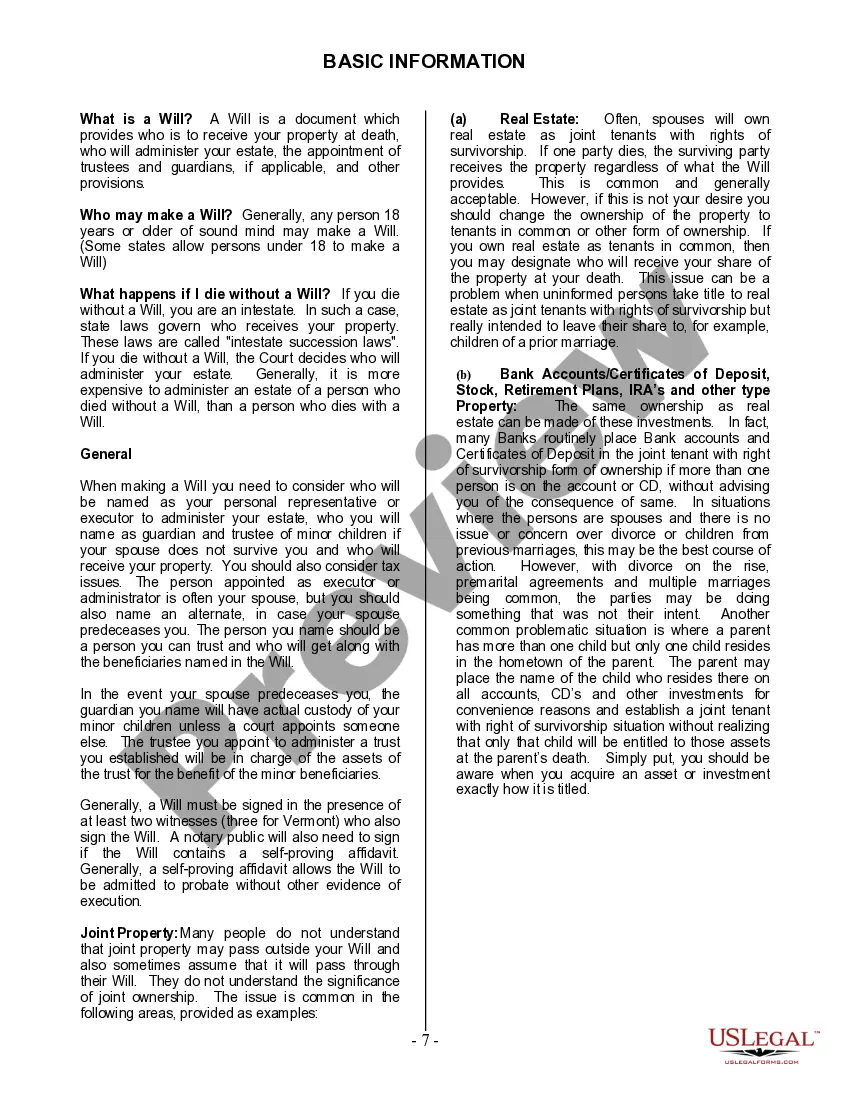
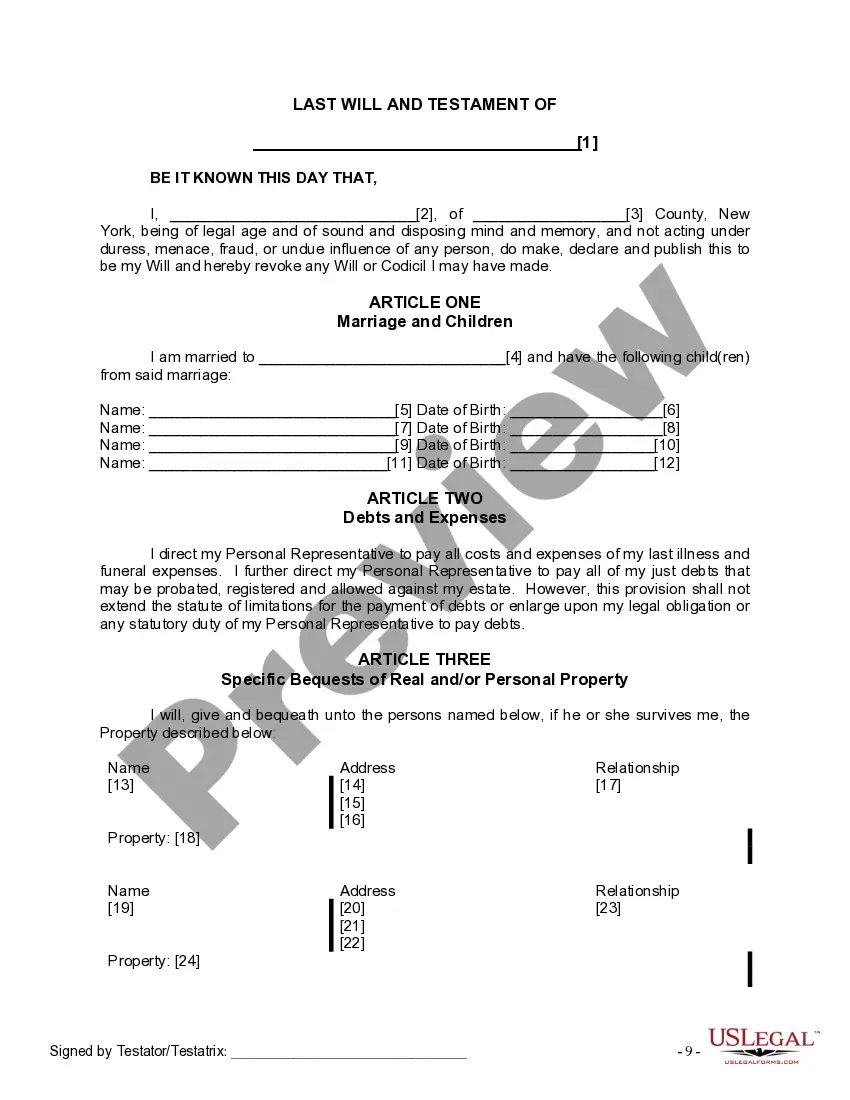
How to fill out New York Mutual Wills Package With Last Wills And Testaments For Married Couple With Adult And Minor Children?
There’s no longer a need to spend hours searching for legal documents to fulfill your local state obligations. US Legal Forms has gathered all of them in one location and made them easier to access.
Our platform offers over 85,000 templates for any business and individual legal matters categorized by state and purpose. All forms are properly drafted and verified for authenticity, ensuring you can confidently obtain an updated New York Wills Without Power.
If you are acquainted with our platform and already possess an account, you must verify that your subscription is active before acquiring any templates. Log In to your account, choose the document, and click Download. You can also revisit all saved documents whenever required by accessing the My documents tab in your profile.
Print your form to fill it out manually or upload the sample if you prefer to utilize an online editor. Crafting legal documents under federal and state laws and guidelines is quick and straightforward with our library. Experience US Legal Forms today to keep your paperwork organized!
- If you have not interacted with our platform before, the process will involve a few more steps to complete.
- Review the page content carefully to confirm it has the sample you need.
- To accomplish this, employ the form description and preview options, if available.
- Use the Search field above to browse for another sample if the current one does not suit you.
- Click Buy Now next to the template name when you locate the appropriate one.
- Select the desired subscription plan and either create an account or Log In.
- Make payment for your subscription via credit card or through PayPal to continue.
- Choose the file format for your New York Wills Without Power and download it to your device.
Form popularity
FAQ
To invalidate a will or part of a will based on undue influence, the Surrogate's Court must conclude that the testator would not have executed the will but for the improper influence of the manipulator. Improper execution.
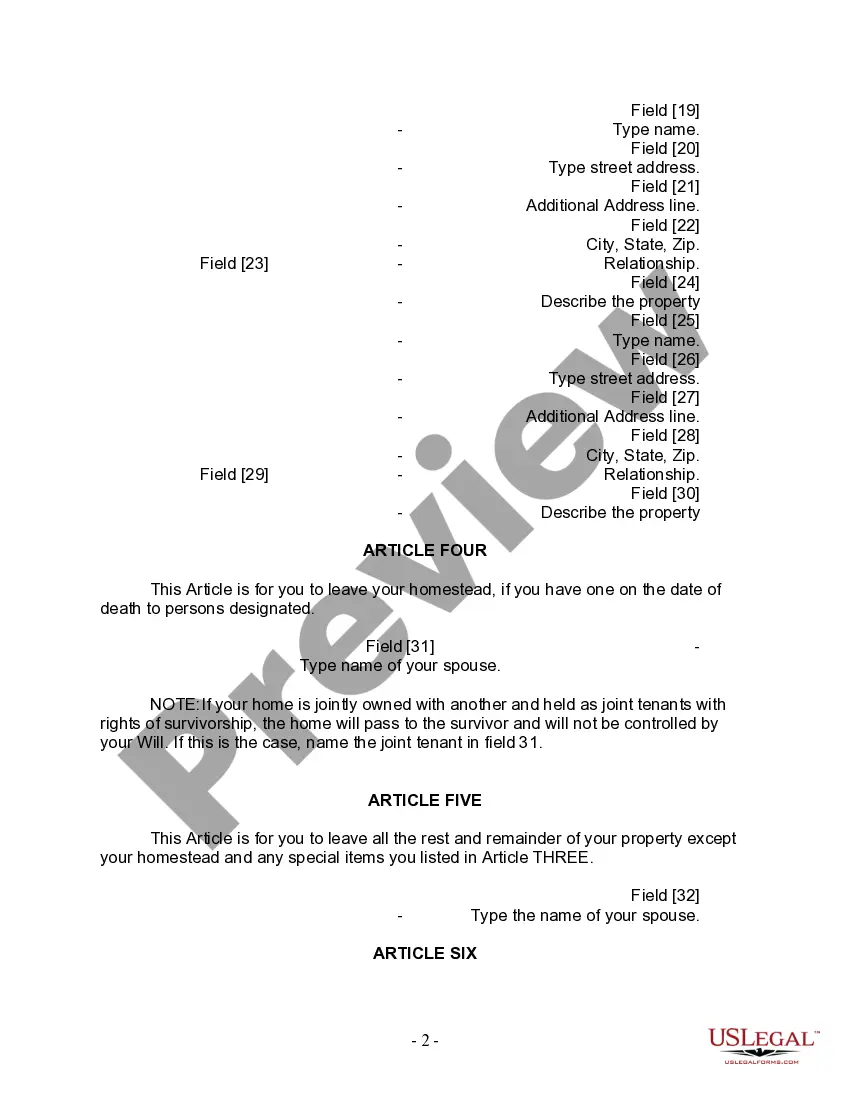
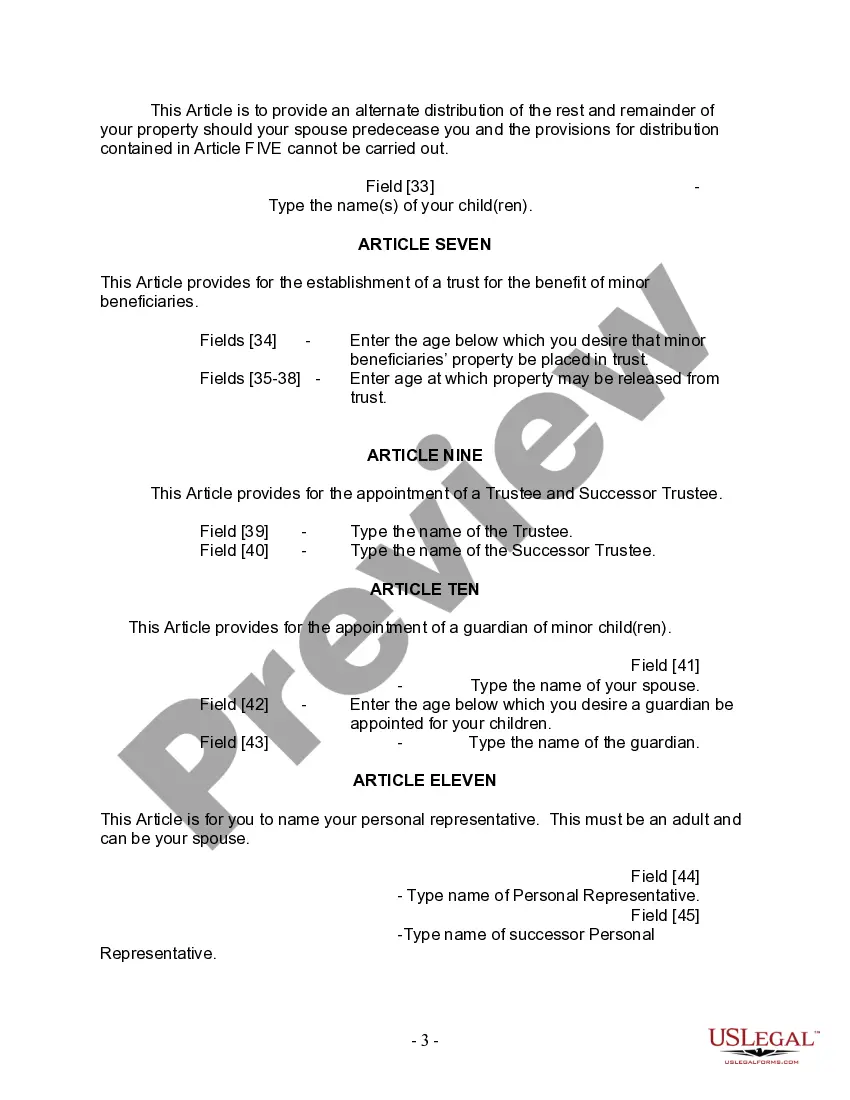
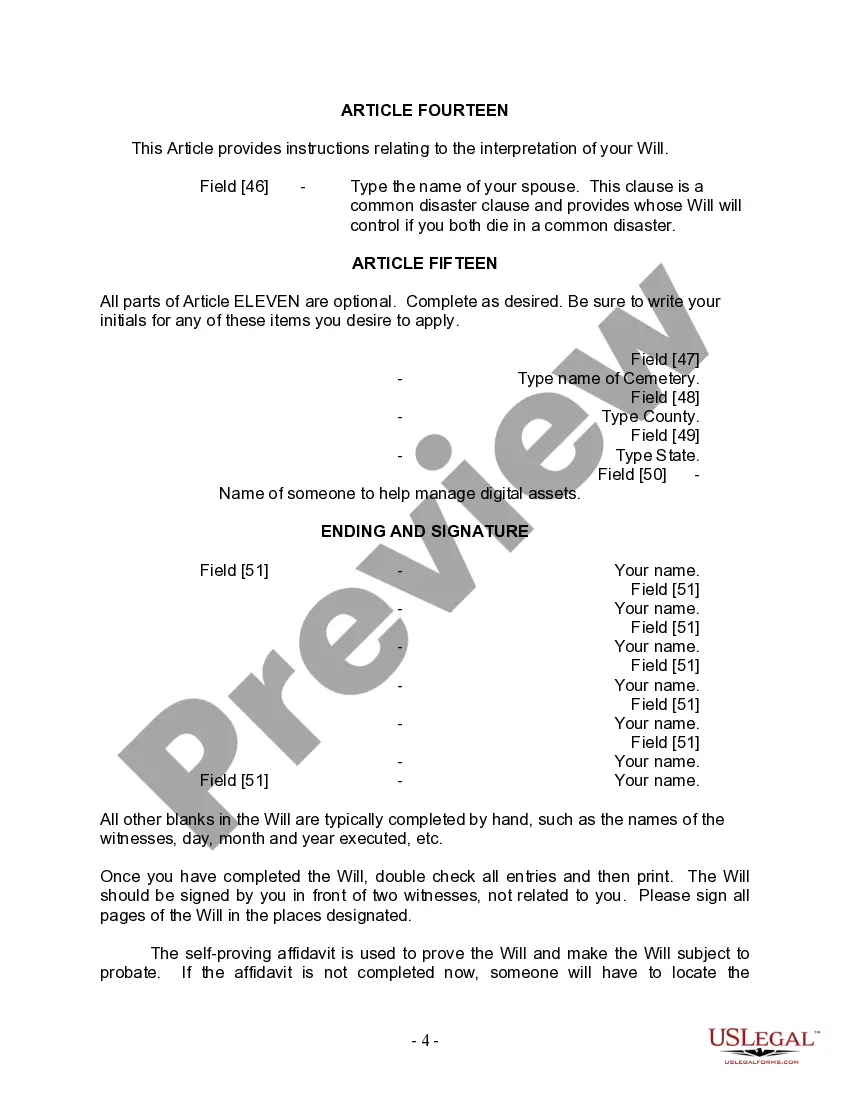
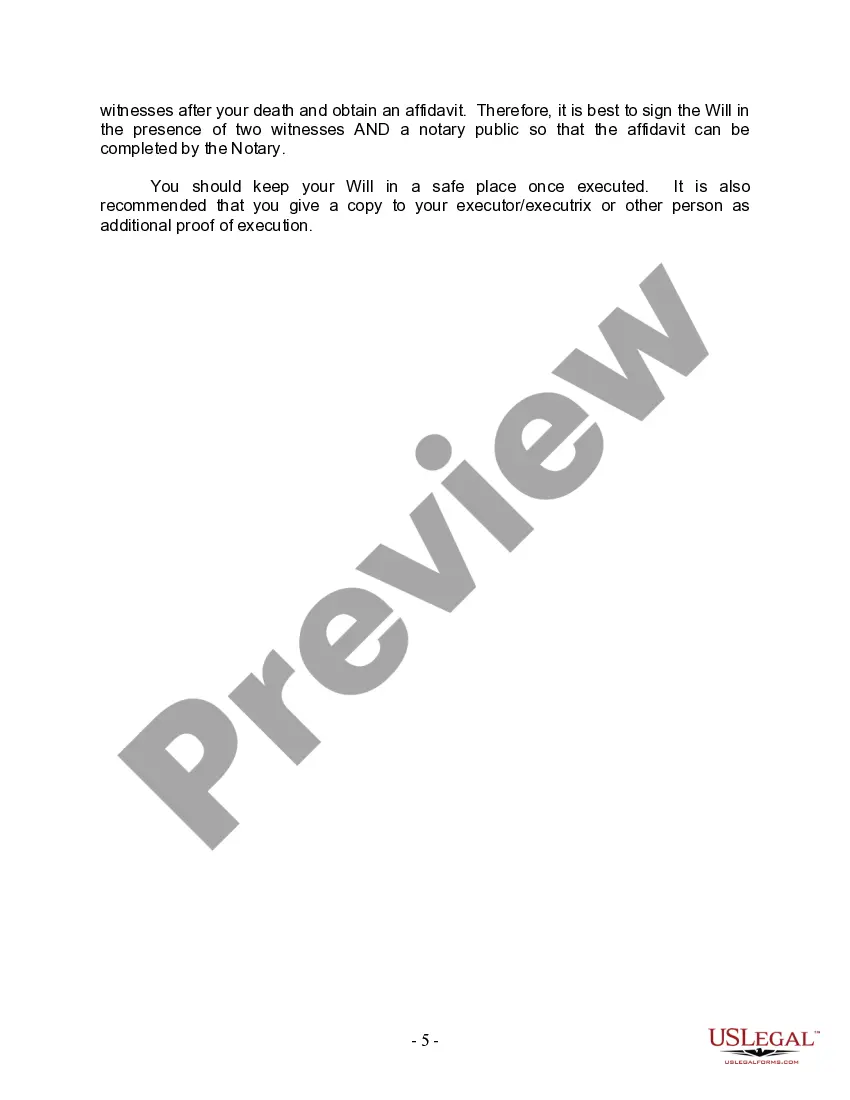
No, in New York, you do not need to notarize your will to make it legal. However, New York allows you to make your will "self-proving" and you'll need to go to a notary if you want to do that. A self-proving will speeds up probate because the court can accept the will without contacting the witnesses who signed it.
Unlike some other states, New York requires a Will be in writing. A Will must be signed by the testator (drafter) and witnessed by two individuals who are at least 18 years of age. The witnesses cannot be a beneficiary under the will. The wrong witness will irretrievably invalidate the will.
At present, New York does not provide for a virtual execution of a Will. Estates, Powers and Trusts Law section 3-2.1 entitled Execution and attestation of wills; formal requirements provides that a Will must be in writing and signed in the presence of at least two attesting witnesses.
To be valid at all times, a Will must be in writing, dated and signed by the maker of the Will with two witnesses signing and adding their addresses under their signature. Just writing out your wishes without the witness formality is not suggested.