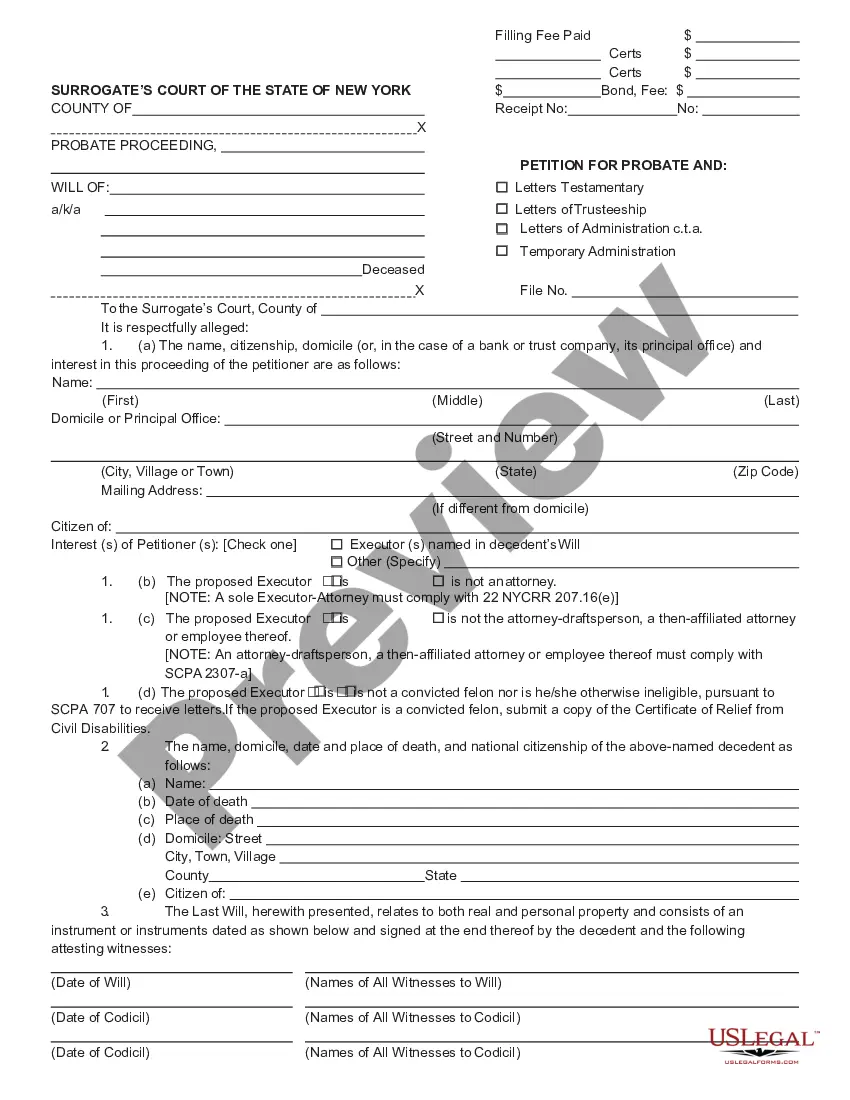
This is an official form from the New York State Unified Court, which complies with all applicable laws and statutes. USLF amends and updates the forms as is required by New York statutes and law.
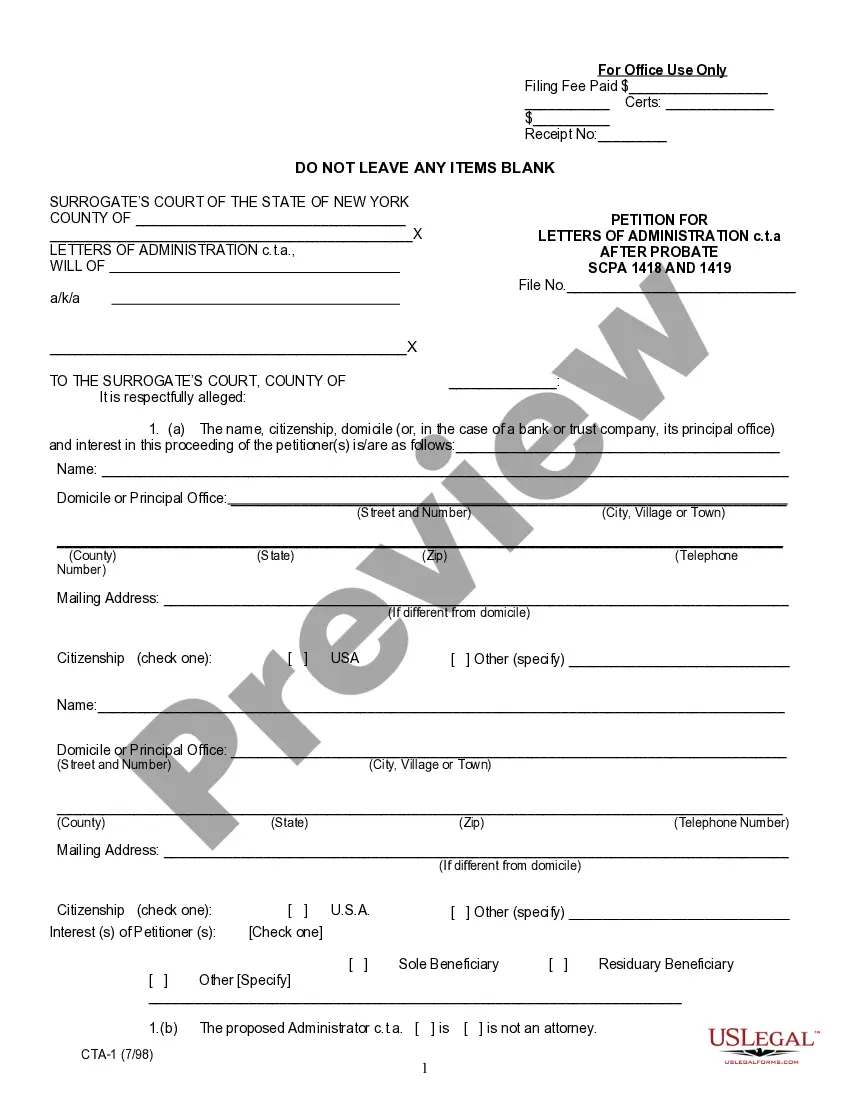
Letter Of Administration Example
Category:
State:
New York
Control #:
NY-SPRB-CTA-1
Format:
Word;
Rich Text
Instant download
This website is not affiliated with any governmental entity
Public form
Description
Free preview
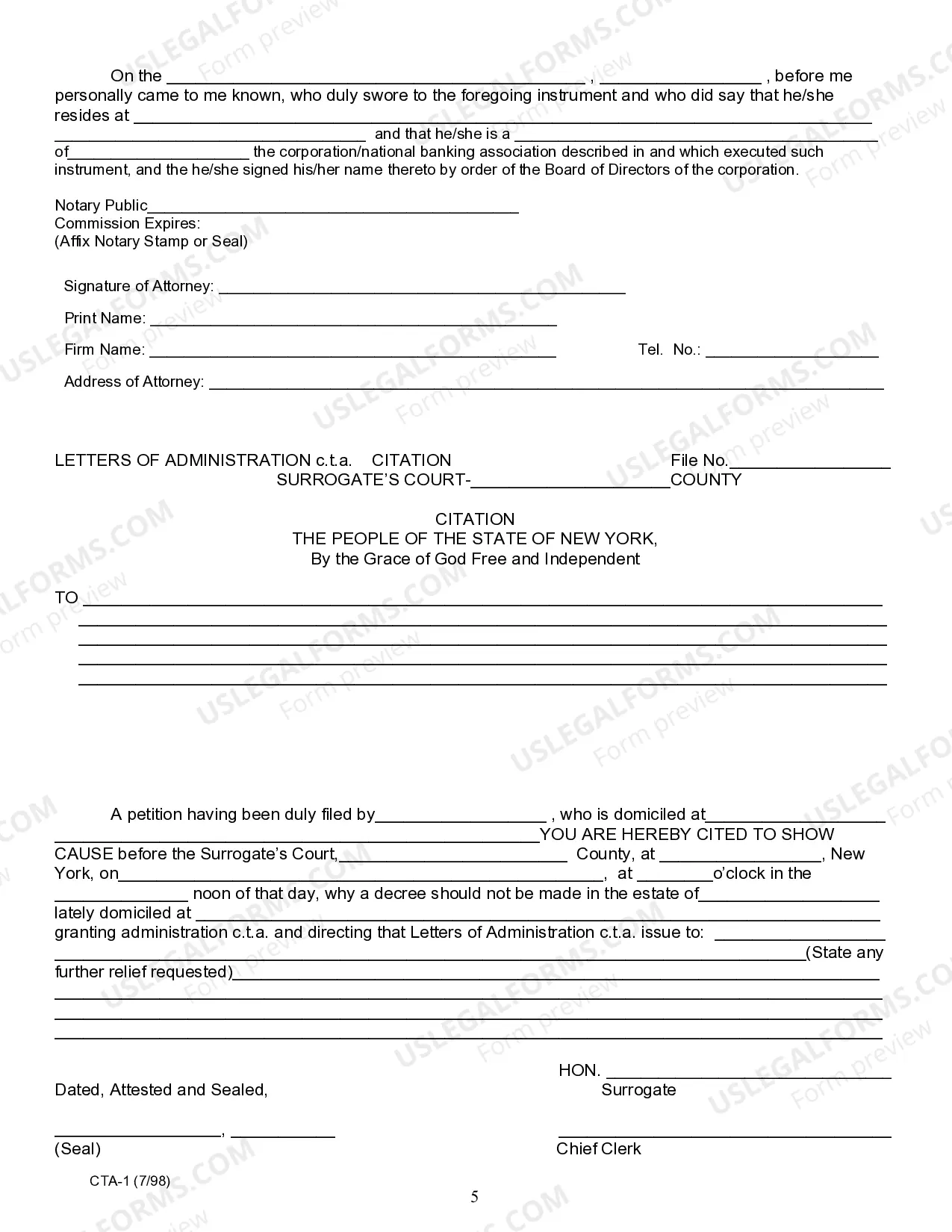
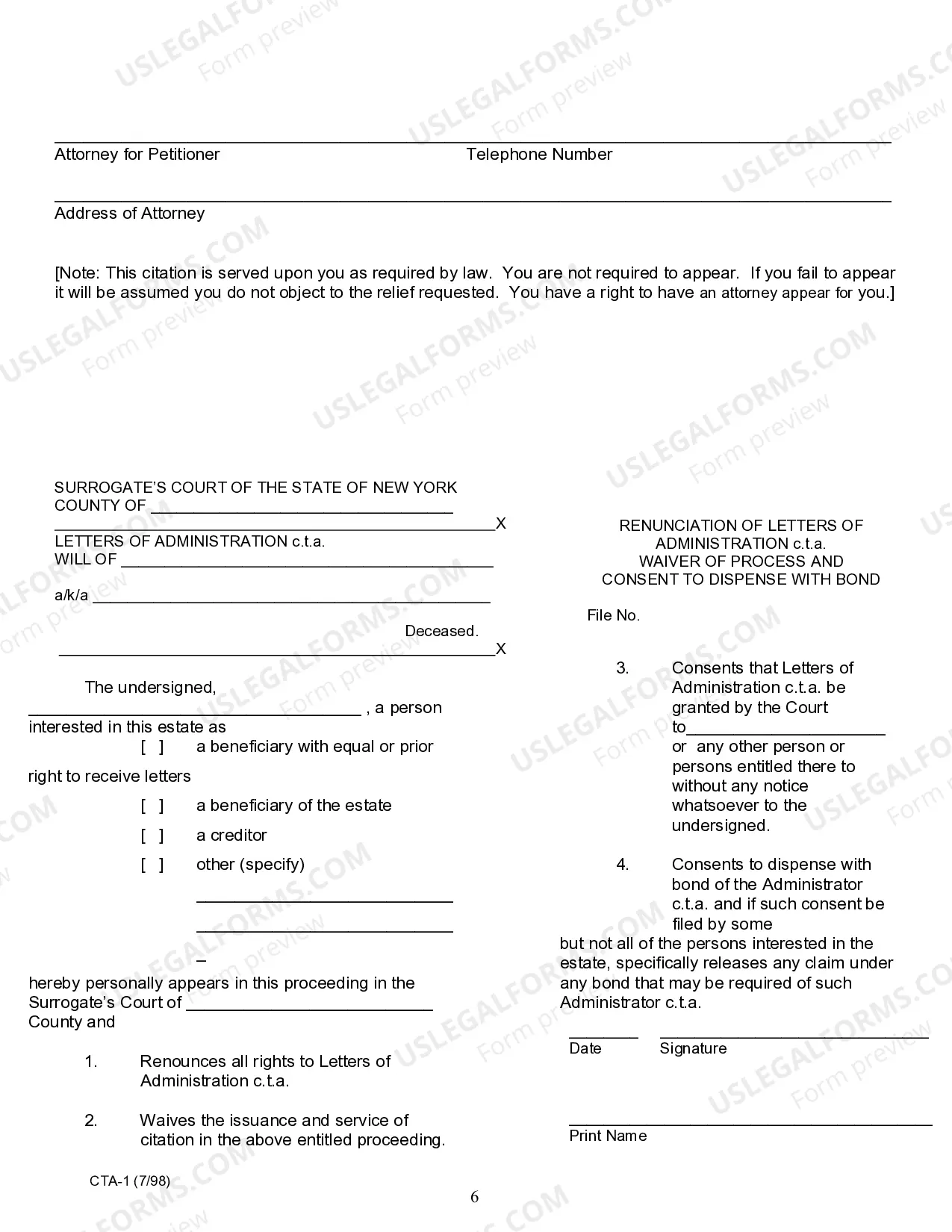
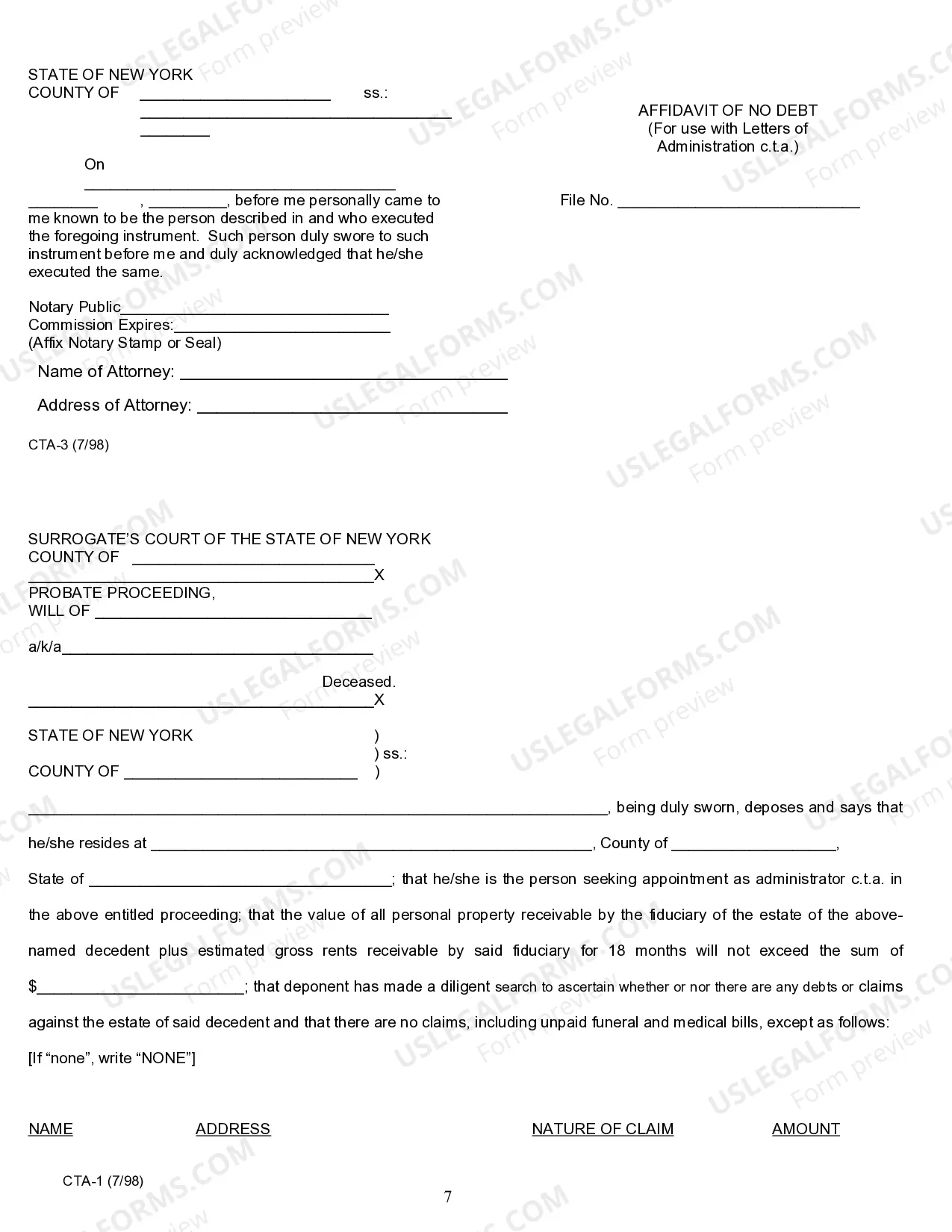
Get your form ready online
Our built-in tools help you complete, sign, share, and store your documents in one place.
Built-in online Word editor
Make edits, fill in missing information, and update formatting in US Legal Forms—just like you would in MS Word.
Export easily
Download a copy, print it, send it by email, or mail it via USPS—whatever works best for your next step.
E-sign your document
Sign and collect signatures with our SignNow integration. Send to multiple recipients, set reminders, and more. Go Premium to unlock E-Sign.
Notarize online 24/7
If this form requires notarization, complete it online through a secure video call—no need to meet a notary in person or wait for an appointment.
Store your document securely
We protect your documents and personal data by following strict security and privacy standards.

Make edits, fill in missing information, and update formatting in US Legal Forms—just like you would in MS Word.

Download a copy, print it, send it by email, or mail it via USPS—whatever works best for your next step.

Sign and collect signatures with our SignNow integration. Send to multiple recipients, set reminders, and more. Go Premium to unlock E-Sign.

If this form requires notarization, complete it online through a secure video call—no need to meet a notary in person or wait for an appointment.

We protect your documents and personal data by following strict security and privacy standards.
Looking for another form?








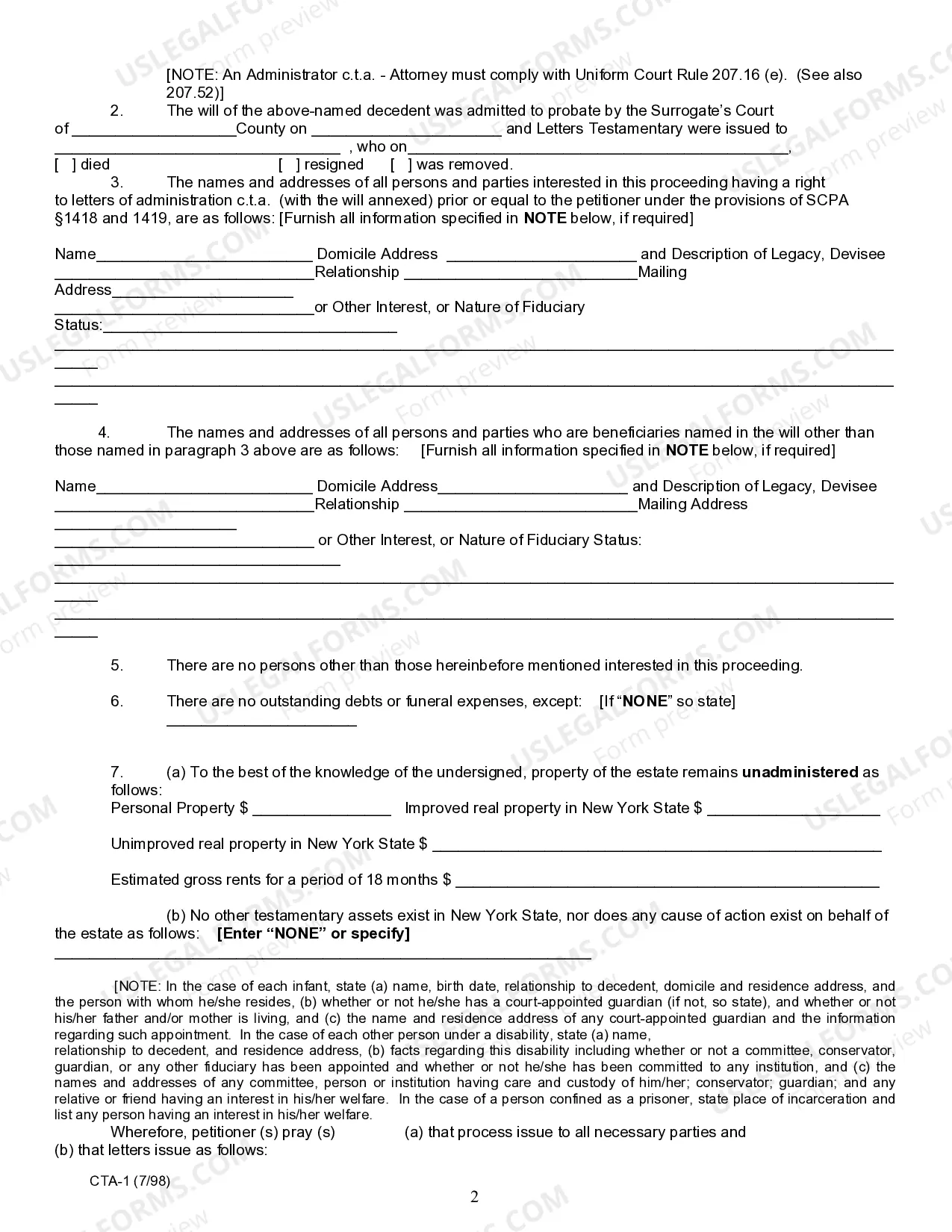
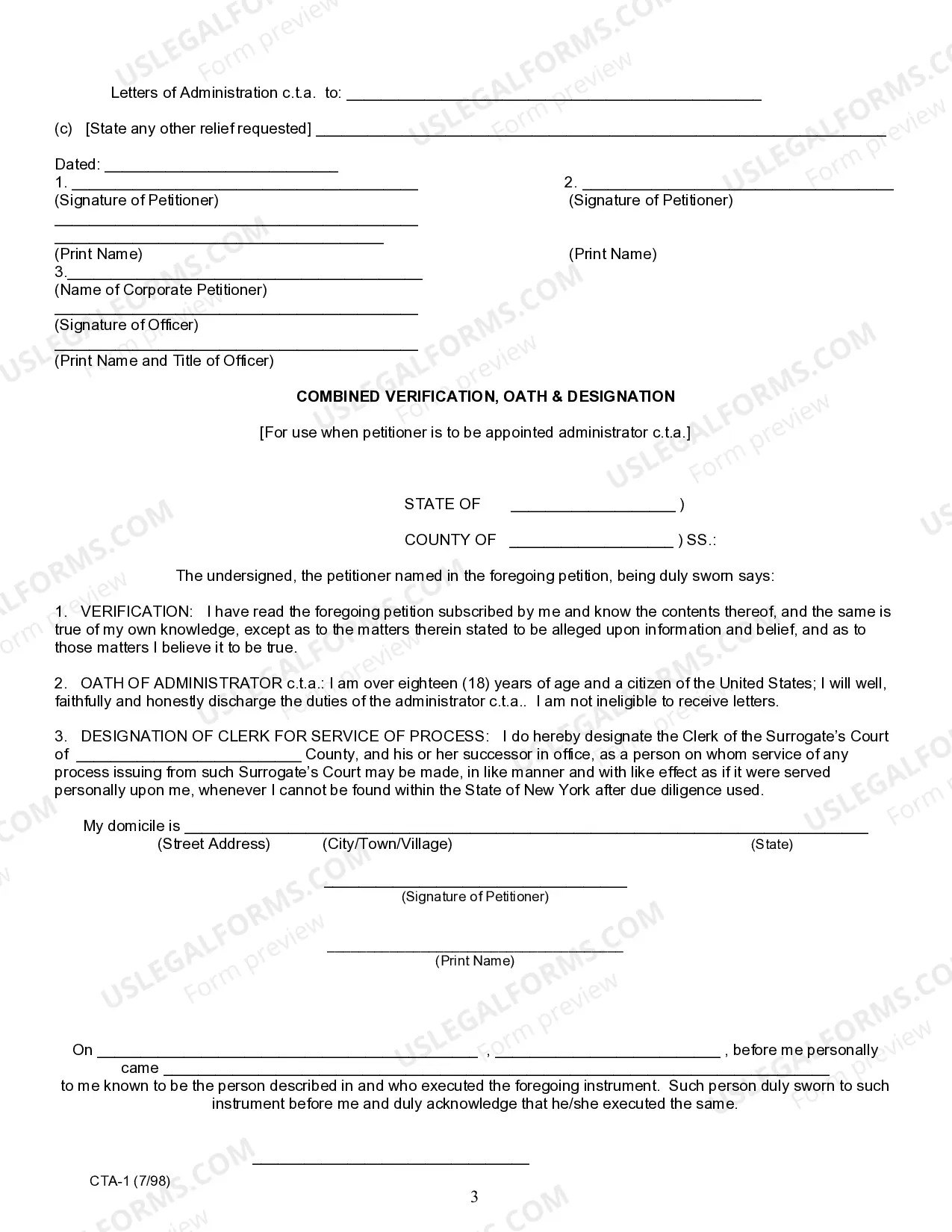
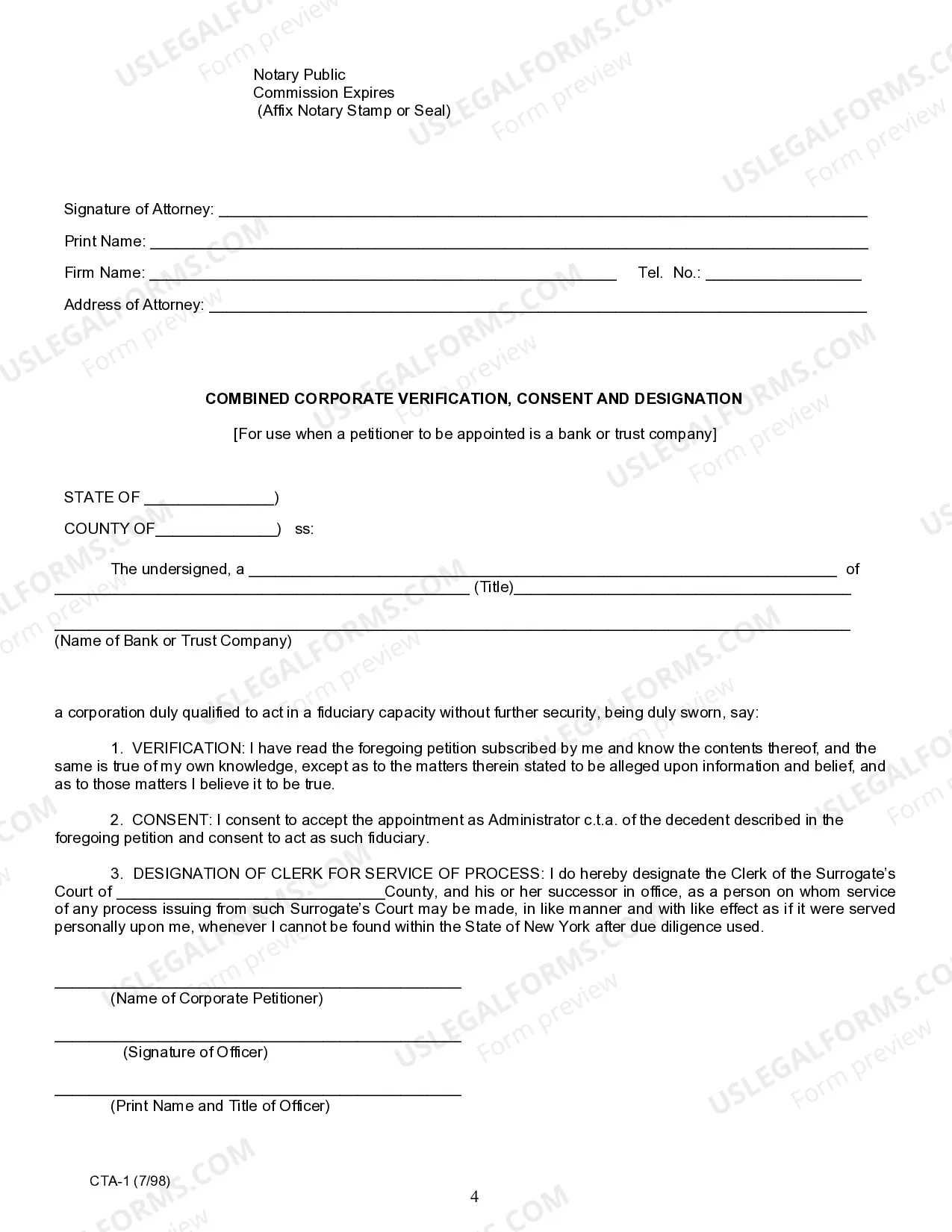
How to fill out New York Petition For Letters Of Administration CTA After Probate?
Utilizing legal document examples that adhere to federal and local regulations is crucial, and the web provides numerous choices to select from.
However, what's the advantage of spending time looking for the properly prepared Letter Of Administration Example sample online when the US Legal Forms digital library already compiles such templates in one location.
US Legal Forms represents the largest online legal repository with over 85,000 fillable templates created by lawyers for any business or personal situation.
Review the template using the Preview feature or through the text outline to confirm it fulfills your needs.
- They are straightforward to navigate with all documents categorized by state and intended use.
- Our experts keep up with legislative updates, ensuring that your form is always current and compliant when obtaining a Letter Of Administration Example from our site.
- Acquiring a Letter Of Administration Example is quick and simple for both existing and new users.
- If you already possess an account with an active subscription, Log In and download the document sample you require in your chosen format.
- If you are a newcomer to our site, follow the instructions below.
Form popularity
FAQ
All assets held in a designated beneficiary account do not require to be probated. Most common designated beneficiary assets accounts are life insurance, registered saving plans such as RRSPs, RRIFs, TFSAs, and employer pension plan. They are also referred as 'Transfer on Death' or 'Pay on Death' assets.
A Letter of Testamentary?sometimes called a "Letter of Administration" or "Letter of Representation"?is a document granted by a local court. The document simply states that you are the legal executor for a particular estate and that you have the ability to act as such.
A letter of administration is a court-issued document that gives someone the authority to act as the estate administrator. The administrator can then access and manage the late person's assets, such as financial accounts and real estate property.
Homes, land, or bank accounts owned by people who are joint tenants usually transfer to the remaining joint tenants when an owner dies. There may also be life insurance policies, RRSPs, or pension plans that the deceased person directed to go to specific beneficiaries. These do not become part of the estate.
One of the most common ways to avoid probate is to create a living trust. Through a living trust, the person writing the trust (grantor) must "fund the trust" by putting the assets they choose into it. The grantor retains control over the trust's property until their death or incapacitation.