Living Trust For Rental Property
Description
Get your form ready online
Our built-in tools help you complete, sign, share, and store your documents in one place.
Make edits, fill in missing information, and update formatting in US Legal Forms—just like you would in MS Word.
Download a copy, print it, send it by email, or mail it via USPS—whatever works best for your next step.
Sign and collect signatures with our SignNow integration. Send to multiple recipients, set reminders, and more. Go Premium to unlock E-Sign.
If this form requires notarization, complete it online through a secure video call—no need to meet a notary in person or wait for an appointment.
We protect your documents and personal data by following strict security and privacy standards.

Make edits, fill in missing information, and update formatting in US Legal Forms—just like you would in MS Word.

Download a copy, print it, send it by email, or mail it via USPS—whatever works best for your next step.

Sign and collect signatures with our SignNow integration. Send to multiple recipients, set reminders, and more. Go Premium to unlock E-Sign.

If this form requires notarization, complete it online through a secure video call—no need to meet a notary in person or wait for an appointment.

We protect your documents and personal data by following strict security and privacy standards.
Looking for another form?










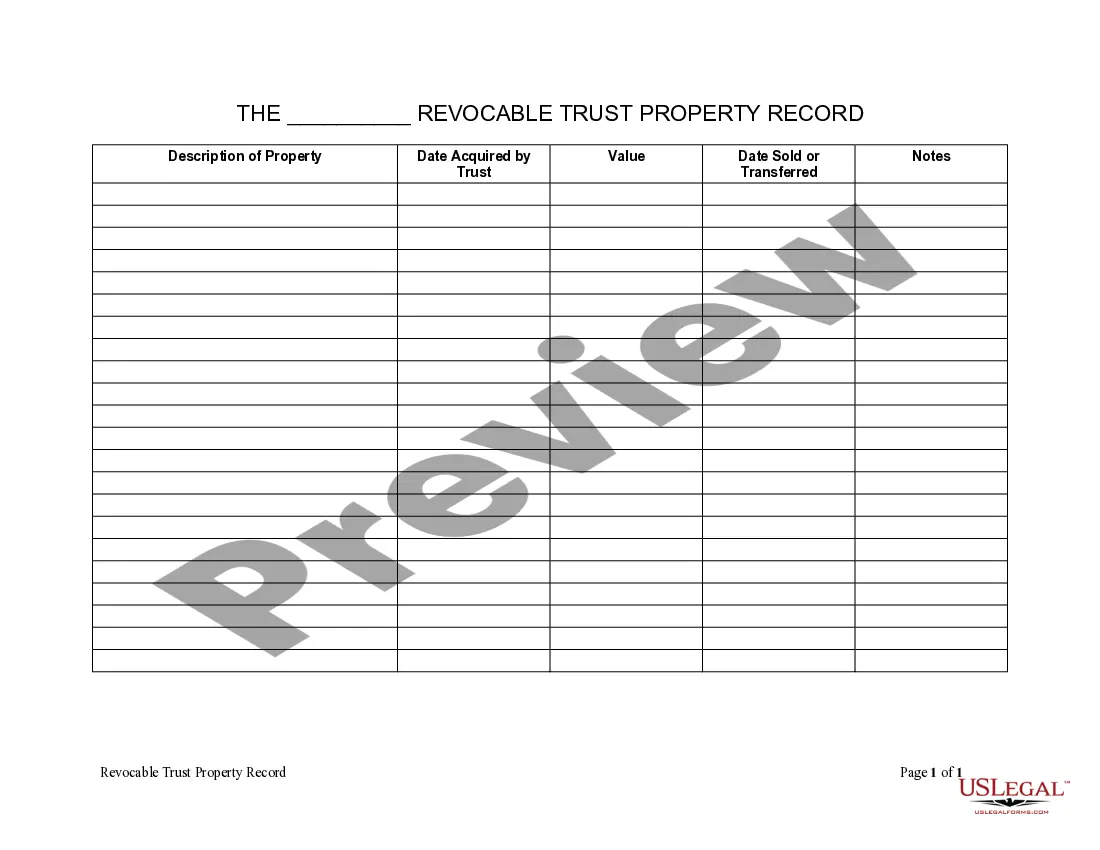
How to fill out New York Living Trust Property Record?
- Start by logging into your US Legal Forms account. If you're a first-time user, create an account to access the form library.
- Search for 'living trust for rental property' in the preview mode to ensure you select the correct document that meets your jurisdiction's requirements.
- If the form you found doesn't suit your requirements, utilize the search bar to find another suitable template.
- Click 'Buy Now' to select a subscription plan that fits your needs, giving you access to thousands of legal forms.
- Complete your purchase securely using your credit card or PayPal account.
- After purchase, immediately download your living trust form, and keep it saved on your device for easy access.
Once you have your living trust document ready, you can customize it to suit your rental property's specific needs. US Legal Forms not only provides a robust collection of forms but also connects users with legal experts for additional assistance.
Start your estate planning journey today by leveraging the user-friendly resources on US Legal Forms!
Form popularity
FAQ
Certainly, you can place a rental property in a living trust. This process can simplify the transfer of ownership and provide several benefits like privacy and asset protection. A living trust for rental property is designed to ensure your investment is managed according to your wishes. If you're considering this option, platforms like US Legal Forms can guide you through the necessary steps efficiently.
Yes, a stepped-up basis does apply to rental property held in a living trust. Upon the owner's death, the property’s basis adjusts to its current market value, which can lessen potential capital gains taxes for your heirs. This feature makes a living trust for rental property an attractive option for estate planning. Understanding these tax implications can help you make informed decisions regarding your assets.
You can indeed put your rental property in a living trust. This allows you to maintain control while ensuring a smooth transfer of property upon your passing. A living trust for rental property also protects your assets from probate, which can simplify the management of your estate. Many individuals choose this route for both convenience and peace of mind.
Yes, a step-up basis applies to living trusts, including those for rental property. When the property owner dies, the property receives a new market value, which can reduce capital gains taxes for heirs. This feature can provide significant financial benefits, especially when dealing with rental property investments. Utilizing a living trust for rental property can help streamline this process.
The best method to leave a house to your children often involves setting up a living trust for rental property. This approach helps avoid probate, ensuring a smoother transfer of ownership. Additionally, a trust can allow for specific instructions on how your children should manage or use the property. By considering this option, you can provide clarity and peace of mind for your family.
A living trust for rental property typically does not automatically receive a step up in basis on the property held in the trust. However, when the property owner passes away, the trust can facilitate a step up in basis for the beneficiaries. This adjustment can significantly reduce capital gains taxes when the heirs sell the property. Understanding these nuances can help ensure that your estate planning is tax-efficient.
Deciding between gifting a house or placing it in a living trust for rental property depends on your specific situation. Gifting a house may incur gift tax implications, while a trust can provide smoother transitions while avoiding probate. Utilizing a living trust for rental property can shield assets from the direct impact of taxes and provide ongoing management options. It's wise to consult with a financial advisor to determine the best approach for your circumstances.
Yes, you can place a rental property in a living trust to manage and protect it. This approach helps streamline the transfer of property upon death and can potentially avoid probate, preserving the value of the estate. Additionally, managing rental income becomes easier when it is housed within a living trust for rental property. As you explore this option, consider reaching out to uslegalforms for assistance in setting up your trust correctly.
One of the most effective strategies to minimize estate tax is by establishing a living trust for rental property. By transferring your rental properties into a trust, you can help ensure those assets bypass probate and reduce the overall estate's taxable value. Moreover, considering a revocable trust allows flexibility during your lifetime while safeguarding the assets. It’s wise to consult with a professional to tailor the trust to your needs.
Yes, rental income generated from a living trust for rental property is typically taxable. The trust must report this income on its tax return, and any distributions made to beneficiaries may also be subject to taxation. It’s crucial to handle all financial reporting correctly to avoid potential penalties. Consulting a tax professional can offer additional guidance tailored to your specific situation.