Living Trust With Beneficiary
Description
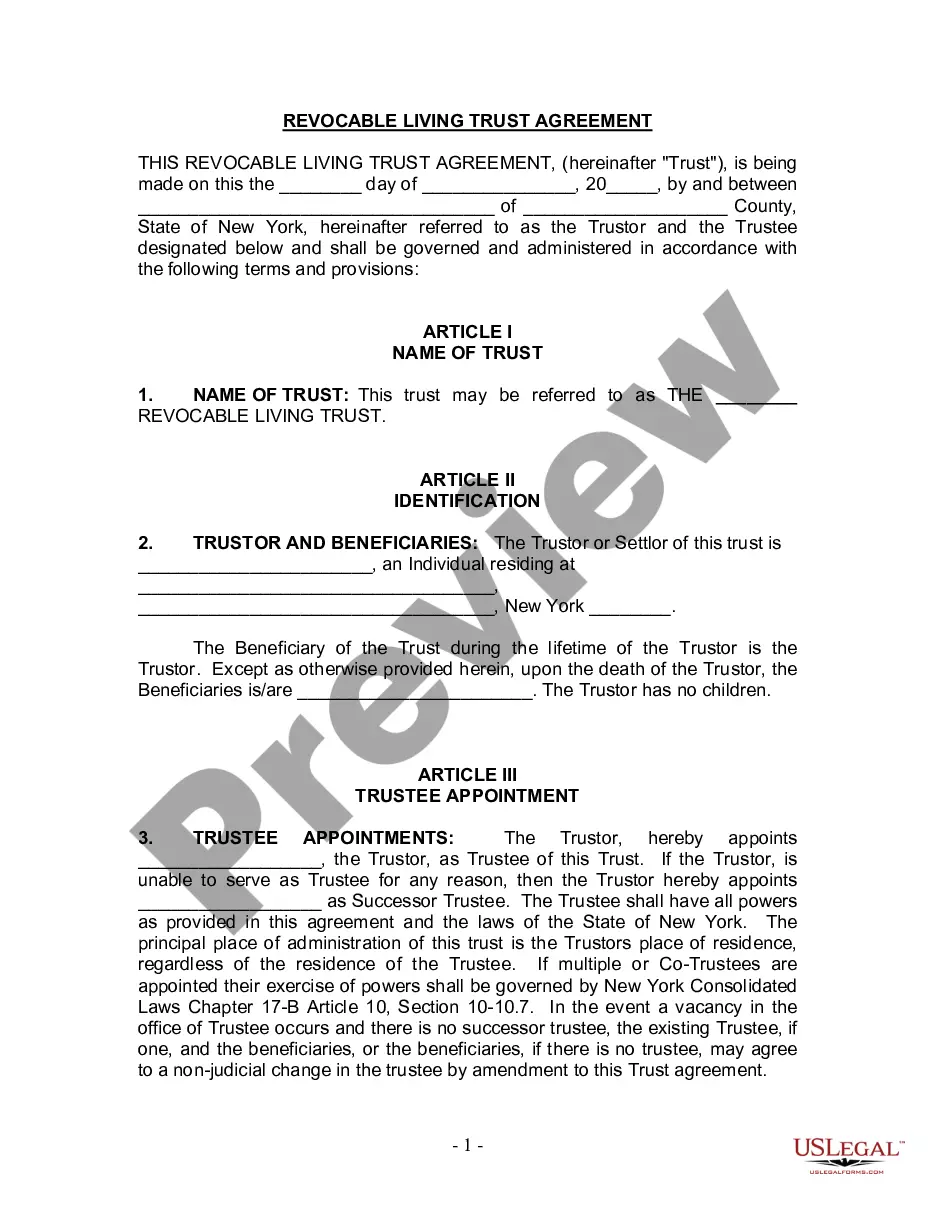
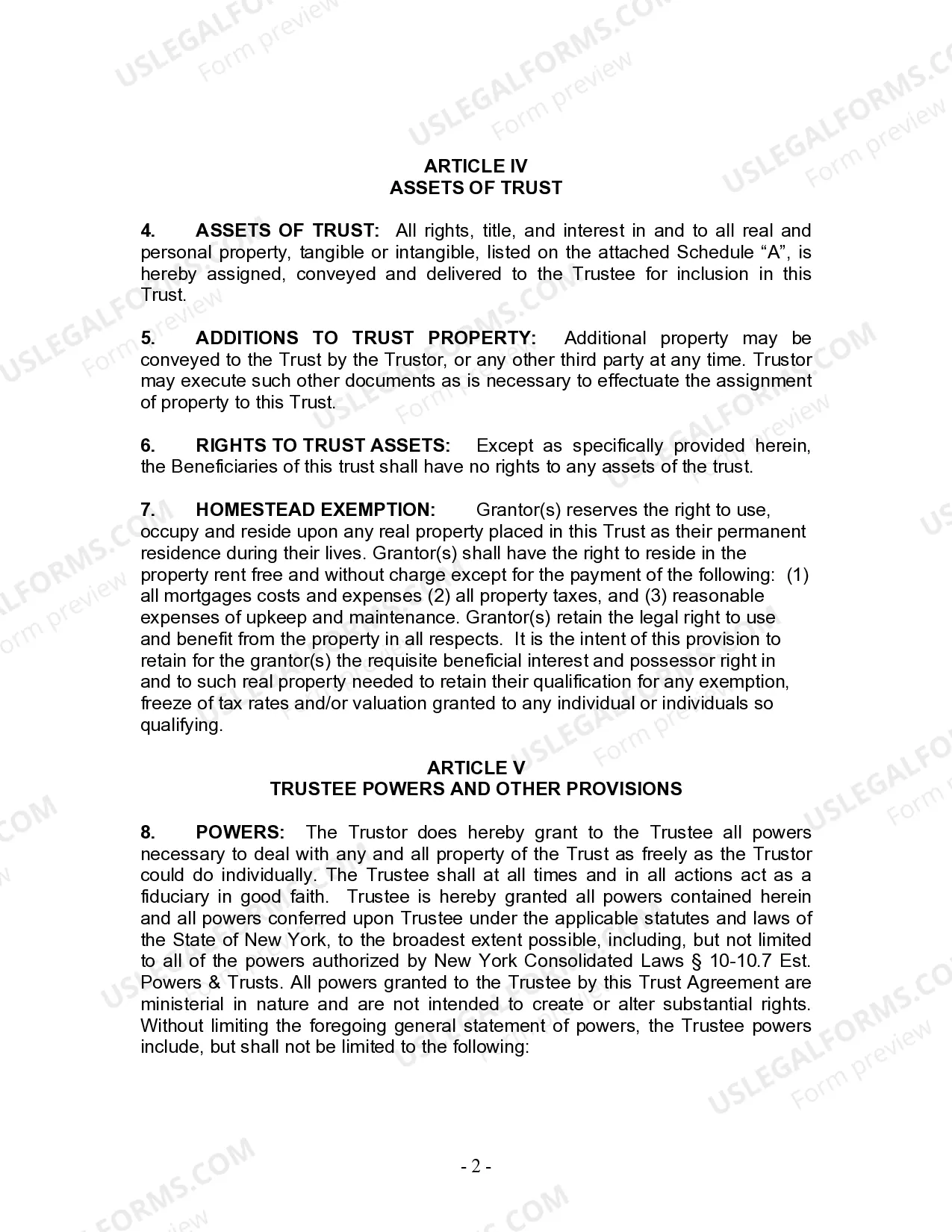
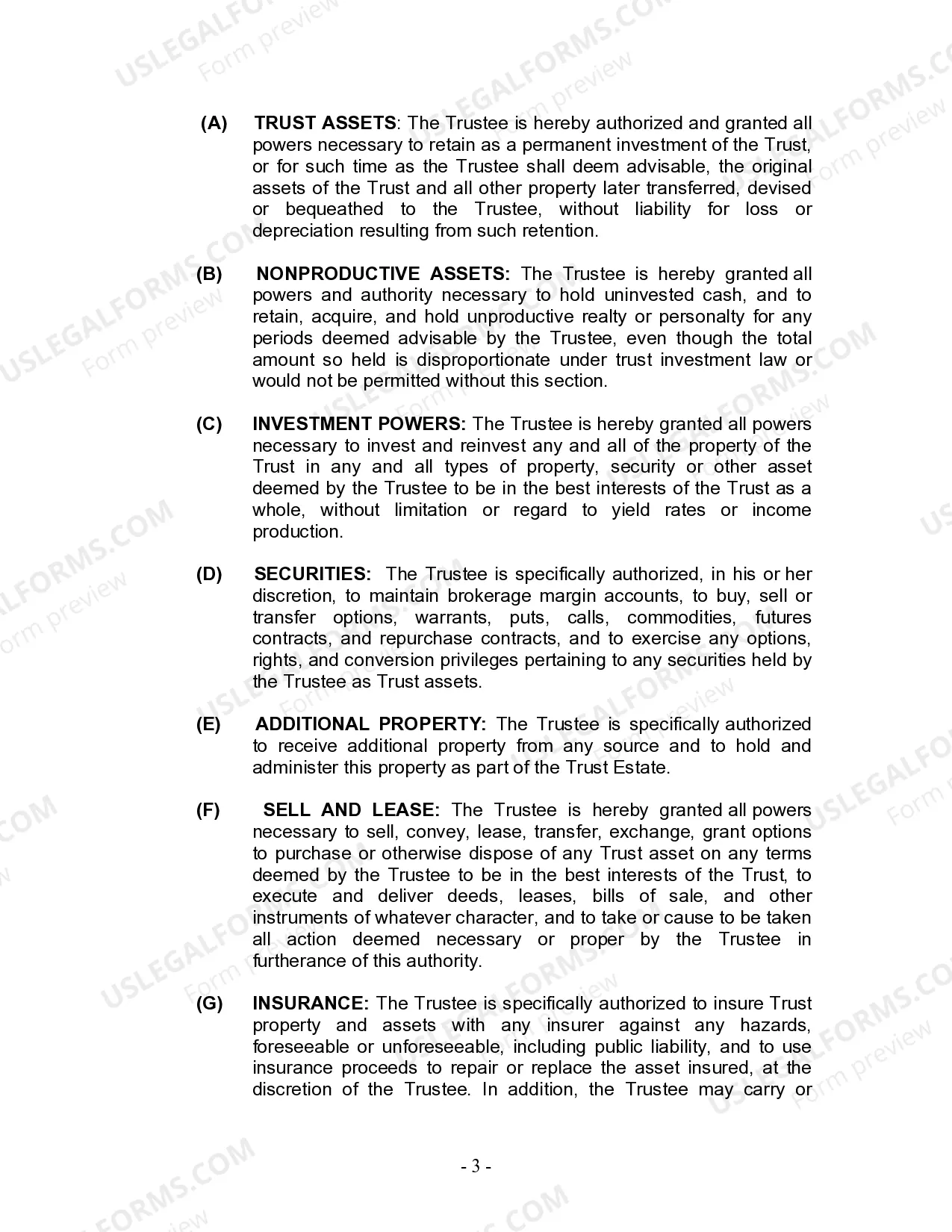
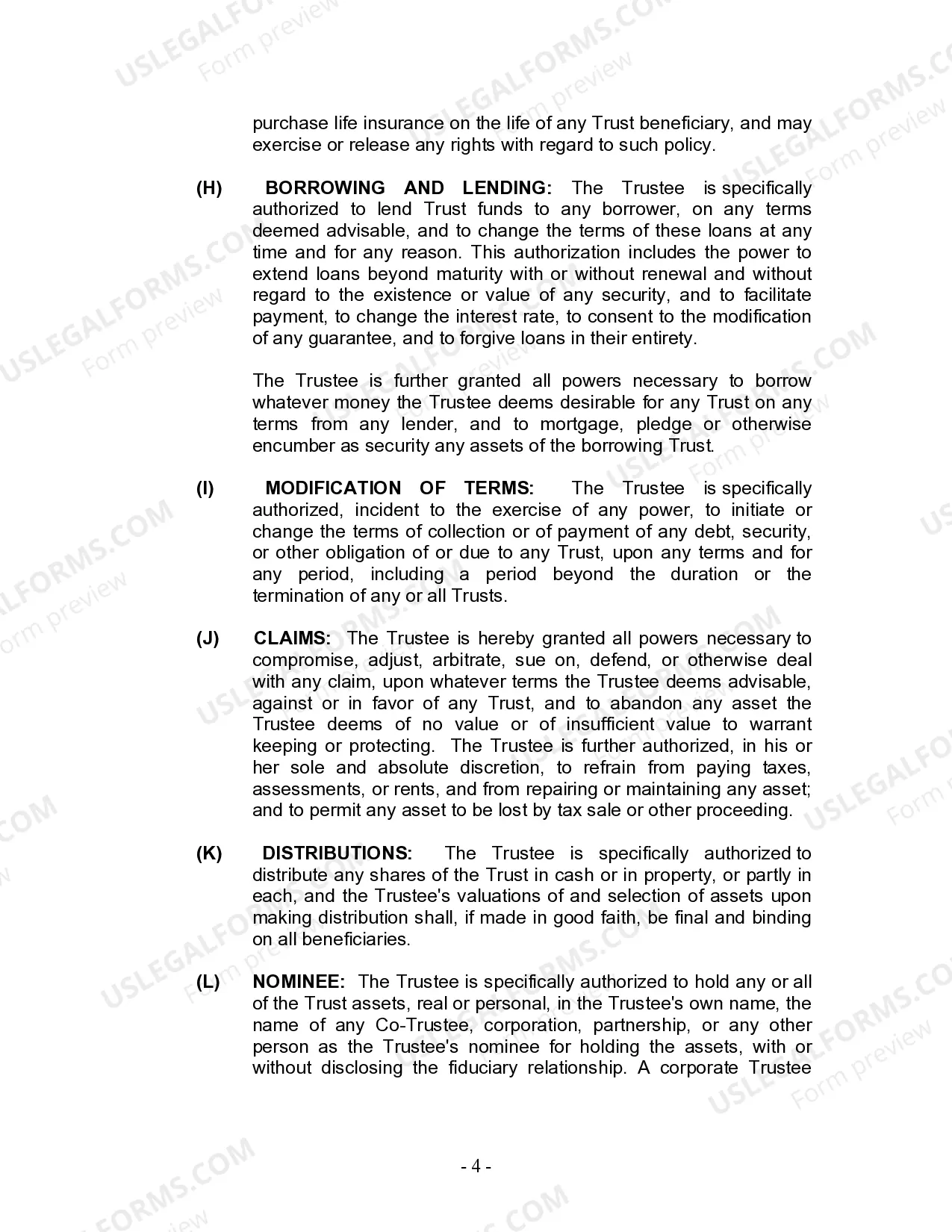



Get your form ready online
Our built-in tools help you complete, sign, share, and store your documents in one place.
Make edits, fill in missing information, and update formatting in US Legal Forms—just like you would in MS Word.
Download a copy, print it, send it by email, or mail it via USPS—whatever works best for your next step.
Sign and collect signatures with our SignNow integration. Send to multiple recipients, set reminders, and more. Go Premium to unlock E-Sign.
If this form requires notarization, complete it online through a secure video call—no need to meet a notary in person or wait for an appointment.
We protect your documents and personal data by following strict security and privacy standards.

Make edits, fill in missing information, and update formatting in US Legal Forms—just like you would in MS Word.

Download a copy, print it, send it by email, or mail it via USPS—whatever works best for your next step.

Sign and collect signatures with our SignNow integration. Send to multiple recipients, set reminders, and more. Go Premium to unlock E-Sign.

If this form requires notarization, complete it online through a secure video call—no need to meet a notary in person or wait for an appointment.

We protect your documents and personal data by following strict security and privacy standards.
Looking for another form?






How to fill out New York Living Trust For Individual Who Is Single, Divorced Or Widow Or Widower With No Children?
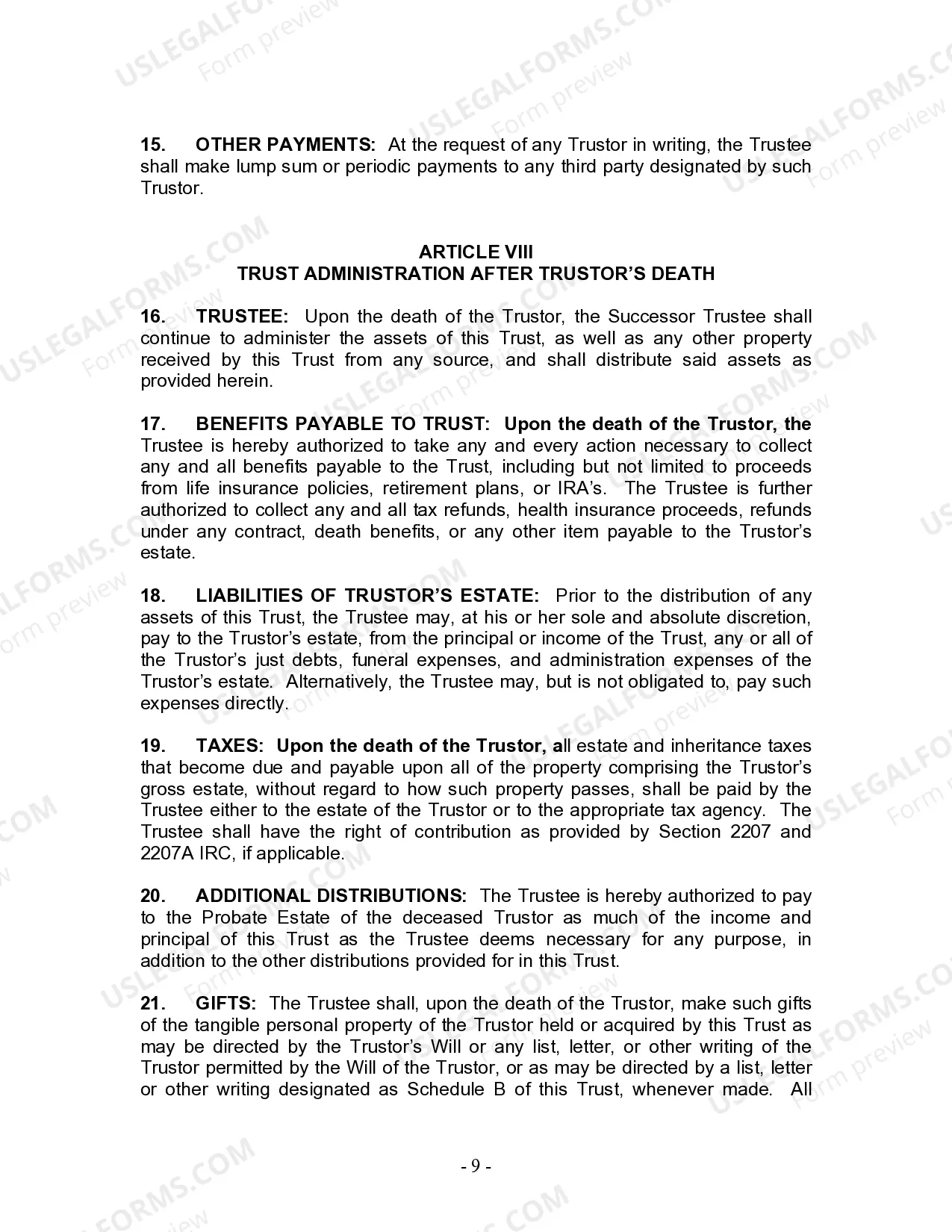
The Living Trust With Beneficiary showcased on this page is a versatile legal template created by skilled attorneys in alignment with federal and state regulations.
For over 25 years, US Legal Forms has furnished individuals, enterprises, and legal professionals with more than 85,000 authenticated, state-specific documents for any business and personal needs. It is the fastest, simplest, and most reliable method to acquire the papers you require, as the service promises the utmost level of data protection and anti-malware safeguards.
Register for US Legal Forms to have authenticated legal templates for all of life’s situations at your fingertips.
- Search for the document you require and examine it.
- Browse the file you looked for and preview or review the form description to ensure it meets your needs. If it does not, use the search bar to find the appropriate one. Click Buy Now once you’ve located the template you need.
- Register and Log In.
- Select the pricing plan that fits you and create an account. Use PayPal or a credit card to facilitate rapid payment. If you already have an account, Log In and check your subscription to proceed.
- Obtain the editable template.
- Choose the format you prefer for your Living Trust With Beneficiary (PDF, DOCX, RTF) and save the document on your device.
- Complete and sign the documents.
- Print the template to fill it out manually. Alternatively, utilize an online multifunctional PDF editor to swiftly and accurately complete and sign your form with an eSignature.
- Download your documents once again.
- Utilize the same document again whenever necessary. Access the My documents tab in your profile to redownload any forms you've previously downloaded.
Form popularity
FAQ
A judgment in Minnesota is valid for 10 years. To renew a judgment in Minnesota for another ten year period, a creditor must start a new lawsuit against the debtor before the expiration of the initial ten year period.
A default judgment is ?equivalent to an admission by the defaulting party to properly pleaded claims and allegations.?[1] ingly, once the court determines that a party is in default, the complaint's factual allegations, except those related to damages, will be taken as true.
Please note that court employees can give general information about court rules, forms, and procedures, but they cannot give legal advice. Step 1: Fill out the Motion form. ... Step 2: Fill out the Affidavit in Support of Motion form. ... Step 3: Serve your Motion and Affidavit on the opposing parties. ... Step 4: Proof of Service.
Minnesota has ten judicial districts that contain all district courts in the state. There is also a federal trial court for Minnesota, which is called the District Court for Minnesota.
After you win a judgment, you must then have the judgment docketed. This process is sometimes called ?transcribing the judgment.? You can docket a judgment by filing an Affidavit of Identification of Judgment Debtor form with court administration in the county where you were awarded the judgment.
A Confession of Judgment contract is a formal payment plan where the property owner pays off delinquent taxes in yearly installments (either a five- or 10-year payment plan, as determined by the county auditor).
Satisfaction of Judgment is when the judgment has been paid in full. The parties need to let the court know that the judgment has been paid. The creditor (party being paid) or the debtor (person who owes the money) can do this by filing a form with the court.
Writs of Execution are orders issued by district court directing the sheriff to satisfy a judgment. They must be directed to the Sheriff of the county in which the assets to satisfy the judgment are located and they may be for personal or real property.