Life Estate Deed With Mortgage
Description

Get your form ready online
Our built-in tools help you complete, sign, share, and store your documents in one place.
Make edits, fill in missing information, and update formatting in US Legal Forms—just like you would in MS Word.
Download a copy, print it, send it by email, or mail it via USPS—whatever works best for your next step.
Sign and collect signatures with our SignNow integration. Send to multiple recipients, set reminders, and more. Go Premium to unlock E-Sign.
If this form requires notarization, complete it online through a secure video call—no need to meet a notary in person or wait for an appointment.
We protect your documents and personal data by following strict security and privacy standards.

Make edits, fill in missing information, and update formatting in US Legal Forms—just like you would in MS Word.

Download a copy, print it, send it by email, or mail it via USPS—whatever works best for your next step.

Sign and collect signatures with our SignNow integration. Send to multiple recipients, set reminders, and more. Go Premium to unlock E-Sign.

If this form requires notarization, complete it online through a secure video call—no need to meet a notary in person or wait for an appointment.

We protect your documents and personal data by following strict security and privacy standards.
Looking for another form?
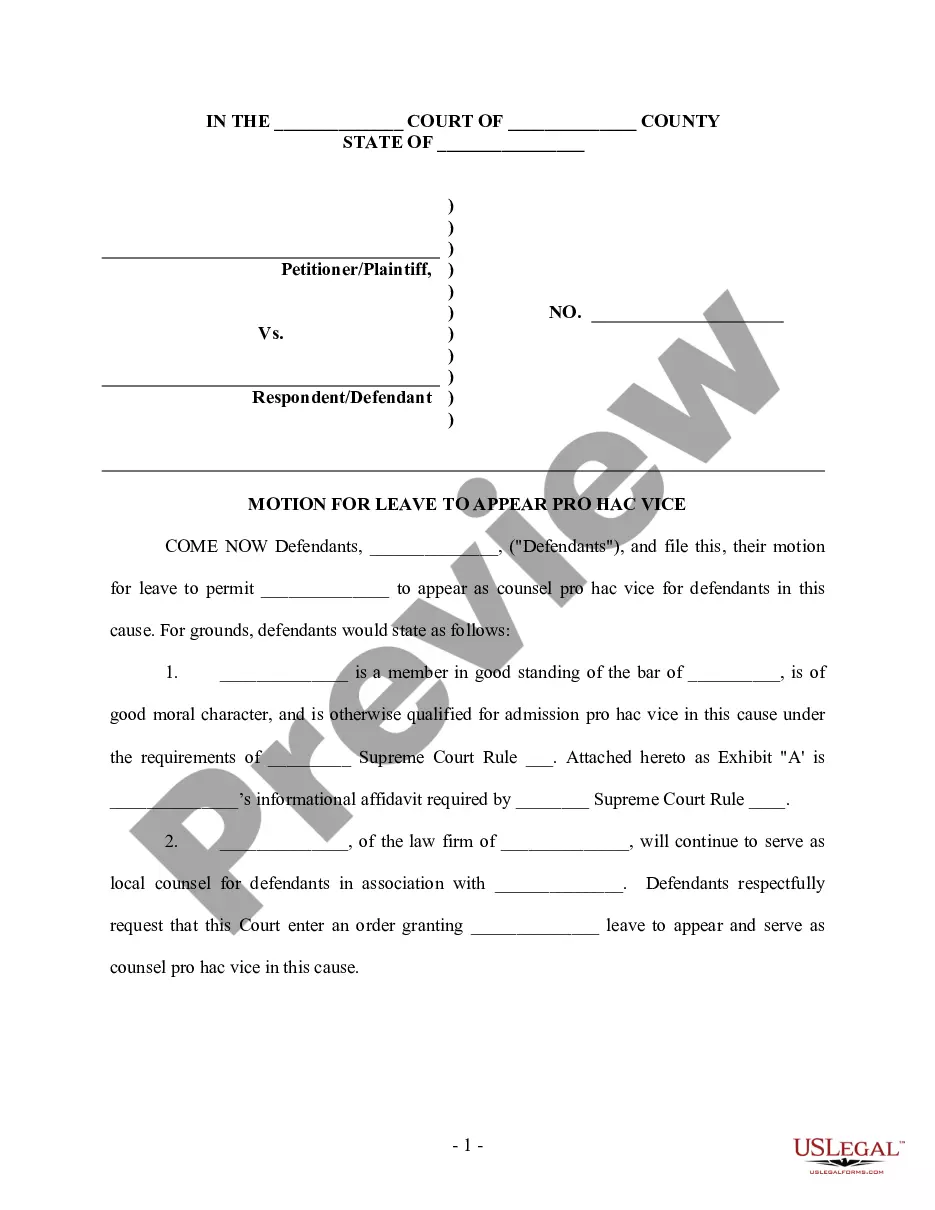




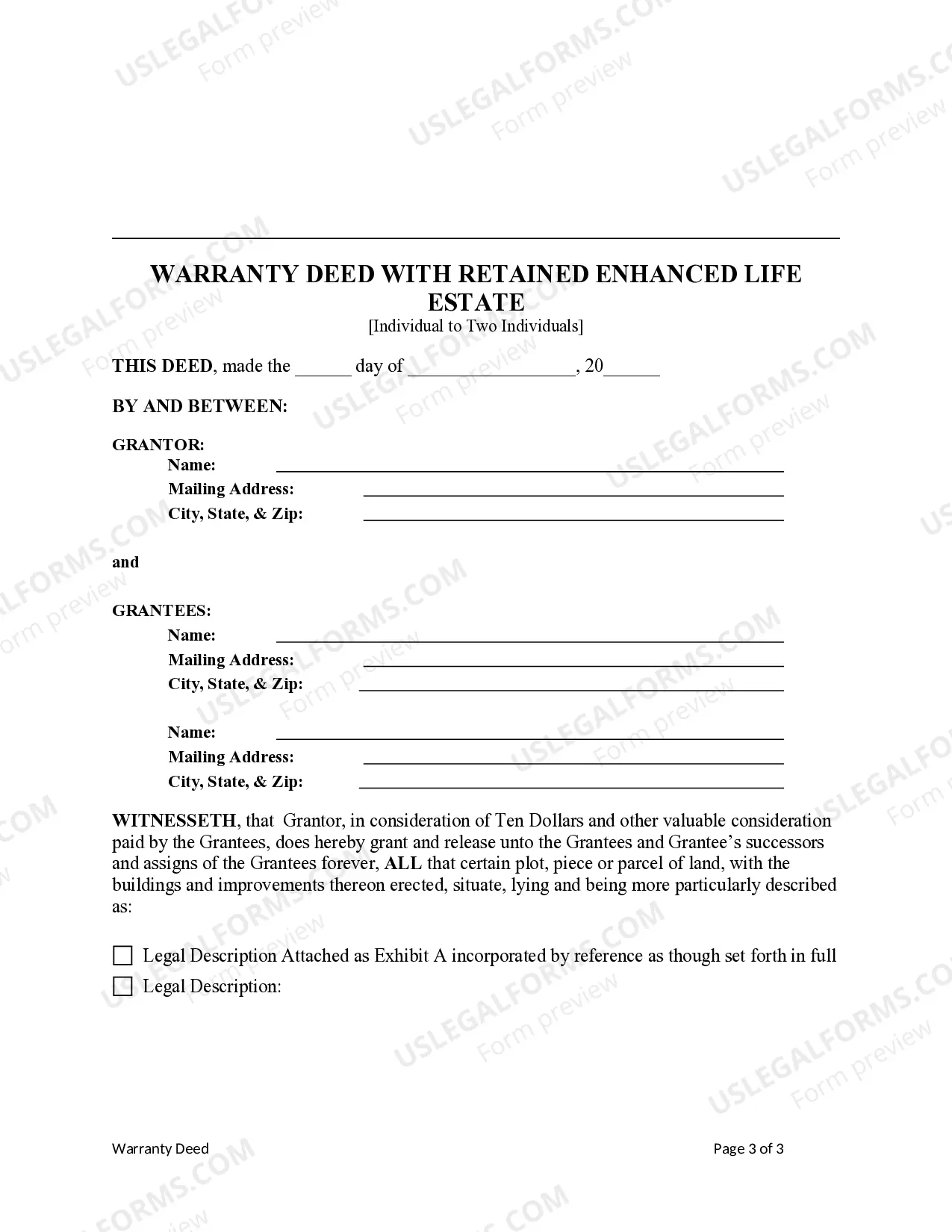
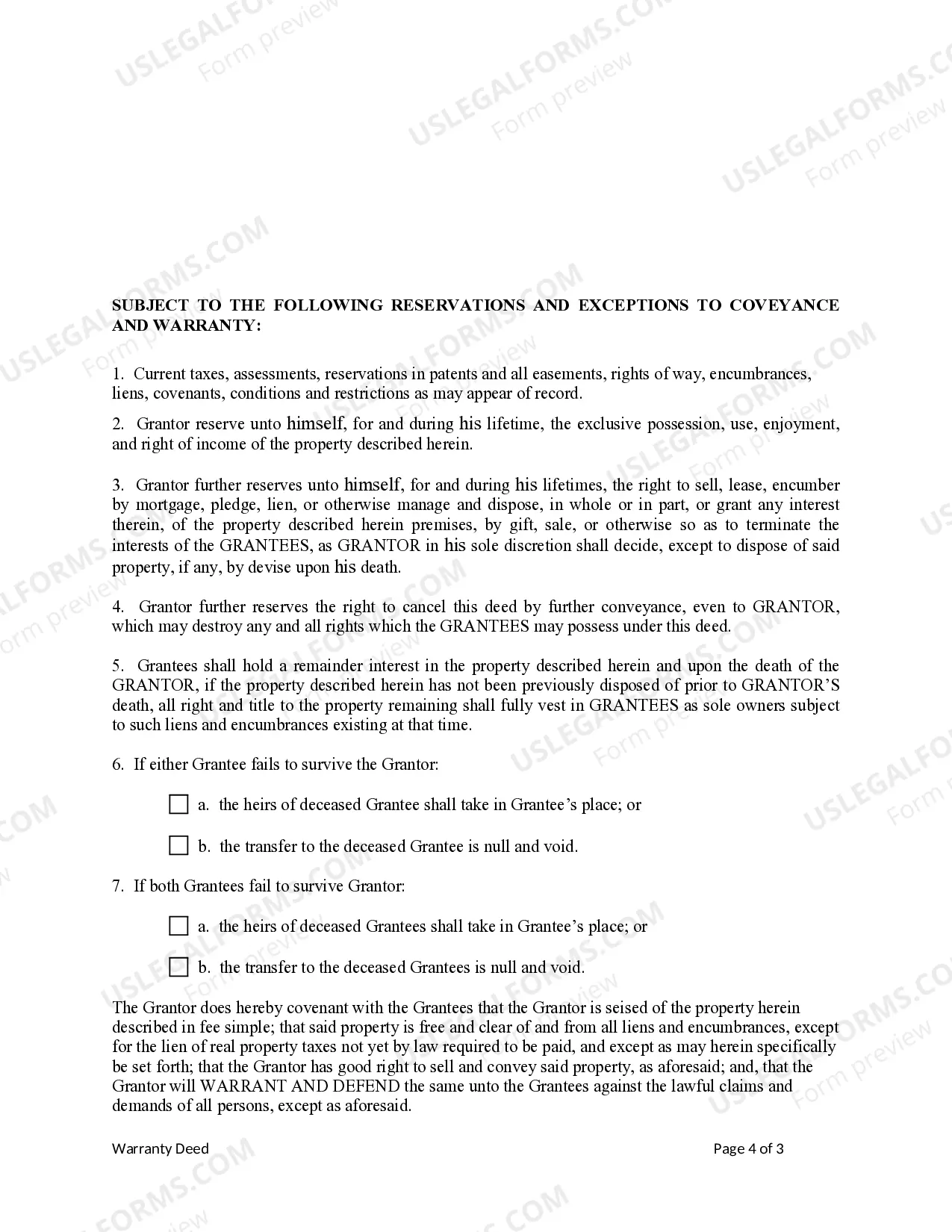
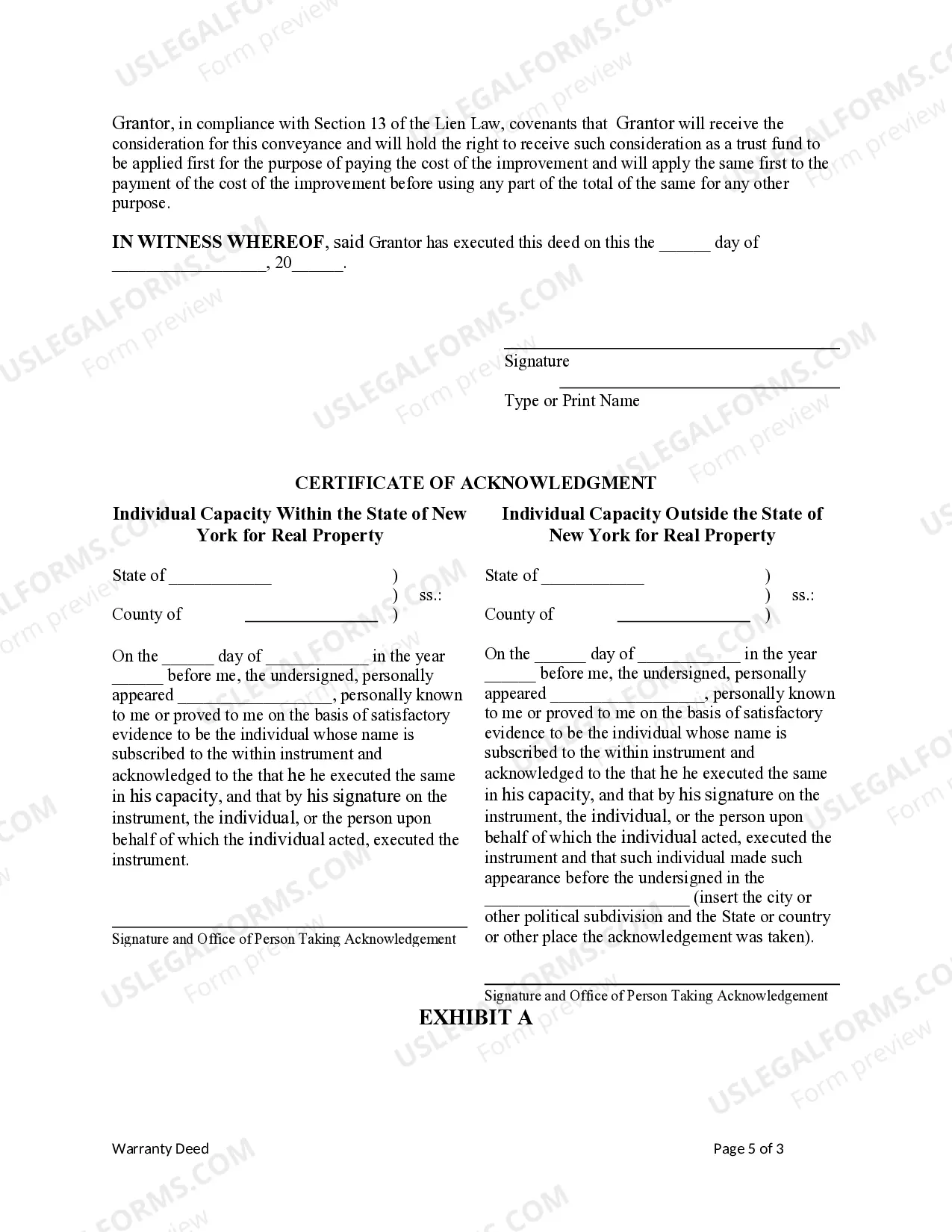
How to fill out New York Enhanced Life Estate Or Lady Bird Warranty Deed From Individual To Two Individuals?
- Log in to your US Legal Forms account if you are already a member or create a new account to get started.
- Browse through the extensive collection of legal forms and check the preview mode to find the specific life estate deed with mortgage that fits your needs.
- If the initial form doesn’t match your local jurisdiction requirements, use the search feature to find the correct template.
- Once you have the correct document, click the Buy Now button and select a subscription plan that suits you best.
- Complete the purchase process by entering your payment information, whether it's your credit card or PayPal account.
- After your purchase, download the form directly to your device and access it anytime through the My Forms section for your convenience.
In conclusion, US Legal Forms provides an exceptional way to manage your legal documentation needs efficiently. The platform's robust form collection and access to premium experts ensure your life estate deed with mortgage will be completed accurately and in accordance with legal standards.
Start utilizing US Legal Forms today to take control of your legal documents!
Form popularity
FAQ
Selling a house in a life estate typically requires the agreement of both the life tenant and the remainderman. The life estate deed with mortgage locks in specific rights that individuals must honor. Therefore, if you’re considering selling, open communication is vital. If complications arise, uslegalforms can provide the necessary documentation to help navigate the sale process seamlessly.
A will does not override a life estate deed with mortgage. The life estate remains in effect regardless of the instructions in the will. This means that once you establish a life estate, the property automatically transitions to the remainderman upon the life tenant's death, unaffected by any changes made in the will. Understanding this distinction is crucial for estate planning.
You cannot sell a house in a life estate without the consent of the remainderman. A life estate deed with mortgage grants the life tenant certain rights, but selling the property requires cooperation with the future owners. If you are considering selling, it's important to include the remainderman in the decision-making process. This collaboration ensures all parties are informed and agree on the transaction.
A life estate deed with mortgage can limit your control over the property. As a life tenant, you cannot sell the property or take out new loans without the permission of the remainderman. This restriction can create complications if you need to access the house’s value for financial needs. Additionally, once the life tenant passes away, the property automatically transfers to the remainderman.
While a will contains your wishes for asset distribution after death, it cannot override a life estate deed with mortgage. The life estate deed is a legal document that establishes a clear title transfer to heirs upon your passing. Therefore, it is crucial to understand how these documents interact, ensuring your estate plan aligns with your intentions. Using platforms like USLegalForms can help clarify these details and assist in making informed decisions.
When it comes to a life estate deed with mortgage, tax implications can vary. Generally, you might not face immediate tax consequences when creating this deed, but the property could be subject to capital gains tax when it is sold. However, your heirs may benefit from a step-up in basis, which can reduce their taxable gain upon inheritance. Consulting a tax professional can clarify the specifics for your situation.
The negatives of a life estate often include limited control over the property and potential financial responsibilities. If the life tenant incurs debt against the property, this can affect the remaindermen. To effectively manage these drawbacks, consider using platforms like uslegalforms, which provide resources and guidance in navigating life estate deed with mortgage issues.
Many people create life estates to retain rights to live in a property while ensuring its transfer to heirs after their death. This arrangement can help avoid probate and facilitate smoother transitions of ownership. Using a life estate deed with mortgage can also provide financial support while keeping the asset within the family.
Yes, it is possible to have a deed with a mortgage. When creating a life estate deed with mortgage, the mortgage can encumber the property, affecting both the life tenant and remaindermen. It is essential for all parties to understand the terms of the mortgage to ensure adequate management of the asset.
To navigate around a life estate, property owners may need to negotiate with remaindermen or consider alternative legal instruments. For example, they could explore options for transferring interests through a life estate deed with mortgage. Getting professional advice ensures that all actions comply with applicable laws and best serve the owner's intentions.